 Lynden Exterior
 Roofing in Blaine: A Different Set of Problems Than Inland Whatcom County
Blaine sits right up against the Strait of Georgia, and that location changes what a roof has to deal with compared to homes just a few miles inland in Lynden or Everson. Salt-laden air moves off the water and settles on every exposed surface, including roofing metal, fasteners, and flashing. Add in wind-driven rain that comes in sideways during winter storms, plus the long, damp shoulder seasons that let moss colonies get established and stay established, and you have a roofing environment that punishes shortcuts faster than most of Whatcom County does.
We work throughout Blaine and the surrounding coastal pockets, and the roofs we replace out here tend to show a consistent pattern: premature fastener corrosion, moss-driven shingle lift, and moisture intrusion at valleys and penetrations that were sealed correctly for a drier climate but not for this one. A roof replacement done right in Blaine isn't just "the same job as Lynden, closer to the water." The materials, fastener selection, and detailing all need to account for what the coast actually does to a roof over time.
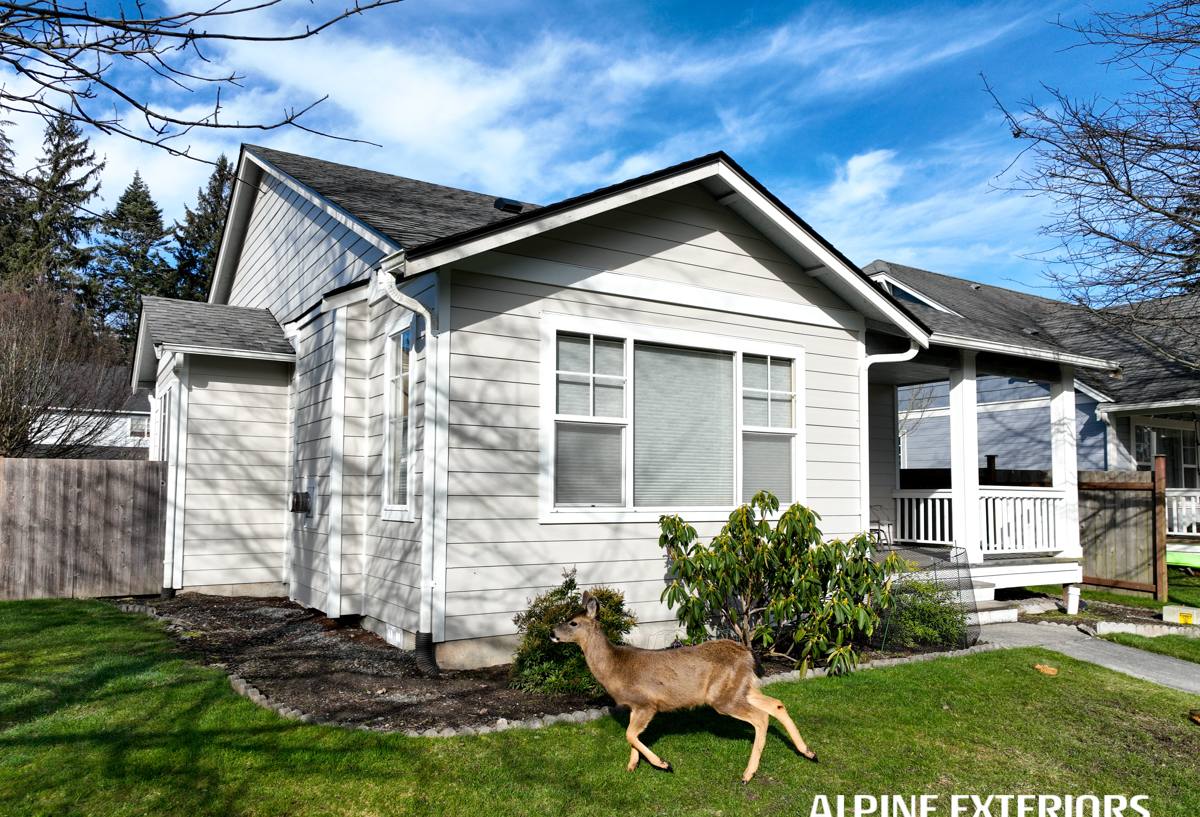
What Blaine's Climate Actually Does to a Roof
Salt Air and Metal Fatigue
Airborne salt accelerates corrosion on anything unprotected or under-protected — exposed nail heads, cheap flashing, uncoated fasteners. Over years, this shows up as rust streaking, weakened fastener holding power, and pinhole leaks at flashing seams that would have lasted much longer a few miles inland.
Driving Rain and Wind Uplift
Blaine gets weather straight off the water with little to break it up. Wind-driven rain doesn't just fall on a roof, it pushes sideways into laps, seams, and any gap in the underlayment. Combined with gusts strong enough to test shingle uplift resistance, this means fastening patterns and underlayment choices matter more here than in more sheltered inland lots.
Moss and Extended Damp Seasons
Whatcom County's wet season runs long, and Blaine's proximity to the water keeps humidity and surface moisture around even longer in shaded or north-facing roof sections. Moss doesn't just look bad — it holds moisture against the roofing material, lifts shingle edges, and works its way under laps where it accelerates rot in the decking below.
Signs a Blaine Roof Needs Replacement (Not Just a Repair)
- Granule loss heavy enough that you can see bare asphalt on multiple slopes, not just one weathered patch
- Moss established at the ridge and working down past the halfway point of the slope
- Soft or spongy decking felt underfoot during inspection, especially near valleys or eaves
- Rust staining at flashing, vent boots, or exposed fasteners that keeps returning after cleaning
- Daylight visible through the roof deck from the attic, or water staining on attic sheathing
- Shingles curling, cupping, or losing their seal in patterns that match prevailing wind direction
- Repeated leak repairs in the same general area over the past two or three winters
Any one of these on its own might still be repairable. Several together, especially on a roof past its expected service life, usually means repair costs start approaching replacement costs without buying you much additional life out of the roof.
What a Correct Roof Replacement Involves Out Here
Tear-Off and Deck Inspection
We remove the existing roofing down to the deck rather than layering over it. This is the only way to actually see what's underneath — soft decking, hidden rot at valleys, or old flashing that's been quietly failing for years. Any damaged sheathing gets replaced before anything new goes down; roofing over compromised decking just guarantees a shorter-than-expected lifespan for the new roof.
Underlayment Selection for Coastal Exposure
Given Blaine's rain exposure, we lean toward synthetic underlayments with strong water-shedding performance and, in vulnerable areas like valleys and eaves, self-adhered ice-and-water membrane for a second line of defense against wind-driven moisture. This isn't overbuilding — it's matching the underlayment to what the site actually experiences.
Fastener and Flashing Choices
Given salt exposure, fastener corrosion resistance is not a place to cut corners. We use fasteners and flashing rated for coastal or high-corrosion environments rather than standard-grade hardware that's fine 20 miles inland but underperforms near the water. This is a small percentage of total job cost with an outsized effect on how long flashing seams stay watertight.
Ventilation Checked and Corrected
Roof ventilation gets evaluated as part of every replacement, not treated as an afterthought. Poor attic ventilation traps moisture, which speeds up deck rot and can shorten shingle life from the underside even when the surface looks fine. In a climate this damp, ventilation is doing real work, not just satisfying a checklist.
Material Options and How They Perform Near the Water
| Material | How It Handles Salt Air & Moss | General Lifespan | Trade-Offs |
|---|---|---|---|
| Architectural asphalt shingle | Good with proper ventilation and algae-resistant granules; still benefits from moss treatment over time | 25–30 years | Most cost-effective; moss and granule loss need periodic attention |
| Standing seam metal | Excellent when fasteners and coatings are coastal-rated; sheds moisture and resists moss buildup well | 40–50+ years | Higher upfront cost; installation quality and fastener selection matter more than with shingles |
| Synthetic/composite shingle | Strong moisture and rot resistance; performs well in damp, shaded areas prone to moss | 30–50 years | Cost sits between asphalt and metal; product selection and installer familiarity matter |
| Cedar shake | Requires more diligence in a damp coastal climate; moisture retention and moss are a maintenance burden here | 20–30 years with upkeep | We'll install it if requested, but we're upfront that it demands more ongoing maintenance in this specific climate |
We don't push one material on every homeowner. The right choice depends on your budget, how long you plan to stay in the home, and how much ongoing maintenance you want to take on. What we will do is give you an honest read on how each option actually behaves once it's a few years into Blaine's weather, not just how it looks on day one.
Our Process, Start to Finish
- On-site inspection. We walk the roof (weather permitting) and check the attic from inside, looking at decking condition, ventilation, flashing points, and moss extent.
- Written estimate. You get a clear scope of work and pricing before anything is scheduled — no vague allowances, no surprise add-ons discovered after the tear-off starts.
- Material selection. We walk through the options that fit your budget and priorities, with straight talk about how each performs specifically in a coastal Whatcom County setting.
- Scheduling around the weather. Given how much wind-driven rain Blaine gets, we plan tear-off and dry-in carefully so your home isn't exposed longer than necessary.
- Tear-off, deck repair, and installation. Old roofing comes off, decking issues get fixed, and the new roofing system goes down to spec — underlayment, flashing, fasteners, and ventilation all addressed, not just the shingles.
- Final walkthrough. We review the finished roof with you, including any workmanship warranty details, before we consider the job done.
Cost Factors for a Blaine Roof Replacement
Every roof is different, so we won't quote a number without seeing yours, but the main variables that move the price are worth understanding upfront:
- Roof size and pitch — steeper roofs take longer and require more safety setup
- Number of layers currently on the roof and whether decking repair is needed
- Material choice — asphalt, synthetic, or metal carry different material and labor costs
- Complexity of the roofline — valleys, dormers, and penetrations all add labor time
- Ventilation upgrades needed to bring an older roof up to current standards
- Access — tight lots or difficult staging areas can affect labor time
Why a Crew That Already Works Blaine Matters
A roof replacement crew that mostly works drier, inland areas can still do competent work, but they're less likely to default to coastal-rated fasteners, they may underestimate how aggressive the moss growth will be in a shaded, damp Blaine yard, and they haven't necessarily seen how flashing details hold up after a few winters of driving rain off the Strait. We work this area regularly, which means our material and detailing decisions are based on what we've actually seen fail and hold up here, not on generic specs written for a different climate zone.
That local familiarity also shows up in smaller ways — knowing which parts of Blaine tend to get the worst wind exposure, understanding typical lot access and staging constraints, and being realistic with you about how long moss control will need to stay part of your maintenance routine after the new roof goes on.
Maintaining Your New Roof in a Coastal Climate
A correctly installed roof still benefits from some ongoing attention in a place like Blaine. A few habits go a long way toward getting full value out of the investment:
- Have moss growth addressed before it establishes heavily, rather than after it's visibly lifting shingles
- Keep gutters clear so water isn't backing up under eaves during heavy rain events
- Have flashing and fastener points checked periodically, especially after major windstorms
- Watch attic ventilation — blocked soffit or ridge vents undo a lot of the moisture protection built into the system
None of this is complicated, but skipping it in a coastal climate tends to shorten roof life more than it would inland.
Get an Honest Look at Your Roof
If your Blaine home's roof is showing moss, granule loss, or recurring leaks, it's worth getting a straightforward, no-pressure assessment before those problems get more expensive to fix. We'll walk the roof, tell you what we actually find, and give you a clear estimate with options that make sense for a coastal Whatcom County property. Use the form below to request your free estimate.