 Lynden Exterior
 Siding Installation for Sumas-Area Homes
Sumas sits out at the edge of our regular service area, a short drive northeast of Lynden along the Whatcom County border with British Columbia. It's flatter, wetter-feeling farmland compared to the rolling ground closer to town, but it answers to the same weather that shapes every exterior job we do in this corner of the state: salt-tinged marine air that works its way inland from the Sound, driving rain that hits walls sideways more often than it falls straight down, and a moss season that runs long enough here to feel like a permanent condition rather than a seasonal one. Siding installation is where all three of those factors either get handled correctly, up front, or get baked into problems that surface years later. We install James Hardie fiber cement siding exclusively for Sumas-area homes, and this page walks through what the climate demands, what a correct installation actually involves, and how our process works from first walk-through to final trim.
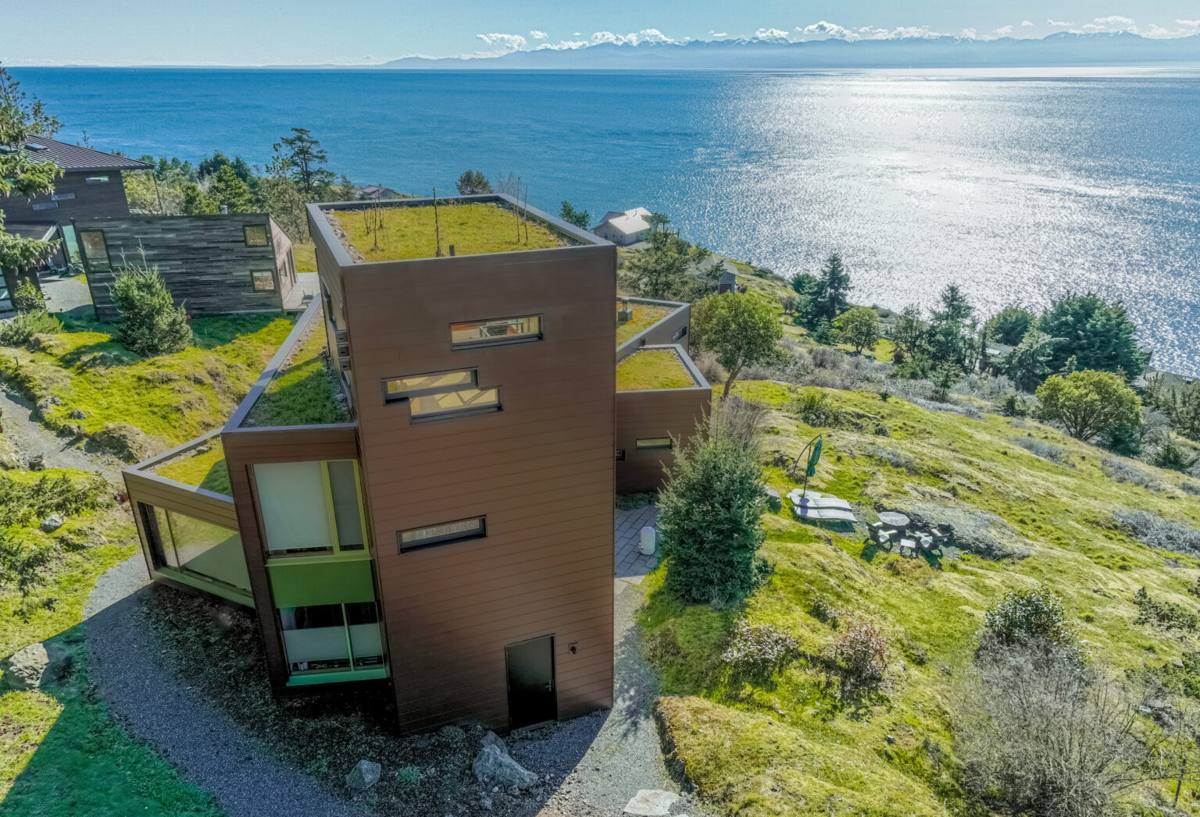
What Sumas's Climate Asks of a Siding Installation
Salt Air and Corrosion
Even out toward Sumas, well inland from the immediate coastline, homes still get a steady dose of salt-laden air moving through the region. Salt accelerates corrosion in fasteners, flashing, and any exposed metal trim, and it shortens the life of lower-grade hardware faster than a dry, inland climate would. An installation that uses the wrong fastener grade or skips corrosion-resistant flashing in favor of whatever's cheapest on the truck is setting up a maintenance problem that won't show itself for a few years — by which point it's a repair job, not a five-minute fix.
Wind-Driven, Sideways Rain
Rain in this part of Whatcom County rarely falls straight down. Wind pushes it sideways into walls, seams, and window and door openings, which is a fundamentally different load than a simple rainfall total suggests. Siding installed with standard clearances and standard lap details for a calm, dry climate can fail here specifically because water finds its way in from the side — behind trim, at corners, and anywhere flashing is doing less work than it should. Getting the water-management layer right, not just the visible siding on top of it, is what actually determines whether a home stays dry.
A Long Moss and Mildew Season
Mild temperatures, persistent dampness, and plenty of shaded wall area on most homes add up to a moss and mildew season that stretches across much of the year here. It shows up first on north-facing and tree-shaded walls, and it's more than a cosmetic issue — sustained organic growth holds moisture directly against the wall, which is exactly the condition that leads to hidden rot behind siding that looks fine from the driveway. Installation details like proper drainage gaps and correct caulking at joints matter more in a climate where a wall rarely gets a long enough dry stretch to fully shed the moisture it picks up.
What a Correct Siding Installation Actually Involves
Siding installation isn't just fastening panels or planks to a wall. Done right, it's a layered system, and each layer has to be correct for the whole assembly to perform over the long run in a climate like this one.
- Weather-resistive barrier: A continuous, properly lapped barrier behind the siding that manages any moisture that gets past the outer layer, directing it back out rather than trapping it against the sheathing.
- Flashing at every penetration: Windows, doors, hose bibs, light fixtures, and roof-to-wall transitions all need flashing detailed to shed wind-driven rain, not just vertical rainfall.
- Correct fastening pattern and depth: James Hardie specifies fastener type, spacing, and placement for good reason — under-driven or over-driven nails, or the wrong fastener grade, are among the most common causes of early siding failure.
- Proper clearances: Siding needs a gap from grade, roof lines, decks, and other transitions so it isn't sitting in standing water or trapped moisture.
- Caulking and sealant at the right joints only: Sealing joints that are supposed to drain, instead of ones that are supposed to be sealed, traps water instead of releasing it — a detail that separates an experienced installer from one just following a generic checklist.
- Manufacturer-spec starter strips, trim, and accessories: Using Hardie's engineered components rather than generic substitutes keeps the whole system working as designed, and keeps the warranty intact.
Skip any one of those layers and the siding can still look correct on installation day. The problems that follow — staining, soft trim, siding pulling away from the wall — usually take a couple of wet seasons to show up, which is part of why installation quality is so easy to underestimate until it's someone else's callback.
Why James Hardie Is the System We Install
We used to work with a wider range of siding products before narrowing to one system. That decision came out of watching, over years of jobs across Whatcom County, which materials held up under sustained regional moisture and salt exposure and which ones quietly turned into maintenance headaches for the homeowner a few years down the road.
| Consideration | Why It Matters in Sumas |
|---|---|
| Non-combustible fiber cement core | Doesn't feed a fire the way wood-based siding can — a real factor for household safety and insurance underwriting |
| Factory-applied ColorPlus finish | Baked on under controlled conditions, so it resists fading and moisture intrusion far longer than site-applied paint exposed to salt air and sun |
| Climate-engineered HZ product lines | Hardie builds formulations for different climate zones, including versions suited to sustained moisture exposure and freeze-thaw cycling |
| Dimensional stability | Doesn't swell, cup, or warp the way engineered wood siding can after repeated wet-season moisture cycles |
| Strong transferable warranty | Backed by Hardie provided installation follows spec — real protection, not a marketing claim |
We don't install LP SmartSide, vinyl siding, Cemplank, Allura, primed spruce, or cedar. Each has a place in the broader market, and plenty of homeowners elsewhere are satisfied with them. But we made a professional call that one system, installed correctly every time, serves a Sumas-area homeowner better than a cheaper option that shifts maintenance risk onto them once the marine air and wet seasons start working on it.
Our Installation Process, Start to Finish
- On-site walk-through: We look at the existing siding, trim, flashing, and any visible moisture or rot damage before quoting anything, so the estimate reflects what your home actually needs.
- Tear-off and substrate inspection: Once old siding comes off, we inspect the sheathing and framing underneath for hidden rot or moisture damage — this is where problems that weren't visible from outside usually surface.
- Repair before cover-up: Any compromised sheathing or framing gets repaired before anything new goes on. Installing new siding over damaged substrate just hides the problem.
- Weather-resistive barrier and flashing: We install and lap the barrier correctly and detail flashing at every window, door, and penetration before the visible siding goes up.
- Hardie siding installation to manufacturer spec: Fastening pattern, clearances, and joint treatment follow Hardie's published specifications, not shortcuts.
- Trim, caulking, and final detailing: Trim and accessories go in, and joints get sealed correctly — sealed where they should be, left to drain where they should be.
- Final walk-through: We walk the finished job with you before calling it done, so you know exactly what was installed and why.
Signs Your Current Siding Installation Was Done Wrong
Not every Sumas-area home needing new siding is dealing with old age. Sometimes the problem is an installation that was never right to begin with. A few signs worth checking for before deciding what your home actually needs:
- Staining, streaking, or soft spots concentrated near seams, corners, or window and door trim
- Visible gaps or caulking at joints that should have been left open to drain
- Siding sitting flush against grade, a deck, or a roofline with no visible clearance gap
- Nail heads popping through the surface, or fastener stains bleeding through the finish
- Persistent moss or mildew growth on shaded walls that keeps coming back after cleaning
- Siding that flexes or feels hollow when pressed, suggesting it's not fastened to spec
Any of these can point to an installation issue rather than a material one, which is worth knowing before assuming a full re-side is the only option.
Cost Factors for Siding Installation in Sumas
Every property is different, and we don't quote real numbers without walking the home first, but a few factors consistently move the cost of a siding installation project in this area up or down.
| Factor | How It Affects the Job |
|---|---|
| Tear-off and disposal of existing siding | Old siding material, condition, and volume affect labor and disposal costs |
| Substrate repair needs | Rotted sheathing or framing discovered during tear-off adds material and labor before new siding can go on |
| Home size and wall complexity | More corners, dormers, and roof-to-wall transitions mean more flashing detail and labor time |
| Siding profile and accessory choices | Lap width, trim style, and color selection affect material cost within the Hardie product line |
| Site access | Rural or agricultural lot layouts near Sumas can affect staging and equipment access compared to an in-town lot |
Exact costs depend on the specific home and its condition, which is why we give a written estimate after an in-person walk-through rather than a number off a generic price sheet.
Why a Crew That Already Works in Sumas Matters
A crew that regularly does siding installation in and around Sumas has already seen how salt air, wind-driven rain, and a long moss season play out on real homes here across a full year — not just how a product performs on a spec sheet. That experience shapes practical decisions on install day: which wall orientations need the most flashing attention, how much clearance to leave given the site's drainage, and which fastening details are worth the extra time so you're not dealing with a callback after the first hard winter storm. Sumas's mix of flat farmland, border proximity, and marine-influenced weather is close enough to Lynden to be part of our regular territory, but different enough from an in-town lot that a crew without local experience can miss the details that matter most.
If your Sumas-area home needs new siding, a repair, or just an honest opinion on whether a past installation was done correctly, we're happy to take a look. Reach out using the form below to schedule a free, no-pressure estimate.