 Lynden Exterior
 Why Ferndale Homes Wear Out Siding Faster Than the Manual Says
Ferndale sits close enough to the water and the marine air pattern that comes with it that siding here takes a different kind of beating than siding fifty miles inland. Salt-laden air rides in off the Strait and Bellingham Bay on a regular basis, and it settles into every seam, nail head, and lap joint on a home's exterior. Add in Whatcom County's long stretch of driving rain each fall and winter, plus a moss season that can run from October well into spring on shaded and north-facing walls, and you have a climate that punishes any siding product with a weak point.
Most siding failures we're called out to inspect in Ferndale aren't dramatic. They're slow: a swollen bottom edge behind a shrub bed, a soft spot under a downspout that's been dripping onto the wall for two winters, moss holding moisture against a north wall long after the rest of the house has dried out. By the time paint is peeling or a board flexes under a thumb, the damage has usually been building for years.
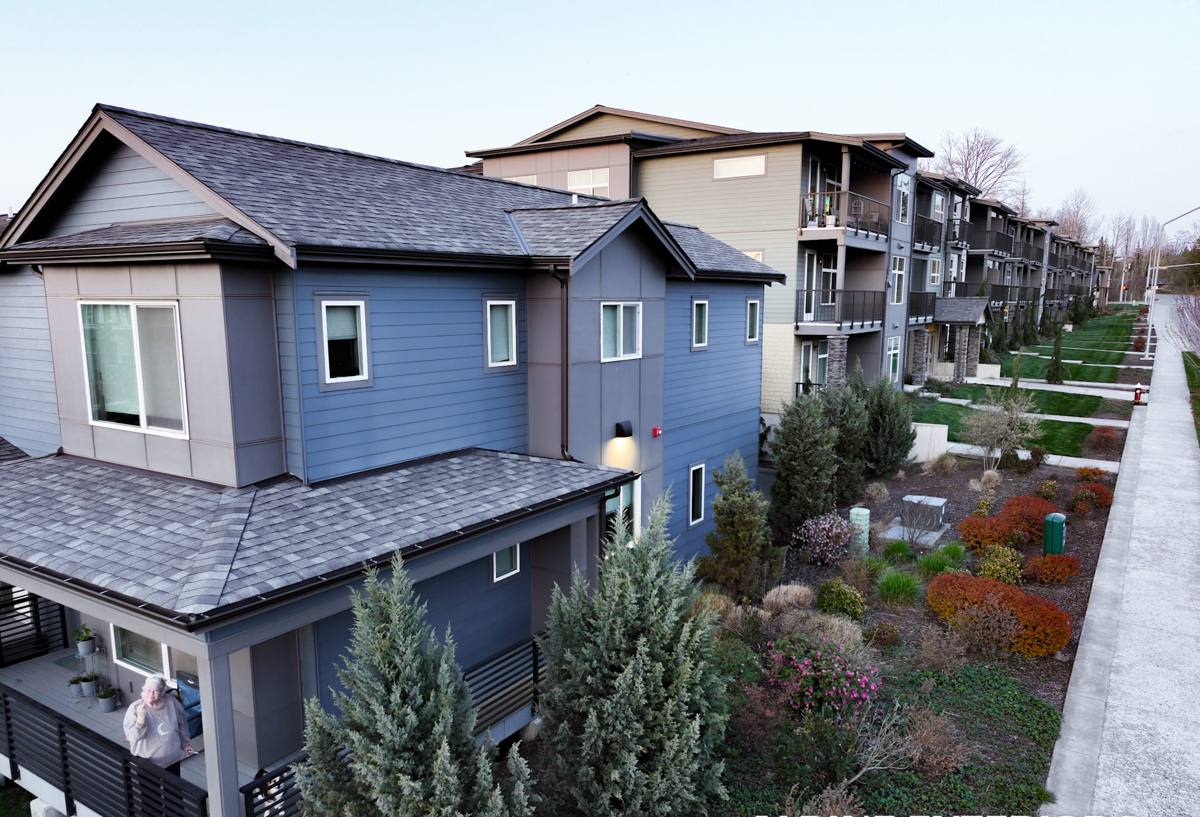
What Correct Siding Replacement Actually Involves
Replacing siding is not a cosmetic swap. Done right, it's a full reset of how the wall manages water, and that matters more in Ferndale than in a dry climate. A proper replacement includes:
- Full removal of old siding and a wall-by-wall inspection of the sheathing underneath for rot, soft spots, or prior water damage
- Repair or replacement of any compromised sheathing before new material goes up — covering rot instead of fixing it just hides the problem for a few more years
- A correctly lapped weather-resistive barrier (housewrap) with proper flashing integration at every window, door, and penetration
- Rain-screen or drainage gap detailing where the wall assembly calls for it, so bulk water has somewhere to go besides straight into the wall cavity
- Correct fastening pattern and nail placement per the manufacturer's installation specification — not shortcuts that void the warranty
- Proper caulking and sealant only where the manufacturer's instructions call for it, not as a substitute for correct flashing
Skip any one of these steps and the new siding can look fine for a few years while the underlying wall keeps taking on moisture. That's the trap with a lot of siding jobs — the failure is invisible until it isn't.
What We Install, and What We Don't
We install James Hardie fiber cement siding exclusively. We don't install vinyl, LP SmartSide, Cemplank, Allura, primed spruce, or cedar lap siding, and we're upfront with Ferndale homeowners about why.
Vinyl is inexpensive and easy to install fast, but it expands and contracts with temperature swings, can crack in impact events, and fades over time — and in a climate with this much driving rain, the seams and J-channels are where water finds its way behind the wall if installation isn't precise. Engineered wood products like LP SmartSide use a wood-strand substrate that performs well when sealed and maintained but is inherently more vulnerable to sustained moisture exposure than fiber cement, which matters on a wall that stays damp under moss growth for weeks at a time. Primed spruce and cedar are wood, full stop — they need repainting or restaining on a cycle, and any breach in that finish, especially where salt air is accelerating everything else, opens the door to rot faster than most homeowners expect. Cemplank and Allura are fiber cement competitors to Hardie; we simply have more field experience, better local supply, and stronger factory-finish warranty backing with Hardie's ColorPlus system, and we'd rather stand fully behind one product line than split our expertise across several.
None of this means those products can't work under the right conditions with the right maintenance. It means we've made a professional call, based on what we see fail and what we see hold up in this specific climate, to put one product on the homes we work on.
Why James Hardie Fits Ferndale's Climate
Fiber cement is made from cement, sand, and cellulose fibers — it doesn't rot, it isn't a food source for moss or mildew the way wood is, and it holds its shape in wet-dry cycles instead of swelling and shrinking. That matters directly for Ferndale's moss season: moss on siding is mostly a problem because of what it holds against the wall, not the moss itself, and fiber cement doesn't degrade the way wood substrates do under that kind of sustained dampness.
Hardie's HZ5 product line is engineered specifically for climates with heavy moisture exposure — it's the version we spec for homes in this region rather than the HZ10 line built for hot-dry climates. The factory-applied ColorPlus finish is baked on under controlled conditions and backed by its own finish warranty, which means the color coat isn't fighting the same weathering battle that field-applied paint has to fight against salt air and constant damp. That's a real advantage in a location where repainting cycles on wood siding tend to run shorter than they would sixty miles inland.
Fiber cement is also non-combustible, which is a straightforward, practical advantage regardless of location — one less thing to worry about long-term.
Hardie Product Lines We Use Most in This Area
| Product | Common Use | Why It Fits Ferndale |
|---|---|---|
| HardiePlank lap siding | Primary wall cladding | Traditional lap profile, HZ5 formulation for wet-marine climates |
| HardieShingle | Accent gables, dormers | Adds texture without introducing a wood substrate |
| HardiePanel | Board-and-batten sections | Clean modern look, same moisture resistance as lap |
| HardieTrim | Corners, fascia, window trim | Matches siding durability at the most exposure-prone details |
Signs a Ferndale Home Needs Siding Replacement, Not Just Repair
Not every issue means a full tear-off. But there's a point where patching stops making financial sense and full replacement becomes the more honest recommendation. Watch for:
- Soft or spongy sections when you press on the siding, especially near the bottom courses or under windows
- Visible warping, buckling, or gaps that have opened up between boards
- Paint that's failing across large sections rather than one isolated spot
- Recurring moss or algae growth that comes back within a season of cleaning
- Rot or staining visible at the base of the wall, around penetrations, or near the roofline
- Siding that's original to a home built more than 25-30 years ago, especially in wood-based products
If it's one or two boards, repair is often the right call. If the damage is spread across a wall or shows up on multiple sides of the house, that's usually a sign the whole system — not just the visible surface — has been compromised.
Our Process for a Ferndale Siding Replacement
1. On-Site Inspection
We walk the exterior with you, check moisture readings where we suspect trouble, and look at drainage patterns, roofline overhangs, and shaded areas that tend to hold onto moss and dampness longer.
2. Written Scope and Estimate
You get a clear breakdown of what's being removed, what sheathing repair (if any) is anticipated, and which Hardie products and colors fit the home — no vague allowances.
3. Tear-Off and Wall Assessment
Old siding comes off in sections so we can assess sheathing condition as we go, rather than guessing at what's underneath before we start.
4. Water Management Rebuild
Housewrap, flashing, and drainage detailing are installed correctly at every window, door, and penetration before a single piece of new siding goes up.
5. Hardie Installation to Spec
Fastening, spacing, and clearances follow James Hardie's published installation instructions, which is what keeps the product warranty intact.
6. Final Walkthrough
We go over the finished work with you, including care and cleaning guidance suited to this climate's moss and moisture patterns.
Cost Factors to Understand Before You Get Quotes
| Factor | Why It Moves the Price |
|---|---|
| Sheathing condition | Rot discovered during tear-off adds repair scope beyond the original estimate |
| Home size and wall complexity | More corners, gables, and trim details mean more labor and cut waste |
| Product line and profile | HardieShingle and specialty profiles cost more than standard lap |
| Color | Factory ColorPlus finishes vary in cost by color; custom color-matching adds cost |
| Access and site conditions | Multi-story sections, tight lot lines, or landscaping obstacles affect labor time |
We won't quote a number without seeing the home, but we're happy to talk through realistic ranges for your specific situation during the estimate.
Why Hire a Crew That Already Works in Ferndale
Installation quality is what separates a Hardie job that lasts thirty-plus years from one that fails early — and that quality shows up in details a homeowner rarely sees: correct fastener placement, proper clearances above grade and hard surfaces, and flashing sequences installed in the right order at every window and door. A crew that already works this part of Whatcom County has made those calls dozens of times on homes facing the same salt exposure, the same driving rain angles, and the same moss patterns your home deals with. That's not something a general contractor doing one siding job a year picks up on the fly.
We're also a single-product specialist rather than a jack-of-all-trades siding installer. Every crew member on your job has installed Hardie repeatedly, not occasionally — and that repetition is where installation quality actually comes from.
If your Ferndale home's siding is showing its age, or you just want an honest opinion on whether you're looking at repair or replacement, we're glad to walk the exterior with you and give you a straight answer. Fill out the form below for a free, no-pressure estimate.