 Lynden Exterior
 Storm Damage Roof Repair for Kendall Homes
Kendall sits in the rural stretch of Whatcom County northeast of Lynden, closer to the foothills and further from the moderating effect of the Salish Sea than town properties. That means winter and spring storms tend to arrive with a bit more punch: steady wind out of the south and southwest, driving rain that comes in sideways rather than straight down, and cold snaps that can turn standing water on a roof into ice. For homeowners out here, a roof isn't just shedding water in a light drizzle — it's holding up under real weather pressure several times a year.
When that kind of storm does damage, the fix has to match the cause. A roof that lost shingles to wind uplift needs a different repair approach than one that's been slowly compromised by moss holding moisture against the deck for years. We look at both the immediate damage and what led up to it before we recommend anything.
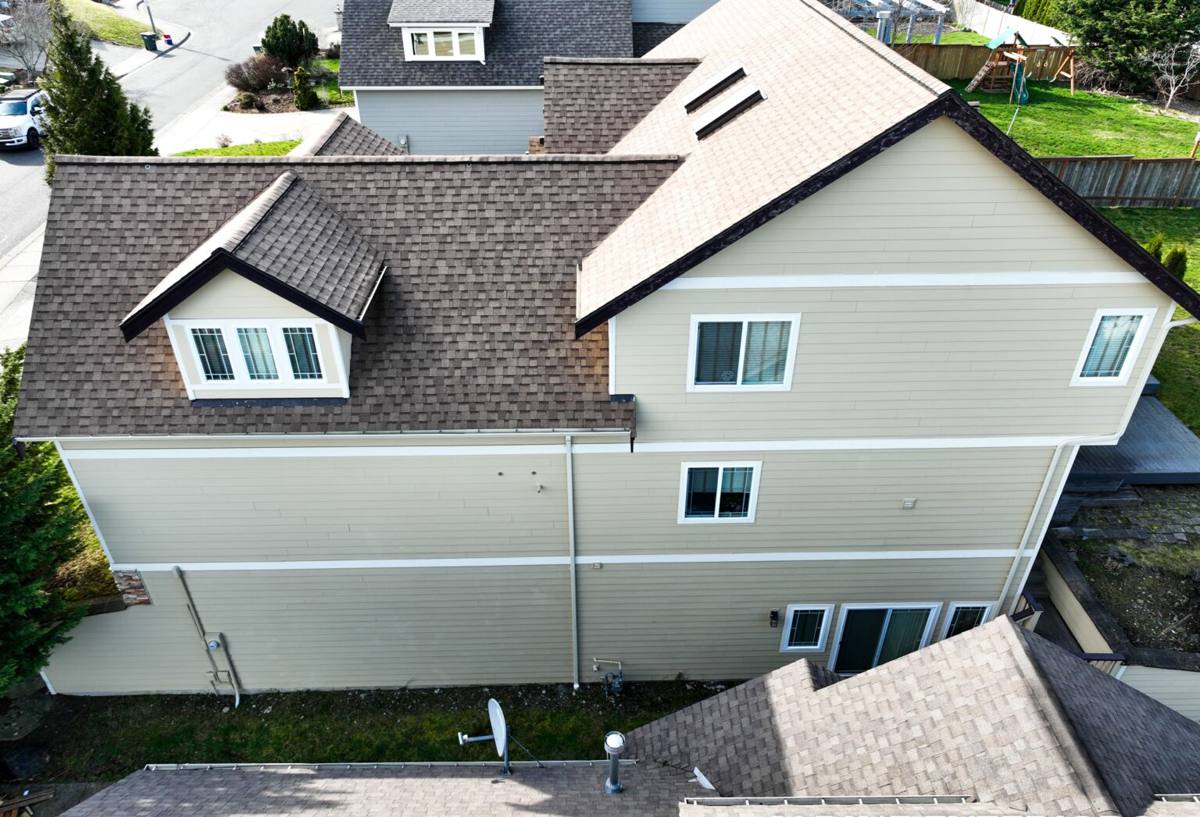
What Storm Damage Actually Looks Like Out Here
Not all storm damage announces itself with a hole in the roof. In Kendall and the surrounding Lynden area, we more often find damage that's been quietly working on a roof for weeks before anyone notices water inside.
Wind and Rain Damage
- Shingles lifted, cracked, or torn loose at ridge lines and roof edges, where wind uplift is strongest
- Flashing pulled away from chimneys, skylights, or wall intersections after repeated flexing in gusts
- Fascia and soffit damage where wind-driven rain gets pushed up under roof edges instead of running off
- Gutter and downspout separation, which redirects water back toward the fascia and siding
Moss and Moisture Damage
Whatcom County's long, wet, mild winters are close to ideal growing conditions for moss, and Kendall's tree cover and shaded rooflines make it worse. Moss doesn't just look bad — it holds water against the shingle surface long after a storm has passed, which accelerates granule loss and, over time, lets moisture work its way under the shingle tabs. A storm that would have been a non-event on a clean roof can turn into an active leak on a moss-covered one, because the moss has already broken down the roof's ability to shed water quickly.
What a Correct Storm Repair Involves
A proper storm damage repair isn't just replacing what's visibly missing. It's a sequence, and skipping steps is how homeowners end up calling us back for the same leak six months later.
1. Full Roof Inspection, Not Just the Damaged Spot
Wind damage rarely stays confined to one area. We check the whole roof plane, not just where the homeowner spotted the problem, because a gust strong enough to lift one section usually stressed the fasteners nearby too. We also check the attic or roof deck from the inside where accessible, since water stains often show up several feet from where the actual entry point is.
2. Deck Condition Check
Before any new shingles or flashing go down, we confirm the roof deck underneath is sound. Water that's been getting in for a while — especially under moss — can soften plywood or OSB sheathing. Repairing over a soft deck doesn't hold, and it's the kind of shortcut that shows up as a sagging or spongy spot within a year or two.
3. Matching Repair to Cause
Loose shingles from wind get properly re-secured or replaced with matching material, not just glued down. Flashing failures get rebuilt with new flashing and correct sealant, not just caulked over — caulk alone is a temporary patch, not a repair. Moss-related granule loss and shingle degradation gets addressed at the source, including safe moss removal and treatment, not just a patch over the worst spot.
4. Water Path Correction
If gutters, downspouts, or grading were part of why water found its way in, we flag that as part of the repair conversation. A roof repair that ignores a gutter dumping water back under the eave is only solving half the problem.
Why a Crew That Already Works Kendall Matters
Kendall isn't downtown Lynden, and it isn't Bellingham. Properties out here tend to have more tree cover, longer driveways, well systems, and rooflines shaped by decades of local building habits rather than subdivision uniformity. A crew that regularly works this part of Whatcom County already has a feel for which roof styles hold moss longest, which orientations take the worst of the wind, and what materials actually hold up here versus what looks good in a brochure.
That local familiarity also matters for response time after a storm. When wind damage happens, the first 24-48 hours matter — a temporary tarp or seal on an exposed area can be the difference between a straightforward repair and a full deck replacement after prolonged water exposure. A crew based near Lynden can get eyes on a Kendall roof quickly instead of routing a job through a distant office first.
Repair vs. Replacement: How We Decide
Not every storm-damaged roof needs a full replacement, and we don't default to recommending one. The decision comes down to a few honest factors.
| Factor | Leans Toward Repair | Leans Toward Replacement |
|---|---|---|
| Age of roof | Under roughly half its expected lifespan | Near or past manufacturer-rated life |
| Extent of damage | Isolated to one section or a few components | Widespread across multiple roof planes |
| Deck condition | Sound, dry sheathing underneath | Soft, delaminated, or water-stained sheathing |
| Moss history | Minor surface growth, recently treated | Long-term uncontrolled growth affecting shingle integrity |
| Prior repairs | First significant repair needed | Multiple past patches in different areas |
We walk through this with the homeowner directly, in plain terms, and we'll say so if a repair is the honest answer even when a replacement would be the bigger job for us. A roof that's structurally sound and only lightly damaged doesn't need to be torn off.
Materials and Fasteners for Wind-Exposed Roofs
Where a Kendall roof sits more exposed to open wind — fewer windbreak trees, a ridge that catches the prevailing southwest gusts — we pay closer attention to fastener count and placement during repair, not just shingle brand. A shingle that's rated for high wind but under-nailed will still lift. We follow manufacturer nailing patterns for the wind zone rather than a generic minimum, since that's usually the actual reason a roof loses shingles in a storm that a neighboring roof handled fine.
For flashing, we use materials sized and formed for the specific joint — chimney step flashing, valley flashing, wall flashing — rather than trying to stretch one universal piece across a repair. Undersized or improvised flashing is one of the more common causes of a "repaired" leak coming back after the next hard rain.
Moss Prevention After the Repair
Fixing storm damage without addressing moss is a short-term win. Since moss regrowth is close to guaranteed in this climate without some ongoing attention, we talk through realistic prevention options as part of the repair, not as an upsell afterward.
- Physical moss removal using methods that don't scrape or damage granule surfaces
- Zinc or copper strip installation near the ridge, which discourages regrowth as rain washes trace metal down the roof slope
- Trimming back overhanging branches where practical, to reduce shade and debris buildup
- Keeping gutters clear so trapped organic debris doesn't feed new moss growth at the edges
None of these are one-time fixes. They reduce how fast moss comes back, which in turn reduces how often you're dealing with moisture-related roof problems at all.
What We Check Before We Ever Touch the Roof
Every storm repair starts with an honest look, in person, before any work or pricing is discussed.
- Visible exterior damage: missing, cracked, or lifted shingles, damaged flashing, gutter separation
- Interior signs: attic moisture, ceiling stains, musty odor in upper rooms
- Deck integrity: soft spots, sagging, or discoloration from below
- Moss extent and location, and how long it's likely been established
- Age and general condition of the roofing system as a whole
We put this in writing so the homeowner has a clear record of what was found, which is also useful if an insurance claim is involved.
A Straightforward Process
Our process for a Kendall storm repair is simple by design: an in-person inspection with photos and a written assessment, a clear explanation of what caused the damage and what's needed to fix it correctly, an honest repair-versus-replacement recommendation, and a scheduled repair using materials and fastening appropriate for this area's wind and moisture exposure. We don't push replacement when a repair will hold, and we don't quote a patch job when the deck underneath needs real attention.
If a recent storm left your Kendall roof with missing shingles, a new leak, or just some worrying moss buildup you'd like looked at before it becomes a bigger problem, we're glad to come take a look. Reach out for a free, no-pressure estimate using the form below.