 Lynden Exterior
 Why Sumas Decks Wear Out Faster Than You'd Expect
Decks in Sumas and the surrounding Lynden area take a different kind of beating than decks in drier parts of the country. It isn't one big storm that does the damage — it's the steady, months-long combination of driving rain, damp marine air moving in off the Sound, and a moss season that can stretch from October well into spring. Wood that stays wet for that long doesn't just look bad. It softens, checks, and eventually loses its structural integrity in exactly the places you can't see from the top: ledger boards, joist hangers, and post bases buried in soil contact or concrete.
We work on decks throughout Whatcom County, and Sumas properties tend to show a consistent pattern — moisture damage concentrated on the north and shaded sides of the structure, moss buildup in low-traffic corners, and fastener corrosion wherever water collects instead of draining. Understanding that pattern is the difference between a repair that lasts and one that just covers up a problem for a season.
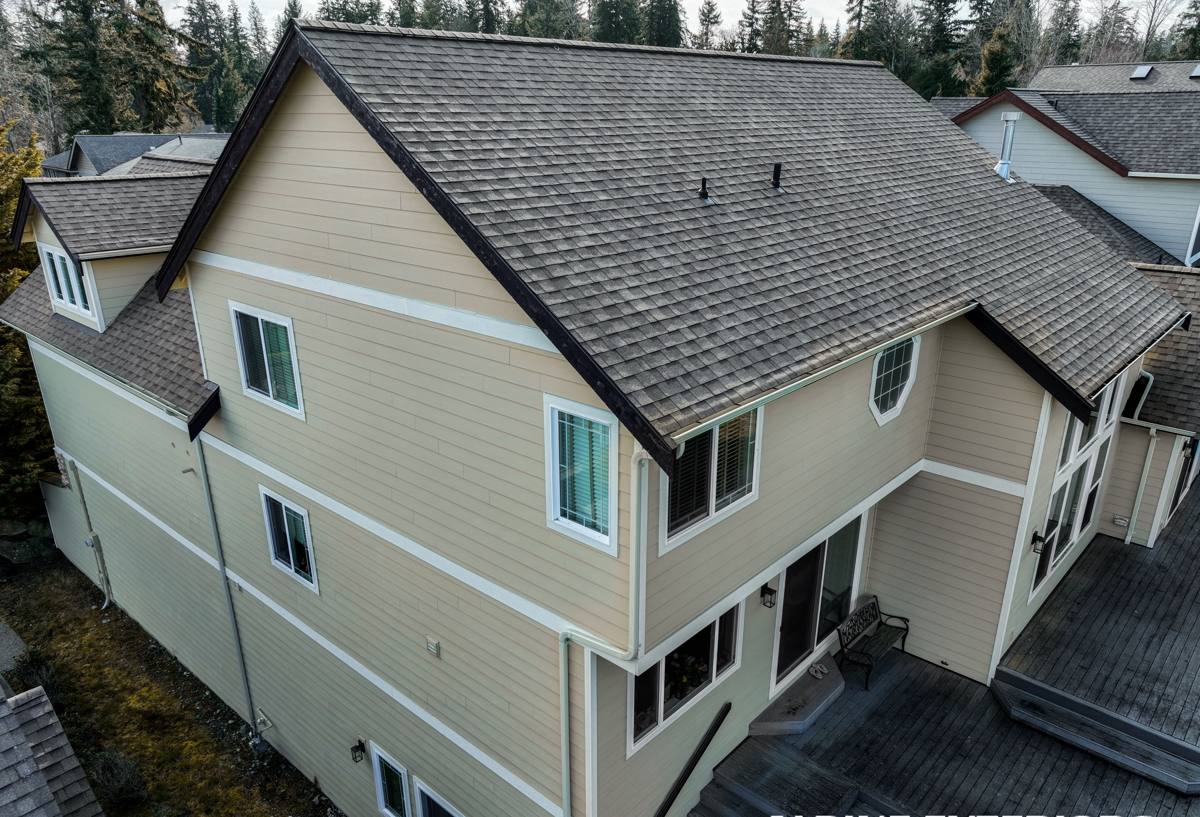
Signs Your Deck Needs Repair, Not Just a Cleaning
A lot of deck problems in this climate look cosmetic at first — dark streaking, a green tinge, boards that feel a little spongy underfoot. Some of that is surface-level and comes off with proper cleaning. But a few signs mean the damage has gone deeper and a repair (not just maintenance) is overdue:
- Boards that flex or feel soft when you press on them, especially near the house
- Visible gaps opening up where the deck meets the ledger board attached to the house
- Railings or posts that wiggle more than they used to
- Rust streaks running down from fasteners or joist hangers
- Moss or algae that keeps coming back within weeks of cleaning
- Stair stringers that feel uneven or bounce when you walk down them
Any one of these on its own might be minor. Two or three together usually means water has been getting into the structure for a while, and it's worth having someone actually get underneath the deck and look, not just walk the surface.
What a Correct Deck Repair Actually Involves
Start Below the Surface
The single biggest mistake we see on deck repairs — whether it's a homeowner's own patch job or a rushed contractor bid — is replacing the boards people can see while ignoring the framing underneath. A deck is only as good as its ledger connection, its joists, and its posts and footings. If those are compromised, new decking on top just buys a little time before the same problems resurface.
The Ledger Board Is Priority One
The ledger is the board that attaches the deck to your house, and in a climate with this much sustained rain, it's the single most common failure point we find. Poor flashing, or flashing that was never installed correctly in the first place, lets water track behind the ledger and rot it from the inside. This is also the connection responsible for holding the whole deck to the structure, so any softness or separation here gets fixed before anything else.
Posts, Footings, and Joists
Next we check post bases for rot at the soil line, confirm footings haven't shifted or heaved, and inspect joists for soft spots, splitting, or hanger corrosion. Galvanized hardware that looked fine five years ago can be badly corroded by now if it's been sitting in a damp pocket that never fully dries out between rains.
Then the Visible Repairs
Once the structure underneath is sound, we address what you actually see: split or cupped decking boards, loose or rotted railings, worn stair treads, and any spots where moss has etched into the wood grain. Refastening loose boards with the wrong screws or just painting over rot is common shortcut work — it looks finished in photos but doesn't hold up through another wet season.
Common Repair Scenarios We See Around Sumas
| Problem | Likely Cause | Typical Fix |
|---|---|---|
| Soft, spongy decking near the house | Failed or missing ledger flashing | Remove affected boards, correct flashing, replace ledger section if rotted |
| Wobbly railings or posts | Corroded fasteners, rot at post base | Replace hardware with corrosion-resistant fasteners, sister or replace posts |
| Recurring moss and algae | Poor drainage, shaded/low-airflow areas | Clean and treat surface, improve gaps between boards, adjust grading if needed |
| Uneven or bouncy stairs | Rotted or undersized stringers | Sister or replace stringers to current framing standards |
| Rust streaking from fasteners | Standard steel screws/nails in a wet climate | Re-fasten with stainless or coated exterior-rated hardware |
Repair vs. Replace: How We Help You Decide
Not every deck with problems needs to come out. As a general rule: if the framing — ledger, joists, posts, footings — is sound and the damage is limited to decking boards, railings, or stairs, repair is usually the right call and the more cost-effective one. If rot has spread through multiple structural members, or the deck was undersized or poorly built to begin with, sinking repair money into it can end up costing more than starting fresh. We'll tell you honestly which situation you're in — our job is to fix what's fixable, not to sell a full rebuild when a repair will hold up fine.
Our Repair Process
1. On-Site Assessment
We inspect from below whenever access allows, not just from the top. That means checking ledger connections, post bases, joist condition, and drainage patterns specific to your property's exposure and shade.
2. Straight Answer on Scope
You get a clear explanation of what's structural versus cosmetic, what's urgent versus what can wait a season, and a written estimate before any work starts.
3. Fix the Structure First
Any framing, flashing, or connection repairs happen before surface work, so the deck is sound underneath, not just refinished on top.
4. Surface and Finish Work
Board replacement, railing repair, stair work, and fastener upgrades come next, matched as closely as possible to your existing deck unless you want to change direction on materials.
5. Walkthrough
We go over what was repaired, what to keep an eye on, and simple upkeep that fits our climate — nothing complicated, just what actually matters here.
Material Choices and Honest Trade-Offs
When we're replacing sections of decking, homeowners usually ask about wood versus composite. Both are reasonable choices, and the right one depends on your budget and how much upkeep you want to do:
- Pressure-treated or cedar decking costs less up front and is easy to spot-repair board by board, but it needs periodic sealing or staining to shed water well in a climate this wet.
- Composite decking resists moisture and moss better with less maintenance, but it costs more initially, and repairs typically mean replacing a full board rather than sanding or patching.
- Hardware and fasteners matter more than the decking material itself in this climate — stainless or coated exterior-rated fasteners are worth the small upfront cost difference over standard steel, which corrodes faster with this much sustained moisture.
We'll walk you through what fits your existing deck and your plans for it, without pushing an upgrade you don't need.
Simple Maintenance That Extends the Life of a Repair
A repair holds up longer when it's paired with a little seasonal upkeep. This isn't a big list, but it makes a real difference in a climate with this much sustained rain and moss pressure:
- Sweep debris out of board gaps before fall rains set in, so water has somewhere to drain
- Rinse off moss and algae before it has a chance to etch into the wood grain
- Check railings and stair treads for looseness once or twice a year
- Keep gutters and downspouts clear so runoff isn't dumping onto or near the deck
- Reseal or restain wood decking on the schedule the product recommends, not just when it looks faded
Why a Crew That Already Works in Sumas Makes a Difference
Deck repair isn't identical everywhere. A crew that regularly works Sumas and the greater Lynden area already knows where moisture tends to collect on local builds, how the region's rain patterns affect ledger and post connections, and what fastener and flashing choices actually hold up here versus what looks fine on paper. That local pattern recognition means fewer surprises once we open things up, and a repair plan built around how Whatcom County weather actually behaves — not a generic checklist.
If your deck has soft spots, loose railings, recurring moss, or you just want an honest look at whether repair or replacement makes more sense, we're happy to come take a look. Reach out for a free, no-pressure estimate using the form below.