 Lynden Exterior
 Why Decks in Sumas Wear Out Faster Than Homeowners Expect
Sumas sits close enough to the Nooksack lowlands and the Fraser Valley air flow that decks here take a beating most homeowners don't fully appreciate until they're kneeling down looking at soft, spongy boards. The combination of near-constant fall and winter rain, marine-influenced air moving in off the Salish Sea, and long stretches of overcast, low-sun days creates exactly the conditions wood and even some composite products struggle with: moisture that never fully leaves the structure, and moss and algae that get a foothold and don't let go.
Unlike a deck in a drier inland climate, a Sumas deck rarely gets a real dry-out period. Ledger boards, joists, and the underside of decking stay damp for weeks at a time in winter, and shaded north-facing decks can hold moisture almost year-round. That's the single biggest reason decks here fail from the inside out — rotten framing under boards that still look okay on top — rather than failing from obvious surface wear.
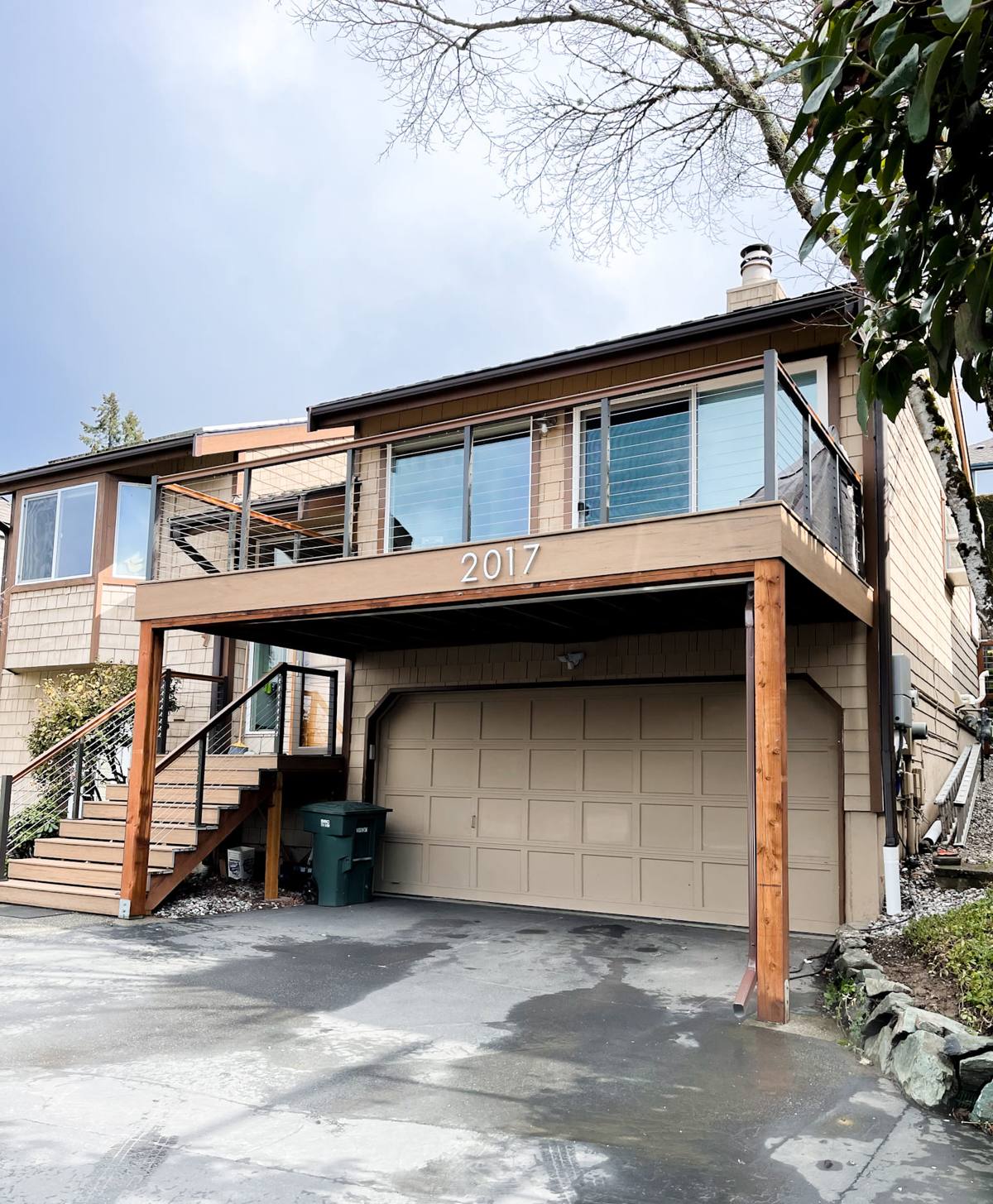
Repair or Replace? Signs the Deck Has Reached the End
Not every tired-looking deck needs full replacement, but in this climate, a lot of decks that "just need new boards" actually need a lot more once you get underneath them. Here's how we tell homeowners to think about it before calling anyone:
- Soft or spongy spots when you walk the deck, especially near the house or in shaded corners
- Visible moss or dark staining that keeps coming back within weeks of cleaning
- Rust streaks around fasteners, or fasteners that back out or spin freely
- Gaps opening up between boards, or boards cupping and warping
- A ledger board separation from the house, or flashing that's missing or failing
- Posts or footings that feel loose, or a railing that flexes when leaned on
- The deck is older than 15-20 years and has never had the substructure inspected
If you're only seeing one or two of these and the framing underneath is solid, board replacement or resurfacing can make sense. Once the ledger connection, joists, or posts are compromised, patching the surface just hides the problem for another season or two.
What a Correct Deck Replacement Actually Involves
It Starts Below the Boards, Not Above Them
A deck replacement done right in this climate is really a structural project with decking on top, not a decking project with a structure underneath. We start by evaluating the ledger attachment, joist condition, post and footing depth, and drainage path — the parts that never get inspected once decking is down and that determine whether the new deck lasts 10 years or 30.
Flashing and Water Management Come First
The ledger-to-house connection is where more Whatcom County decks fail than anywhere else. Proper flashing — a continuous metal flashing integrated with the house's water-resistive barrier, not just caulk over the old connection — is what keeps rain from tracking behind the siding and rotting the rim joist. Given how much rain this area sees over a winter, this step isn't optional, and it's one of the most common shortcuts we see on decks that failed early.
Framing Sized for Wet-Climate Loads
Joist spacing, beam sizing, and post footings need to account for the fact that wood framing here spends more of the year at higher moisture content than framing in a dry climate. That means correct fastener types (stainless or coated hardware rated for ground contact and moisture exposure), proper joist hangers instead of toe-nailing, and footings set below frost depth and sized for the soil conditions on the lot.
Choosing Decking Material for Sumas Weather
Every decking material handles rain, moss, and shade differently. There's no single "best" choice — it depends on how much sun the deck gets, how much maintenance the homeowner wants to do, and budget. Here's how the common options compare for a deck like yours in this climate:
| Material | Moss/Algae Resistance | Maintenance | Typical Lifespan Here |
|---|---|---|---|
| Pressure-treated wood | Low — needs regular cleaning and sealing | Annual cleaning, re-sealing every 1-2 years | 10-15 years |
| Cedar | Moderate — natural oils help but fade over time | Cleaning plus periodic oil/stain | 15-20 years |
| Capped composite | Good — cap layer resists staining, still needs washing | Periodic washing, no sealing | 25-30 years |
| PVC decking | Best — non-organic surface, moss has little to grip | Occasional washing | 30+ years |
On shaded or north-facing decks, which stay damp longest, we generally steer homeowners away from uncapped composite and untreated wood — the maintenance burden to keep moss at bay just isn't realistic for most people's schedules. That's a maintenance and moisture-behavior trade-off, not a knock on any specific manufacturer; every product has a place depending on the site conditions and what the homeowner is willing to keep up with.
Our Deck Replacement Process
- On-site evaluation — we look at the existing deck from the ground up: ledger, framing, footings, drainage, and surface condition, not just the boards
- Honest scope — we tell you plainly whether this is a full tear-out and rebuild or something less, and why
- Material walkthrough — we go over decking, railing, and fastener options against your budget and how the deck actually gets used and shaded
- Permit handling — we pull the necessary permits and coordinate inspections so the project is documented and code-compliant
- Demo and structural rebuild — old decking, framing, and any compromised posts or footings come out; new structure goes in with correct flashing and hardware
- Decking, railing, and finish work — boards, railing system, stairs, and any lighting or accessories are installed
- Final walkthrough — we go over the finished deck with you and cover basic care for whatever material you chose
Permits and Local Considerations
Deck replacement in Sumas and the surrounding unincorporated Whatcom County areas generally requires a building permit once you're doing structural work — new footings, a rebuilt ledger connection, or a deck over a certain height off grade. Guardrail height and baluster spacing are also governed by code, particularly on raised decks. We handle this as part of the job rather than leaving it to the homeowner to sort out, because an unpermitted deck rebuild can become a real headache at resale.
Lot conditions matter too. Some properties around Sumas sit on lower ground with heavier clay or seasonally wet soil, which affects footing depth and drainage planning. We check actual site conditions rather than assuming a standard footing spec will work everywhere in the area.
What Deck Replacement Costs Depend On
We're not going to throw out a number that means nothing without seeing your deck, but here's what actually moves the price on a project like this:
| Cost Factor | Why It Matters |
|---|---|
| Deck size and height off grade | Taller decks need more substantial framing, footings, and often stairs |
| Framing condition | Rotted joists, posts, or ledger issues add rebuild scope beyond surface replacement |
| Decking material chosen | Pressure-treated, cedar, composite, and PVC span a wide price range |
| Railing system | Basic wood rail vs. cable, glass, or composite rail changes both material and labor cost |
| Site access | Tight lots or decks over sloped ground can add labor time |
| Permit and inspection scope | Full structural rebuilds require more documentation and inspection steps |
Most full deck replacements land somewhere between a modest board-and-rail refresh and a full structural rebuild with premium decking — the honest range is wide until we've actually seen the site. We'll walk you through real numbers for your specific deck rather than a generic estimate that doesn't hold up once we're underneath it.
Keeping a New Deck Ahead of the Moss
Whatever material you choose, a little seasonal upkeep goes a long way in this climate. A quick checklist we give every homeowner after a replacement:
- Sweep off leaves and debris regularly in fall — trapped organic matter is what feeds moss growth
- Rinse or wash the deck surface at least once or twice a year, more often on shaded sections
- Check that gaps between boards stay clear so water can drain through instead of pooling
- Inspect the ledger flashing and any caulked joints once a year for gaps or wear
- Re-seal or re-stain wood decking on the schedule the product calls for — don't wait until it's visibly gray
- Keep gutters and downspouts near the deck clear so runoff isn't dumping directly onto it
Why It Matters to Hire a Crew That Already Works in Sumas
A contractor who only occasionally works this far north in Whatcom County can miss things that are obvious to a crew that's regularly out here — how a particular street's soil drains, how much shade a typical lot gets off the tree line, or how fast moss actually comes back on a given exposure. We build and replace decks throughout the Lynden and Sumas area regularly enough to know what actually holds up here versus what looks fine on paper. That local pattern recognition shows up in the flashing details, the footing depth, and the material recommendations we make — not just in the finished look of the deck.
If your deck is showing its age, or you're just not sure whether it's a repair or a full replacement, we're glad to take a look and give you a straight answer. Reach out for a free, no-pressure estimate using the form below — we'll walk the deck with you and tell you honestly what it needs.