 Lynden Exterior
 New Roof Installation Built for Sumas Homes
A roof in Sumas earns its keep. Between long stretches of driving rain, a moss season that seems to run longer every year, and the damp air that settles into the Nooksack lowlands, a roof here is under near-constant low-grade stress. It's rarely one dramatic storm that takes a roof down in this part of Whatcom County — it's years of moisture finding the same weak spot over and over. New roof installation done right for Sumas means building for that reality from the start, not just laying shingles and hoping the underlayment does all the work.
We install new roofs for homeowners throughout the Sumas area and the rest of Whatcom County, and we treat this as a local trade, not a one-size-fits-all product. What holds up on a dry-climate roof spec sheet doesn't always hold up here.
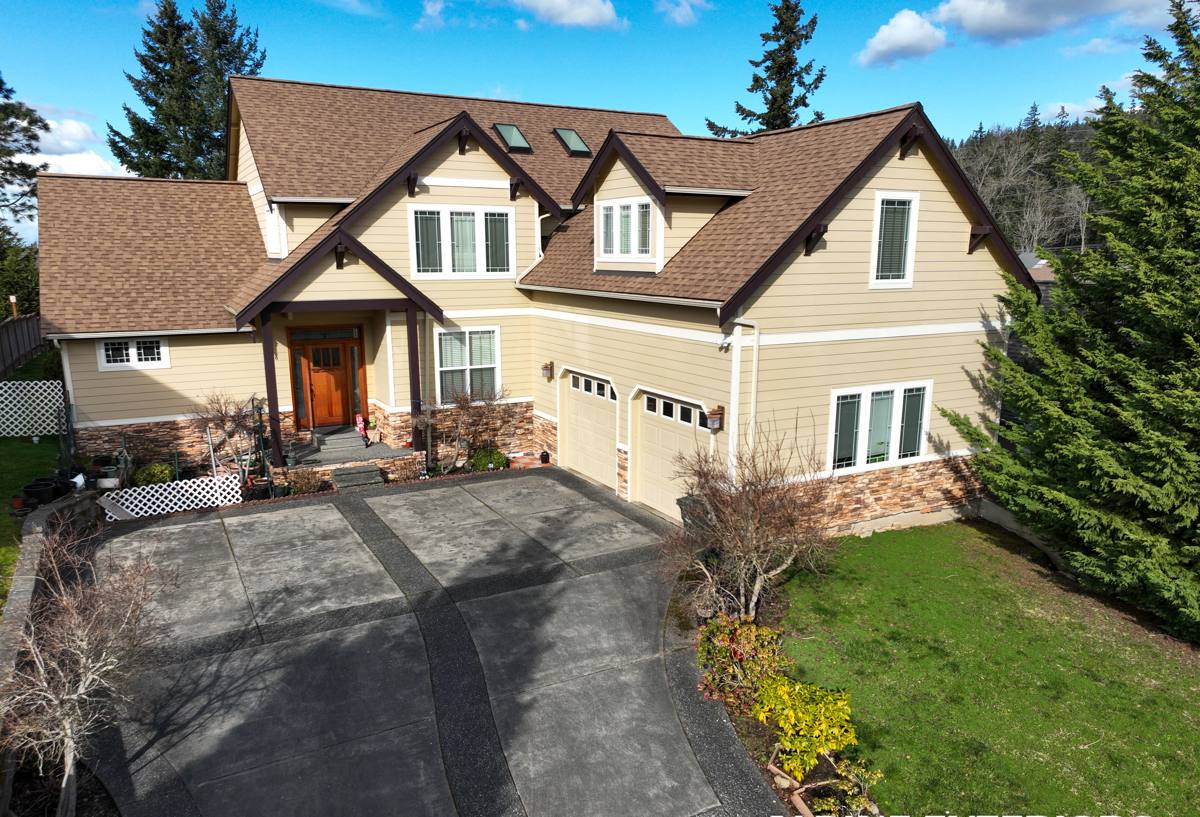
What the Local Climate Actually Does to a Roof
It helps to be specific about what a Sumas roof is fighting, because the failure modes are predictable once you've seen enough of them.
Driving Rain and Wind-Driven Moisture
Rain here doesn't always fall straight down. Wind-driven rain gets pushed sideways under shingle tabs, into exposed nail heads, and along ridge and hip lines that weren't detailed with enough care. Over time that moisture finds its way past a marginal underlayment and into the deck.
Moss and Organic Growth
Shade, moisture, and mild temperatures are exactly what moss wants, and Sumas has all three for a good chunk of the year. Moss doesn't just look bad — it holds water against the shingle surface, lifts tabs as it grows, and works itself under flashing edges. A roof with poor ventilation or a north-facing slope with heavy tree cover will grow moss faster than a well-ventilated, sun-exposed one, regardless of shingle quality.
Salt Air and Corrosion
Even away from the immediate coastline, moist marine air moves inland through this part of Whatcom County and accelerates corrosion on exposed metal — nail heads, flashing edges, and vent housings in particular. Cheap or mismatched fasteners show rust and staining well before the shingles around them are anywhere near worn out.
Freeze-Thaw Cycling
Sumas sees enough cold snaps mixed with wet weather that trapped moisture in a deck or underlayment can freeze, expand, and work joints loose over a few winters. It's slow damage, and it's usually hidden until a leak shows up somewhere unrelated to where the water actually got in.
What a Correct New Roof Installation Includes
A new roof is really a system of layered components, and skipping or shortcutting any one of them shows up later as a leak, a shortened lifespan, or a warranty claim that goes nowhere. Here's what we consider non-negotiable on any new roof install in this climate:
- Tear-off and deck inspection — every layer removed down to the sheathing, with rotten or delaminated deck sections replaced, not covered over.
- Ice and water shield at vulnerable points — eaves, valleys, and around penetrations, where wind-driven rain and ice damming are most likely to force water backward under the shingle line.
- A full synthetic underlayment across the whole roof, not just the code-minimum areas, as a second line of defense against the driving rain this area gets.
- Balanced intake and exhaust ventilation — soffit intake paired with ridge or box vents, sized correctly, to keep the attic dry and slow moss regrowth from the underside up.
- Corrosion-resistant flashing and fasteners at valleys, chimneys, skylights, and wall intersections — this is where salt-influenced air does the most damage over time, so material choice matters here more than almost anywhere else on the roof.
- Proper shingle or panel installation to manufacturer nailing and exposure specs — installation error, not material failure, is the most common cause of early roof problems we see.
- Ridge cap and hip detailing done with attention, since these are high-exposure lines that take the brunt of wind-driven rain.
Roofing Material Options for Sumas Conditions
There's no single "best" roofing material — the right choice depends on the home's roof pitch, tree coverage, budget, and how long the owner plans to stay. Here's how the common options stack up for this specific climate:
| Material | Moss & Moisture Resistance | Typical Lifespan | Maintenance Reality |
|---|---|---|---|
| Architectural asphalt shingle | Good with proper ventilation; moss-resistant algae-guard granules help | 25–30 years | Periodic moss treatment recommended in shaded areas |
| Standard 3-tab shingle | Fair; more prone to moss holding moisture at the tab edges | 15–20 years | More frequent moss and debris cleaning needed |
| Metal panel roofing | Excellent; sheds moisture and discourages moss growth on the surface | 40–50+ years | Low, but fastener and coating quality matter for corrosion resistance |
| Synthetic/composite shake | Good; resists moisture absorption better than wood shake | 30–40 years | Low to moderate |
We don't install every product on the market, and that's intentional. Some options that look appealing on a spec sheet come with maintenance burdens, moisture-handling quirks, or installation sensitivities that don't line up with our standards for a roof that has to perform in this climate for decades — we'd rather steer a homeowner toward something we can stand behind.
Signs a Sumas Home Needs a New Roof, Not Another Repair
Repairs make sense for isolated damage. A full replacement makes more sense once the roof is failing broadly. Watch for:
- Granule loss heavy enough to see bare spots or find granules pooling in gutters
- Shingles that are cupping, curling, or cracking across multiple slopes, not just one spot
- Moss coverage that comes back within a season or two of cleaning
- Soft spots in the decking felt underfoot or visible sagging along a roof line
- Daylight visible through the attic sheathing or consistent staining on attic rafters
- A roof approaching or past 20–25 years old with no major upgrades since installation
Our Process for a New Roof Installation
We keep the process straightforward because homeowners deserve to know what's happening on their own roof and when.
1. On-Site Assessment
We walk the roof, check the attic, and look at ventilation, flashing condition, and deck integrity before recommending anything. We're not selling a fixed package — we're diagnosing the actual roof.
2. Written Estimate and Material Selection
You get a clear breakdown of scope, material options, and cost factors, so the decision is based on what your roof and budget actually need, not pressure to upsell.
3. Tear-Off and Deck Repair
Old roofing comes off completely. Any compromised decking is replaced before anything new goes down — nothing gets covered up.
4. Underlayment, Flashing, and Ventilation Install
This is where a roof's long-term performance in Sumas is actually decided. We treat this stage with as much care as the visible shingle layer, because it's the layer doing the real work during a wind-driven rain event.
5. Final Install and Walkthrough
Shingles or panels go on to spec, the site is cleaned up, and we walk the finished roof with you so you know what was done and what to expect going forward.
Cost Factors for a New Roof in Sumas
Every roof prices out differently, but the variables that move the number the most are consistent:
- Roof size and number of facets, valleys, and penetrations
- Current deck condition and how much replacement it needs
- Pitch and accessibility — steep or high roofs take longer and require more safety setup
- Material choice, from standard asphalt shingle up through metal panel systems
- Ventilation upgrades needed to correct an under-ventilated attic
- Tear-off complexity if there are multiple existing layers to remove
We'd rather walk your specific roof and give you real numbers than throw out a broad range that doesn't mean much once the details come in.
Why a Local Crew Matters for This Job
A new roof installed by a crew that already works Sumas and the surrounding Whatcom County area understands what this climate does to a roof over its first few winters, not just on installation day. We know which details — flashing metal, fastener grade, ventilation balance — actually earn their cost here, and which upsells don't matter as much in this climate as they might elsewhere. That local judgment is what keeps a new roof performing at year fifteen, not just looking good at year one.
If you're weighing a new roof for a Sumas property, we're glad to come take a look and give you a straightforward, no-pressure estimate — just fill out the form below.