 Lynden Exterior
 Window Replacement Built for Acme's Climate, Not a Catalog
Acme sits in a part of Whatcom County that stays wet for most of the year. Rain doesn't just fall here — it drives sideways in a stiff wind, sits in shaded corners of a house for days, and works its way into anything that isn't sealed the way it should be. Add in the salt-tinged marine air that moves through the county and the moss season that seems to stretch longer every year, and you've got a climate that is genuinely hard on windows. A window that would last twenty years in a dry inland town can start failing in half that time out here if it wasn't installed with this specific weather in mind.
We're not talking about swapping in whatever window is on sale. We're talking about a job that accounts for how water moves around a window opening, how much moisture the wood or vinyl around it will see over a Whatcom County winter, and how the house will hold up ten and twenty years down the road. That's the standard we hold ourselves to on every Acme home we work on.
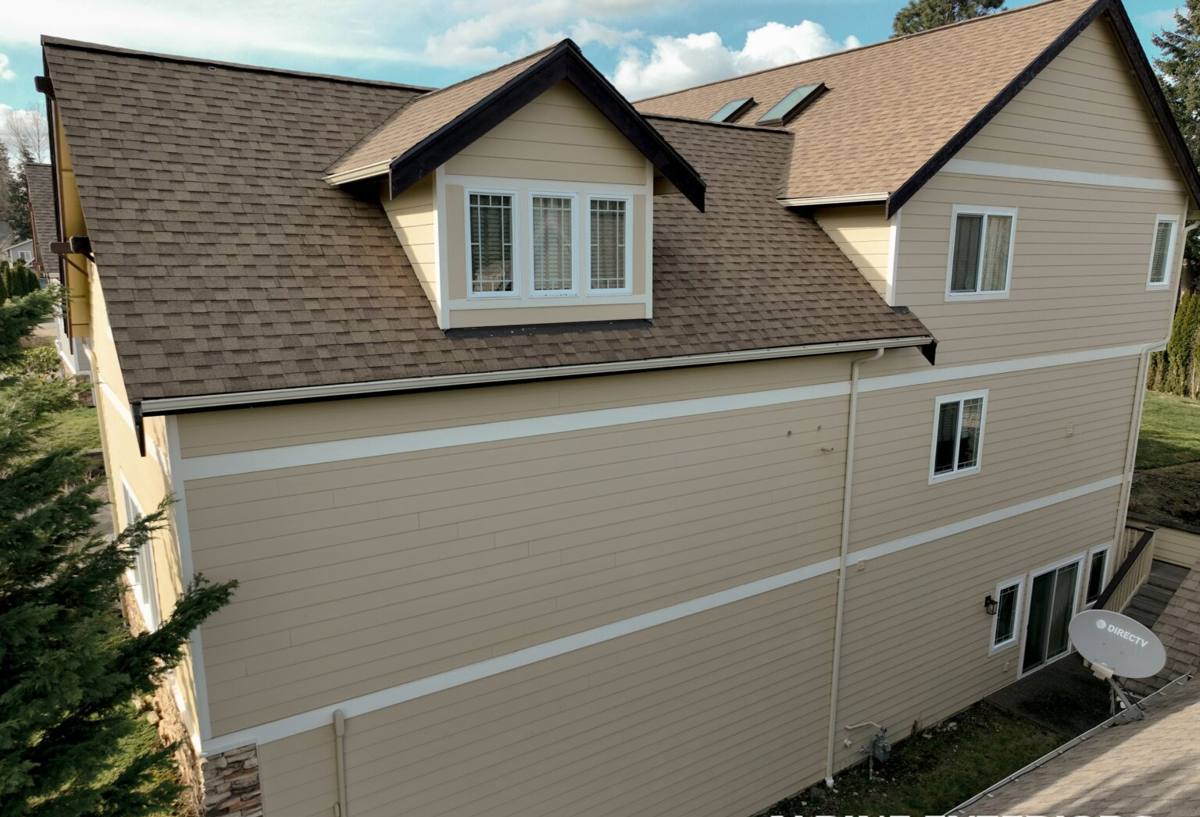
What Driving Rain and Moss Season Actually Do to Windows
It helps to understand the mechanics of why windows fail here, because it explains why the installation matters as much as the window itself.
Wind-Driven Rain Finds the Weak Points
Straight-down rain is easy on a house. Wind-driven rain is not — it gets pushed up and under trim, into nail holes, and behind flashing that was installed a little too casually. Over years, that moisture works into the wall framing around the window, not just the window itself. By the time you see a stain on the interior sill, the damage has usually been building for a while.
Moss and Constant Dampness Break Down Seals and Wood
Whatcom County's long, mild, wet stretch from fall through spring keeps north- and east-facing walls damp for months at a time. That's exactly the environment moss and mildew like, and it's also the environment that breaks down old glazing putty, dries out weatherstripping, and slowly rots exposed wood trim and sills. Once a wood sill starts to soften, water gets in faster, and the cycle speeds up.
Salt Air Adds to the Wear on Hardware and Finishes
The marine influence that moves through this part of the county carries a bit of salt with it. It's not the same exposure you'd get right on the water, but over enough years it still contributes to corrosion on window hardware, fasteners, and metal flashing — one more reason we don't cut corners on materials in the parts of the window system you don't see.
Signs an Acme Home's Windows Need Replacing, Not Patching
Not every window problem means full replacement. But there's a point where repair stops being the honest answer. Here's what we look for:
- Fogging or a permanent haze between panes on double-glazed windows — the seal has failed and can't be repaired
- Soft, spongy, or visibly rotted wood at the sill or bottom corners of the frame
- Windows that are hard to open, won't stay open, or don't latch tightly
- Visible daylight or a noticeable draft around the frame when it's windy
- Peeling paint or bubbling finish concentrated around the window opening, which usually points to moisture getting into the wall
- Noticeable moss or dark streaking building up on the frame or sill faster than the rest of the exterior
- A jump in heating costs without any other obvious cause
If you're only seeing one or two of these and the frame is still solid, a repair or re-seal might be the right call. If you're seeing several, or there's rot involved, replacement is almost always the more honest recommendation — and the more cost-effective one over time.
What a Correct Window Replacement Job Actually Involves
This is where a lot of window jobs go wrong, and it's rarely the window's fault. It's the details around it.
Before the Old Window Comes Out
We check the condition of the rough opening and the framing underneath the old window. In a climate like this, it's common to find some degree of moisture damage that wasn't visible from inside or outside. That gets addressed before anything new goes in — installing a new window over a compromised opening just hides the problem for a few more years.
Flashing and Water Management
This is the single most important part of the job for a house in Whatcom County. Proper flashing — installed in the right order, lapped correctly so water sheds outward and downward — is what keeps wind-driven rain from getting behind the window and into the wall. We use a house wrap and flashing sequence that's built for this, not a shortcut version.
Sealing and Insulation
The gap between the window frame and the rough opening gets properly insulated and sealed — not just caulked around the outside edge. A window that's air-sealed correctly performs better in both directions: it keeps heat in during the winter and keeps the damp, moss-friendly outside air out.
Finish Work
Trim, caulking lines, and paint or stain on any exposed wood get finished so water has nowhere to sit. Small details — like making sure the bottom of trim boards aren't tight against a horizontal surface where water can pool — make a real difference in how long the job lasts.
Choosing the Right Window for This Climate
There isn't one "best" window material for every home — it depends on the house, the budget, and how much maintenance you want to take on. Here's how the common options compare for a wet, moss-prone climate like Acme's:
| Frame Material | Moisture Performance | Maintenance | Typical Fit |
|---|---|---|---|
| Vinyl | Very good — won't rot, resists moss and mildew buildup | Low — occasional cleaning | Most Acme homes; best value |
| Fiberglass | Excellent — very stable in wet/dry cycling, holds paint well | Low to moderate | Homes wanting a higher-end feel or custom color |
| Wood (clad exterior) | Good if the exterior cladding is intact; interior wood still needs upkeep | Higher — finish needs monitoring | Older or historic-style homes where wood interior trim matters |
| Aluminum | Prone to condensation and corrosion over time in this climate | Moderate to high | Rarely our first recommendation here |
For most Acme homes, we lean toward vinyl or fiberglass because they hold up to years of wet weather without the ongoing maintenance that wood exteriors demand. That's a judgment based on how these materials behave under sustained moisture exposure, not a knock on any particular brand — every material has a place, and we'll walk you through the honest trade-offs for your specific house.
Our Process, Start to Finish
- On-site assessment — we look at every window being considered, check the framing and sills, and identify any moisture damage before quoting anything
- Straightforward estimate — a clear breakdown of window options, labor, and any repair work the opening needs
- Scheduling around the weather — we plan installation days with Whatcom County's rain patterns in mind so openings aren't sitting exposed
- Removal and inspection — old windows come out, and we address any rot or damage we find in the opening
- Installation — proper flashing, air sealing, and insulation around each window
- Finish and cleanup — trim, caulking, and a full site cleanup before we consider the job done
- Walkthrough — we go over the finished work with you and make sure every window operates the way it should
Why It Matters That We Already Work in Acme
A crew that regularly works Acme and the surrounding Lynden area knows how this specific stretch of Whatcom County behaves — which wall orientations take the worst of the wind-driven rain, how much moss buildup is normal versus a warning sign, and how local homes were typically framed and finished. That knowledge shows up in small decisions on the job: how much of the old framing to open up and check, which flashing details matter most, where to add extra attention that a crew unfamiliar with the area might skip.
It also means straightforward logistics — permitting through the appropriate local jurisdiction, sourcing materials without delay, and being reachable if a question comes up after the job is done. You're not dealing with a crew that drove in from out of the area for one job and is gone the next day.
What Affects the Cost of a Window Replacement Project
| Factor | Why It Matters |
|---|---|
| Number and size of windows | The most direct driver of total project cost |
| Frame material chosen | Vinyl, fiberglass, and clad-wood options carry different price points |
| Condition of the existing opening | Rot repair or reframing adds labor beyond a straightforward swap |
| Window style | Simple sliders and single-hungs cost less than bays, custom shapes, or large picture windows |
| Access and site conditions | Second-story windows or tight access can add time |
We don't quote a job until we've actually looked at the windows and openings in person — a phone estimate for window replacement almost always misses something, especially when there's a chance of hidden moisture damage.
A Straightforward Next Step
If your Acme home has windows that are fogging, drafty, hard to operate, or showing signs of moisture damage around the frame, it's worth having someone look at them before another wet season adds to the damage. We offer free, no-pressure estimates — you'll get a clear look at what's going on with your windows and honest options for fixing it, whether that's a full replacement or something less involved. Fill out the form below to get started.