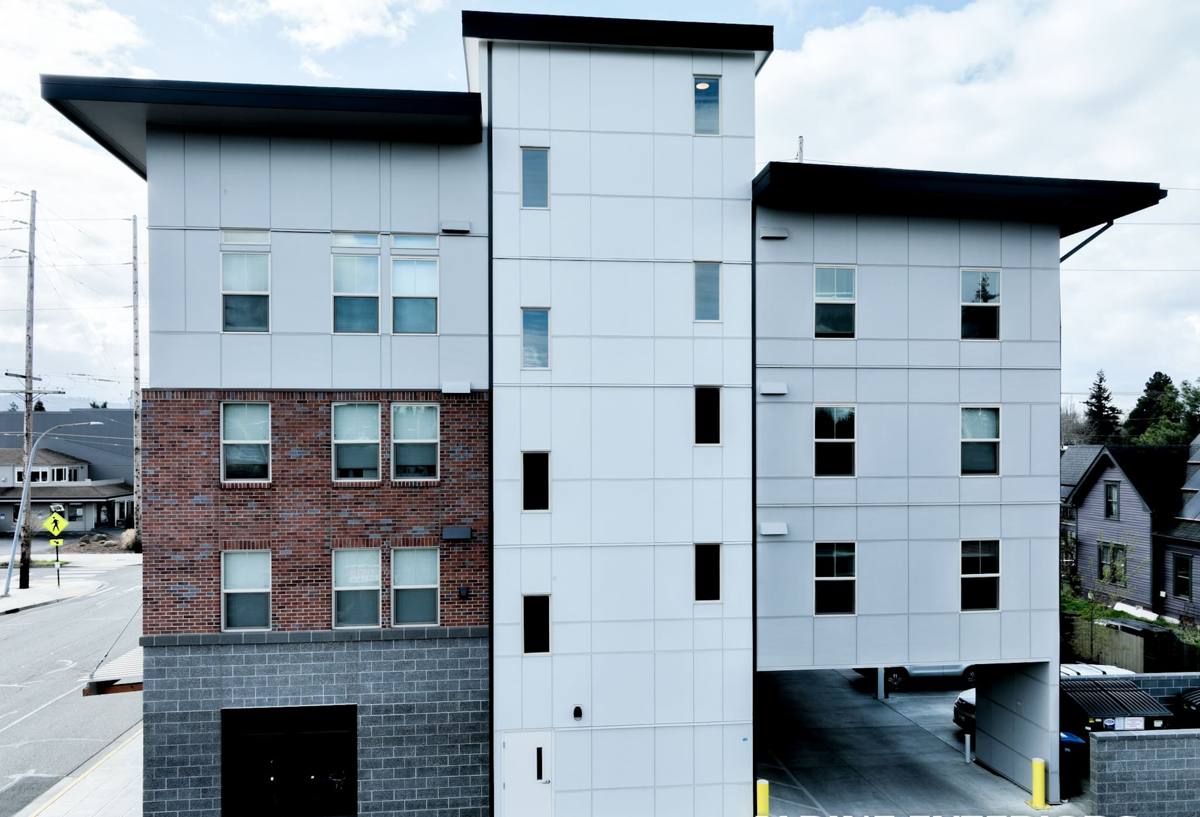
 Lynden Exterior
 Windows in Sumas Take a Different Kind of Beating
Sumas sits in a corner of Whatcom County where weather doesn't just pass through — it settles in. Between the marine air pushing in off the Salish Sea, long stretches of driving rain, and a moss season that can run from fall through spring, window assemblies here work harder than they do in drier parts of the state. Frames, sills, and seals are constantly cycling between wet and dry, and that cycle is what eventually breaks a window down — not one big storm, but years of small ones.
A window that was installed correctly and is still within its service life can shrug all of that off. A window that was installed with a shortcut, or one that's simply reached the end of its sealant and hardware life, starts showing it in specific, predictable ways. That's what this page is about: what actually goes wrong with windows in this climate, what a correct replacement job looks like, and how we handle it for homes in and around Sumas.
What Actually Fails First
Most homeowners don't call us because a window "looks old." They call because something specific started happening. In this climate, it's usually one of these:
- Fogging or a permanent haze between the panes — the insulated glass seal has failed and moisture is trapped inside the unit
- Soft, discolored, or spongy wood at the sill or lower corners of the frame — water has been getting behind the trim, not just on it
- Moss or dark streaking building up on the sill and lower sash faster than it can be cleaned off
- Drafts or a cold spot near the window even with it fully latched
- Hardware that's pitted, stiff, or corroded — common on older aluminum and lower-grade vinyl hardware exposed to salt-laden marine air
- Visible daylight or water staining at the interior trim after a hard rain
Any one of these on its own might be a repair. Several of them together, especially on a window more than 20 years old, usually means the frame and seal system are past the point where patching makes sense.
What a Correct Window Replacement Job Actually Involves
Swapping a window sounds simple — remove the old one, set the new one, caulk the edges. Done that way, it will leak within a few seasons in this climate. Water in Whatcom County doesn't just fall straight down; wind-driven rain pushes it sideways and up under trim, which means the water management layers behind the visible frame matter as much as the window itself.
Full-Frame vs. Insert Replacement
There are two honest approaches, and which one applies depends on the condition of the existing frame:
- Insert (pocket) replacement — a new window is fitted into the existing, sound frame. Faster and less invasive, but only appropriate when the old frame and sill are still structurally solid and properly flashed.
- Full-frame replacement — the window is removed down to the rough opening, the sheathing and framing are inspected, and new flashing, sill pan, and weather barrier are installed before the new window goes in. This is the right call whenever there's evidence of past water intrusion, rot, or a frame that was never flashed correctly to begin with.
We won't default to the cheaper option if the wall behind it tells us otherwise. Covering up a wet or rotted frame with a new window is the single most common reason a "recent" window replacement fails early.
The Details That Actually Stop Water
Regardless of which approach fits, the same fundamentals apply: a sloped sill pan that sheds water outward instead of trapping it, flashing tape integrated with the house wrap in the correct shingle-lap order, backer rod and a proper exterior sealant joint (not just a bead of caulk over a gap), and shims and fasteners set so the frame stays square and doesn't bow under wind load. None of these steps are visible once the trim goes back on — which is exactly why they're the steps worth asking about before hiring anyone.
Choosing the Right Window for This Climate
Material choice matters more here than in a dry climate, because the frame is dealing with sustained moisture exposure, not occasional rain. Here's how the common options actually hold up:
| Material | How it handles PNW moisture | Maintenance | Best fit |
|---|---|---|---|
| Vinyl | Won't rot; seams and welded corners are the main long-term watch point | Low — occasional cleaning | Most homes; best value for the climate |
| Fiberglass | Very stable dimensionally, resists moisture and temperature swings well | Low | Larger openings, homes wanting a slimmer sightline |
| Wood-clad | Exterior clad protects the wood, but any breach in the cladding lets moisture reach the wood core | Higher — cladding seams need periodic inspection | Homes prioritizing an interior wood look, willing to maintain it |
| Bare aluminum | Conducts cold and is prone to condensation and hardware corrosion in marine air | Moderate | We don't recommend it for this climate as a primary frame material |
We steer most Sumas and Lynden homeowners toward vinyl or fiberglass for the frame simply because they don't give moisture a food source or a corrosion path — that's a maintenance-burden and longevity call, not a knock on wood-clad windows done and maintained properly.
Glass Package
Washington's energy code sets minimum performance requirements for replacement windows, and in this part of the state you want to meet or beat them, not just hit the floor. A double-pane unit with Low-E coating and argon fill is the standard baseline we install; it cuts heat loss, reduces condensation on the interior glass in winter, and holds up to the temperature swings between a cold, damp night and a sunny afternoon. Triple-pane is available and worth discussing for north-facing rooms or homes right along a windy exposure, but it's a real cost jump and isn't necessary on every elevation.
Our Process, Start to Finish
- On-site assessment — we look at each window individually, not just the house as a whole. Sun exposure, wind exposure, and existing damage vary window to window.
- Honest scope — we tell you which openings are candidates for insert replacement and which need full-frame work, and why, before any number gets attached.
- Written estimate — material, method, and price in writing, no verbal-only quotes.
- Removal and inspection — old units come out, and we inspect the framing and sheathing before anything new goes in. If we find rot or prior water damage, we show you before covering it up.
- Water management first — sill pan, flashing, and weather barrier integration happen before the window is set.
- Set, shim, and seal — window is set square and plumb, fastened per manufacturer spec, and sealed with a proper exterior joint.
- Interior and exterior finish — trim, casing, and paint or caulk lines are finished to match the rest of the house.
- Final walkthrough — every window operates, locks, and seals correctly before we call the job done.
Permits and Local Code
Window replacement in Whatcom County can require a permit depending on scope — particularly when an opening is being enlarged, a full-frame replacement changes the structural opening, or the work is part of a larger project. Bedroom windows also have to meet egress requirements for size and sill height, which occasionally affects what can go into an existing rough opening without additional framing work. We handle the permit determination and paperwork as part of the job rather than leaving it for the homeowner to sort out, and we won't tell you a permit isn't needed just to move the job along faster.
Why a Crew That Already Works Sumas Matters
Sumas is a small border community, and its housing stock and weather exposure aren't identical to Bellingham thirty minutes south or the drier east side of the state. A crew that already works this part of Whatcom County has a feel for which elevations of a house take the worst of the wind-driven rain, how fast moss builds back on a north-facing sill, and what a properly flashed opening needs to hold up through a full wet season rather than just look finished on install day. That familiarity shows up in fewer callbacks, not in anything flashy — it's the difference between a window that's still tight in five years and one that needs recaulking after the second winter.
Being local also means a straightforward answer if something does come up after the job — no waiting on a crew that has to drive in from out of the area.
What to Check Before You Commit
- Ask whether they're proposing insert or full-frame replacement, and why — the answer should depend on your frame's actual condition, not a default
- Ask what happens if they find rot or water damage once the old window is out — get that answer in writing, not verbally
- Confirm the glass package (Low-E, argon, U-factor) meets Washington's current energy code minimums for your window type
- Ask who pulls the permit, if one is needed, and who is responsible for inspection sign-off
- Get material, warranty terms, and installation warranty in writing — separately, since they're not the same thing
- Confirm the crew is licensed, bonded, and insured in Washington State before any work starts
Cost Factors Worth Understanding
Every home is different, and we won't quote a number without seeing the openings, but these are the factors that actually move the price:
| Factor | Why it changes the price |
|---|---|
| Insert vs. full-frame replacement | Full-frame involves more labor, materials, and finish work at each opening |
| Frame material | Vinyl, fiberglass, and wood-clad carry different material costs |
| Glass package | Triple-pane and specialty coatings cost more than a standard Low-E double-pane unit |
| Window size and configuration | Larger units, custom shapes, or operable-heavy configurations (casements, sliders) cost more than a standard double-hung |
| Existing damage | Rot or water damage found during removal adds repair scope before the new window goes in |
| Access and story height | Second-story or hard-to-access openings take longer and may need additional safety setup |
Broadly, straightforward insert replacements on standard-size openings sit at the lower end of the range; full-frame work with repair, larger or custom units, and upgraded glass push toward the higher end. We'll break your specific numbers down line by line rather than handing you a single lump figure.
Get a Straight Answer on Your Windows
If your windows in Sumas are fogging, drafty, or showing rot at the sill, we'll come take a look, tell you honestly whether it's a repair or a replacement situation, and walk you through what a correct job would involve for your specific home. The estimate is free, there's no pressure attached to it, and you can use the form below to get started.