 Lynden Exterior
 Deck Repair Built for Wiser Lake's Wet, Shaded Conditions
Wiser Lake sits in a pocket of Whatcom County where mature tree cover, lake humidity, and long stretches of overcast weather combine to keep outdoor structures damp far more of the year than homes closer to open ground. Decks here don't fail because the wood is bad or the builder cut corners — they fail because Lynden's climate is genuinely hard on horizontal wood and composite surfaces, and most decks aren't detailed to shed water as fast as they need to. A deck repair here has to account for shade, standing moisture, and the moss and algae growth that comes with both, not just patch the boards that look bad.
We work on decks around Wiser Lake regularly, and the repair calls we get tend to follow a pattern: a soft spot near the house where the ledger board meets the siding, slick green growth on boards that never fully dry out, and fasteners that have started to bleed rust into the wood grain. None of that is unusual for this area — it's just what happens when a deck goes a few years without the right kind of attention.
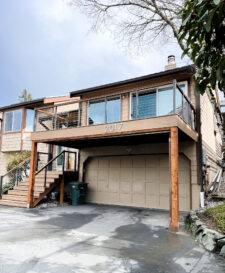
How Whatcom County Moisture Damages a Deck Over Time
Salt-tinged air off the sound, driving rain through the fall and winter, and a moss season that can stretch from October into May all chip away at a deck in different ways. Understanding how the damage actually happens helps explain why a proper repair looks different from a quick board swap.
Moss and Algae
Shaded, lake-adjacent lots stay damp longer after every rain, and that moisture combined with organic debris (needles, leaf litter, pollen) gives moss and algae exactly what they need to take hold on decking boards, especially on the north side of a house or under tree canopy. Once established, moss holds water against the wood surface around the clock, which accelerates rot underneath even when the top of the board still looks intact.
Fastener Corrosion
Damp, salt-influenced air corrodes standard fasteners faster than it does in drier inland climates. Rusted nails or screws lose their grip, boards start to lift or squeak, and rust streaks bleed into the surrounding wood — a cosmetic problem at first that becomes a structural one if the fasteners fail entirely.
Ledger Board and Framing Rot
The ledger board — where the deck attaches to the house — is the single most important structural connection on most decks, and it's also the part most exposed to repeated wetting if flashing was skipped or installed incorrectly. Once water gets behind the ledger, rot can spread into the rim joist and framing before it's visible from the deck surface.
UV and Freeze-Thaw Cycling
Even under cloud cover, UV exposure dries and checks exposed wood fibers, and the freeze-thaw swings common in a Lynden winter open up small cracks that let water penetrate deeper each cycle. Over several seasons this is what turns a tight, solid deck surface into one with soft, splintering boards.
Signs Your Wiser Lake Deck Needs Repair
Most deck problems give warning signs well before anything becomes dangerous. Walking your deck a couple of times a year and checking for the following can catch issues while they're still a repair job instead of a full rebuild.
- Boards that feel spongy, springy, or noticeably softer underfoot than the rest of the deck
- Persistent green or black staining that doesn't lighten up between rains
- Gaps opening up between the ledger board and the house siding or trim
- Rust streaking around nail or screw heads, or fasteners that have backed out
- Railings or posts that wiggle more than they used to
- Visible daylight or water staining on the framing underneath the deck
- Stair stringers that feel uneven or have separated slightly from the treads
- A musty smell coming from underneath the deck structure
What a Correct Deck Repair Actually Involves
A repair that only replaces the boards you can see from the top often misses the damage that caused them to fail in the first place. A thorough job starts underneath.
Structural Inspection First
Before any decking comes off, we check the ledger board connection, joists, beams, and post footings for soft spots, rot, or movement. This is also where we look for flashing that's missing, cracked, or was never installed correctly — a very common root cause behind ledger rot on older decks in this area.
Addressing the Cause, Not Just the Symptom
If moss has been growing on a section of decking, we look at why that spot stays wet longer than the rest of the deck — often it's a drainage or airflow issue, not just an aesthetic one. Replacing the boards without correcting the underlying moisture path usually means the same repair is needed again in a few years.
Fastener and Hardware Upgrades
Where we find corroded fasteners or connectors, we replace them with hardware rated for the exposure, not just a matching size. This is a small line item on a repair invoice that has an outsized effect on how long the fix actually lasts.
Board Matching and Finish
For wood decks, we match species and dimension as closely as possible so repaired sections weather in evenly rather than standing out as a patchwork. For composite decking, we confirm the color run and board profile before ordering, since discontinued or slightly different lots can be noticeable once installed.
Repair or Replace? Cost Factors to Weigh
Not every deck problem calls for a full rebuild, but it's worth being honest about when a repair is the right call versus when it's a short-term fix on a deck that's past its useful life. These are the factors that usually decide it.
| Factor | Favors Repair | Favors Replacement |
|---|---|---|
| Framing condition | Joists, beams, and posts are solid, damage limited to decking | Rot found in multiple structural members |
| Age of deck | Under 10-15 years, built to a reasonable standard | Older deck nearing the end of typical service life |
| Extent of moss/rot damage | Isolated to a few boards or one area | Widespread across most of the deck surface |
| Ledger and flashing | Properly flashed and structurally sound | Missing or failed flashing with framing rot behind it |
| Code and permit status | Existing structure meets current requirements | Deck predates current guardrail, footing, or attachment codes |
| Long-term plans | Homeowner wants to extend current deck's life a few more years | Homeowner wants a different size, layout, or material |
When a deck is structurally sound but showing surface wear, moss staining, or a handful of damaged boards, repair is almost always the more cost-effective route. When rot has reached the framing or the ledger connection is compromised, patching the visible symptoms without addressing the structure underneath isn't a repair we'll recommend, since it doesn't hold up.
Our Deck Repair Process
- On-site assessment — We walk the full deck, check underneath, and test the framing, ledger connection, and posts before quoting anything.
- Clear scope, clear estimate — You get a written breakdown of what's being repaired and why, so there's no guessing about what the price covers.
- Careful demo — Damaged boards, hardware, and framing come out without disturbing sound material around them.
- Structural correction — Rotted framing, failed flashing, and corroded connectors get replaced before any new decking goes down.
- Rebuild and match — New boards, railings, or stair components are installed to match the existing deck as closely as possible.
- Final walk-through — We check the repaired area for level, fastening, and finish, and point out any maintenance items worth keeping an eye on.
Materials and Fasteners We Use
The materials chosen for a repair have a direct effect on how well the fix holds up against Wiser Lake's moisture and moss exposure. We select based on what's already on the deck and what will realistically perform for that specific location.
| Component | Common Option | Trade-off to Consider |
|---|---|---|
| Fasteners | Stainless steel or coated deck screws | Higher upfront cost, significantly better resistance to corrosion in damp, salt-influenced air |
| Framing connectors | Galvanized or coated structural hardware | Rated for exterior exposure; matching existing hardware grade matters for warranty compliance |
| Replacement decking (wood) | Cedar or pressure-treated lumber | Requires ongoing sealing/staining to resist moss and moisture; more maintenance over time |
| Replacement decking (composite) | Capped composite boards | Lower maintenance and better moisture resistance, higher material cost, limited to available color runs |
| Flashing | Metal or membrane ledger flashing | Essential where the deck meets the house; skipping it is the leading cause of ledger rot we see |
We won't install a fastener or hardware grade that's mismatched to the deck's exposure just to save a few dollars on the estimate — it's a false economy that shows up as a callback within a couple of seasons.
Why a Crew That Already Works Wiser Lake Matters
Deck repair advice that works fine in a drier part of the state doesn't always hold up around a lake in Whatcom County. Knowing which side of a house typically stays shaded, how much moss pressure a lakefront lot deals with compared to one set back from the water, and which fastener grades actually last in this air is the difference between a repair that's done once and one that's redone every few years. A crew that already works this specific area brings that knowledge to the estimate, not just to the invoice.
Local familiarity also means a faster, more accurate first look — we're not guessing at what Whatcom County's weather does to a deck over time, we're seeing it on jobs nearby on a regular basis.
Keeping Your Repaired Deck Solid Year After Year
A good repair buys you years, but a little seasonal upkeep buys you more.
- Sweep leaves, needles, and debris off the deck surface regularly, especially in shaded areas
- Rinse or gently brush off moss growth before it has a chance to establish
- Keep gutters and downspouts clear so runoff isn't draining onto or under the deck
- Check the ledger board and flashing area once a year for gaps or staining
- Reseal or refinish wood decking on the manufacturer's recommended schedule, not just when it looks faded
- Trim back overhanging branches to reduce shade and debris buildup where practical
If your deck near Wiser Lake has soft boards, persistent moss, or just feels less solid than it used to, we're happy to take a look and give you a straight answer on what it needs. Reach out for a free, no-pressure estimate using the form below.