 Lynden Exterior
 Why Wiser Lake Homes Wear Siding Differently
Wiser Lake sits in one of the wetter pockets of Whatcom County, and homes here take on moisture from more directions than most people realize. There's the standing humidity that comes off the lake itself, the driving rain that blows in sideways during fall and winter storms, and the marine-influenced air that moves inland across the county from Puget Sound and the Strait of Georgia. None of that is dramatic on any given day, but siding doesn't fail on a dramatic day — it fails from thousands of ordinary damp days stacked on top of each other.
That combination is exactly why we don't treat a Wiser Lake siding job the same way we'd treat a job on the dry side of the state. Wood-based products swell and shrink with the humidity swings. Vinyl gets brittle in freeze-thaw cycles and doesn't handle the moss and algae bloom that shaded, lake-adjacent lots tend to grow. Fiber cement, installed correctly, is the one product category that shrugs off all three of those stressors without needing constant homeowner intervention.
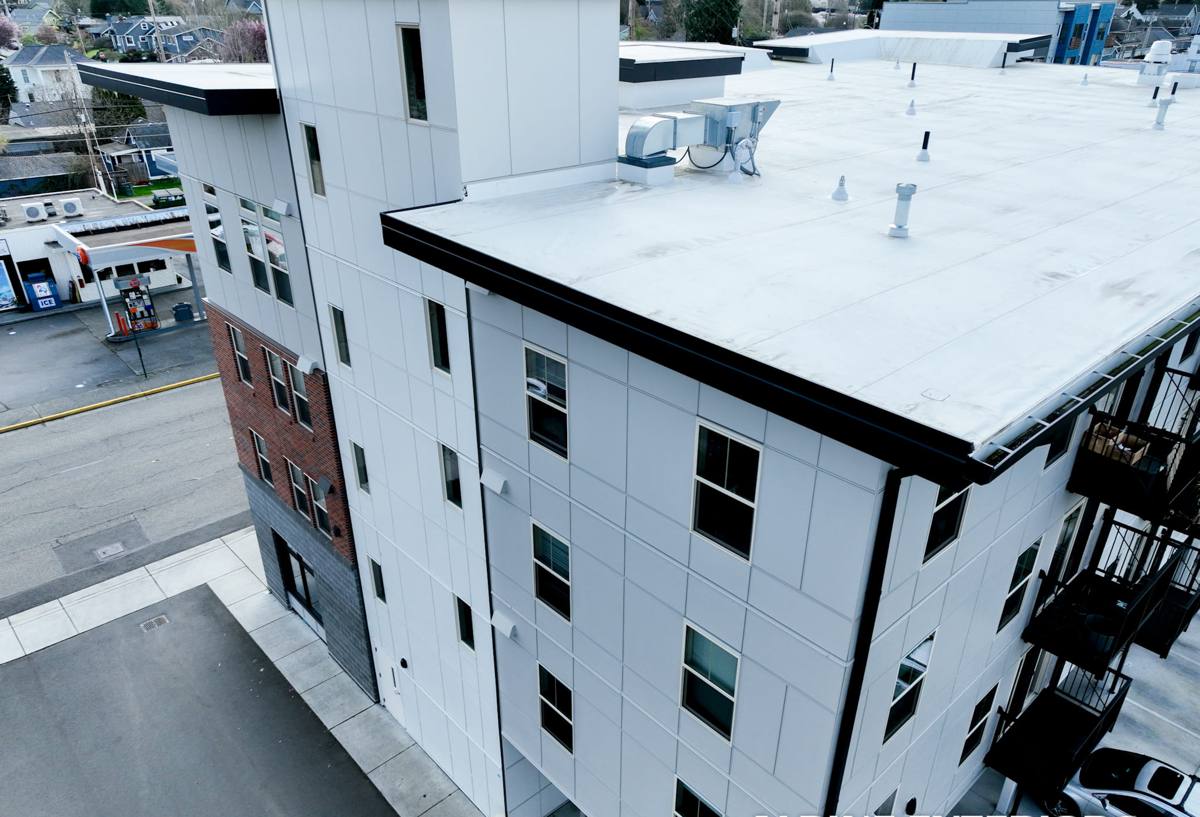
What "Correct" James Hardie Installation Actually Involves
James Hardie siding is engineered to perform in wet climates, but the product only delivers on that promise when it's installed to Hardie's actual specifications — not just nailed to the wall in a way that looks right from the street. On a lake-proximity property like this, the details that get skipped on a rushed job are exactly the ones that matter most.
The Weather Barrier Comes First
Before a single board goes up, the wall needs a code-compliant weather-resistive barrier, properly lapped and taped at every seam, with flashing integrated at windows, doors, and any roof-to-wall transitions. On a home exposed to sustained rain, this layer is doing more work than the siding itself — it's the backup plan if any water gets past the exterior cladding.
Clearances and Gaps Matter More Here
Hardie specifies minimum clearances from grade, roofing, and decks, plus gaps at butt joints and around penetrations that get sealed with the right sealant — not caulked over and forgotten. Skip these and you create the exact wick points where moisture sits against the board and starts a slow failure, even though the material itself is moisture-resistant.
Fastening Pattern and Depth
Nails driven too deep, spaced wrong, or placed in the wrong zone of the board void the warranty and create stress points. This is a detail inspectors and homeowners rarely check after the fact, which is exactly why it gets cut corners on rushed crews.
Choosing the Right Hardie Product for This Property
James Hardie makes several distinct product lines, and picking the right one for a Wiser Lake home comes down to exposure, style, and how much of the wall sees direct weather.
| Product | Best Use | Why It Fits Here |
|---|---|---|
| HardiePlank Lap Siding | Most wall areas, traditional look | Widest color and texture range; handles the county's rain exposure with proper lap and clearance detailing |
| HardiePanel Vertical Siding | Gable ends, accent walls, modern styling | Fewer horizontal seams means fewer potential water entry points on high-exposure faces |
| HardieShingle | Accent bands, dormers, Craftsman-style details | Adds texture without sacrificing the moisture performance of fiber cement |
| HardieTrim | Corners, fascia, window/door surrounds | Matches expansion behavior of the field siding so trim doesn't separate over time |
Most Wiser Lake homes end up with a mix — lap siding for the main field, a vertical or shingle accent somewhere, and matched trim throughout. We also select the HZ5 climate-engineered version of Hardie's products, which is formulated for regions with sustained moisture rather than dry heat, and that's a meaningful distinction for anything built near the lake.
The Moss and Algae Reality Around the Lake
Shaded, tree-lined lots near water hold moisture longer and grow moss and algae faster than an open lot in town. This affects siding two ways. First, moss holding against a wall keeps that surface damp far longer than it should be, which matters most for any product that isn't inherently rot-resistant. Second, algae staining shows up faster on north-facing and shaded walls, and it shows up worst on products with inconsistent or absorbent finishes.
James Hardie's ColorPlus factory finish is baked on under controlled conditions and resists fading and staining better than field-applied paint, which makes a real difference on the shaded sides of a lake property where staining is most visible. It won't stop moss from growing on nearby surfaces like roofs or fences, but it does mean the siding itself isn't absorbing moisture the way primed wood or lower-grade composite panels can.
- Keep vegetation and tree limbs trimmed back from exterior walls to reduce shade and trapped moisture
- Rinse siding periodically to clear pollen, moss spores, and organic buildup before it takes hold
- Check gutters twice a year — overflow during heavy rain is one of the most common causes of localized siding damage
- Inspect caulking at trim and penetrations annually; failed sealant is the most common entry point for moisture problems
- Watch for soft spots or discoloration at the bottom courses, which are closest to splash-back and standing moisture
Why We Don't Install Wood, Vinyl, or LP SmartSide Here
We get asked why we don't offer cedar, primed wood, vinyl, or engineered wood products like LP SmartSide as alternatives. Each has real strengths — cedar looks great, vinyl is inexpensive, engineered wood installs quickly. But every one of them depends more heavily on paint film integrity, caulking maintenance, or moisture-sealed edges staying perfect over time to avoid swelling, rot, or cracking. In a climate that delivers sustained rain and shaded, damp microclimates the way this area does, that's a maintenance burden we don't think is fair to hand a homeowner. Fiber cement removes that dependency, which is the entire reason we standardized on it.
Our Process for a Wiser Lake Siding Project
1. On-Site Assessment
We walk the full exterior, checking existing siding condition, sheathing where accessible, drainage patterns, roofline transitions, and how much direct weather versus shade each wall sees. Lake-adjacent lots often have different exposure on each side of the house, and that shapes product and detailing choices wall by wall.
2. Tear-Off and Substrate Check
Old siding comes off and we inspect the sheathing underneath for hidden rot or moisture damage before anything new goes up. Covering a compromised substrate is one of the most common ways a siding job fails early, and it's not visible once the new siding is on.
3. Weather Barrier and Flashing
A new, properly lapped weather-resistive barrier goes on with flashing detailed at every window, door, and roof intersection — this is the step that protects the home even if the exterior cladding is ever compromised.
4. Installation to Hardie Spec
Siding, trim, and accents go up following James Hardie's fastening, clearance, and joint specifications exactly, not approximated.
5. Final Walkthrough
We review the completed exterior with the homeowner, cover basic maintenance expectations for this climate, and provide warranty documentation.
What Drives Cost on a Job Like This
| Factor | Impact |
|---|---|
| Tear-off scope | Full removal of old siding vs. layering costs more but is usually necessary to check the wall assembly |
| Sheathing repair | Any rot found during tear-off adds cost but is far cheaper to fix now than after re-siding |
| Product mix | Combining lap siding with vertical panels, shingle accents, and trim adds material and labor complexity |
| Wall height and access | Multi-story sections, steep grades, or lake-adjacent terrain can require more staging |
| Color and finish | Factory ColorPlus finishes vary slightly by color selection and product line |
We don't quote a number without seeing the house, but we'll always walk through these factors with you before we start so there are no surprises.
What to Check Before Hiring Anyone for This Job
- Ask whether they install to James Hardie's written fastening and clearance specifications, not just "how they've always done it"
- Confirm they'll inspect and address the weather barrier and flashing, not just swap the visible siding
- Ask how they handle sheathing repair if rot is found during tear-off
- Check whether they carry current liability insurance and, if applicable, are a recognized Hardie installer
- Ask about experience with properties in shaded, moisture-heavy settings similar to lake-adjacent lots
- Get the product line and HZ zone specified in writing, not just "James Hardie siding" as a generic line item
Why Local Experience Around Wiser Lake Matters
A crew that regularly works properties around Lynden and the lake already understands how shade patterns, drainage, and sustained rain exposure behave on this kind of lot. That's not something you learn from a manual — it's from seeing how siding actually holds up here over multiple seasons. It shows up in small decisions: where to add extra flashing attention, which walls need closer joint sealing, and which product line makes sense for a shaded north face versus an open south-facing wall. Those judgment calls are what separate a siding job that looks fine at handoff from one that's still performing a decade later.
If you're considering new siding for a home near Wiser Lake, we're happy to walk the property, look at what your walls are actually dealing with, and put together a straightforward, no-pressure estimate using the form below.