 Lynden Exterior
 Building a Deck That Actually Holds Up in Acme
Acme sits back in the wooded foothills east of Lynden, where big trees, damp air, and long stretches without direct sun shape how outdoor structures age. A deck built the same way you'd build one on an open, sunny lot in town often struggles out here. The wood stays wetter longer, moss and algae get a head start in the shade, and the ground itself behaves differently under tree cover than it does on cleared, well-drained lots. None of that means you can't have a solid, good-looking deck in Acme — it just means the details matter more.
Whatcom County's marine-influenced weather brings driving rain most of the year, and out toward Acme that rain lingers on decking and framing longer than it would somewhere with more sun and wind exposure. Add in a long moss season and the salt-tinged, moisture-heavy air that rolls through this whole part of the county, and you've got a climate that's genuinely tough on outdoor wood and hardware. We build every deck out here with that reality in mind, not as an afterthought.
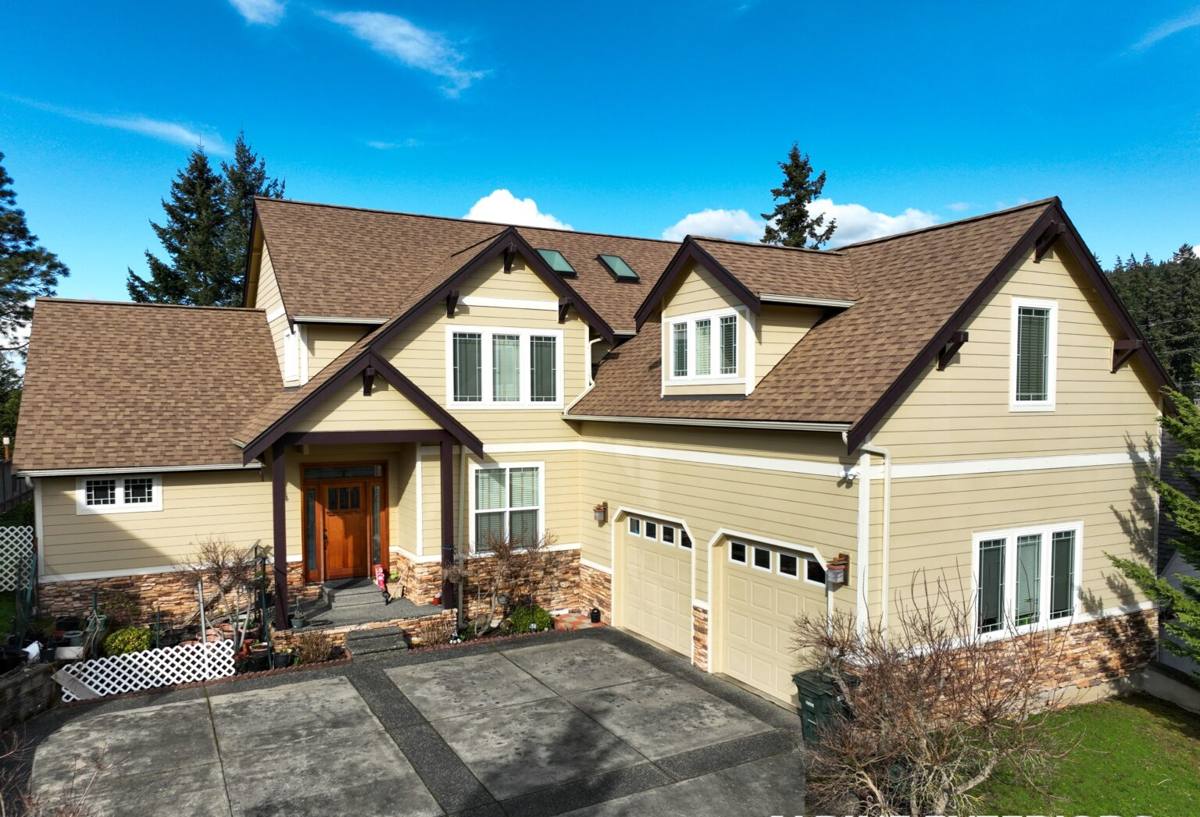
What Acme's Setting Means for Your Deck
Shade and tree cover
Many Acme properties back up to woods or sit under a substantial tree canopy. That shade is one of the biggest reasons decks in this area develop moss, algae, and soft spots faster than decks in open sun. Wood that never fully dries between rains stays vulnerable to rot, and shaded composite decking can still grow a surprising amount of surface algae even though it won't rot the way wood does. We factor sun exposure into material recommendations and design choices — including gaps, spacing, and orientation — rather than assuming every deck in Whatcom County gets the same drying conditions.
Ground and soil conditions
Foothill and river-valley lots around Acme often have heavier, wetter soil than you'll find on higher or more open ground closer to Lynden. That affects how footings drain and how much movement the ground goes through with the seasons. We check actual soil conditions on your lot rather than assuming a generic footing spec will hold — a shortcut that shows up years later as a settling post or a deck that's started to rack.
Snow and wind load in the foothills
Properties closer to the foothills can see heavier wet snow loads than lots right in Lynden proper. A deck's framing needs to be sized for the actual load it may see, not just the minimum. We build to the load conditions of your specific site, not a one-size-fits-all frame.
Getting the Structure Right
Footings below frost depth
Every post footing needs to go down below the frost line and bear on undisturbed, load-capable soil — not loose fill or organic topsoil, which is common under tree cover. Skipping this, or pouring a shallow footing to save time, is one of the most common reasons decks in wooded, damp settings start to heave or lean within a few years.
Ledger board flashing
If your deck attaches to the house, the ledger board connection is the single most important detail on the whole project. Improper flashing here is the number one cause of hidden rot behind attached decks, because water gets behind the ledger and into the house framing where nobody sees it until there's real damage. We flash this connection correctly every time — proper metal flashing, correct lap order, and a drainage gap where the deck meets the siding — rather than relying on caulk alone to keep water out.
Joist protection
Untreated joist tops sit right where rain collects and sits the longest. We protect joist tops and any exposed end-grain cuts so the framing underneath your decking isn't the weak point holding everything else up. In a climate that stays wet as long as Whatcom County's does, this is not an optional upgrade — it's what determines whether your frame is still sound in fifteen years or needs early repair.
Choosing the Right Decking Material
There's no single "best" decking material for every Acme lot — it depends on how much sun and shade your deck gets, how much upkeep you want to do, and your budget. Here's an honest comparison of the main options as they perform in this climate:
| Material | Upfront Cost | Maintenance in Shade/Damp | Moss & Algae Resistance | Typical Lifespan |
|---|---|---|---|---|
| Pressure-treated wood | Lowest | Annual cleaning and periodic sealing needed | Prone to moss/algae if shaded; needs regular cleaning | 15-20 years with upkeep |
| Cedar | Moderate | Regular oiling or sealing to hold color and resist moisture | Naturally more rot-resistant, but still grows surface growth in deep shade | 15-20 years with upkeep |
| Composite decking | Higher | Occasional washing; no sealing or staining | Better overall, though shaded boards can still get surface algae | 25-30 years |
| PVC/capped decking | Highest | Lowest maintenance; wash as needed | Best moisture and algae resistance of the group | 25-30+ years |
For a heavily shaded Acme lot, we often steer homeowners toward composite or capped decking specifically because it removes the annual sealing cycle that shade makes so hard to keep up with — a deck that never fully dries out is a deck you're constantly re-treating if it's wood. That said, plenty of homeowners still prefer the look and feel of real wood, and if your lot gets decent afternoon sun, cedar or treated wood can absolutely hold up with a realistic maintenance routine. We'll walk your site with you and give you a straight recommendation based on what we actually see, not a default pitch toward the higher-margin product.
Railings, Stairs, and Code Requirements
Any deck more than a couple feet above grade needs a code-compliant guardrail, and most attached or elevated decks require a building permit before work starts — that applies in unincorporated Whatcom County the same as it does inside Lynden city limits, though the specific permitting process differs. We handle the permit application and inspections as part of the job, and we build railings, baluster spacing, and stair stringers to current code, not to whatever's easiest.
Stairs deserve their own attention in a wet climate: tread spacing, rise-and-run consistency, and slip resistance all matter more when treads are wet more often than not. We size and space stair stringers so they hold up under repeated wet-weather use, not just under a dry-day inspection.
Drainage, Airflow, and Keeping Moss Off Your Deck
A deck that can't shed water and dry out will grow moss no matter what material it's built from. Two things make the biggest difference in a climate like this:
- Board spacing and slope: Correct gapping between boards and a slight slope away from the house let water actually leave the deck surface instead of sitting on it.
- Under-deck airflow: Skirting and low clearance can trap damp air underneath a deck, which speeds up rot in the framing even if the surface looks fine. We leave enough clearance and ventilation for air to actually move under there.
No deck in a shaded, damp part of Whatcom County will stay moss-free forever without some homeowner upkeep, but a deck built with the right slope, spacing, and airflow needs far less scrubbing and far less frequent sealing than one that wasn't.
How We Build a Deck in Acme, Step by Step
- Site visit to check sun exposure, tree cover, soil conditions, and how the deck will tie into your house.
- Design and material discussion, with honest trade-offs laid out for your specific lot rather than a generic pitch.
- Permit application and any required engineering for your footing and framing plan.
- Footings poured below frost depth on verified, load-bearing soil.
- Framing, with ledger flashing and joist-top protection built in from the start.
- Decking, railing, and stair installation to current code.
- Final walkthrough so you know exactly what maintenance your specific deck will need.
Seasonal Deck Maintenance Checklist
Whatever material you choose, a little seasonal attention goes a long way in this climate:
- Sweep leaves and debris off the deck surface regularly, especially in fall — trapped debris holds moisture against boards and speeds up moss growth.
- Clean moss and algae off boards and stairs before they get slick, particularly on shaded sections.
- Check and clear gaps between boards so water can drain instead of pooling.
- Inspect the ledger board flashing and the deck-to-house connection once a year for any sign of water intrusion.
- Reseal or re-stain wood decking on the schedule your specific product needs — don't wait until it's visibly gray and dry.
- Check railing and stair connections for looseness, which shows up faster with constant wet-dry cycling.
Why Hire a Crew That Already Works in Acme
A lot of deck problems in this area trace back to a plan that would work fine on a sunny, open lot in a drier part of the state but wasn't adjusted for Acme's shade, moisture, and soil. We already know which lots around here hold water, which need extra attention to airflow under the deck, and how Whatcom County's permitting process works for this kind of project. That's the difference between a deck that needs babying every year and one that just quietly does its job through another wet Whatcom County winter.
If you're planning a new deck or replacing one that hasn't held up, we're happy to take a look and give you a straightforward assessment of what your specific lot needs. Reach out for a free, no-pressure estimate using the form below.