 Lynden Exterior
 A New Roof Built for the Aldergrove Climate
Aldergrove sits in that stretch of the Pacific Northwest where weather doesn't do anything halfway. Homes here take on driving rain that comes in sideways off the coast, long stretches of damp overcast that never quite dry out a roof surface, and salt-laden air that works its way inland and speeds up corrosion on anything metal. Add in a moss season that can run most of the year in shaded, north-facing sections of a roof, and you've got a combination that punishes cheap materials and sloppy installation fast.
A new roof installed for this area needs to do three things well: shed water completely even in wind-driven rain, resist moss and algae growth without relying on the homeowner to scrub it every spring, and use fasteners and flashing metals that won't corrode prematurely from salt exposure. None of that is exotic — it's standard good roofing practice — but it only shows up in the finished product when the crew installing it actually understands the local conditions rather than following a generic checklist.
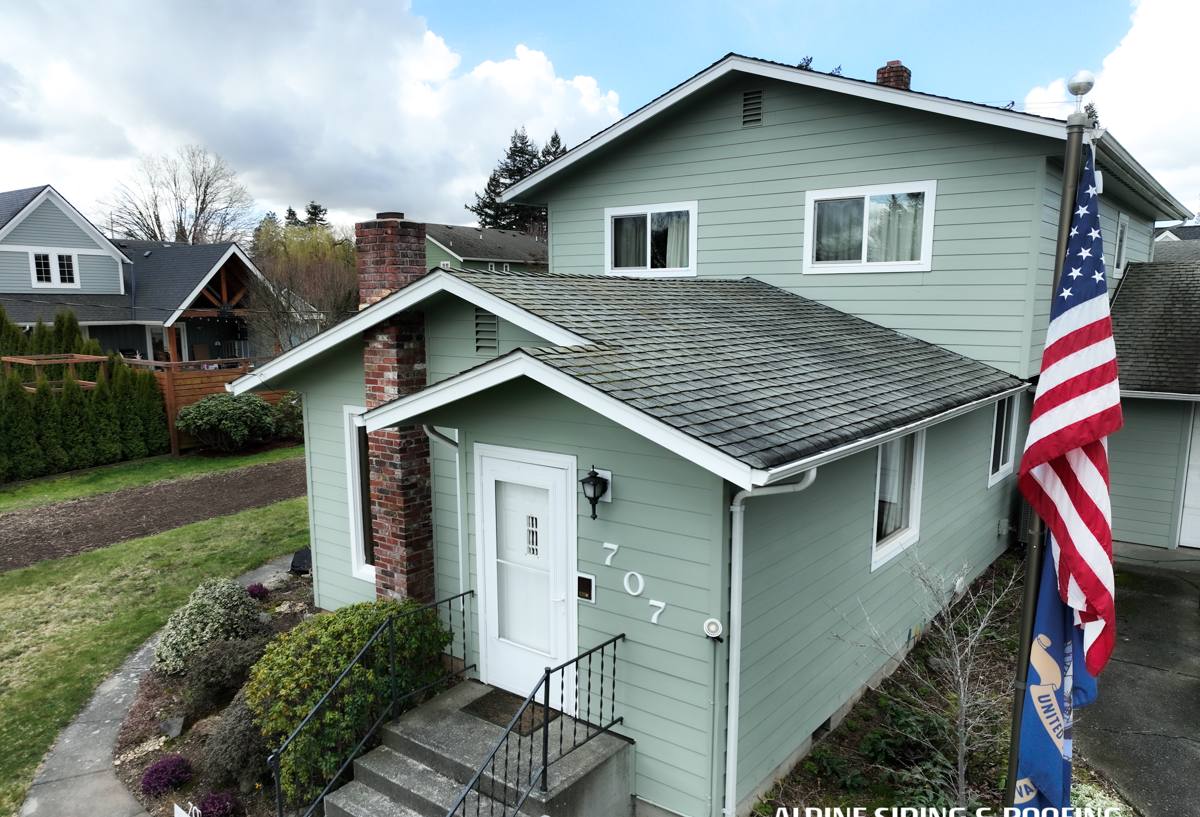
What a Correct Installation Actually Involves
A new roof is more than laying shingles over the old ones or stripping and re-covering the same deck without a second look. Every step matters, and skipping any one of them is usually where the callbacks and premature leaks come from.
Deck and Structure Check
Once the old roofing is off, the decking gets inspected board by board. Soft spots, delaminated plywood, or water-stained sheathing get replaced — not covered over. In a climate with this much moisture, a hidden rotten section under new shingles is a guarantee of trouble a few years down the road.
Underlayment and Water Protection
Synthetic underlayment goes down as the primary water barrier under the shingles, and self-adhered ice-and-water membrane goes in at the eaves, valleys, and any low-slope transitions where wind-driven rain is most likely to back up under the shingle edge. This is not optional trim in a region that gets sustained horizontal rain — it's the difference between a roof that sheds water and one that eventually lets it in sideways.
Flashing Details
Flashing around chimneys, skylights, vent pipes, and wall-to-roof transitions is where most roof leaks actually start, not in the open field of shingles. We use corrosion-resistant flashing metal and proper step-and-counter-flashing techniques rather than relying on caulk or roof cement to bridge a gap — sealant is a backup, not a flashing system.
Ventilation
A roof needs balanced intake and exhaust ventilation to let moisture escape from the attic year-round. Without it, condensation builds up on the underside of the decking, which shortens the life of the roof from the inside and can encourage rot regardless of how good the shingles on top are.
Roofing Material Options for This Climate
There's no single "best" roofing material for every home — it depends on the roof's pitch, the home's style, and how much long-term maintenance the homeowner wants to take on. Here's an honest breakdown of the common options for homes in this area.
| Material | Typical Lifespan | Moss/Algae Resistance | Relative Cost |
|---|---|---|---|
| Standard 3-tab asphalt shingle | 15–20 years | Low unless treated | Lowest |
| Architectural (dimensional) asphalt shingle | 25–30 years | Moderate; better with algae-resistant granules | Moderate |
| Algae-resistant architectural shingle | 25–30 years | Higher — copper-infused granules slow algae growth | Moderate to higher |
| Metal roofing (standing seam or panel) | 40–50+ years | High; sheds moss more easily due to slick surface | Highest |
For most Aldergrove-area homes, an algae-resistant architectural shingle is the practical middle ground — it holds up well against the moss and staining that shaded, north-facing roof sections tend to develop, without the upfront cost jump of metal. Metal makes the most sense on steep-pitch roofs or for homeowners planning to stay long-term and wanting to install once.
Our Installation Process
- On-site assessment. We walk the roof, check the attic for ventilation and moisture issues, and measure for an accurate material estimate — not a drive-by guess.
- Written estimate. You get a clear scope of work and price before anything is scheduled, including what's included in tear-off, disposal, and material upgrades.
- Tear-off and deck inspection. Old roofing comes off completely so the decking can be inspected and any damaged sections replaced.
- Underlayment and flashing installation. Water protection goes in at all the vulnerable points before a single shingle is laid.
- Shingle or material installation. Installed to manufacturer spec so the warranty stays intact.
- Ventilation check. Intake and exhaust venting confirmed and corrected if the existing setup was inadequate.
- Cleanup and magnetic sweep. Yard and driveway cleared of debris and stray nails before we consider the job done.
- Final walkthrough. We go over the finished roof with you before we leave.
Why a Crew That Already Works This Area Matters
Lynden and Aldergrove sit right on either side of the same stretch of border country, and the homes on both sides face the same weather. A roofing crew based out of Lynden and already familiar with homes in and around Aldergrove isn't learning the local conditions on your roof — they've seen how the moss builds up on north-facing slopes in this part of Whatcom and the Fraser Valley, how the wind-driven rain finds weak flashing, and which details matter most for roofs that sit this close to the coast.
That familiarity shows up in practical ways: fewer surprises during the estimate, a crew that isn't guessing at how the local climate will treat different materials, and a contractor who's reachable and local rather than a crew passing through the area for one job. For a project as significant as a full roof replacement, that local track record is worth asking about directly.
Moss, Algae, and Keeping a New Roof Looking Right
Even a well-installed roof in this region will see some moss and algae activity over its lifespan — the climate simply favors it. The goal of a good installation is to slow that process down and make maintenance manageable, not to promise a roof that never needs attention.
- Choose algae-resistant shingles or a metal surface where moss growth is a known problem on the property
- Keep overhanging branches trimmed back to reduce shade and debris buildup on the roof
- Clear gutters and valleys of leaves and needles at least twice a year so water keeps moving
- Have moss growth removed gently — no pressure washing shingles, which strips granules and shortens roof life
- Schedule a periodic roof check rather than waiting for a visible leak to call someone out
Signs You Need a New Roof, Not Another Repair
Not every roof problem calls for a full replacement, but there's a point where repairs stop making financial sense. Some signs worth a serious look:
- Shingles that are cupping, curling, or losing significant granule coverage across large areas
- Daylight visible through the roof deck from inside the attic
- Recurring leaks in different spots after repairs, rather than one isolated failure point
- Roof deck that feels spongy or soft when walked on
- A roof already at or past the expected lifespan for its material, especially heading into another wet season
- Heavy, widespread moss growth that's lifting shingle edges rather than just sitting on the surface
If you're only seeing one or two of these and the roof is otherwise sound, a repair may still be the right call — we'll tell you that honestly during an assessment rather than pushing a replacement that isn't needed yet.
What Affects the Cost of a New Roof
Roofing estimates vary a fair amount from home to home, and the honest answer is that it depends on several factors specific to your roof rather than a flat per-square-foot number:
| Factor | Why It Matters |
|---|---|
| Roof size and number of layers to remove | More tear-off labor and disposal cost |
| Roof pitch and accessibility | Steeper or harder-to-access roofs take more time and safety equipment |
| Decking condition | Rotten or damaged sheathing found during tear-off adds material and labor |
| Material choice | Standard shingle vs. algae-resistant vs. metal changes cost significantly |
| Number of penetrations | Chimneys, skylights, and vents each need proper flashing |
| Ventilation upgrades | Adding or correcting intake/exhaust venting if the current setup is inadequate |
A written, on-site estimate is the only reliable way to know what your roof actually needs — anything given without walking the roof and checking the attic is a guess, not a quote.
If your Aldergrove-area roof is showing its age or you're planning ahead for the next wet season, we're glad to take a look and give you a straightforward, no-pressure estimate — just fill out the form below and we'll get in touch.