 Lynden Exterior
 Roofing for Acme's Particular Climate
Acme sits in the wooded foothill country southeast of Lynden, closer to the timber and the Nooksack River drainage than to the open flats of the valley floor. That changes what a roof deals with day to day. Homes out here tend to sit under or near mature conifers, get less direct sun on parts of the roof plane, and catch driving rain funneled down off the higher ground to the east. Combined with Whatcom County's long, wet winter season, that's a tough combination for any roofing material — but it's especially hard on a roof that isn't installed with moss, moisture, and shade specifically in mind.
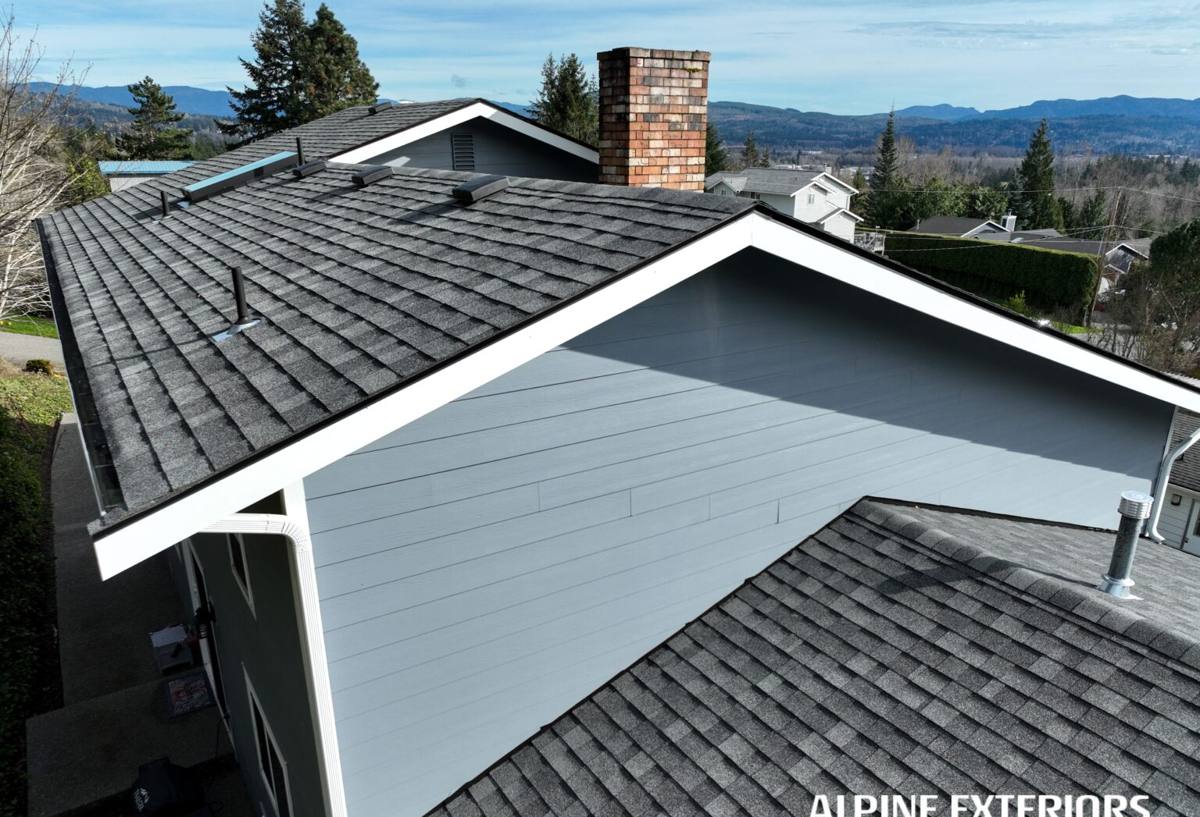
Asphalt shingle roofing remains the most practical option for the vast majority of homes in this area, and for good reason. It's not about cutting corners — it's about matching a proven, well-understood material to a climate that punishes sloppy installation far more than it punishes the material itself. Get the install right and asphalt shingles handle Acme's conditions for decades. Get it wrong, and no shingle brand will save you from moss intrusion, trapped moisture, or premature granule loss.
Why Asphalt Shingles Still Make Sense Here
There's a reason asphalt shingles remain the standard on the overwhelming majority of homes in Whatcom County, including out toward Acme. They're cost-effective relative to metal or cedar, they're straightforward to repair in sections rather than requiring a full tear-off when a problem shows up, and modern shingle lines have improved significantly on algae resistance and wind rating compared to what was available even fifteen years ago.
That last point matters more here than in a drier climate. A shaded, moss-prone roof needs a shingle product and installation approach that accounts for near-constant moisture exposure through the fall, winter, and spring months. Not every asphalt roof is installed with that in mind — plenty are installed the same way regardless of whether the home sits in open sun or under a stand of Douglas fir. That difference shows up in how long the roof actually lasts, not just in how it looks the day it's finished.
What Tree Cover Changes
A shaded roof dries slower after every rain. Slower drying means moss spores that land on the shingle surface have more time to establish before conditions turn hostile to them again. Over a few seasons, that turns into visible moss growth, especially on north-facing slopes and anywhere debris collects — valleys, behind chimneys, along the lower courses near gutters. Left alone, moss lifts shingle edges, holds water against the roof deck, and accelerates granule loss underneath the growth itself.
What Acme's Weather Actually Does to a Roof
It helps to understand the specific mechanisms at work, not just the general idea that "wet weather is bad for roofs."
Driving Rain and Wind-Driven Moisture
Whatcom County storms frequently come with real wind behind the rain, not just straight-down precipitation. Wind-driven rain finds any gap in flashing, any shingle that isn't sealed down properly, and any nail that missed its mark. On homes closer to the foothills, funneling wind off higher terrain can push rain sideways into eaves, dormers, and roof-to-wall transitions that would stay dry in calmer conditions.
Moss and Sustained Shade
As covered above, shade from surrounding trees is the biggest single factor separating an Acme roofing job from a job on an open lot closer to town. Moss doesn't just look bad — it's a mechanical problem. Rhizoids from moss growth work into the shingle surface and granule layer, and the moisture the moss holds against the roof deck creates the conditions for rot in the sheathing underneath if it goes unaddressed long enough.
Freeze-Thaw and Debris Load
Whatcom County doesn't get the deep freezes some inland climates do, but it does get enough freeze-thaw cycling in the colder months to stress any water that's already trapped in a roof system. Combined with needle and leaf debris from nearby trees clogging valleys and gutters, that's a recipe for ice damming and standing water in the exact spots a roof can least afford it.
What a Correct Asphalt Shingle Job Actually Involves
A roof that's going to hold up under these conditions needs more than shingles nailed to plywood. Every layer underneath the visible surface does real work.
Underlayment and Ice-and-Water Protection
Synthetic underlayment across the full roof deck is the baseline, but the eaves, valleys, and any roof-to-wall transitions need self-adhering ice-and-water membrane underneath the shingles. On a shaded, moss-prone roof like many in Acme, we treat this as non-negotiable rather than an upgrade — those are exactly the spots where trapped moisture does the most damage over time.
Ventilation
A roof deck that can't breathe traps heat and moisture from inside the home against the underside of the sheathing. That accelerates deterioration from below at the same time moss and rain are working on it from above. Balanced intake and exhaust ventilation isn't a cosmetic detail — it directly affects how long the shingles and the deck underneath them last.
Flashing
Chimneys, skylights, dormers, and any wall-to-roof transition need properly formed and step-flashed metal, not just caulk and hope. Caulk fails; correctly installed flashing doesn't need to rely on it. This is one of the most common places we find shortcuts on roofs that are failing years before they should.
Fastening
Nailing pattern and nail placement affect both wind resistance and manufacturer warranty validity. Shingles rated for high wind exposure lose that rating if they're fastened incorrectly — a detail that matters on more exposed lots and rooflines catching wind off the foothills.
How Our Process Works
We keep the process straightforward because a re-roof shouldn't feel mysterious to the homeowner paying for it.
- On-site inspection. We walk the roof (not just look at it from the ground), check the attic or roof deck from inside where accessible, and note shade patterns, moss condition, flashing points, and ventilation.
- Honest scope and estimate. We tell you what actually needs to happen — full replacement, partial repair, or maintenance — and explain why, in plain terms, with a written estimate.
- Scheduling around the weather. Given how much rain this area sees, we plan install windows around forecasted dry stretches rather than forcing a schedule that risks exposing an open roof deck.
- Tear-off and deck inspection. Once the old roofing is off, we check the sheathing itself for soft spots or rot before anything new goes down — this is where shade- and moss-related damage often becomes visible for the first time.
- Installation. Ice-and-water membrane at vulnerable points, full synthetic underlayment, correct flashing, proper ventilation, and shingles fastened to manufacturer spec.
- Cleanup and walkthrough. Magnetic sweep for stray fasteners, debris hauled off, and a final walkthrough so you know what was done and what to watch for going forward.
Repair, Maintain, or Replace?
Not every roof problem means a full replacement, and not every homeowner needs to hear that it does. Here's how we generally think through it:
| Situation | Typical Approach | What Drives the Decision |
|---|---|---|
| Moss on an otherwise sound roof under 10-15 years old | Treatment and removal, plus a maintenance plan | Shingle mat and granules still in good condition underneath |
| Isolated flashing or valley leak | Targeted repair | Problem is localized, rest of the roof is performing normally |
| Widespread granule loss, curling, or brittle shingles | Full replacement | Material is past its useful life across most of the roof |
| Soft or spongy deck sections found during inspection | Deck repair as part of replacement | Sheathing damage requires access that only a tear-off provides |
| Roof nearing 20+ years old with recurring moss and moisture issues | Replacement recommended | Repeated symptoms usually point to underlying, not isolated, wear |
Cost on any of these depends on roof size, pitch, number of penetrations (chimneys, skylights, vents), accessibility on the lot, and how much of the deck needs repair once it's exposed. We won't quote a number without seeing the roof, but we will always explain what's driving the number we give you.
Maintenance That Actually Matters in Acme
Given the tree cover and moisture most Acme properties deal with, a little regular attention goes a lot further than it would on an open, sun-exposed lot. A practical maintenance routine:
- Clear valleys, gutters, and downspouts of needle and leaf debris at least twice a year — more often under heavy tree cover
- Watch for moss starting on north-facing slopes and shaded valleys before it spreads across the whole roof
- Trim back branches that overhang or brush the roof surface to reduce shade and debris load
- Check attic ventilation isn't blocked by insulation or debris, especially after any attic work
- Have flashing points around chimneys and skylights checked periodically, since these are common leak origins even on otherwise healthy roofs
- Address small leaks or soft spots promptly rather than waiting — moisture damage compounds quickly under a shaded roof
Shingle Quality and What It Means for Your Home
Not all asphalt shingles are built the same, and the right choice depends on your roof's exposure, pitch, and how much shade and moss pressure it deals with.
| Factor | Standard 3-Tab | Architectural (Laminate) |
|---|---|---|
| Wind resistance | Lower rating, more exposed edges | Higher rating, better suited to exposed or wind-funneled lots |
| Algae/moss resistance options | Sometimes available | More commonly built in on mid- and upper-tier lines |
| Expected lifespan | Shorter end of the range | Longer end of the range, with proper installation |
| Appearance | Flat, uniform look | Dimensional, heavier shadow line |
We don't push a single brand as the answer for every home. What matters more than the label is matching the shingle line's wind rating and algae-resistant granule technology to how much shade and moisture a particular roof actually deals with — and then installing it to spec so the warranty is worth something if you ever need it.
Why It Matters That We Already Work in Acme
A roofing crew that mostly works closer to town doesn't always think about the details that matter on a wooded, foothill-adjacent property — longer driveways and gravel access, staging materials around septic systems or wells, working around mature trees rather than clear-cut lots, and scheduling around the wetter microclimate that comes with more tree cover and elevation. None of that is complicated, but it's the kind of thing you want a crew to already have a handle on before they show up with a dumpster and a load of shingles.
We also know that a roof recommendation that's right for a sun-exposed lot near downtown Lynden isn't automatically right for a shaded property along the SR-9 corridor toward Acme. That shows up in what underlayment we specify, how seriously we treat moss prevention, and how we talk you through the maintenance side after the install is done — not just in getting the shingles on straight.
Getting Started
If you're dealing with moss buildup, an aging roof, or just want an honest read on where your roof actually stands, we're happy to come take a look. The estimate is free, there's no pressure attached to it, and you'll get a straight answer about whether you need a repair, a replacement, or just a better maintenance routine. Use the form below to get in touch and we'll schedule a time to come out.