 Lynden Exterior
 Asphalt Shingle Roofing Built for Bellingham's Weather, Not Just Any Weather
Bellingham sits close enough to the water that salt air is part of daily life, and far enough into the Pacific Northwest that driving rain and long stretches of gray, damp weather are the norm rather than the exception. Add in a moss season that can run most of the year under the right shade and moisture conditions, and you have a climate that is genuinely tougher on an asphalt shingle roof than most manufacturers' warranty language assumes. A roof installed the same way you'd install one in a dry inland climate will age faster here, plain and simple.
This page is about one thing: asphalt shingle roofing done correctly for Bellingham homes, in the context of Whatcom County's specific climate. Not a generic rundown of shingle types you could read on any roofing site in the country.
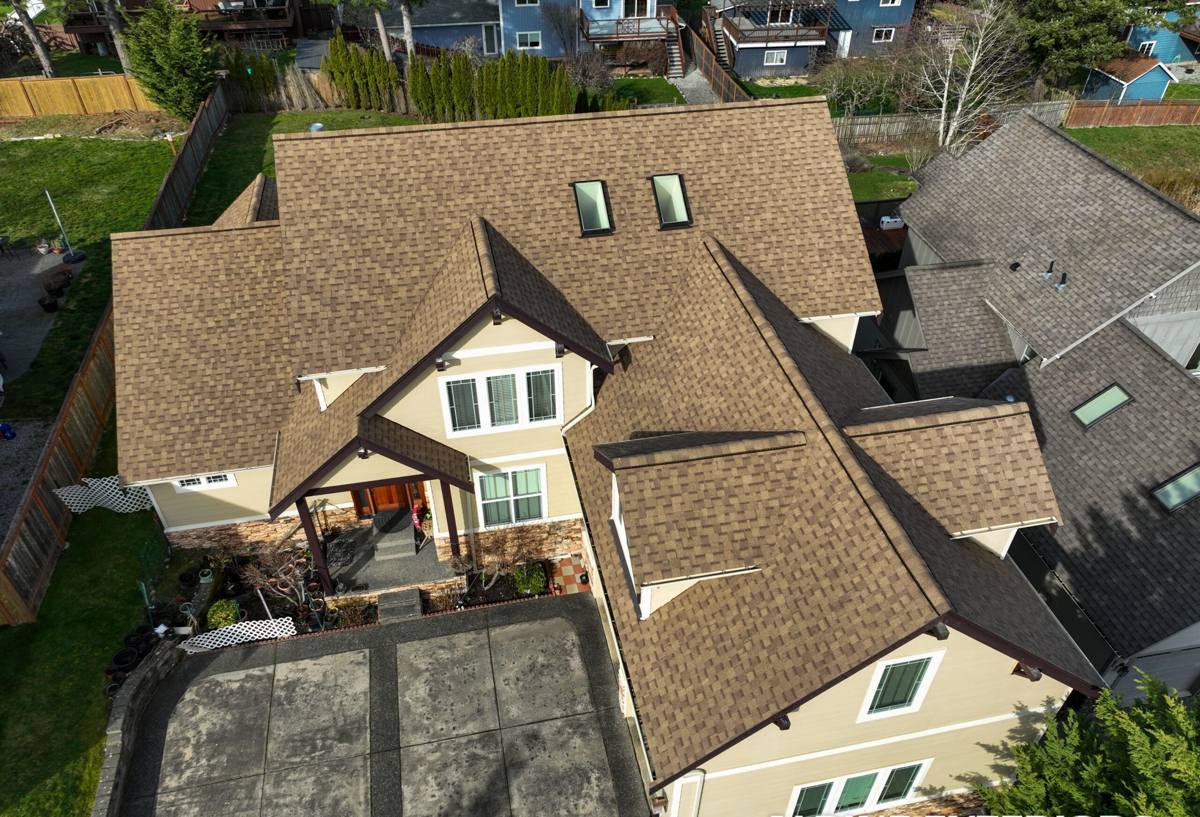
What Bellingham's Climate Actually Does to a Shingle Roof
Salt Air and Metal Fatigue
Homes closer to Bellingham Bay and the surrounding waterways deal with airborne salt that accelerates corrosion on exposed metal — nail heads, flashing, drip edge, and roof vents. When those components corrode faster than the shingles around them wear out, you end up with leaks at the flashing points long before the shingle field itself is due for replacement. The fix isn't a different shingle; it's using corrosion-resistant fasteners and flashing metal from the start and not cutting corners on those small parts.
Driving Rain and Wind-Driven Water
Rain in this part of Washington doesn't always fall straight down. Wind off the water pushes it sideways and under standard shingle laps if the underlayment, starter strip, and flashing details aren't installed with that in mind. Most leaks we're called out to investigate in older Bellingham roofs trace back to water finding a sideways path in through a valley, a wall-to-roof transition, or a poorly lapped underlayment seam — not through the shingles themselves failing outright.
Moss, Shade, and Prolonged Dampness
Whatcom County's tree cover and long damp season give moss exactly what it needs: shade, moisture, and time. Moss holds water against the shingle surface, works its way under shingle tabs as it grows, and can lift edges enough to let wind and rain in. Left unaddressed for a few seasons, moss growth measurably shortens the life of an otherwise sound roof.
What a Correct Installation Looks Like Here
A roof that's actually built for this climate, rather than just built to code minimums, includes a few things that matter more here than they would in a drier region:
- A fully sealed, high-quality synthetic or ice-and-water underlayment at eaves, valleys, and penetrations — not just field-lapped felt
- Corrosion-resistant flashing and fasteners, especially near the coast, so metal components don't fail before the shingles do
- Balanced intake and exhaust ventilation, since damp regional air makes attic moisture control more important, not less
- Algae-resistant (AR) shingles with copper or zinc granules to slow moss and algae growth on north-facing and shaded slopes
- Careful valley and step-flashing work at every wall intersection, since that's where wind-driven rain actually gets in
None of this is exotic. It's standard good practice applied consistently, which is exactly where shortcuts tend to show up on lower-bid jobs.
Signs a Bellingham Roof Needs Attention
Because moss and moisture damage build slowly, many homeowners don't notice a problem until there's a stain on a ceiling. Watch for these signs, particularly on shaded or north-facing roof sections:
- Visible moss, even in small patches, along ridge lines or shaded valleys
- Granules collecting in gutters or at downspout outlets
- Shingle tabs that look lifted, curled, or slightly cupped
- Dark streaking that isn't moss — often algae staining rather than dirt
- Rust staining below metal flashing or vent boots
- Soft spots in the decking felt underfoot, or daylight visible at the ridge from inside the attic
- Interior ceiling stains after a heavy wind-driven rain event, even if they dry out and fade
Our Process for Bellingham Asphalt Shingle Roofing
- On-site assessment. We walk the roof, check the attic for ventilation and moisture issues, and look specifically at valleys, flashing, and any shaded or moss-prone sections.
- Honest scope and options. We tell you what's actually needed — full replacement, partial section work, or repair — and explain the trade-offs of each so you can decide with real information.
- Tear-off and deck inspection. We remove old roofing down to the deck and check for soft or rotted sheathing before anything new goes down, since covering a compromised deck just hides the problem.
- Underlayment and flashing first. This is where most future leaks are prevented or created, so it gets as much attention as the visible shingle layer.
- Shingle installation. Installed to manufacturer spec for nailing pattern and exposure, which matters for wind rating in a windy coastal county.
- Ventilation check. We confirm intake and exhaust are balanced before calling the job done, not just present.
- Final walkthrough. We go over the finished roof with you, including basic maintenance guidance specific to your property's shade and moss exposure.
Choosing the Right Shingle for Coastal Whatcom County Conditions
Not every asphalt shingle line is built with the same priorities. For Bellingham homes, the features that matter most are wind rating, algae resistance, and how the shingle handles repeated wet-dry cycling rather than pure heat resistance, which matters more in hotter, drier climates.
| Shingle Type | Best For | Consideration Here |
|---|---|---|
| 3-tab (standard) | Budget-conscious projects | Lower wind rating and shorter lifespan; moss and algae resistance is usually limited unless AR-rated |
| Architectural / dimensional | Most Bellingham homes | Better wind rating, thicker profile sheds water more reliably, widely available with AR granules |
| Premium / designer | Homes prioritizing appearance and longevity | Highest wind and impact ratings, longest warranties, higher upfront cost |
| Algae-resistant (AR) upgrade | Shaded lots, north-facing slopes, tree-heavy properties | Copper/zinc granules slow moss and algae growth; worth the modest upcharge in this climate |
Our default recommendation for most Bellingham properties is an architectural shingle with AR granules. It's the point where cost, wind performance, and moss resistance line up best for this specific climate, though a full premium line makes sense for homes with heavy shade or long-term ownership plans.
Moss Prevention Is Part of the Job, Not an Afterthought
Moss control on a Bellingham roof isn't a one-time treatment — it's an ongoing part of ownership. During installation, we position AR shingles strategically on the most exposed and shaded slopes and can install zinc or copper strips near the ridge on request, which release trace metal ions with every rain and slow regrowth over time. After installation, periodic soft-washing (never pressure washing, which drives water under shingles and strips granules) keeps moss from re-establishing. We're upfront that no shingle roof in this climate is fully moss-proof forever — the goal is slowing growth and catching it early, not pretending it won't happen.
What Drives Cost on a Bellingham Roofing Project
| Factor | Why It Matters Locally |
|---|---|
| Roof pitch and complexity | Steeper pitches and multiple valleys mean more flashing detail work, which is where wind-driven leaks originate |
| Deck condition | Long-term moisture exposure sometimes means hidden rot isn't visible until tear-off begins |
| Shingle grade chosen | 3-tab vs. architectural vs. premium, plus whether AR granules are included |
| Ventilation upgrades | Adding or correcting intake/exhaust ventilation adds labor but reduces future moisture issues |
| Access and site conditions | Steep lots, mature trees, and limited driveway access affect staging and disposal costs |
Exact numbers depend on your roof's size, pitch, and condition, so we avoid throwing out generic per-square pricing that doesn't hold up once we're actually on your roof. A free on-site estimate gives you real numbers instead of a guess.
Why It Matters That Your Crew Already Works Bellingham
A contractor who works Whatcom County regularly already knows which slopes in this area collect moss fastest, how far wind-driven rain travels under a poorly lapped shingle near the water, and which flashing details fail first when salt air is in the mix. That's not something you can fully replicate with a general checklist — it comes from doing the work here, season after season, and seeing which shortcuts come back to bite homeowners two or three years later. It also means faster response if a storm causes damage, since we're not driving in from out of the area to take a look.
Get a Straight Answer on Your Roof
If you're dealing with visible moss, a leak that shows up only during heavy wind-driven rain, or just want an honest read on how much life is left in your current roof, we're happy to take a look. Reach out for a free, no-pressure estimate using the form below — we'll give you a clear picture of what your roof actually needs, not an upsell.