 Lynden Exterior
 Bellingham Decks Take a Different Kind of Beating
Bellingham sits close enough to the water that salt-laden air reaches most neighborhoods, and that air does something to wood and metal that inland decks never have to deal with. Add in Whatcom County's long wet season, where a deck can go weeks without a real drying window, and you get a structure that's under constant moisture pressure for most of the year. Moss doesn't just make a deck slippery — it holds water against the boards and fasteners far longer than open air would, and that extended contact time is what actually breaks decks down.
We're based in Lynden and work Bellingham regularly, so this isn't a generic weather disclaimer. It's the reason we make specific choices on every Bellingham deck we replace: fastener grade, gap spacing, ledger flashing, and how much slope we build into the frame so water actually leaves instead of sitting.
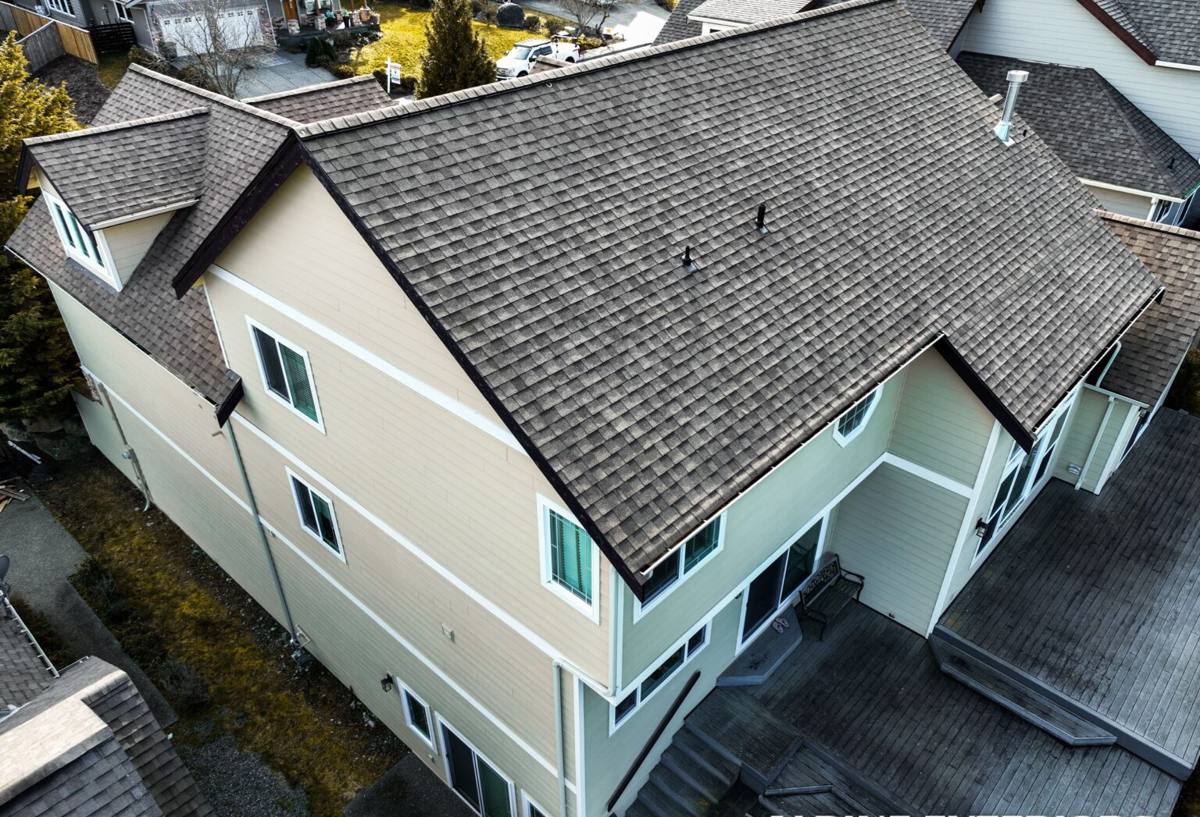
How to Tell a Deck Needs Replacement, Not Another Repair
Homeowners often call us thinking they need a few boards swapped, and sometimes that's true. But there are signs that mean the problem is in the frame, not the surface — and no amount of board replacement fixes a bad frame.
Frame and structural red flags
- Soft or spongy spots when you walk the deck, especially near the house or stairs
- Visible gaps or rust streaks at the ledger board where the deck meets the house
- Posts that wobble, or footings that look like they're heaving or settling unevenly
- A greenish or black film on the underside of joists that doesn't wipe off
- Fasteners that are rusted, backed out, or leaving dark stains around the head
If it's just a handful of surface boards that have cupped or split while the frame underneath is solid, repair can make sense. If the issues are at the ledger, the posts, or the joists, replacement is the honest recommendation — patching those doesn't hold up through another Whatcom County winter.
What a Correct Deck Replacement Actually Involves
A deck replacement is more than swapping decking boards for new ones. The parts nobody sees — the ledger connection, the footings, the flashing — are what determine whether the new deck lasts 25 years or starts failing again in five.
The ledger board and house connection
This is the single most important detail on any deck attached to a house, and it's the spot most prone to hidden rot in a wet climate like ours. A correct install uses proper flashing between the ledger and the siding or sheathing, lag bolts or through-bolts rated for the load (not just deck screws), and a gap or drainage path so water can't pool behind the board. Get this wrong and you get slow, invisible rot behind the siding — the kind of damage that costs far more to fix than the deck itself.
Footings and posts
Footings need to sit below frost depth and bear on undisturbed soil, sized to the load they're carrying. We check existing footings before assuming they can be reused — years of ground saturation can shift or settle a footing even when the post above it still looks fine.
Joist spacing and framing
Joist spacing depends on the decking material you choose. Composite and PVC boards generally need tighter joist spacing than solid wood to avoid deflection over time, so the framing plan should be set based on the surface material, not the other way around.
Decking Material Options for a Bellingham Climate
Every decking material handles Whatcom County's rain and moss differently. There's no universally "best" choice — it depends on how much upkeep you want to do and what you're willing to spend up front versus over time.
| Material | How It Handles Local Moisture/Moss | Maintenance |
|---|---|---|
| Pressure-treated wood | Resists rot with proper sealing, but end grain and fastener holes need attention; moss gets a foothold if left ungroomed | Annual cleaning and re-sealing recommended |
| Cedar | Naturally more rot- and insect-resistant than most softwoods, ages to gray without sealing but softer surface can hold moss film | Periodic cleaning, optional staining every few years |
| Composite decking | Doesn't absorb water like wood, but can stay damp on the surface longer in shaded, mossy spots — needs periodic scrubbing | Low — occasional wash, no sealing |
| PVC/capped composite | Fully sealed surface resists moisture and moss growth best of the common options | Lowest — soap and water as needed |
We'll walk through these trade-offs with you at the estimate — not to upsell a particular product, but because the right material really does depend on how much sun or shade your deck gets and how much time you want to spend maintaining it.
Cost Factors on a Bellingham Deck Replacement
Every deck is different, so we won't quote a number without seeing the site, but these are the factors that move the price up or down on most Bellingham projects.
| Factor | Why It Matters |
|---|---|
| Deck size and height | Larger decks and elevated decks (multi-level or with stairs) need more framing, footings, and labor |
| Ledger and siding condition | If we find rot behind the ledger, siding repair gets added to the scope — better to catch it now than after |
| Decking material chosen | Wood costs less up front; composite and PVC cost more initially but less over the deck's life |
| Railing style and code requirements | Guard height, baluster spacing, and stair rail requirements affect both material and labor |
| Footing and permit requirements | Whatcom County permitting and footing depth requirements vary by property and existing structure |
Our Deck Replacement Process
We keep the process the same on every Bellingham deck so nothing gets skipped, regardless of size.
1. On-site assessment
We inspect the existing deck from the ledger down to the footings, not just the visible surface, and identify anything hidden — rot, undersized footings, corroded hardware — before we quote the job.
2. Honest scope and estimate
You get a clear breakdown of what's being replaced, what material options fit your budget and site conditions, and what (if anything) is required for permitting.
3. Demolition and disposal
The old deck comes down and off the property. We check the ledger and adjacent siding at this stage since that's when hidden damage becomes visible.
4. Framing, flashing, and footings
New footings, posts, joists, and ledger flashing go in to code, sized for the decking material you've chosen.
5. Decking, railing, and finish work
Boards, railings, and stairs are installed with attention to drainage gaps and moss-resistant details — fastener spacing, board gaps, and slope away from the house.
6. Final walkthrough
We walk the finished deck with you, point out any care instructions specific to the material you chose, and answer questions before we consider the job done.
Permits and Local Code Considerations
Most deck replacements in Whatcom County require a permit, particularly when footings or framing are being replaced rather than just the surface boards. Requirements can include guard rail height, stair rail geometry, baluster spacing, and footing depth relative to frost line. We handle the permit process as part of the job so you're not left navigating county requirements on your own, and so the finished deck passes inspection without a return trip.
Maintaining Your New Deck Through the Wet Season
A well-built deck still needs some seasonal attention in this climate — the goal is to keep moss and standing moisture from getting a foothold in the first place.
- Sweep leaves and debris off the deck regularly in fall, before they trap moisture against the boards
- Scrub visible moss or algae film with a stiff brush and mild cleaner rather than a pressure washer set too high, which can damage board surfaces
- Keep gutters and downspouts clear so runoff isn't draining directly onto or under the deck
- Check that drainage gaps between boards stay clear of debris so water keeps moving through
- Re-seal wood decking on the schedule recommended for the product — skipping a season lets moisture back in
- Inspect the ledger flashing and any visible fasteners once a year for early signs of rust or gaps
Why Hiring a Crew That Already Works Bellingham Matters
A deck built with inland assumptions — standard fastener grades, minimal flashing, no thought given to moss buildup — will show problems within a few years out here. We're a Lynden-based crew that works Bellingham and the rest of Whatcom County regularly, so the moisture and moss patterns specific to this area aren't a surprise on your project — they're part of how we plan the framing, flashing, and material selection from the first site visit.
If your deck is showing soft spots, rust at the ledger, or persistent moss that keeps coming back no matter how often you clean it, we're happy to take a look. Reach out for a free, no-pressure estimate — we'll tell you honestly whether you need a full replacement or if targeted repair will get you a few more good years.