 Lynden Exterior
 Why Bellingham's Climate Is Hard on Siding
Bellingham sits where the Salish Sea's marine air meets the wet weather rolling off the Cascades and the Pacific, and that combination is tough on exterior building materials. Homes here don't just get rained on — they sit in a near-constant cycle of moist, salt-tinged air, wind-driven rain that hits walls at an angle instead of running straight down, and long stretches of overcast days that never fully dry a wall surface out. Siding in this area has to do more work than siding in a dry inland climate, and materials that perform fine elsewhere often struggle here.
Salt Air and Corrosion
Proximity to Bellingham Bay means airborne salt is a real factor, even for homes set back from the water. Salt-laden moisture accelerates corrosion on fasteners, flashing, and any metal trim components, and it degrades some coatings faster than plain rainwater would. Siding materials and installation hardware both need to be chosen with that in mind, not treated as an afterthought.
Driving Rain and Wind-Driven Moisture
Whatcom County storms frequently bring rain sideways, not straight down. That matters because a lot of siding failures aren't caused by rain hitting a wall — they're caused by rain finding its way behind the siding through a gap, a poorly lapped joint, or a fastener hole that wasn't sealed correctly. A material that's technically water-resistant can still fail a home if the installation doesn't account for wind-driven moisture getting behind the cladding.
A Long Moss and Mildew Season
Between the rainfall totals and the number of shaded, north-facing walls common in this area's neighborhoods, moss and mildew have a long growing season here — often most of the year on surfaces that don't get much direct sun or airflow. Porous or organic siding materials give moss and mildew something to hold onto and feed on. Non-porous, factory-finished materials are far more resistant, but they're not immune if the installation traps moisture behind the panel.
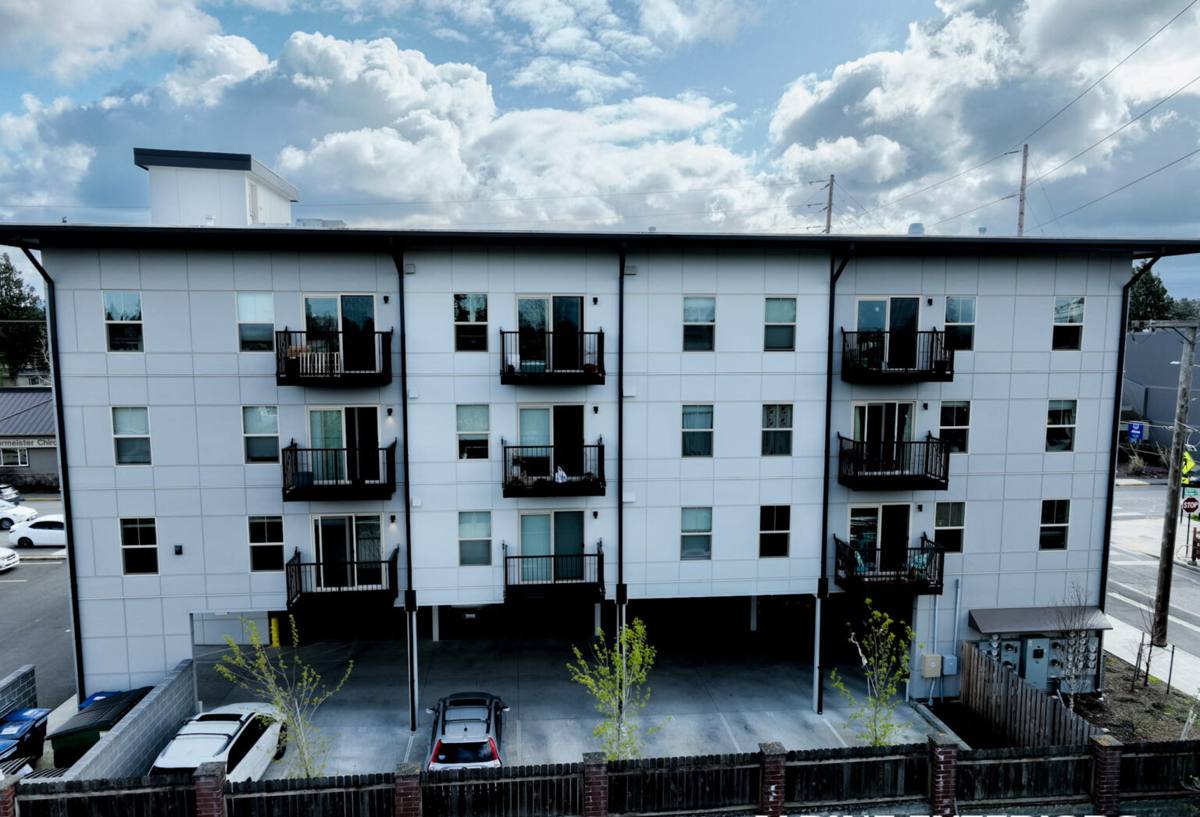
Why We Install Only James Hardie Fiber Cement
We standardized on James Hardie fiber cement siding for homes in this area, and we don't install vinyl, LP SmartSide, cedar, primed spruce, or other fiber cement brands. That's not a marketing position — it's a decision built around what actually holds up to the conditions described above.
James Hardie's HardieZone HZ5 product line is engineered specifically for regions with the freeze-thaw cycles, sustained moisture, and marine exposure common to the Pacific Northwest. The fiber cement itself is non-combustible and dimensionally stable, meaning it doesn't swell, warp, or rot the way wood and wood-composite products can when they take on repeated moisture. The factory-applied ColorPlus finish is baked on under controlled conditions, which gives it better adhesion and weather resistance than field-applied paint — and it holds its color and seal far longer than the coatings used on cheaper composite or engineered-wood alternatives.
None of this means fiber cement is maintenance-free or magically immune to Bellingham's climate. It means it starts from a stronger baseline — and that baseline only holds up if the installation behind it is done correctly.
What a Correct Installation Actually Requires Here
Fiber cement siding is only as good as the assembly behind it. In a climate like this one, a handful of details separate a job that lasts decades from one that develops hidden rot in five to ten years.
Drainage Plane and Rainscreen Gap
Any wall in this climate needs a continuous weather-resistant barrier behind the siding, and ideally a rainscreen gap — a small air space between the barrier and the siding panel — so that any moisture that does get past the cladding can drain and dry out instead of sitting against the sheathing. Skipping this step is one of the most common causes of siding failure in wet coastal climates, regardless of what material is on the outside.
Flashing and Joint Sealing
Every window, door, roofline transition, and butt joint is a place where water can find a way in. Correct flashing — installed in the right order, lapped the right direction, and integrated with the drainage plane — matters more than the siding material itself when it comes to keeping a wall dry. Joints need to be sealed with products rated for the movement and exposure they'll see, not just caulked and forgotten.
Fastening Schedule for Wind Exposure
Fastener spacing and placement need to follow the manufacturer's specification for the wind exposure category of the home's location, and every fastener penetration is a potential entry point for moisture if it isn't placed and sealed correctly. This is a detail that's easy to rush and hard to inspect after the fact — which is exactly why it needs to be done right the first time.
How James Hardie Compares for Bellingham Homes
| Material | Moisture & Salt Air Resistance | Moss/Mildew Resistance | Long-Term Maintenance |
|---|---|---|---|
| James Hardie Fiber Cement (HZ5) | Engineered for Pacific Northwest exposure; non-combustible, dimensionally stable | Non-porous ColorPlus finish resists growth better than organic materials | Occasional wash; factory finish holds up for years before repaint is needed |
| Cedar / Primed Spruce | Absorbs moisture over time; salt air accelerates finish breakdown | Organic surface is prone to moss, mildew, and rot in shaded areas | Frequent refinishing, sealing, and rot inspection required |
| LP SmartSide (Engineered Wood) | Wood-strand core is sensitive to sustained moisture exposure at cut edges and joints | Better than raw wood, but edge and joint moisture intrusion remains a risk | Edge sealing and joint maintenance are important to prevent swelling |
| Vinyl | Doesn't absorb water, but can warp or crack under wind and temperature swings; seams allow moisture behind panels | Surface resists growth, but grime and mildew build up in seams and laps | Low upkeep, but color fades and panels aren't repairable — only replaceable |
Our Installation Process
Every project follows the same sequence, whether it's a full re-side or a targeted repair section:
- Assessment. We inspect the existing siding, sheathing, and any signs of past moisture intrusion before quoting the job, so surprises don't show up mid-project.
- Tear-off and sheathing check. Removing the old siding lets us confirm the sheathing underneath is sound before anything new goes on — covering up a hidden problem is how small issues become expensive ones.
- Weather barrier and rainscreen installation. We install a continuous weather-resistant barrier and rainscreen strapping so the wall assembly can drain and dry as intended.
- Hardie panel or lap siding installation. Panels are installed to James Hardie's fastening and clearance specifications for this region's wind exposure and HZ5 classification.
- Flashing, trim, and sealing. Windows, doors, and transitions are flashed and sealed before trim goes on, so water management is built into the wall — not added on top of it.
- Final inspection and cleanup. We walk the finished job for joint quality, fastener placement, and finish consistency, then clear the site.
Why a Crew That Already Works Bellingham Matters
A siding crew that works this specific area regularly develops a feel for things that don't show up in a spec sheet: which wall orientations grow moss fastest, how much wind-driven rain a given exposure typically takes in a winter storm, and what the City of Bellingham and Whatcom County permitting and inspection process actually expects on a re-side. That familiarity shows up in the details — where extra flashing attention gets paid, which joints get sealed a little more carefully, how the rainscreen gap is handled on a shaded north wall versus a sun-exposed south wall.
It also means fewer surprises during the job itself. Crews that mainly work drier inland climates sometimes treat coastal moisture management as optional or secondary. Around here, it's the part of the job that determines whether the siding is still performing well fifteen or twenty years from now.
Maintenance Checklist for Homeowners After Installation
Fiber cement siding is low-maintenance, not no-maintenance. A little attention once or twice a year keeps it performing the way it's designed to in this climate:
- Rinse siding annually with a garden hose to remove salt residue, pollen, and grime buildup — avoid high-pressure washing directly into joints and laps.
- Check caulking around windows, doors, and trim yearly for cracking or separation, especially after the first winter following installation.
- Look at shaded, north-facing sections for early moss or mildew growth and address it promptly with a gentle wash rather than letting it establish.
- Keep gutters clear and downspouts directed away from the wall base to reduce splash-back moisture at the bottom courses of siding.
- Trim back vegetation and shrubs that hold moisture against the wall or block airflow across the siding surface.
- Have any accidental impact damage or hairline cracks repaired promptly — small issues are far cheaper to fix before moisture gets behind the panel.
If you're weighing siding options for a Bellingham-area home and want a straight answer about what your walls actually need, we're happy to take a look and walk the property with you. There's no pressure and no obligation — just a clear assessment and an honest estimate, using the free form below.