 Lynden Exterior
 Why Birch Bay Homes Are Hard on Siding
Birch Bay sits right on the water, and that changes what a house needs from its exterior compared to homes further inland in Whatcom County. Salt-laden air corrodes fasteners and finishes faster than it does even a few miles away. Wind-driven rain off the bay pushes moisture sideways into laps and seams that would stay dry on a more sheltered lot. And the long, gray, wet stretch of fall through spring here means algae and moss get a running start on any siding material that holds moisture or has a rough, absorbent surface.
None of that is unique to any one street or subdivision in Birch Bay — it's a function of being a low-lying coastal community exposed to marine weather for most of the year. Siding that's marketed as "good enough" for a dry climate, or even for a typical Pacific Northwest inland town, often falls short here. That's the lens we use when we talk about fiber cement siding for this area specifically: not what works in general, but what holds up on a bay-front or near-bay lot year after year.
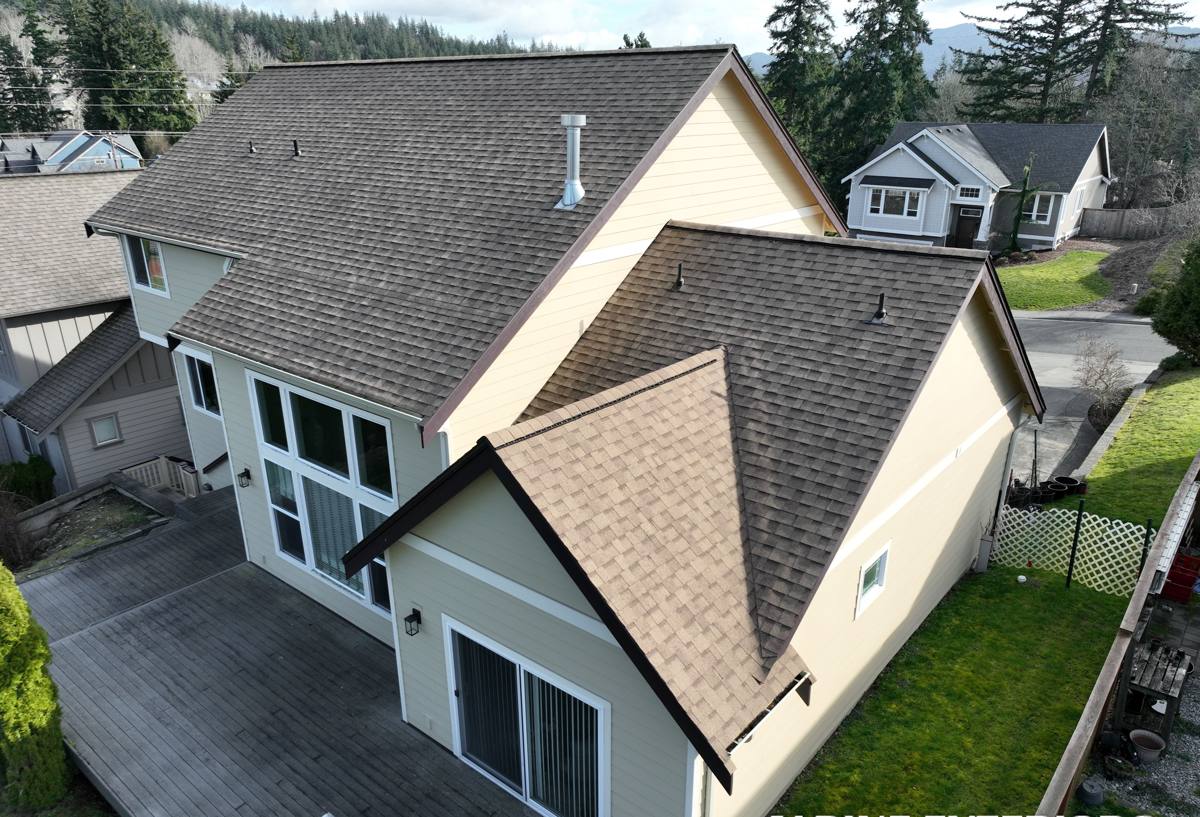
What Salt Air and Moss Season Actually Do to Siding
Salt Air
Airborne salt is corrosive to exposed metal — nail heads, flashing edges, trim fasteners — and it can accelerate the breakdown of lower-quality paint finishes over time. Materials with a factory-applied, engineered finish hold color and integrity far longer under this kind of exposure than field-painted or unfinished surfaces.
Wind-Driven Rain
Rain that comes in at an angle, which is common on open bay-facing exposures, drives water into laps, corner joints, and butt seams more aggressively than straight-down rain. Siding that swells, wicks, or delaminates when it takes on moisture is a poor match for this kind of exposure. The material itself needs to resist water intrusion, and just as important, the installation details — flashing, lap spacing, sealed joints — need to be done correctly, because even the best siding material fails early if water gets behind it.
Moss and Algae Season
Whatcom County's wet season runs long, and north-facing or shaded walls near mature trees stay damp for extended stretches. Porous or rough-textured siding surfaces give moss and algae something to grip. A dense, factory-finished surface resists that growth far better and is easier to keep clean when it does appear.
Why We Install Only James Hardie Fiber Cement
We standardized on James Hardie fiber cement siding, and we don't install vinyl, LP SmartSide, Cemplank, Allura, or wood siding like primed spruce or cedar. That's a deliberate decision, not a brand preference for its own sake.
- Non-combustible material — fiber cement doesn't burn, which matters for insurance conversations and long-term peace of mind.
- ColorPlus factory finish — baked-on color that resists fading and chipping far better than field-applied paint, which matters directly for salt-air exposure.
- Climate-engineered HZ product lines — James Hardie makes region-specific formulations, and the HZ5 line is engineered for wetter, cooler climates like ours.
- Dimensional stability — fiber cement doesn't swell, warp, or rot the way wood-based products can when they take on repeated moisture.
- Strong transferable warranty — backed by a manufacturer with a long track record, which matters when you're planning to own the home for years or eventually sell it.
We're upfront that other products have real strengths — vinyl is inexpensive and low-maintenance in mild climates, engineered wood products can look attractive and install quickly, and cedar has a natural appeal that some homeowners love. But when we weigh those products against what a Birch Bay exposure demands over 20-30 years — moisture resistance, finish durability under salt air, and resistance to organic growth — fiber cement is what we're willing to put our name on and back with our own installation standards.
What Correct Fiber Cement Installation Involves
The material is only half the equation. A huge share of siding failures we get called to look at — regardless of brand — trace back to installation shortcuts, not the product itself. For a coastal Whatcom County home, we pay particular attention to:
Water Management Behind the Siding
A correctly built wall assembly includes a weather-resistant barrier, properly lapped and taped, with rainscreen or drainage gap where conditions call for it. This matters more in Birch Bay than in a sheltered inland location, because wind-driven rain puts more water at the wall surface to begin with.
Flashing at Every Penetration
Windows, doors, hose bibs, vents, and any other wall penetration need proper flashing that directs water outward and down, never behind the siding plane. Salt-air corrosion makes fastener and flashing material choice especially important here.
Fastener Selection and Placement
Corrosion-resistant fasteners, placed per manufacturer specification for nailing pattern and depth, are non-negotiable this close to salt water. Overdriven or underdriven nails compromise the siding's ability to move slightly with temperature changes without cracking.
Proper Clearances
James Hardie specifies minimum clearances from grade, roof lines, decks, and other surfaces. Skipping these clearances is one of the most common causes of moisture damage and premature paint failure we see on improperly installed siding.
Caulking and Joint Treatment
Butt joints and trim intersections need to be treated per spec — some joints are meant to be caulked, others are designed to be left with a gap for drainage. Getting this backwards traps water instead of shedding it.
Our Process for a Birch Bay Fiber Cement Project
- On-site assessment — we look at your home's specific exposure: how close to the water, which walls face prevailing wind and rain, existing moisture damage, and current siding condition.
- Product and profile selection — we walk through James Hardie's siding profiles (lap, shingle-style, panel) and ColorPlus color options that fit your home's style and your maintenance preferences.
- Wall assessment for water management — we check what's behind the current siding, and address any weather barrier or sheathing issues before new siding goes up, not after.
- Installation to manufacturer specification — correct nailing, flashing, clearances, and joint treatment, done by installers who work this material regularly.
- Final walkthrough — we go over the finished work with you, including care and maintenance specific to a bay-front exposure.
Why a Crew That Already Works Birch Bay Matters
Installation quality on any coastal property depends on judgment calls that come from experience with that specific exposure — how tight to run clearances near a deck that catches spray, how a north wall under tree cover behaves compared to an open bay-facing wall, which details tend to fail first when wind-driven rain is a regular occurrence rather than an occasional event. A crew that has done this work throughout Lynden and the surrounding Whatcom County coastline brings that judgment to your project instead of treating it like a generic install.
There's also a practical service side to this: a company based in and working regularly around Lynden and Birch Bay can respond faster for warranty questions, follow-up caulking touch-ups, or storm-related inspections than a crew that only occasionally works this far north or this close to the water.
Cost Factors for Fiber Cement Siding in a Coastal Setting
Every home is different, but these are the main factors that move the price on a Birch Bay fiber cement project. We'll give you a firm number after seeing the house — broad ranges below are for planning purposes only.
| Factor | Why It Matters Here |
|---|---|
| Extent of existing moisture damage | Wind-driven rain exposure means some older siding jobs have hidden sheathing or framing damage that needs repair before new siding goes on |
| Wall assembly upgrades | Adding or upgrading a weather-resistant barrier or drainage plane adds labor but pays off directly against this climate |
| Siding profile and texture | Lap, shingle-style, and panel profiles vary in material and labor cost |
| Trim and detail work | Homes with more corners, window trim, and architectural detail take more time to flash and finish correctly |
| Access and site conditions | Bay-front lots can have tighter access, slopes, or landscaping that affect setup and staging |
A Simple Maintenance Checklist for Coastal Fiber Cement
Fiber cement with a ColorPlus finish is low-maintenance compared to painted wood, but "low-maintenance" isn't "no-maintenance," especially this close to the water. A few habits go a long way:
- Rinse siding periodically with a garden hose to clear salt residue, especially on walls facing the water
- Check caulked joints annually for cracking or separation and have them touched up before winter
- Keep gutters clear so overflow isn't running down the siding face
- Trim back vegetation and tree cover on shaded walls to reduce moss and algae buildup
- Inspect trim and flashing after major windstorms for any displacement
- Address any soft spots, discoloration, or paint failure quickly rather than waiting
If you're weighing a siding replacement or repair on a Birch Bay home, we're happy to take a look and walk you through what your specific exposure calls for. Reach out for a free, no-pressure estimate — there's a form below to get started.