 Lynden Exterior
 Birch Bay's Marine Climate Is Harder on Siding Than Most Homeowners Realize
Birch Bay sits right up against the water, and that changes what siding has to survive compared to homes even a few miles inland in Lynden. Salt-laden air moves off the water and settles on every exterior surface, wind-driven rain hits siding at an angle instead of just running down it, and shaded, damp lots hold onto moisture long after a storm has passed. Put those three together and you get a climate that's genuinely rougher on exterior materials than most of Whatcom County experiences.
None of that is exotic or rare — it's just consistent. Consistent salt exposure corrodes unprotected metal fasteners and trim over years, not months. Consistent wind-driven rain finds any gap in flashing or caulking that a calmer climate would never expose. And consistent shade and dampness feed moss and algae growth on siding that never gets a full afternoon of sun to dry out. A siding job that's "good enough" inland can fail early in Birch Bay for exactly these reasons.
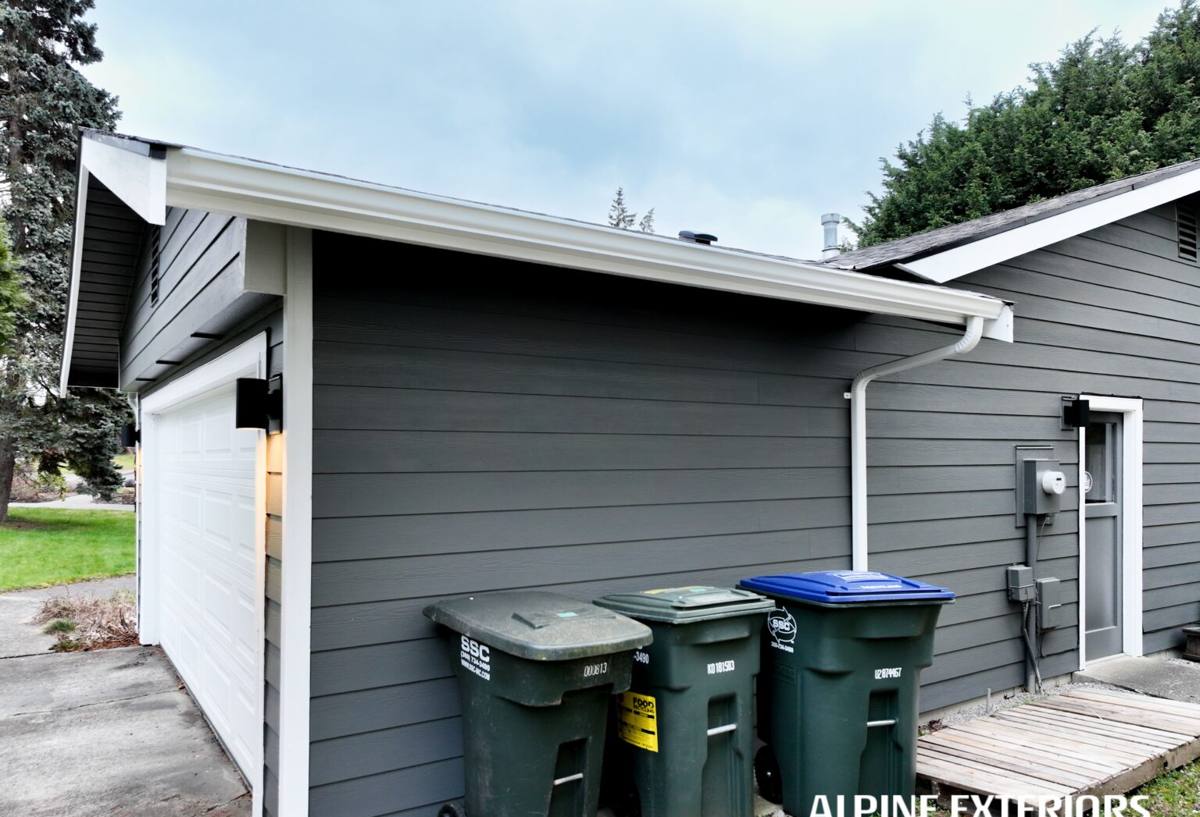
Why We Install James Hardie Fiber Cement Here — and Nothing Else
We are a Hardie-only siding contractor. We don't install vinyl, LP SmartSide, cedar, primed spruce, or other fiber cement brands, and Birch Bay is one of the clearest examples of why. Every alternative has a specific weak point that this climate is good at finding:
- Vinyl expands and contracts with temperature swings and can crack or warp under sustained wind loads; its seams and J-channels give wind-driven rain more entry points over time.
- Wood-based products (cedar, primed spruce) depend entirely on paint film and caulking to keep moisture out of an organic substrate — miss a spot in a damp, shaded environment and rot follows.
- LP SmartSide is engineered wood with a treated strand core; it holds up reasonably well when detailing is perfect, but any breach in the factory coating exposes wood fiber to the kind of sustained moisture Birch Bay delivers.
James Hardie fiber cement is cement, sand, and cellulose fiber — there's no organic wood fiber for moisture to feed on, and it doesn't corrode, rust, or rot. The ColorPlus factory finish is baked on under controlled conditions and holds color and adhesion far better against salt exposure and UV than field-applied paint on wood or the printed finish on vinyl. That's the whole reason we standardized on it: it's the product that actually matches what this coastline does to a house.
What a Correct Installation Looks Like This Close to the Water
Hardie siding is only as good as the installation behind it. In a salt-air, high-rain environment like Birch Bay, a handful of details matter more than they would on a sheltered inland lot.
Fasteners and Flashing
Standard fasteners can corrode faster in salt air than they would a few miles inland. We use corrosion-resistant fastener types appropriate to the exposure, and we don't cut corners on flashing at windows, doors, and every horizontal trim transition — these are the spots where wind-driven rain gets forced sideways and upward instead of simply running off.
A Working Rainscreen Gap
Hardie siding needs an air gap and drainage path behind it so any moisture that does get past the surface can drain and dry out instead of sitting against the wall sheathing. This matters everywhere, but in a marine climate where damp air lingers longer, a properly furred-out rainscreen is the difference between siding that dries out after a storm and a wall assembly that stays damp for days.
Cut Edges and Field-Applied Paint
Every factory edge of a Hardie board is protected by the ColorPlus finish or primer, but any edge cut on-site is raw material until it's sealed. We seal and touch up every field cut — top and bottom cuts, notches around penetrations, everything — because an unsealed cut edge is exactly the kind of small miss that salt air and constant moisture will exploit first.
Choosing the Right Hardie Product for a Birch Bay Home
James Hardie makes several siding profiles, and the right choice depends on the home's style and exposure, not just preference. James Hardie also engineers its products by climate zone, and homes along the Whatcom County coast fall into the moisture- and humidity-focused end of that range — which is part of why we don't treat every Hardie order the same way we might for a drier region.
| Product | Best Use | Why It Fits Birch Bay |
|---|---|---|
| HardiePlank lap siding | Most home styles, traditional or modern lap look | Widest color and texture range; ColorPlus finish resists salt-driven fading |
| HardiePanel vertical siding | Modern facades, accent walls, gable ends | Fewer horizontal seams for wind-driven rain to test |
| HardieTrim boards | Corners, window and door surrounds, fascia | Non-combustible, won't rot at high-exposure trim joints |
| HardieSoffit panels | Eaves and overhangs | Resists the moss and mildew growth common on shaded, damp soffits |
Our Process, Start to Finish
We keep the process straightforward and honest, whether the home is right on the water or set back from it:
- On-site assessment. We look at wind exposure, shading, existing moisture damage, and current flashing and trim condition before we ever talk product or price.
- Scope and estimate. A written estimate that spells out product lines, trim details, and what prep work (rot repair, flashing replacement) is included.
- Tear-off and inspection. Removing the old siding lets us actually see the sheathing and framing underneath — this is where hidden moisture damage from a previous install shows up.
- Weather barrier and rainscreen setup. Correct house wrap or weather-resistive barrier, furring for drainage, and flashing at every penetration before a single piece of Hardie goes up.
- Installation to manufacturer spec. Correct fastener placement, board overlap, gapping, and caulking — not just "close enough."
- Final detailing. Sealing cut edges, caulking transitions, and a walk-through so you know what was done and why.
Living With Hardie Siding in a Salt Air, High-Moss Climate
Correctly installed Hardie siding is low-maintenance, not zero-maintenance. A few habits go a long way in Birch Bay specifically:
- Rinse siding with a garden hose once or twice a year to clear salt residue and organic buildup before it feeds moss growth, especially on shaded north- and west-facing walls.
- Check caulking at trim joints, window and door surrounds, and butt joints annually — caulk is the first line of defense against wind-driven rain and it does wear out.
- Keep gutters and downspouts clear so overflow doesn't run directly down siding faces.
- Trim back vegetation and landscaping that keeps siding shaded and damp longer than it needs to be.
- Address any moss or algae growth early with a gentle wash rather than pressure-washing directly into seams and edges.
Cost Factors for a Birch Bay Siding Project
Every project is different, but the same handful of factors drive most of the cost difference between homes:
| Factor | Why It Affects Cost |
|---|---|
| Home size and story count | More square footage and stories mean more material and more scaffolding/lift time |
| Existing damage found at tear-off | Rot or moisture damage in sheathing or framing has to be repaired before new siding goes on |
| Trim complexity | Homes with more corners, dormers, and window/door surrounds take more labor per square foot |
| Product profile mix | Combining lap siding, panel accents, and custom trim costs more than a single uniform profile |
| Access and site conditions | Waterfront and sloped lots can require more staging and protection work |
We give a straightforward written estimate after the on-site assessment — no vague ranges, no pressure to decide on the spot.
What to Look For Before You Hire Anyone
Because siding problems in this climate often don't show up for a year or two, it pays to vet a contractor carefully rather than go with the lowest bid. Before you sign anything, it's reasonable to ask for:
- Proof of active contractor licensing and insurance in Washington
- A written scope that names the specific Hardie products and trim details being used
- An explanation of how they'll handle flashing, rainscreen gapping, and fastener choice — not just "we'll install it"
- Their plan for sealing field-cut edges before installation
- References or examples of work in Birch Bay or similarly exposed coastal areas, not just inland projects
Why a Crew That Already Works Birch Bay Matters
Siding crews based inland sometimes treat every job the same regardless of exposure, and in a place like Birch Bay that's how corners get cut without anyone meaning to cut them. A crew that already works this stretch of Whatcom County knows which walls take the worst of the wind-driven rain, which lots stay shaded and damp long enough to grow moss faster, and where salt exposure means upgrading fastener choice isn't optional. That familiarity shows up in the details — the flashing, the gapping, the fastener spec — long before it shows up as a problem you'd otherwise have to call someone back for.
We're based in Lynden and we work this coastline regularly, which means Birch Bay isn't a special case for us — it's simply the standard we build every job to.
If you're considering new siding for a Birch Bay home, we're happy to take a look and walk you through what your house specifically needs. Fill out the form below for a free, no-pressure estimate.