 Lynden Exterior
 Why Birch Bay's Coastal Exposure Changes the Siding Equation
Homes near Birch Bay sit in a different climate zone than a house a few miles inland in Lynden, even though they're in the same county. Proximity to saltwater brings airborne salt spray, near-constant humidity, and wind-driven rain that hits walls at an angle instead of falling straight down. Add Whatcom County's long, wet shoulder seasons and shaded, slow-drying sites, and you get a set of conditions that punishes siding materials and installation shortcuts faster than almost anywhere else in the region. A siding job that would hold up fine in a drier inland neighborhood can fail years early here if the material or the installation isn't matched to what the coast actually does to a wall.
This page is specifically about installing siding on Birch Bay homes — not siding in general. The material choice, the detailing around windows and doors, and the maintenance expectations all shift when salt air, driving rain, and moss are part of daily life rather than occasional weather events.
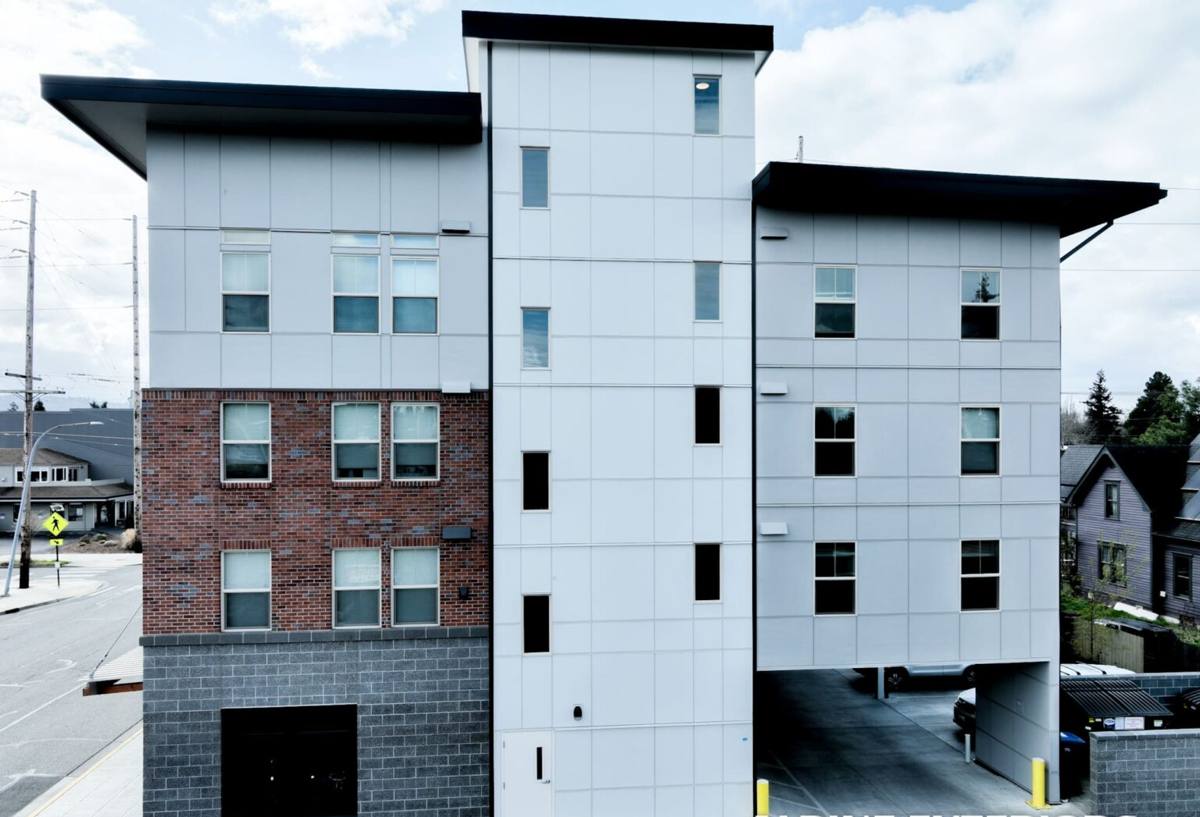
What Salt Air, Driving Rain, and Moss Actually Do to a Wall
Salt Air
Airborne salt is corrosive to metal fasteners, flashing, and trim, and it accelerates the breakdown of finishes that aren't formulated to resist it. On wood-based and wood-composite sidings, salt-laden moisture speeds up swelling, checking, and paint failure at the surface. It doesn't take a beachfront lot to be affected — salt spray travels well inland on onshore winds, so homes set back from the water still see elevated exposure compared to a typical inland Whatcom County property.
Driving Rain
Wind-driven rain doesn't just run down a wall — it gets pushed sideways and upward, finding its way behind laps, into unsealed joints, and around poorly flashed penetrations. Over time, water that gets behind the siding rather than off of it is responsible for more rot, sheathing damage, and mold than any other single factor in coastal siding failures. The siding material matters, but the water management behind it — house wrap, flashing, and drainage gaps — matters just as much.
Moss and Organic Growth
Long wet seasons and shaded, tree-lined lots common around Birch Bay create ideal conditions for moss, algae, and mildew to take hold on north-facing and shaded walls. Beyond the cosmetic issue, sustained organic growth holds moisture against the siding surface for extended periods, which shortens the life of any material that isn't dimensionally stable and rot-resistant to begin with.
Why We Install Only James Hardie Fiber Cement Here
We standardized on James Hardie fiber cement siding for every home we side, and coastal jobs like the ones in Birch Bay are a big part of why. Fiber cement is non-combustible, dimensionally stable, and doesn't swell, rot, or delaminate the way wood-based products can when they take on repeated moisture exposure. That matters enormously in a climate where the siding is wet more often than it's dry for months at a time.
Hardie's climate-engineered HZ product lines are built specifically to address regional weather patterns — the HZ5 formulation used in colder, wetter climates like ours is engineered for better resistance to moisture-related freeze-thaw stress than the standard formulation sold in drier regions. That's not a marketing detail; it's a real difference in how the board is manufactured for where it's going to live.
The factory-applied ColorPlus finish is another piece of this. It's baked on under controlled conditions and backed by its own finish warranty, which holds up better against sun, salt, and repeated wet-dry cycling than field-applied paint. Salt air and UV both work against painted finishes over time, and a factory finish gives Birch Bay homeowners a meaningfully longer stretch before repainting becomes a conversation.
We don't install vinyl, LP SmartSide, Cemplank, Allura, primed spruce, or cedar. Each of those has real strengths, but none of them hold up to this specific combination of salt exposure, driving rain, and sustained moss pressure as well as correctly installed Hardie fiber cement does, and we'd rather stand behind one product system we trust completely than offer several we have reservations about.
Quick Comparison: How Common Siding Materials Handle Coastal Conditions
| Material | Salt Air Resistance | Moisture Behavior | Typical Maintenance |
|---|---|---|---|
| James Hardie Fiber Cement (HZ5) | Strong — non-combustible, dimensionally stable | Doesn't swell or rot; managed by proper installation and drainage | Occasional wash; factory finish resists fading |
| Vinyl | Can become brittle and discolor with sun and salt exposure over time | Doesn't absorb water, but panels can warp or gap, allowing water behind | Low, but damage often means full panel replacement |
| Wood / Cedar | Vulnerable to salt-accelerated checking and finish breakdown | Absorbs moisture; prone to rot and swelling in sustained wet conditions | Frequent refinishing and moisture monitoring |
| Engineered Wood (e.g., LP SmartSide) | Moderate; finish and edge sealing are critical | Can swell or degrade at cut edges and seams if moisture gets in | Regular inspection of joints and caulking |
What a Correct Installation Actually Involves
The siding material is only part of the story. A large share of coastal siding failures we're called out to inspect trace back to installation details, not the product itself. A correct job on a Birch Bay home includes:
- A continuous, properly lapped weather-resistive barrier behind the siding, with all seams taped or sealed
- Correct flashing at every window, door, deck ledger, and roof-to-wall intersection — the places driving rain finds first
- Proper fastener type, spacing, and embedment per the manufacturer's installation guide, using corrosion-resistant fasteners suited to salt-air exposure
- Maintained clearance between the bottom of the siding and grade, decks, and roof lines to prevent standing water and wicking
- Correct panel and joint gaps with factory-approved caulking, not just tight-butted boards that leave no room for expansion
- Careful detailing at inside and outside corners, where two planes meet and water concentrates
- A drainage plane behind the siding so any incidental moisture has somewhere to go besides the sheathing
Skipping or rushing any one of these doesn't usually show up as a problem in year one. It shows up in year five or eight, as a soft spot near a window, a stain trailing down from a butt joint, or moss taking hold where water has been sitting against the wall longer than it should.
Our Process for Birch Bay Siding Projects
Assessment
We start by looking at the whole wall system, not just the visible siding — checking for existing moisture damage, evaluating current flashing and trim condition, and noting site-specific exposure factors like which elevations take the brunt of the wind and rain off the water.
Preparation
Old siding removal is followed by a check of the sheathing underneath. Any water damage found at this stage gets addressed before anything new goes on the wall — covering over a compromised sheathing layer just locks the problem in.
Installation
We install the weather barrier, flashing, and Hardie siding as a complete system, following manufacturer specifications for fastening, gapping, and clearances at every transition point on the house.
Final Inspection
Before we consider the job finished, we walk the exterior checking every joint, corner, and penetration — the details that determine whether the wall performs well for the next several decades or starts showing problems in a few years.
Why Local Experience in Birch Bay Matters
A crew that regularly works Whatcom County's coastal areas already knows which elevations of a house typically take the worst weather, how much drying time to expect between rain events, and what level of moss and organic growth is normal versus a sign of an underlying moisture problem. That familiarity shows up in small decisions throughout a project — where to add extra flashing attention, which details deserve a second look, and how to sequence work around the wet season instead of fighting it. It's the difference between a crew that's installing siding on a coastal home for the first time and one that's seen how these houses hold up ten years later.
Keeping Your Investment Looking Right
Even the right material installed correctly benefits from basic upkeep in this climate. A periodic rinse to clear salt residue and organic buildup, especially on shaded or north-facing walls, keeps moss from getting a foothold. Keeping gutters clear and grade sloped away from the foundation reduces the moisture load your siding has to shed. None of this is heavy maintenance — it's the kind of light attention that lets a well-installed Hardie system reach the long end of its service life instead of the short end.
If you're planning a siding project for a Birch Bay home, we're happy to walk the property, look at your current siding and trim condition, and give you a straightforward, no-pressure estimate for what correct James Hardie installation would look like on your house. There's a form below — reach out and we'll get you scheduled.