 Lynden Exterior
 Blaine Sits Where Weather Meets Siding, Head-On
Blaine's location near the water changes what siding has to deal with compared to homes a few miles inland. Salt-laden air off the coast, near-constant winter rain systems rolling in off the Pacific, and a moss and algae season that can stretch from fall through spring all put steady pressure on exterior walls. None of that damage happens overnight. It shows up as small failures — a cracked panel here, a soft spot there, caulking that's pulled away at a trim joint — that get worse every month they're ignored.
A siding repair in Blaine isn't the same job as a siding repair in a drier part of Whatcom County. The materials, the fasteners, the flashing details, and the sequencing all have to account for the fact that this siding will spend more of the year wet than dry, and that salt air accelerates corrosion on anything metal that isn't properly rated or protected. Getting the repair right the first time matters more here, because a rushed patch job doesn't get a break in the weather to fail slowly — it gets tested immediately.
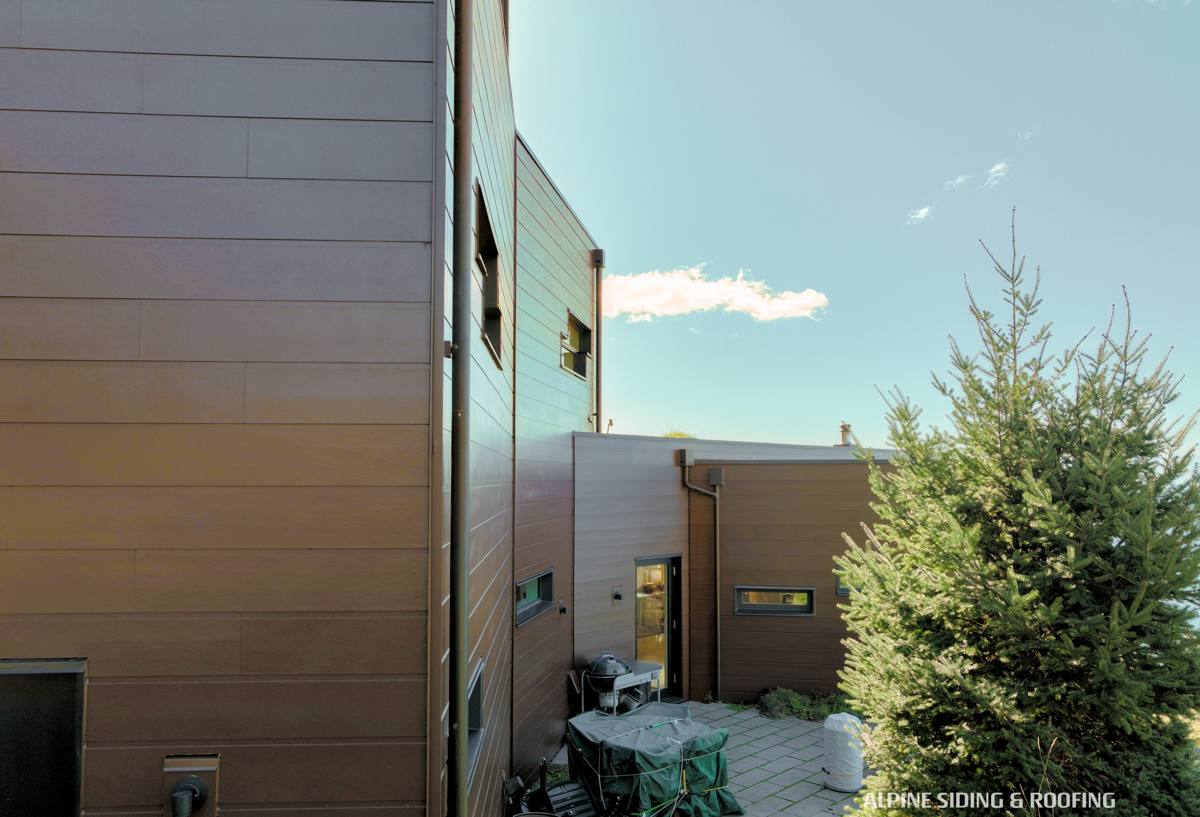
What Coastal Exposure Actually Does to Siding
It helps to understand the specific failure patterns we see, rather than treating "siding damage" as one generic problem.
Moisture Intrusion Behind the Panel
Driving rain doesn't just hit siding head-on — wind off the water pushes it sideways and up under laps, around trim, and into any gap where caulking has failed or flashing was installed short. Once water gets behind the siding, the problem is rarely the visible panel anymore; it's what's happening to the sheathing and framing underneath.
Salt Air and Fastener Corrosion
Standard fasteners and some trim hardware corrode faster in salt air than they would inland. Rust streaking below nail heads or screws, and soft or discolored siding around fastener points, are common early signs that the wrong hardware was used or that corrosion has already started working its way into the material.
Moss, Algae, and Prolonged Dampness
Blaine's long wet season keeps north-facing walls, shaded siding, and anything under tree cover damp for extended stretches. Moss and algae growth aren't just cosmetic — they hold moisture against the surface longer than bare siding would, which speeds up whatever deterioration is already underway underneath.
Signs a Blaine Home Needs Siding Repair Now, Not Later
Most homeowners don't notice siding problems until they're already significant. Here's what we tell people to actually check for, especially heading into or coming out of the wet season:
- Panels that feel soft, spongy, or flex when pressed — a sign moisture has reached the substrate
- Visible cracks, splits, or chips, especially near corners and window trim
- Bubbling, peeling, or discolored paint/finish in one localized area rather than across the whole wall
- Persistent moss or dark streaking that keeps returning after cleaning
- Gaps or separation at seams, trim joints, or where siding meets flashing
- Rust staining below fasteners or trim hardware
- A musty smell or visible staining on interior walls that share an exterior wall with damaged siding
- Warped or buckled sections, particularly on walls that take the most wind-driven rain
Any one of these on its own might be a minor, contained repair. Several of them together, or damage that's spread across more than one wall, usually means it's worth a closer look before deciding on a fix.
Repair or Replace: How We Actually Make the Call
Not every damaged section needs to come off the whole house, and not every issue can be responsibly patched. We look at how contained the damage is, what's happening behind the surface, and how old and how compromised the rest of the siding is before recommending anything.
| Factor | Points Toward Repair | Points Toward Replacement |
|---|---|---|
| Extent of damage | Isolated to one or two panels/areas | Spread across multiple walls or elevations |
| Sheathing condition underneath | Dry, sound framing once opened up | Soft, rotted, or water-stained sheathing found |
| Age of existing siding | Siding is otherwise mid-life and sound | Siding is near or past its expected service life |
| Material match | Matching product/color still available | Discontinued profile or badly faded existing siding |
| Root cause | Isolated flashing/caulking failure | Systemic issue (bad original install, wrong product for climate) |
Sometimes what looks like a simple repair turns into a bigger conversation once a panel comes off and we can see what the coastal moisture has been doing to the wall behind it. We'll always tell you honestly which situation you're in before work proceeds.
What a Correct Siding Repair Involves
A repair that just covers up the visible damage without addressing what caused it tends to fail again within a season or two, especially in a climate like Blaine's. A correct repair means:
- Removing enough surrounding material to actually see the extent of the damage, not just patching the spot that's visible
- Inspecting the sheathing, house wrap, and flashing underneath before anything goes back on — this is the step that gets skipped when a repair is done too fast
- Correcting the underlying cause, whether that's a flashing detail, a caulking failure, or a fastener that was never rated for the exposure
- Replacing damaged material with matching product, cut and fastened to the same standards as the original installation
- Re-sealing and re-finishing so the repaired section is protected the same way as the surrounding siding, not left as a weak point
Skipping any one of these steps is how "repaired" siding ends up back on our schedule a year later — often worse, because the underlying moisture problem had more time to spread.
Why We Only Repair and Install James Hardie Fiber Cement
When a repair uncovers more damage than expected, or when a section of siding is beyond patching, homeowners are sometimes surprised to learn we only install one product: James Hardie fiber cement. It's a deliberate standard, not a limitation we apologize for.
Fiber cement doesn't absorb water the way wood-based products can, and it's non-combustible, which matters on a coastline where wind-driven weather is a fact of life. Hardie's HZ5 product line is engineered specifically for climates with heavy moisture exposure, and the factory-applied ColorPlus finish is baked on and warranted against fading and peeling in a way that field-applied paint simply isn't. We've made the call not to install vinyl, LP SmartSide, or other fiber cement alternatives because, in our experience installing and repairing siding on the coast, none of them hold up as consistently to sustained salt air and moisture as correctly installed Hardie does.
That doesn't mean every repair turns into a Hardie conversation — most don't. But when replacement is the honest recommendation, this is why we steer homeowners there instead of a cheaper like-for-like patch with a product we don't stand behind long-term.
Our Process for a Blaine Siding Repair Call
The process is straightforward, and we keep it that way on purpose:
| Step | What Happens |
|---|---|
| 1. Walkthrough | We inspect the damaged area and the surrounding siding, not just the spot you called about |
| 2. Diagnosis | We identify whether this is a contained repair or a sign of a broader issue underneath |
| 3. Written estimate | You get a clear scope and price before any work starts — no surprise change orders |
| 4. Repair | Damaged material comes off, the substrate is checked, the cause is corrected, matching material goes back on |
| 5. Finish and cleanup | Sealing, finish-matching, and full site cleanup before we consider the job done |
Because we're based in Lynden and already work throughout Whatcom County including Blaine, scheduling a look at a damaged section doesn't require a long lead time, and we're not learning the area's weather patterns for the first time on your house.
Maintenance After the Repair: Living With Blaine's Climate
A good repair buys you time, but it doesn't make a coastal home maintenance-free. A few habits go a long way toward protecting the work:
- Rinse siding periodically to clear salt residue and organic buildup before it takes hold, especially on walls facing the water or under tree cover
- Keep gutters and downspouts clear so runoff doesn't sheet down siding walls during heavy rain events
- Trim back vegetation that keeps a wall shaded and damp longer than the rest of the house
- Walk the exterior once or twice a year, particularly after winter storms, and check the same trouble spots — caulk joints, corners, low walls — for early signs of trouble
- Address small caulking or trim gaps quickly; they're a cheap fix now and an expensive one once water gets behind the wall
None of this is unique to fiber cement — it's just what coastal exposure asks of any exterior. But Hardie's resistance to moisture absorption and its factory finish mean these maintenance habits go further and last longer than they would on a product that's already fighting moisture intrusion at the material level.
Why a Crew That Already Works Blaine Is Worth Choosing
Siding repair looks simple from the outside, but the details that make it last — the right flashing sequence, the right fastener for salt-air exposure, knowing which walls in this area take the worst of the wind-driven rain — come from having actually done the work here before. A crew based in Lynden that regularly works the Blaine area isn't guessing at how the coastal climate affects a repair; it's a known variable in how we scope and execute the job.
That local familiarity also means straightforward, unrushed estimates. We're not driving in from out of the area to squeeze in one job — we're already in Whatcom County, which keeps scheduling realistic and follow-up easy if you ever have a question about the work after it's done.
If you've got a section of siding in Blaine that's cracking, staining, going soft, or just doesn't look right anymore, we're happy to take a look and give you a straight answer about what it needs. Reach out for a free, no-pressure estimate using the form below.