 Lynden Exterior
 Composite Decking for Abbotsford, BC Homes
Abbotsford sits right in the wet belt of the Pacific Northwest, close enough to Lynden and Whatcom County that the two areas share the same weather patterns almost day for day. That means the same deck problems show up on both sides of the border: standing water after fall storms, moss creeping into any surface that stays shaded and damp, and salt-laden air off the coast working its way into fasteners and framing over the years. A deck built for a dry climate simply doesn't hold up here. A deck built for this one does.
This page is about one thing: composite decking, done right, for homes in and around Abbotsford. Not a general overview of every decking material we offer — a straight look at what this climate demands, what a correct composite installation actually involves, and why it matters that the crew doing the work already knows this region's weather instead of learning it on your project.
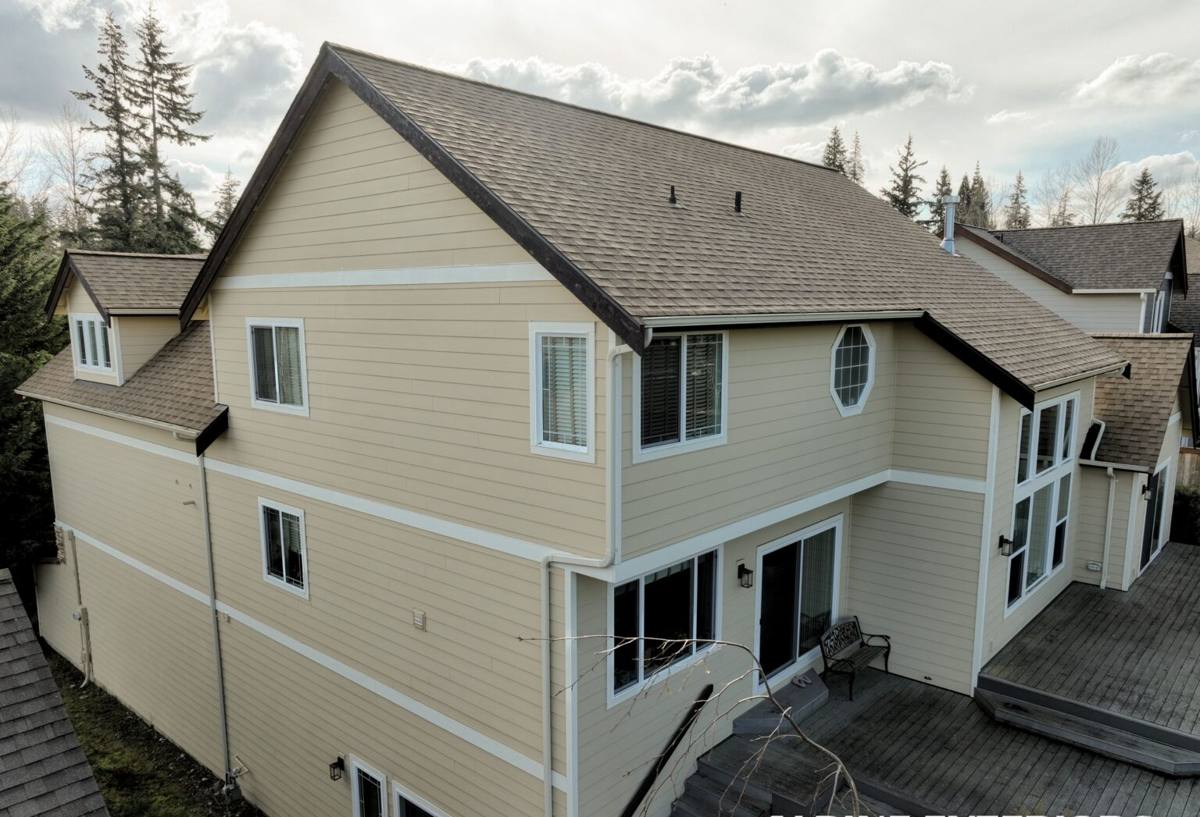
What This Climate Actually Does to a Deck
Before talking about materials, it helps to understand what you're fighting. The combination of driving rain, long stretches of overcast humidity, and a moss season that can run from fall through spring puts three specific stresses on any deck surface:
- Moisture cycling — boards that soak up rain and then dry out repeatedly, which is what eventually causes warping, cupping, and fastener pull-through in wood decking.
- Moss and algae growth — anywhere water sits or airflow is blocked, organic growth takes hold, and it makes surfaces slick and dangerous underfoot long before it's an eyesore.
- Corrosion — salt air and constant dampness accelerate rust on screws, joist hangers, and any hardware that isn't rated for the exposure.
None of this is unique to any one property — it's the baseline for the area. A deck that ignores it will show problems within a few seasons, not decades.
Why Composite Holds Up Better Here
Composite decking is made from a blend of wood fiber and recycled plastic, usually with a protective outer cap on higher-end boards. That construction matters directly for this climate:
Moisture resistance
Composite boards don't absorb water the way solid wood does, so they don't swell, cup, or split from repeated wet-dry cycles the same way. That doesn't mean water can't cause problems underneath a composite deck — it can, if the substructure isn't built to shed it — but the board itself isn't fighting the climate the way wood is.
Moss and mildew resistance
Capped composite boards give algae and moss less to grip onto than raw wood grain does, and they clean up with a simple wash rather than sanding or refinishing. In a climate where moss season is a real thing, that's a meaningful difference in how much upkeep a deck demands.
No annual refinishing
Wood decking in this climate typically needs a fresh stain or sealer every year or two just to keep water out of the grain. Composite doesn't need that cycle. It's not a zero-maintenance product — nothing outdoors in this region is — but the maintenance is cleaning, not refinishing.
We'll still install and repair wood decking when that's what a homeowner wants — it has its place, and some homeowners prefer the look and the ability to refinish it however they like. But for a low-maintenance deck in this climate, composite is our honest recommendation more often than not.
What a Correct Composite Installation Actually Involves
Composite boards are only as good as what's underneath them. A lot of the decking problems we get called out to fix aren't a material failure — they're a substructure that wasn't built for this climate in the first place. A correct job includes:
- Proper joist spacing — composite requires tighter joist spacing than wood in most cases; installing it on wood-spec framing leads to bounce and premature sagging.
- Ventilation underneath — airflow beneath the deck keeps moisture from pooling against the underside of boards and the tops of joists.
- Grading and drainage away from the structure — water needs somewhere to go. If the ground or ledger board traps it, you get rot at the house connection regardless of what's on top.
- Corrosion-resistant hardware — hidden fastener systems, joist tape, and coated or stainless fasteners rated for wet, salt-exposed conditions, not general-purpose hardware.
- Flashing at the ledger board — this is the single most common failure point on deck-to-house connections in wet climates, and it's invisible once the deck is built, which is exactly why it has to be done right the first time.
Any of these done wrong won't show up on installation day. They show up two, three, five years later as soft spots, rust streaks, or water damage against the house — and by then it's a repair job, not a five-minute fix.
Composite Decking Options Compared
Not all composite is built the same. Here's a general comparison of the tiers we work with, to give you a sense of the trade-offs before we talk specifics for your project:
| Type | Moisture/Moss Resistance | Typical Lifespan | Relative Cost |
|---|---|---|---|
| Uncapped composite | Good, but the surface can absorb some moisture over time | 15–25 years | Lower |
| Capped composite (cap on top only) | Very good — protective shell resists staining and moss | 20–30 years | Mid |
| Fully capped composite (cap on all sides) | Best — protected on every exposed face, including cut ends when detailed properly | 25–30+ years | Higher |
For most Abbotsford-area homes, fully capped or top-capped composite is worth the upfront difference given how much moss and moisture exposure the deck will see over its life. We'll walk through the real options and pricing for your specific deck rather than push a single tier on every job.
How We Approach a Composite Decking Project
Our process is the same whether it's a full rebuild or a first-time deck:
- On-site assessment — we look at drainage, sun/shade exposure, existing structure (if any), and how the deck ties into the house.
- Design and material selection — board tier, color, fastener system, and layout, based on how you'll actually use the space.
- Permitting and planning — we handle the paperwork required for your local jurisdiction so you're not chasing it down yourself.
- Demo and substructure build — if replacing an old deck, we check the ledger board and framing underneath rather than just building over a problem.
- Composite installation — hidden fasteners, proper spacing, and flashing detail done to spec, not shortcuts.
- Final walkthrough — we go over the finished deck with you and explain basic care before we consider the job done.
Cost Factors for a Composite Deck
Composite decking costs more upfront than pressure-treated wood, but less over its lifespan once you account for staining, sealing, and board replacement on a wood deck. Actual project cost depends on:
| Factor | Why It Matters |
|---|---|
| Deck size and shape | More linear footage of cuts and edges adds labor beyond simple square footage |
| Height and structure | Multi-level decks or decks needing new footings cost more than a simple ground-level rebuild |
| Board tier | Uncapped vs. capped vs. fully capped is the biggest material cost swing |
| Railing and stairs | Composite or metal railing systems add cost versus basic wood rail |
| Substructure condition | A rebuild that needs new framing, footings, or ledger repair costs more than resurfacing sound framing |
We'll give you a firm, itemized number after seeing the site — we don't quote sight-unseen, because the substructure condition affects price too much to guess at.
Signs Your Current Deck Needs Attention
If you're not sure whether it's time to replace or just repair, look for these before deciding:
- Soft, spongy, or springy spots underfoot
- Visible gaps, rot, or discoloration where the deck meets the house
- Persistent moss or green staining that returns quickly after cleaning
- Rust streaks around fasteners or hardware
- Railings that flex or feel loose when leaned on
- Boards that have cupped, split, or noticeably faded unevenly
Some of these are surface issues; others point to structural problems underneath. Worth having a second set of eyes on it before deciding which one you're dealing with.
Why a Local Crew Matters for This Project
Abbotsford sits close enough to Lynden and the rest of Whatcom County that the drive isn't the issue — the climate familiarity is. A crew that builds decks in this weather pattern year-round already knows how much ventilation a substructure needs here, which fastener systems actually hold up against the salt air and moss cycle, and how the grading around a typical PNW home needs to route water. That's not something you learn from a spec sheet — it's something you learn from callbacks on jobs that were done wrong for the climate. We'd rather build it right the first time than come back to fix it.
If you're weighing a new composite deck or a rebuild of an aging one, we're glad to take a look and give you an honest read on what your property needs. Reach out for a free, no-pressure estimate using the form below.