 Lynden Exterior
 Siding Repair Built for Custer's Climate
Homes around Custer sit in one of the more exposed pockets of Whatcom County. This stretch of land near the water and open farmland catches wind-driven rain off the Strait of Georgia, carries a faint but real salt-air component, and stays damp enough for long stretches of the year that moss and algae get a serious head start on north-facing walls and anything shaded by trees. Siding here doesn't fail because homeowners neglected it — it fails because the material wasn't built for this specific combination of moisture, wind, and organic growth pressure. Repairing it correctly means understanding those forces, not just patching what's visible.
We work on homes throughout the Lynden and Custer area regularly, which means we're not guessing at what's under a section of damaged siding — we've seen the pattern before: rot starting behind a poorly flashed window, paint failure on the weather side of a house, or moss creeping up from grade level on a wall that never gets direct sun. A repair job done by a crew unfamiliar with this climate often addresses the symptom and misses the cause, which means the same damage comes back in two or three years.
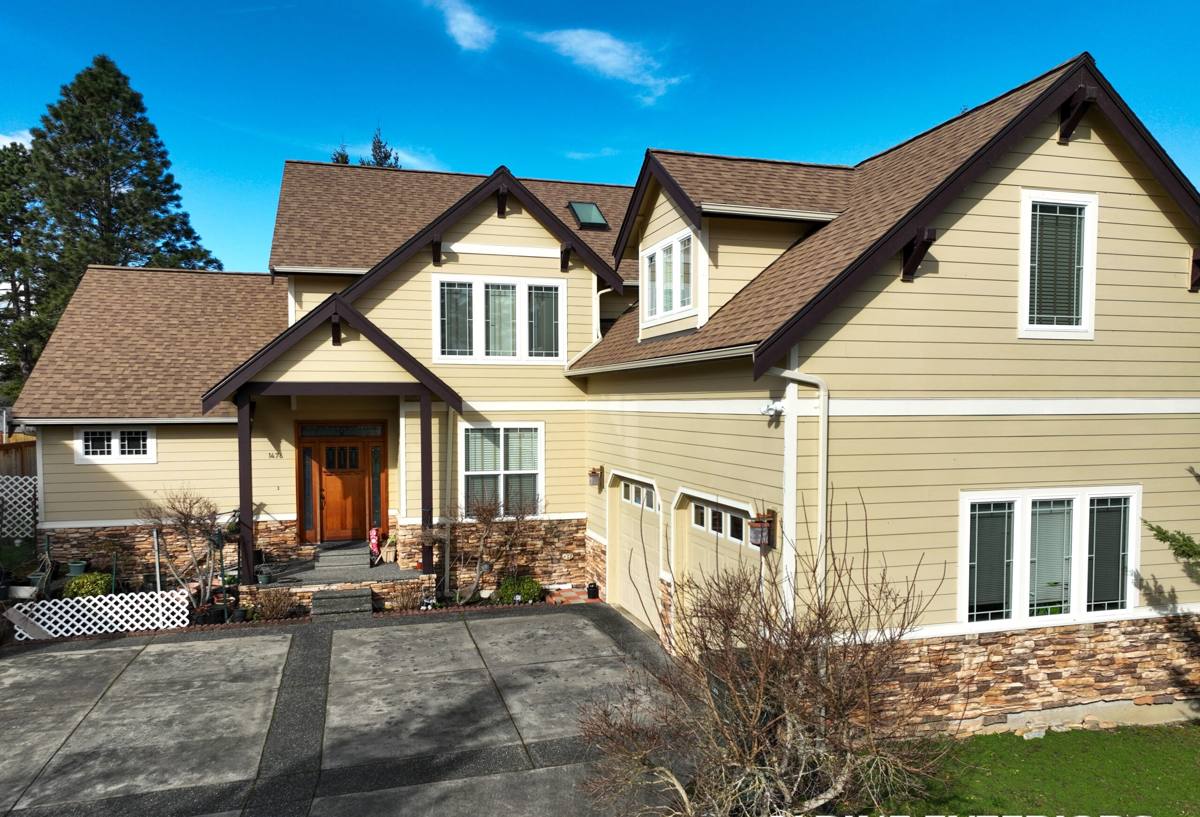
Why Siding Fails Faster in the Custer Area
Salt Air and Metal Fastener Corrosion
Proximity to Puget Sound and the Strait of Georgia means airborne salt reaches further inland than most homeowners assume. Salt-laden moisture accelerates corrosion on exposed nail heads, staples, and any steel trim or flashing that wasn't rated for coastal exposure. Once fasteners corrode, they lose holding strength and can streak rust down the face of the siding — a cosmetic problem that's really a structural warning sign.
Driving Rain and Wind-Loaded Walls
Storms coming off the water don't fall straight down — they drive sideways into whichever wall faces the weather. That wind-loaded rain finds every gap in caulking, every under-flashed window, and every seam where siding panels weren't lapped correctly. Water pushed horizontally behind siding doesn't drain the way vertical rain does, so it sits against sheathing and framing longer, which is exactly the condition that leads to rot.
Moss Season and Trapped Moisture
Whatcom County's long wet season, combined with tree cover and shaded exposures common on rural and semi-rural Custer-area lots, gives moss and algae months to establish themselves on siding surfaces. Beyond the appearance issue, moss holds moisture directly against the material, which keeps wood-based products wet far longer than they'd otherwise be and slowly breaks down paint films and factory finishes underneath.
What a Correct Siding Repair Actually Involves
A quality repair is never just "replace the damaged board and caulk the edges." Done right, it's a sequence:
- Diagnose the water path. Damaged siding is a symptom. We trace back to where water is actually entering — a window head, a butt joint, a penetration for a hose bib or vent — before touching the visible damage.
- Open up and inspect what's underneath. Sheathing and framing behind failed siding need to be checked for soft spots, staining, or active rot. Repairing over hidden damage just buys a few more years before the same spot fails again, worse.
- Correct the flashing and water management, not just the siding. If the original installation had inadequate flashing, house wrap gaps, or missing weep paths, we fix those details as part of the repair — otherwise the new siding fails the same way the old siding did.
- Replace with matched or compatible material. Whenever possible we match existing James Hardie profiles and colors; where an older product is being replaced piecemeal, we explain the trade-offs of patching versus a broader section replacement.
- Finish and seal to spec. Manufacturer-specified sealants, fastener patterns, and clearances aren't optional details — they're what determines whether the repair lasts five years or twenty.
Repair vs. Full Replacement: How We Help You Decide
Not every damaged section needs full replacement, but not every repair is worth doing either. The table below outlines how we think through it.
| Situation | Likely Approach | Why |
|---|---|---|
| Isolated impact damage, sound siding elsewhere | Spot repair | Surrounding material and structure are healthy; a targeted fix is cost-effective |
| Rot found behind one or two boards, contained area | Repair with sheathing correction | Underlying cause can be fixed locally without disturbing the whole wall |
| Repeated failures in the same wall section | Section replacement | Points to a systemic flashing or drainage issue, not a one-time defect |
| Widespread moss staining and finish breakdown across multiple walls | Full re-side evaluation | Material may be past its serviceable life; patching won't address overall condition |
| Original siding is LP SmartSide, vinyl, or primed wood nearing end of life | Discuss full replacement with James Hardie | Repeated patch-and-repair on a failing legacy product rarely outperforms one correct re-side |
Why We Only Repair With and Recommend James Hardie
When a repair calls for new material — whether it's a few boards or a full wall — we use James Hardie fiber cement, and we don't install LP SmartSide, vinyl, Cemplank, Allura, primed spruce, or cedar as a standard practice. That's a deliberate professional standard, not a sales pitch:
- Non-combustible core — fiber cement doesn't feed a fire the way wood-based siding can, which matters on any home, coastal or not.
- Factory-applied ColorPlus finish — cured and baked on at the factory, it resists the fading and chalking that field-applied paint struggles with under constant damp exposure.
- HZ5 and climate-engineered product lines — Hardie's HZ system is formulated for the specific moisture and freeze-thaw conditions of the Pacific Northwest, which is directly relevant to Whatcom County's wet, moderate climate.
- Moisture resistance — fiber cement doesn't absorb and swell the way engineered wood products can when a seal fails and water gets behind a board.
- Transferable warranty backing — a real asset if the home sells within the coverage period, something worth factoring into any repair-versus-replace decision.
We're honest that other products have real strengths — vinyl is inexpensive and low-maintenance in mild climates, cedar has a natural look many homeowners love, and engineered wood is easier to work with in some applications. But for the wind, rain, and moss conditions common around Custer, we've found fiber cement's moisture behavior and finish durability hold up better over the long run, which is why it's the only material we stand behind for both new installs and repairs.
Signs a Custer-Area Home Needs Siding Repair Soon
- Soft or spongy spots when you press on the siding, especially near the bottom of walls or under windows
- Visible gaps, warping, or buckling at panel seams
- Paint that's peeling, bubbling, or chalking heavily on one particular wall while others look fine
- Persistent moss or dark streaking that keeps returning after cleaning
- Rust streaks running down from fastener heads or metal trim
- Interior signs — a musty smell, a stained spot on drywall, or a soft baseboard on an exterior wall
- Caulking that's cracked, shrunk, or pulled away from trim and window edges
Our Process for Custer Siding Repair Calls
We keep the process straightforward because homeowners dealing with siding damage usually just want clear answers, not a sales process:
- On-site assessment. We look at the damaged area and the rest of the exterior, since damage in one spot often hints at a pattern elsewhere.
- Honest scope and estimate. We tell you plainly whether this is a contained repair or something that points toward a larger issue, with a straightforward estimate — no inflated scope, no downplaying real problems either.
- Scheduling around Whatcom County weather. Repair work involving open sheathing needs a reasonable weather window; we plan around forecasts rather than rushing a job into a storm.
- The repair itself. Removal, structural inspection, correction of the underlying water path, and installation to manufacturer spec.
- Final check. We walk the repair with you before calling it done, and explain what we found and what we fixed.
Maintenance That Extends the Life of a Repair
A correct repair sets a wall up to last, but ongoing conditions in the Custer area mean a little seasonal attention goes a long way:
| Task | Frequency | Why It Matters Here |
|---|---|---|
| Soft wash to remove moss/algae buildup | Annually, more often on shaded walls | Long wet season gives organic growth a head start; removing it early prevents moisture retention |
| Inspect and re-seal caulk joints | Every 1-2 years | Wind-driven rain finds gaps quickly; sealant is a wear item, not a one-time fix |
| Check gutters and downspouts | Twice yearly, before and after wet season | Overflowing gutters dump extra water directly onto siding below |
| Trim vegetation and tree cover near walls | Annually | Improves airflow and sun exposure, slowing moss regrowth |
| Visual inspection after major storms | As needed | Wind events are when new gaps and impact damage typically show up |
Working With a Crew That Knows This Area
A repair crew unfamiliar with Whatcom County's coastal-influenced weather may not think to check for salt-related fastener corrosion, or may under-flash a repair because that's sufficient in a drier climate. We work on homes throughout the Lynden and Custer area, so the failure patterns specific to this stretch of the county — wind-loaded rain on exposed walls, moss on shaded north sides, and the slow damage that comes from both — aren't unfamiliar territory. That local pattern recognition is often the difference between a repair that lasts and one that's back on the schedule in a few years.
If you're noticing damage, discoloration, or ongoing moss issues on your siding, we're happy to take a look and give you a straightforward assessment — no pressure, no obligation. Reach out for a free estimate using the form below.