 Lynden Exterior
 Building a Deck That Can Handle Acme's Weather
Acme sits in one of the wetter, shadier pockets of Whatcom County. Between the tree cover, the valley moisture, and the long stretch of the year where things just don't fully dry out, a deck built here has different needs than one built on an open, sunny lot closer to town. We've built and repaired decks throughout the Lynden area long enough to know that the decks that fail early almost always failed because they were built like a dry-climate deck instead of a wet, shaded one.
The driving rain that comes through Whatcom County in the fall and winter, combined with damp air that lingers under tree canopy, means water finds its way into places a homeowner never thinks to check. A deck that looks fine on the surface can be quietly rotting from the underside, or growing a slick layer of moss on boards that never get direct sun. Building correctly for Acme means designing around moisture from the first footing to the last board, not just picking materials that look nice.
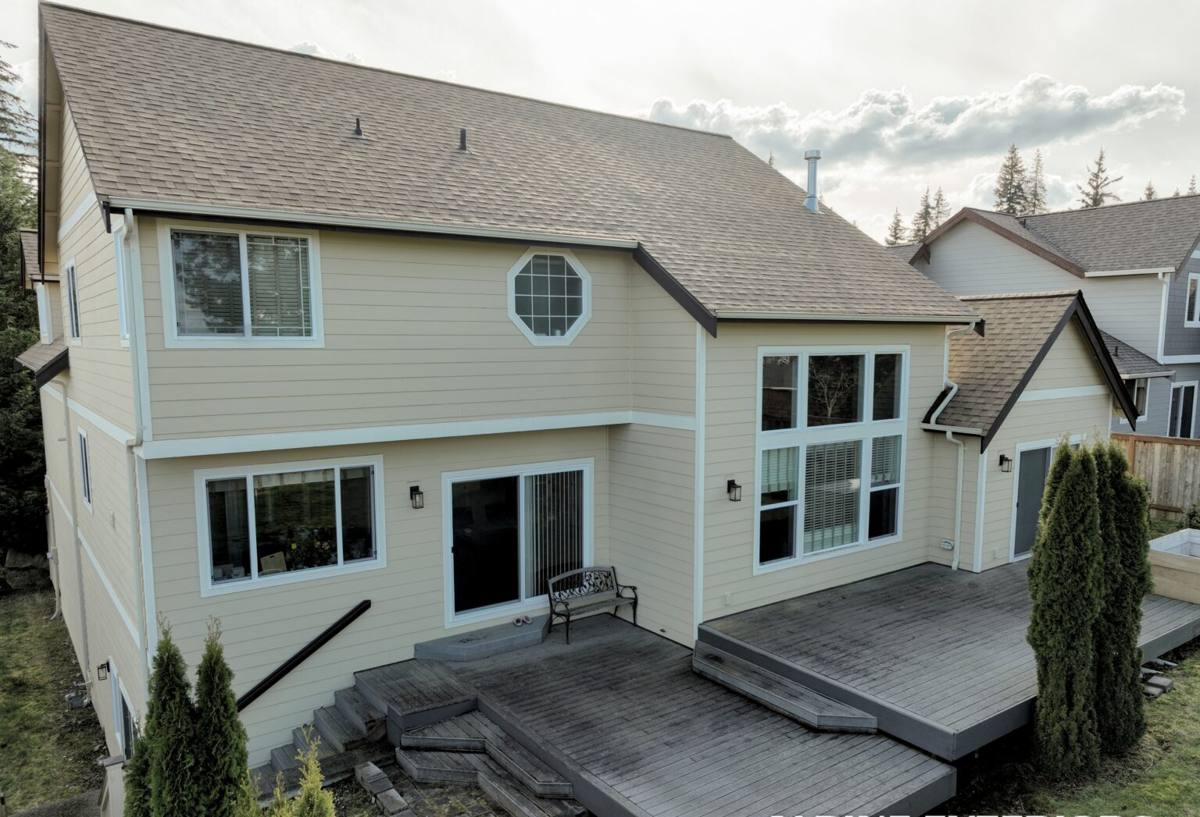
Why Local Conditions Should Drive the Design, Not Just the Style
A lot of deck problems we get called out to fix in this area aren't framing failures — they're drainage and airflow failures. Homes in and around Acme often sit close to wooded lots or slopes where the ground stays damp well into summer. That changes a few things about how a deck should be planned:
- Board spacing and orientation need to account for shade patterns, not just the standard layout
- Ledger board attachment and flashing details matter more here than in drier parts of the state
- Under-deck ventilation has to be planned in, not added as an afterthought
- Surface texture and finish choice affect how slippery boards get once moss and algae start growing
None of this is exotic — it's standard good building practice — but it only gets done right when the crew is actually thinking about the site's microclimate instead of building the same deck they'd build anywhere else in the state.
Choosing the Right Decking Material for a Shaded, Damp Lot
There's no single "best" decking material — there's a best material for a given lot, budget, and how much upkeep the homeowner wants to do. For Acme properties specifically, moisture tolerance and moss resistance usually matter more than they would on a sunnier lot in town.
| Material | How it handles moisture & shade | Maintenance | Typical lifespan |
|---|---|---|---|
| Pressure-treated wood | Holds up structurally but needs sealing to resist moss and graying in shaded spots | Annual cleaning, re-sealing every 1-2 years | 15-20 years with upkeep |
| Cedar | Naturally rot-resistant, but softens the moss issue only partially — still needs care in deep shade | Cleaning and finish renewal every 1-2 years | 15-20 years with upkeep |
| Composite decking | Doesn't rot or absorb water like wood, but can still grow surface algae/moss film in shaded, low-airflow areas | Periodic washing, no sealing or staining | 25-30+ years |
| PVC/capped polymer | Best moisture resistance of the common options; least affected by standing damp conditions | Occasional washing | 25-30+ years |
We're honest with homeowners about trade-offs rather than pushing one product. Composite and capped polymer decking cost more up front, but on a shaded Acme lot they buy back a lot of the time homeowners would otherwise spend scrubbing moss off wood every spring. Wood decking is a perfectly good choice too, especially where budget matters more than low maintenance — it just needs a homeowner who's willing to stay on top of cleaning and sealing.
A Word on Fasteners and Framing Lumber
Whatever decking material goes on top, the framing underneath should always be treated for ground contact where it's close to soil, and fasteners should be corrosion-resistant hardware rated for treated lumber. In a damp, shaded environment like Acme, standard hardware corrodes faster than manufacturers' generic ratings assume — that's a maintenance and safety issue, not a cosmetic one.
Framing and Footings: What's Underneath Matters Most
The part of a deck nobody sees is the part that determines whether it lasts. On lots around Acme with heavier tree cover and slower-draining soil, footings need to be sized and set correctly for local frost depth and soil conditions, not just poured to the minimum. We also pay close attention to:
- Proper ledger flashing where the deck attaches to the house, so water is directed away from the structure rather than into the rim joist
- Joist spacing appropriate to the decking material chosen — composite and PVC often require tighter spacing than wood
- Post bases that hold the post above grade and off standing water, rather than buried directly in concrete
- Beam and joist protection with proper flashing tape, since end-grain and top cuts are where rot starts first
These details cost very little extra at build time and are the difference between a deck that needs major structural work in year eight versus one that's still solid at year twenty-five.
Designing for Airflow and Drainage, Not Just Looks
Moss doesn't grow because a deck is "old" — it grows where moisture sits and air doesn't move. On a lot with tree cover and limited direct sun, that means the space under and around the deck needs to be designed to shed water and breathe, including:
- Adequate clearance between the deck framing and the ground
- Gaps between boards sized for the material and climate, so water passes through rather than pooling
- Skirting, if used, that still allows ventilation rather than sealing the underside completely
- Gutter or drip-edge coordination where the deck sits under an eave, so roof runoff isn't dumping directly onto the deck surface
We also think about sun exposure when we design the layout — even shifting a deck's orientation by a few feet, where the lot allows it, can mean the difference between a deck that dries out after each rain and one that stays damp for days.
Railings, Stairs, and Hardware That Hold Up
Railing posts and stair stringers take a lot of abuse in a wet climate because they're exposed on all sides and often see the most direct rain. We use connection hardware and post attachment methods built for structural load in wet-use conditions, and we pay attention to end-grain sealing on any wood components, since that's where moisture gets in fastest. For metal or cable railing systems, we check that all hardware is rated for coastal or high-moisture exposure — standard interior-grade hardware doesn't hold up long in this climate.
Our Process for a Custom Deck Build in Acme
Every property is different, but the process we follow stays consistent:
- Site visit and assessment — we look at sun exposure, tree cover, drainage patterns, and how the ground handles water on that specific lot
- Design and material conversation — we walk through the material options above with real trade-offs, not a sales pitch, based on your budget and how much upkeep you want to do
- Permitting — deck projects in Whatcom County generally require a permit depending on size and height; we handle that process so it isn't left to the homeowner
- Framing and structural work — footings, ledger attachment, joists, and beams built to hold up under local soil and moisture conditions
- Decking, railing, and finish work — installed with attention to drainage gaps, fastener placement, and airflow underneath
- Final walkthrough — we go over how to care for the specific material you chose, so you know what to expect season to season
What to Expect for Maintenance After the Build
No deck in this climate is maintenance-free, even the low-maintenance materials. What changes by material is how much and how often:
- Wood decks: annual or biennial cleaning and sealing, plus periodic checks for soft spots near ground contact
- Composite/PVC decks: occasional washing to remove surface algae or moss film, especially in shaded areas
- All decks: keeping gutters and nearby drainage clear so runoff isn't directed onto the deck surface
- All decks: an annual look at railing posts, stair connections, and any ground-contact framing for early signs of rot or hardware corrosion
Setting this expectation up front is part of doing the job right — a homeowner who knows what a deck needs is a homeowner whose deck actually lasts.
Permits and Building for Whatcom County Requirements
Deck construction near Lynden typically falls under Whatcom County or local jurisdiction building codes depending on exact location, and most decks above a certain height or size require a permit and inspection. We handle the permitting and inspection process as part of the build, which also means the structural work — footings, ledger attachment, railing height and spacing — is verified by someone outside our own crew. That's a real benefit for the homeowner, not just paperwork.
Why Hire a Crew That Already Works in Acme
A deck built by a crew unfamiliar with this specific area tends to get the general framing right and miss the local details — the drainage planning, the shade-driven material choice, the ventilation under the structure. We work throughout the Lynden area regularly, which means we've already seen how decks age here, what fails first, and what actually holds up through a Whatcom County winter. That experience shows up in the small decisions during a build that a homeowner never has to think about, because they're handled correctly the first time.
If you're planning a new deck or replacing one that's showing its age, we're happy to come take a look at your property and talk through honest options for your budget and your lot. Reach out for a free, no-pressure estimate using the form below.