 Lynden Exterior
 Windows Built for What the Nooksack Valley Actually Deals With
Nooksack sits in the agricultural flatlands east of Lynden, where Whatcom County's marine-influenced weather settles into the valley and stays. Homes here see long stretches of driving rain, damp air moving in off the Sound, and a moss season that can run most of the year on north- and west-facing walls. None of that is dramatic on its own, but it adds up over the life of a window. Wood sashes swell and stick. Aluminum frames pit and corrode at the corners. Old glazing putty dries out and lets water track behind the trim. By the time a homeowner notices a draft or a soft spot on the sill, the damage usually goes back further than the window itself.
Custom windows done right in this area aren't just about a tighter seal or a better look — they're about choosing frame materials, flashing details, and glass packages that hold up to years of wet weather without babysitting. That's the standard we hold every Nooksack job to.
What "Custom" Actually Means Here
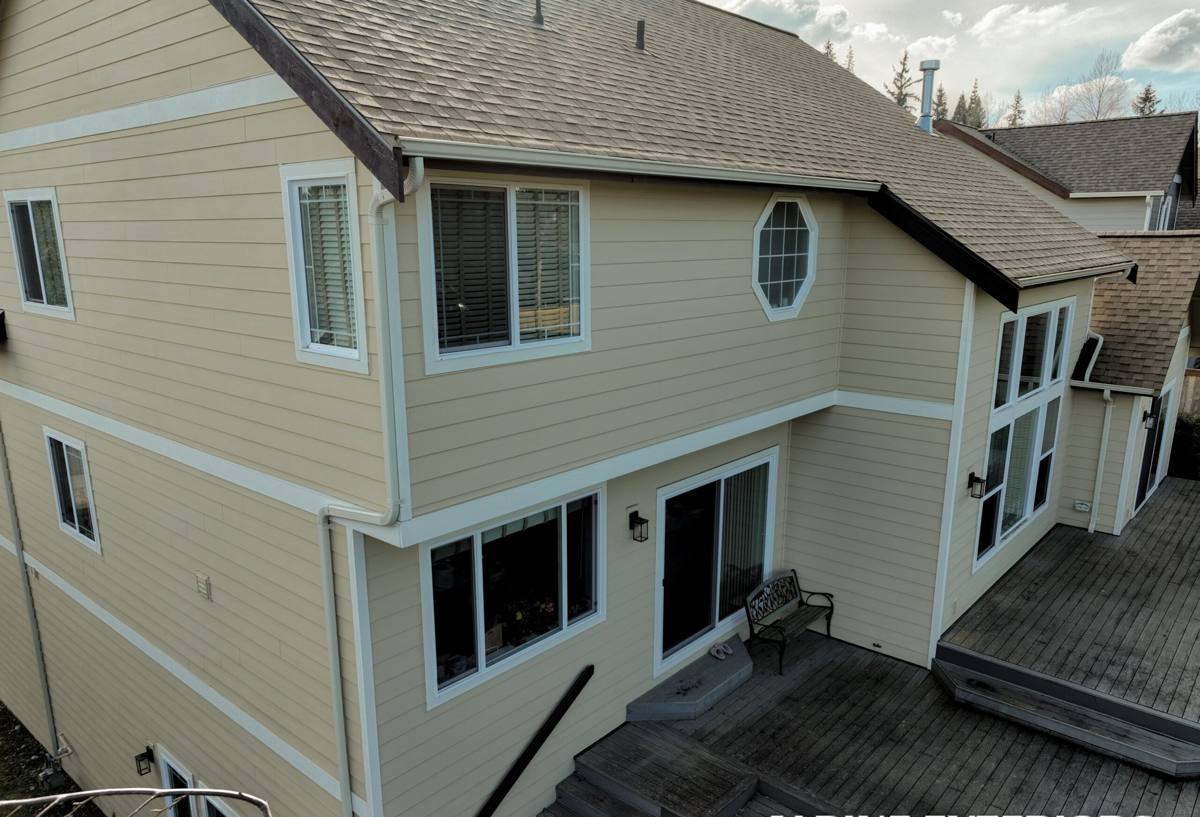
A lot of homes in and around Nooksack are older farmhouses, converted outbuildings, or additions built over several decades — which means window openings are rarely a standard off-the-shelf size. "Custom" isn't a marketing word for us; it's a practical necessity for matching openings that were framed by hand long before modern window sizing existed.
Full-Frame Replacement
We remove the window down to the rough opening, inspect the framing and sheathing for rot or water damage, and install a new window with fresh flashing and a proper drainage path. This is the right call whenever there's visible rot, a soft sill, or a home that's getting new siding at the same time — it's the only way to actually fix water intrusion problems rather than seal over them.
Insert (Pocket) Replacement
When the existing frame is still structurally sound and dry, we can install a new window inside the old frame with less disruption to interior trim and exterior siding. It's faster and less invasive, but it only makes sense when we've confirmed there's no hidden rot behind the old unit — which is why we don't skip the inspection step to save time.
Signs Your Current Windows Are Losing the Fight
Most window failures in this climate show up gradually. A quick self-check before calling anyone:
- Visible moss or dark streaking on the sill, trim, or the wall just below the window
- Fogging or a permanent haze between panes of double-pane glass — a sign the seal has failed
- Wood trim that feels soft, spongy, or has separated paint near the corners
- Noticeable drafts even when the window is fully latched
- Windows that are difficult to open, close, or lock — swelling from moisture
- Rising heating bills without any other obvious explanation
- Condensation forming on the inside of the glass regularly during colder months
Any one of these on its own isn't an emergency. Several together, especially on the sides of the house that catch the weather, usually mean it's time to have someone look closer rather than wait.
What a Correct Installation Actually Involves
Given how much rain this area gets, the installation details matter more than the window brand. A good window in a poorly flashed opening will leak. A modest window installed correctly will outperform it for years. Our process for every custom window includes:
- Removing the old unit and inspecting the rough opening for rot, insect damage, or existing water paths
- Repairing or replacing any damaged framing before anything new goes in
- Installing a sloped sill pan so any water that gets past the window drains back outside instead of pooling
- Integrating new flashing tape with the home's existing house wrap or building paper, shingle-style, so water is always directed downward and outward
- Shimming the window plumb, level, and square before fastening — a crooked install stresses the frame and the seal over time
- Sealing and insulating the gap between the window and framing without overpacking it, which can bow the frame
- Finishing with exterior sealant and trim rated for continuous wet exposure
Skipping the sill pan or reusing old flashing is the single most common shortcut that leads to hidden rot two or three years down the road — by which point it's a much bigger repair than the original window job.
Choosing Materials and Glass for This Climate
There's no single "best" window material — the right choice depends on the home's age, exposure, and how much upkeep the homeowner wants to do. Here's how the common options actually compare for a wet, moss-prone climate like this one:
| Material | Moisture Behavior | Maintenance | Best Fit |
|---|---|---|---|
| Vinyl | Won't rot, resists moss and mildew staining | Low — occasional cleaning | Most standard replacements; strong value |
| Fiberglass | Very stable in wet/dry cycling, minimal expansion | Low | Larger openings or homes with more weather exposure |
| Wood (clad exterior) | Good if the cladding stays intact; interior wood needs protection from condensation | Moderate to high | Historic-style homes where interior wood trim matters |
| Aluminum | Prone to corrosion and condensation in this climate over time | Moderate | Limited use; we generally steer homeowners toward other materials for this reason |
On glass, we typically recommend dual-pane units with a low-E coating and an argon fill as the practical baseline for this area — it cuts heat loss and helps limit condensation on cold, damp mornings, which is a common complaint in older single-pane homes. Triple-pane glass is worth discussing for north-facing rooms or homes right along more exposed stretches of the valley, though it adds cost and weight.
Our Process, Start to Finish
- Free on-site estimate — we look at every window in question, check the framing where accessible, and talk through goals and budget
- Measuring and ordering — custom units are built to the actual opening, not a catalog size
- Scheduling around the weather — we plan install days to minimize how long any opening sits exposed
- Removal and inspection — old windows come out, framing gets a real look before anything new goes in
- Installation — flashing, shimming, sealing, and finish work as outlined above
- Cleanup and walkthrough — we test every window with you before we consider the job done
What Affects the Cost
Every job is different, but the main cost drivers on a custom window project are consistent:
| Factor | Why It Matters |
|---|---|
| Full-frame vs. insert replacement | Full-frame involves more labor, flashing work, and often exterior trim repair |
| Window size and shape | Oversized, arched, or non-standard shapes require custom fabrication |
| Existing rot or framing damage | Repairs add material and labor before the new window can go in |
| Material and glass package | Vinyl, fiberglass, and wood-clad options carry different price points; triple-pane adds cost |
| Number of windows done at once | Bundling multiple windows in one visit typically reduces per-window labor cost |
As a rough sense of range, straightforward insert replacements tend to run a few hundred dollars per window on the lower end, while full-frame replacements with larger or custom-shaped units run higher. We'll always give an exact number in writing before any work starts — no surprises added later.
Why Hiring a Crew That Already Works Nooksack Matters
A lot of window problems we see in this area trace back to installers unfamiliar with how homes here were actually built — older farmhouses with balloon framing, additions with mismatched wall assemblies, or outbuildings converted to living space without a proper vapor barrier. Knowing what's likely behind the wall before we open it up saves time and avoids surprises mid-project.
We also know which sides of a house in this valley take the worst of the weather, which affects both material recommendations and how carefully we detail the flashing. A window installed with Whatcom County's rain patterns in mind performs differently than one installed to a generic national standard.
Keeping New Windows Performing Through Moss Season
New windows still need a little seasonal attention in this climate:
- Keep gutters and downspouts clear so runoff isn't sheeting down over window heads
- Brush moss or algae off nearby trim and siding before it spreads onto the window frame
- Check exterior caulking once a year for cracking or separation, especially after a hard winter
- Make sure any weep holes on vinyl or fiberglass frames stay clear of debris
- Wipe down interior sills periodically if condensation tends to collect there
None of this is a big time investment, but it's the difference between a window that looks and performs well for decades and one that starts showing problems in year five.
If your windows in Nooksack are drafty, fogged, sticking, or just original to a much older house, we're happy to take a look and walk you through honest options — no pressure, no obligation. Use the form below to request a free estimate.