 Lynden Exterior
 Deck Repair Built for Kendall's Climate
Kendall sits in the wooded foothill country east of Lynden, where tree cover, river-bottom humidity, and long stretches of gray, wet weather put a different kind of stress on an outdoor deck than you'd see in a drier inland climate. Whatcom County's marine-influenced air moves through this whole region, even away from the immediate coastline, and it brings the same basic problem everywhere it goes: wood and fasteners that never get a real chance to fully dry out for months at a time. Add in shade from surrounding trees and you get a longer moss season and slower evaporation after every rain.
None of that means a deck in Kendall is doomed — it means a deck here needs to be built and repaired with that reality in mind. A repair that would hold up fine in a dry climate can fail here within a season or two if it doesn't account for drainage, ventilation, and the materials' actual moisture tolerance. We work decks in this area regularly and repair them with that in mind, not with a one-size-fits-all approach borrowed from a drier region.
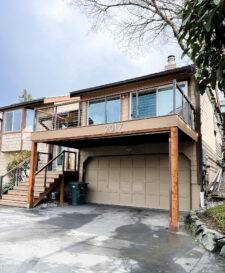
What Kendall's Weather Does to a Deck
Moss and Organic Growth
Shaded decks and north-facing decks in this area hold moisture longer, and moss doesn't just look bad — it holds water against the wood surface and accelerates rot underneath. Left unaddressed for a season or two, moss growth can turn a simple cleaning job into a board-replacement job.
Driving Rain and Wind-Blown Moisture
Rain in this region doesn't always fall straight down. Wind-driven rain pushes moisture sideways into ledger connections, under flashing, and into any gap where end grain is exposed. These are the spots where rot typically starts — not the open, sun-exposed field of the deck boards, but the joints, seams, and connection points that rarely dry completely.
Freeze-Thaw Cycling
Whatcom County doesn't get extreme cold most winters, but it does get repeated cycles of freezing and thawing. Water that's worked its way into a crack or a fastener hole expands when it freezes, widening the damage a little more each cycle. Over a few winters, that's enough to turn a hairline crack into a structural problem.
Salt and Marine Air Influence
Even this far inland, the region's marine air carries enough moisture and mild corrosive influence to matter for metal hardware — joist hangers, screws, bolts, and post bases. Fasteners rated for interior or dry-climate use corrode faster here, and corroded hardware is one of the most common hidden failure points we find on older decks.
Signs a Kendall Deck Needs Repair, Not Just Cleaning
- Boards that feel spongy, springy, or soft underfoot, especially near the house or along the perimeter
- Persistent moss or algae that returns within weeks of cleaning
- Visible gaps, cracking, or cupping in deck boards
- Rust streaks running down from screws, bolts, or hangers
- A ledger board (where the deck attaches to the house) that looks discolored, swollen, or has visible flashing gaps
- Railings or posts that wiggle more than they used to
- Stairs that feel less solid than the rest of the deck
- A musty smell coming from underneath the deck
Any one of these on its own might be minor. Two or three together usually mean moisture has been getting into the structure for a while, not just sitting on the surface.
What a Correct Repair Actually Involves
Diagnosis Before Demolition
We start by finding out how far the damage actually goes. A soft board on top doesn't always mean the joist underneath is compromised, and a joist that looks fine on the surface can be rotted where it contacts a hanger. We probe suspect wood, check ledger and post connections, and look at the framing from underneath when access allows, rather than assuming the damage stops where it's visible.
Removing All Compromised Material
Rot doesn't stop at the edge of a stain. If we cut back a damaged board or joist, we go past the visibly bad wood into solid material, because rot fungus can be active in wood that still looks structurally sound. Patching over partially rotted framing is a repair that fails again within a year or two.
Addressing the Cause, Not Just the Symptom
If a board rotted because water was pooling against it, replacing the board without fixing the drainage or slope just restarts the clock. Correct repair means identifying why that spot failed — poor ledger flashing, missing gap between boards, standing water, lack of ventilation underneath — and correcting that condition as part of the repair.
Matching Materials and Fasteners Correctly
Mixing incompatible metals or using interior-rated hardware outdoors accelerates corrosion. We use fasteners and connectors rated for exterior, ground-contact, or coastal-influence exposure as appropriate to the specific part of the deck being repaired, and we match wood treatment levels to how exposed that section is to moisture.
Rebuilding to Handle Water, Not Just Resist It
A deck built to shed water fast — proper board spacing, correct slope away from the house, clear ventilation underneath — will always outlast one that simply uses tougher materials to resist standing moisture. We design repairs around drainage first.
Common Repairs We Handle in Kendall
| Repair Type | Typical Cause in This Area | What's Involved |
|---|---|---|
| Individual board replacement | Moss retention, standing water, sun/shade cycling | Remove and replace affected boards, check joists underneath |
| Ledger board repair | Flashing gaps, wind-driven rain intrusion | Remove siding/trim as needed, replace rot, reflash correctly |
| Joist and framing repair | Long-term moisture exposure under the deck surface | Sister or replace damaged framing members, verify hanger condition |
| Railing and post repair | Loose connections, base rot from splashback | Reset or replace posts, upgrade base hardware, resecure rails |
| Stair stringer repair | Ground contact moisture, freeze-thaw cracking | Replace stringers, correct ground clearance and drainage |
| Hardware and fastener upgrade | Corrosion from persistent damp air | Replace with exterior/coastal-rated hangers, screws, and bolts |
Repair or Replace? How We Help You Decide
Not every damaged deck needs to come down. The decision usually comes down to how much of the structural framing — the posts, beams, and joists — is still sound. If the damage is limited to surface boards, railings, or isolated framing sections, targeted repair is usually the more cost-effective route and can extend the deck's life significantly. If rot has spread through multiple structural members, or the deck was built without adequate ledger flashing or drainage to begin with, a partial or full rebuild may actually cost less over time than repeated patch repairs.
We'll walk the whole structure with you, point out what we find, and give you a straight answer about which category your deck falls into — not a default push toward the bigger job.
Maintenance That Actually Works in This Climate
- Sweep leaves and debris off the deck surface regularly, especially in fall — trapped organic material holds moisture against the boards
- Clean moss and algae before it establishes rather than after, since established growth holds water underneath it
- Check and clear gaps between boards so water can drain through instead of pooling on top
- Keep gutters and downspouts near the deck functioning, since overflow is a common source of localized water damage
- Inspect ledger flashing and post bases once a year for early signs of moisture intrusion
- Re-seal or re-stain wood decking on the manufacturer's recommended schedule rather than waiting until it visibly needs it
A little consistent upkeep goes a lot further here than it would in a drier climate, simply because there are more months out of the year when moisture has the upper hand.
Our Repair Process
1. On-Site Inspection
We walk the entire deck — surface, framing where accessible, railings, stairs, and the ledger connection — and identify every area of concern, not just the spot that prompted the call.
2. Honest Assessment
We explain what we found in plain terms: what's failing, why, and what your realistic options are, including doing nothing yet if the issue is genuinely minor.
3. Written Scope and Estimate
You get a clear scope of work and a price before anything starts, with material and fastener choices explained so you know what you're getting and why.
4. The Repair Itself
We remove and replace only what needs it, address the underlying moisture or drainage issue, and use fasteners and materials suited to this climate rather than whatever happens to be cheapest.
5. Final Walkthrough
We go over the completed work with you, point out anything worth keeping an eye on, and answer questions about ongoing maintenance for your specific deck.
Why Local Experience in Kendall Matters
A crew that's worked decks throughout Lynden and the surrounding Whatcom County communities knows how differently a shaded, tree-lined property in Kendall behaves compared to an open, sun-exposed lot closer to town. That local pattern recognition — knowing which framing details tend to fail first in this specific mix of shade, rainfall, and seasonal moss growth — is the difference between a repair that's guessing and one that's informed by having actually seen how decks age in this exact area.
If you're seeing soft spots, moss that won't stay gone, or hardware that's starting to rust on your deck, we're happy to take a look and give you a straightforward, no-pressure estimate — just fill out the form below.