 Lynden Exterior
 Deck Repair Built for Deming's Wet, Wooded Climate
Decks in and around Deming take a different kind of beating than decks in drier parts of the country. Long stretches of driving rain, heavy tree cover, and a moss season that can run eight months or more all work against wood and even composite decking. Add in the salt-laden marine air that pushes inland across Whatcom County, and you have a climate that quietly corrodes fasteners, softens wood fiber, and grows a slick green film on anything that stays shaded and damp for too long. None of that means a deck is doomed — it means repairs have to be done with this specific climate in mind, not with a one-size-fits-all approach borrowed from a drier region.
We work on decks throughout the Lynden area, including the more rural, tree-shaded properties around Deming, and we see the same failure patterns over and over. Knowing what those patterns are — and fixing the actual cause instead of just the symptom — is the difference between a repair that lasts and one you're paying for again in two years.
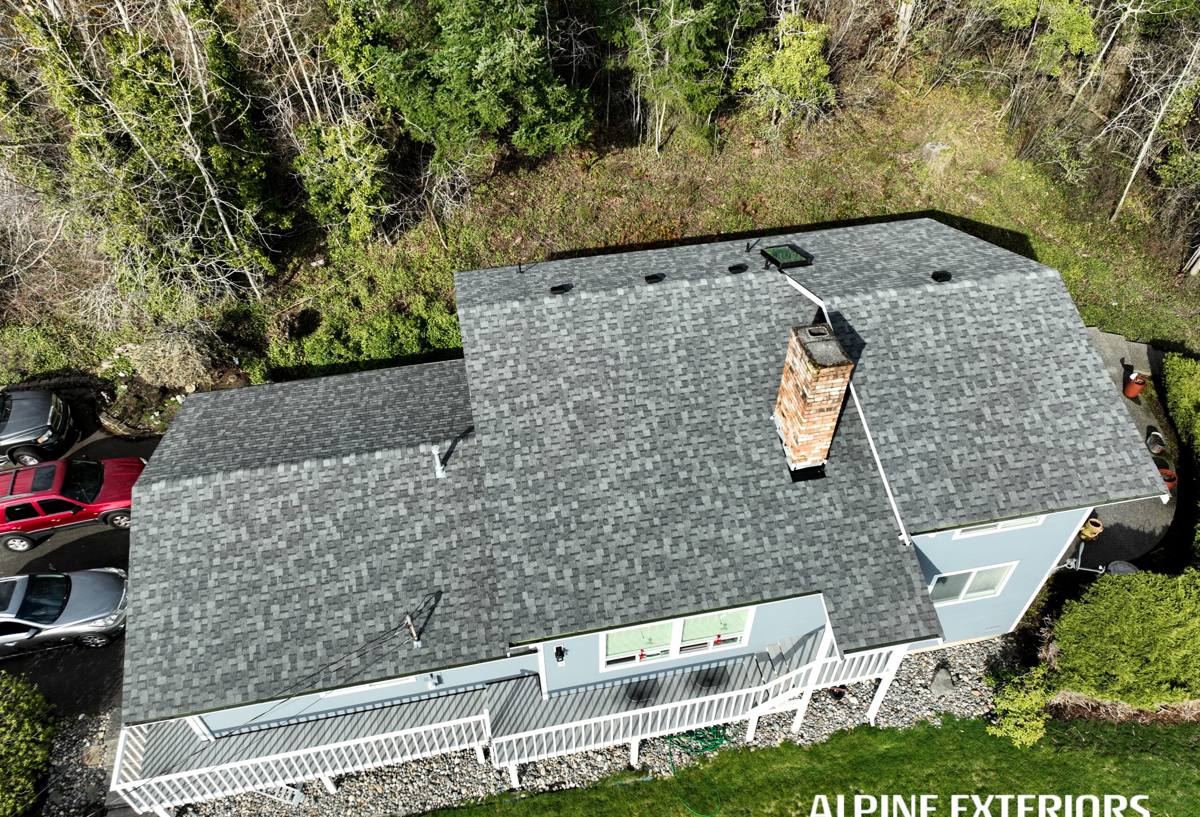
Why Deming Decks Wear Differently Than a Typical Deck
Moss, Shade, and Standing Moisture
Properties with more tree cover hold moisture longer after a storm than open, sun-exposed lots. Moss and algae take hold fastest on the north side of a deck, under overhangs, and anywhere leaves and needles collect between boards. That green film isn't just cosmetic — it holds water against the wood surface and keeps the deck damp long after the rain has stopped, which accelerates rot in both real wood and the substrate under composite decking.
Driving Rain and Wind-Driven Moisture
Whatcom County storms don't always fall straight down. Wind-driven rain gets pushed sideways into ledger board connections, under flashing, and into end grain on stair stringers and railing posts — the places builders often under-flash because they assume water falls vertically. Over time this shows up as soft spots at the house connection point long before the open field of decking looks bad.
Salt Air and Fastener Corrosion
Coastal-influenced air carries enough salt to accelerate corrosion on lower-grade screws, joist hangers, and nails, especially on older decks built before corrosion-resistant hardware was standard. A deck can look structurally fine on the surface while the fasteners holding it together have quietly weakened underneath.
Signs Your Deck Needs Repair — Not Just a Cleaning
- Boards that feel spongy, bounce, or flex more than they used to
- A ledger board area (where the deck meets the house) that looks discolored, swollen, or has visible gaps
- Railings or posts that wiggle at the base
- Rust streaks running down from screw heads or joist hangers
- Stair stringers that feel uneven or have soft edges
- Persistent moss or black staining that comes back within weeks of cleaning
- Visible daylight gaps where flashing has pulled away from the house
Any one of these on its own might be minor. Two or three together usually mean water has been getting into the structure for a while, and a surface fix won't solve it.
What a Correct Deck Repair Actually Involves
Structural Repairs
This is the part that matters most and shows the least. It includes sistering or replacing rotted joists, re-securing or rebuilding the ledger board connection with proper flashing, replacing corroded joist hangers and fasteners with corrosion-resistant hardware, and checking post bases and footings for movement. A deck can have brand-new boards on top and still be unsafe underneath if this layer was skipped.
Surface and Cosmetic Repairs
This covers replacing individual damaged boards, resetting popped or stripped fasteners, sanding and re-coating wood surfaces, repairing or replacing damaged railing sections, and deep-cleaning moss and algae from the surface and gaps between boards. Surface work makes a real difference in how the deck looks and feels day to day, but it only holds up long-term when the structure underneath is sound.
Drainage and Ventilation
A repair that ignores airflow under the deck is a repair that will need to happen again. We look at whether the space beneath the deck can actually dry out between storms, whether gutters or downspouts are dumping water toward the structure, and whether board spacing is allowing water to shed properly instead of pooling.
Repair or Replace? What Actually Drives the Decision
Homeowners often ask whether it's worth repairing an older deck versus rebuilding it. The honest answer depends on how much of the structure is still sound. The table below covers the factors we actually weigh when giving that recommendation.
| Factor | Favors Repair | Favors Replacement |
|---|---|---|
| Ledger board condition | Solid, dry, properly flashed | Soft, swollen, or improperly flashed |
| Joists and framing | Isolated soft spots | Widespread rot across multiple joists |
| Fasteners and hardware | Mostly sound, some spot corrosion | Rust throughout, hangers failing |
| Decking surface | A few damaged boards | Most boards cupped, splitting, or delaminating |
| Age of structure | Under 15-20 years, built to code | Older, unknown build quality, or undersized framing |
| Footings and posts | Stable, no movement | Heaving, shifting, or undersized for current use |
In most cases we can repair the framing and refresh the surface without a full rebuild. We'll tell you plainly if a section is too far gone to be worth patching — that's a judgment call we make based on what we find, not a way to upsell a bigger job.
Our Process for a Deck Repair in Deming
- On-site inspection. We walk the deck, check the ledger connection, probe joists and posts for soft wood, and look underneath at drainage and airflow.
- Honest scope and estimate. You get a clear breakdown of what's structural, what's cosmetic, and what it will cost — no guessing after the fact.
- Structural repair first. Framing, ledger, and hardware issues get fixed before any surface work starts, since surface repairs on a weak structure don't hold.
- Board and railing work. Damaged boards, stairs, and railings get replaced or repaired to match the existing deck as closely as possible.
- Cleanup and drainage check. We clear debris that traps moisture and confirm water is shedding away from the house and the deck structure, not toward it.
- Final walkthrough. We show you what was fixed and why, and flag anything worth keeping an eye on going forward.
Materials and Hardware We Use — and Why
Our standard on repairs is to use corrosion-resistant fasteners and hangers rated for exterior and coastal-influenced conditions, even on inland properties, because the salt-laden air common to this part of Whatcom County doesn't stop at the water's edge. For wood repairs, we match species and treatment to what's already on the deck where possible, and we're upfront about the trade-offs of different decking materials:
- Pressure-treated wood is affordable and easy to repair in sections, but needs regular sealing to resist moisture and moss in a wet climate.
- Cedar looks great and resists rot naturally, but is softer and more prone to surface damage, and costs more to replace board-for-board.
- Composite decking resists rot and moss buildup better than wood, but repairs are more particular — boards, fasteners, and hidden clip systems vary by manufacturer, and matching an existing composite deck years later isn't always possible.
We don't push one material over another. We tell you what each option means for maintenance, moisture behavior, and long-term repair cost, and let you decide what fits your deck and your budget.
Why Hire a Crew That Already Works in the Deming and Lynden Area
Deck repair done by someone unfamiliar with local conditions tends to miss the details that matter here — how much shade a deck gets, how close it is to tree cover that feeds moss, and whether the original build accounted for wind-driven rain at the ledger board. A crew that regularly works Whatcom County properties has already seen how these decks fail and knows where to look first, instead of treating every deck like it's starting from a blank slate. That familiarity shortens the inspection, sharpens the estimate, and means fewer surprises once repairs are underway.
Simple Maintenance That Extends a Repair
A repaired deck lasts longer with a small amount of regular upkeep. This is the same list we give our own repair customers:
- Sweep leaves, needles, and debris out of board gaps regularly, especially in fall
- Rinse or lightly scrub visible moss before it spreads, rather than waiting for a deep clean
- Check the ledger board area once a year for discoloration or soft spots
- Keep gutters and downspouts clear so water isn't draining toward the deck
- Reseal or re-stain wood decking on the schedule recommended for the product used
- Tighten or replace any fasteners showing early rust before they fail
None of this replaces a proper repair when something is actually wrong, but it buys real time between repairs and helps you catch small issues before they become structural ones.
Get a Straightforward Deck Repair Estimate
If your deck in Deming or the greater Lynden area is showing soft spots, rust, persistent moss, or just doesn't feel as solid as it used to, we're happy to take a look and give you a clear, honest read on what it needs. Use the form below to request a free, no-pressure estimate — we'll tell you what's structural, what's cosmetic, and what it will actually cost to fix it right.