 Lynden Exterior
 Deming's Weather Is Harder on Siding Than It Looks
Deming sits up the Nooksack River valley below the Mount Baker foothills, tucked into heavy tree cover that most homes along the coastal parts of Whatcom County don't have to deal with. That changes what "weather damage" actually looks like out here. You get less direct salt exposure than a home right on Bellingham Bay, but you make up for it with longer periods of shade, higher ambient humidity off the river, and rain that sits on siding longer before it has a chance to dry because the sun doesn't reach every wall the same way through the day.
Add in the broader Whatcom County pattern of driving rain pushed sideways by wind off the Sound, and a moss season that can run eight months or more in shaded, tree-lined lots like the ones common around Deming, and you've got a climate that punishes any siding material that can't handle sustained moisture contact. This isn't a page about scare tactics — it's about what actually happens to exterior siding in this specific kind of setting, and what it takes to install a product correctly so it holds up.
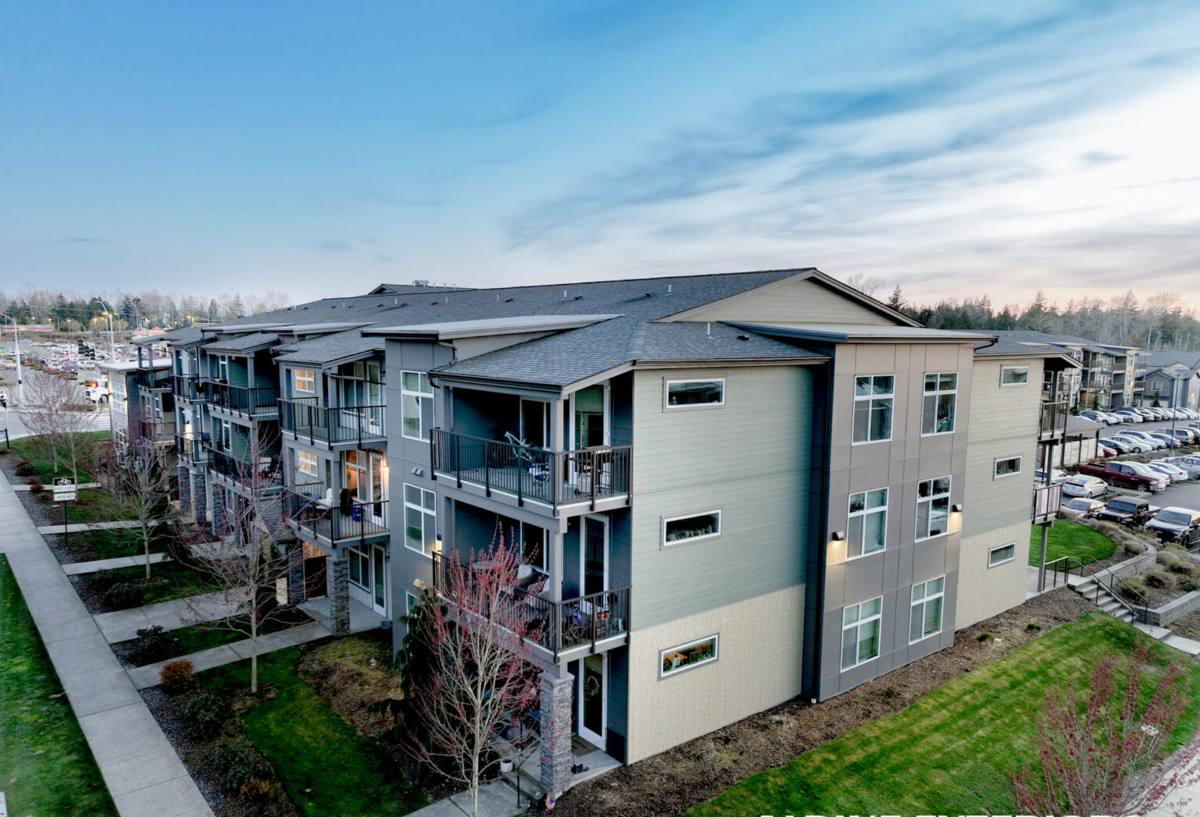
Why We Only Install James Hardie Fiber Cement
We don't install LP SmartSide, vinyl, Cemplank, Allura, primed spruce, or cedar. That's not a knock on every homeowner who has one of those products on their house today — plenty of them look fine and hold up reasonably well under the right conditions. But we've made a professional call to standardize on one product system, and in a climate like Deming's, the reasoning holds up:
- Engineered wood (LP SmartSide) relies on a treated wood strand core and factory coating to resist moisture. In a shaded, high-humidity valley setting, any gap in that coating — a cut edge, a fastener hole, a scuff during install — becomes a point where moisture can get into the wood substrate over time.
- Vinyl doesn't rot, but it also doesn't hold paint, moves with temperature swings, and can crack or warp under the freeze-thaw cycles Deming sees more often than the immediate coastline. It also does nothing to slow a wildfire ember, which matters more the closer you get to the forested land east of town.
- Cedar and primed spruce are real wood — beautiful when new, but they need active maintenance (recoating, caulking, moss treatment) on a schedule most homeowners underestimate, especially on shaded elevations that never fully dry out.
- Allura and Cemplank are also fiber cement, and reasonable products on paper — but we've standardized our crews, flashing details, and warranty process around one manufacturer's system so every job gets installed exactly to spec, every time, with one manufacturer standing behind it.
James Hardie is non-combustible, doesn't absorb water the way wood-based products do, and its ColorPlus factory finish is baked on and warrantied separately from the panel itself — which matters a lot when a home spends most of the year sitting damp under tree cover.
The Right Hardie Product Line for a Shaded Valley Lot
James Hardie builds region-specific product formulations — the HZ5 line is engineered for climate zones with more moisture and freeze-thaw cycling, which fits the Nooksack valley better than a product designed for a drier region. On a Deming home, we're typically looking at:
HardiePlank Lap Siding
The standard for most single-family homes — available in a range of exposures and textures (cedarmill or smooth), and it's what most Deming homes will use for the primary wall surface.
HardieShingle
Useful for accent gables or dormers where a more traditional Pacific Northwest look is wanted, without the maintenance burden of actual cedar shingles.
HardieTrim
Fiber cement trim boards around windows, corners, and fascia so the whole envelope is one consistent, moisture-resistant material system rather than fiber cement panels paired with wood trim that will fail on its own timeline.
What a Correct Installation Actually Involves
Most siding failures we get called out to inspect — regardless of the material — trace back to installation shortcuts, not the product itself. That's especially true in a climate where a wall can stay damp for days after a storm. A correct Hardie install on a Deming home means:
- Proper water-resistive barrier and flashing at every window, door, and penetration before the first plank goes up
- Minimum 1.25-inch gap maintained between siding and roofing, decking, or other horizontal surfaces so water has somewhere to go
- Correct nail placement and fastener spacing per Hardie's published installation guide — not just "close enough"
- Factory-cut edges kept intact wherever possible, and field cuts back-primed or sealed per Hardie spec
- Proper caulking at butt joints and trim intersections using a product compatible with ColorPlus finish, not a generic caulk that will discolor or fail early
Skip any one of these and you can end up with moisture intrusion behind a product that's otherwise doing its job — which is why installation quality matters as much as the material choice itself.
Moss, Shade, and Long-Term Exposure
Moss doesn't damage Hardie panels the way it can compromise wood siding over years of root penetration and moisture retention, but it's still an appearance and maintenance issue nobody wants creeping up their north wall. Shaded elevations near tree lines — common on Deming lots — hold onto moisture longer and give moss more time to establish. The table below is a general guide to what different wall exposures on a typical Deming property tend to need.
| Exposure | Typical Condition | What Helps |
|---|---|---|
| North/shaded walls near tree cover | Slow to dry, higher moss and mildew risk | Periodic soft-wash cleaning, keep nearby branches trimmed back |
| South/west walls, more direct sun | Faster drying, more UV exposure on finish | ColorPlus finish resists fading better than field-applied paint |
| Lower walls near grade or landscaping | Splash-back moisture, mulch and soil contact risk | Maintain proper clearance from grade during install and landscaping |
| Walls facing prevailing wind-driven rain | More direct water contact during storms | Correct flashing and caulking details matter most here |
None of this requires babying the siding — it's mostly common sense maintenance that any Deming homeowner with mature trees on the property should already be doing.
Our Process for a Deming Siding Job
- On-site assessment — we look at your home's specific exposure, existing siding condition, trim, and any moisture or rot issues hiding underneath before quoting anything.
- Scope and product selection — plank profile, texture, and ColorPlus color, plus trim and accent decisions if applicable.
- Removal and inspection — old siding comes off, sheathing gets inspected for water damage before anything new goes up.
- Weather barrier and flashing — this is the step that actually protects the house long-term, and it happens before a single piece of Hardie is installed.
- Installation to Hardie's published spec — correct gaps, fastening, and caulking, not shortcuts.
- Final walkthrough — we go over the finished job with you directly.
Cost Factors for a Deming Hardie Project
Every home is different, but the same variables tend to move the price on most jobs in this area:
| Factor | Why It Matters |
|---|---|
| Home size and wall complexity | More corners, dormers, and cutouts mean more labor and material waste |
| Existing siding removal | Tear-off and disposal of old material adds time versus a bare-sheathing new build |
| Water damage found underneath | Rotten sheathing or framing found during removal has to be repaired before new siding goes on |
| Product mix | Lap siding alone costs less than lap plus shingle accents and full trim replacement |
| Site access | Rural and wooded Deming lots sometimes need extra staging or equipment access planning |
We don't quote broad numbers on a page like this because it wouldn't be honest to your specific house — an on-site look is the only way to give you a real estimate.
Why It Matters That We Already Work Out Here
Deming isn't downtown Bellingham, and it isn't the immediate coastline either — it's a specific kind of Whatcom County property: rural, often wooded, with its own drainage and access considerations. A crew that already works this area knows to expect longer driveways, tree cover that affects staging and drying time between coats or steps, and the moss-and-shade pattern that shows up on almost every mature lot out here. That's not something you can fully plan for from a general Whatcom County estimate — it comes from having actually done the work in this valley.
Signs Your Deming Home May Need New Siding
- Visible warping, bubbling, or soft spots in current siding, especially on shaded walls
- Paint that's peeling or failing faster than it used to
- Moss or mildew that keeps coming back shortly after cleaning
- Gaps opening up at trim, corners, or butt joints
- Rising energy bills that may point to a compromised building envelope
- Siding that's simply reached the end of its practical service life
If you're seeing any of these on a home in or around Deming, it's worth getting a straight answer from someone who can look at the actual wall, not just guess from a description. We'll come take a look, tell you honestly what we see, and put together a free, no-pressure estimate for James Hardie siding built to hold up to this valley's rain, shade, and moss — with no obligation attached.