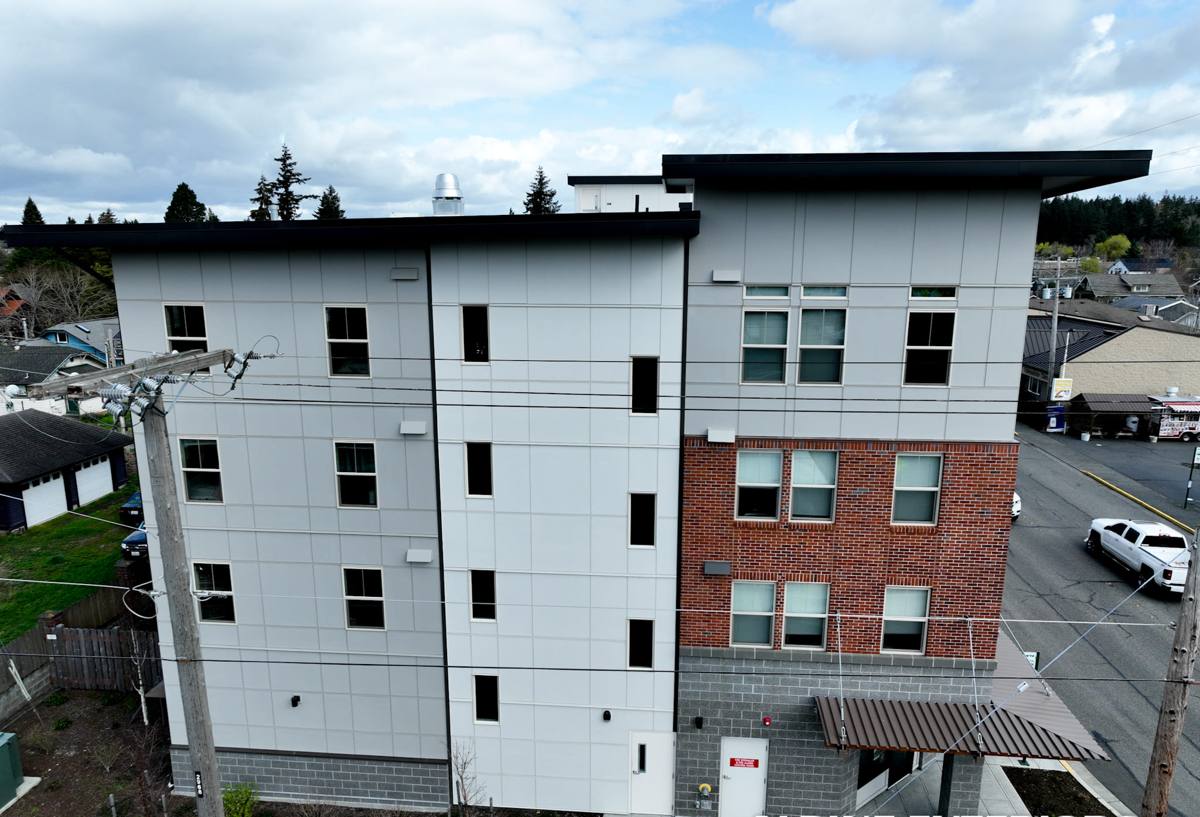
 Lynden Exterior
 Why Custer Homes Put Extra Demands on Windows
Custer sits close enough to the water and open farmland of Whatcom County that homes here take a different kind of weathering than houses further inland. Wind-driven rain off the Strait comes in sideways more often than it falls straight down, salt-laden air rides in on marine breezes, and the long gray stretch from October through April keeps everything—siding, trim, and window frames alike—damp for weeks at a time. That combination is hard on aging windows. Wood sashes swell and stick. Old aluminum frames corrode and lose their seal. Vinyl that wasn't rated for this kind of exposure can warp or discolor faster than it would in a drier climate.
Energy efficiency and weather resistance aren't separate problems out here—they're the same problem. A window that leaks air is very often the same window that's letting in moisture, and moisture is what starts the rot, mold, and frame failure that turns a simple glass upgrade into a full tear-out. When we talk about "energy-efficient windows" for a Custer property, we mean windows and installation details built to handle both the heating bill and the weather at the same time.
What "Energy-Efficient" Actually Means Here
Manufacturers slap "energy efficient" on almost everything now, so it helps to know what the term is actually measuring. Two numbers matter most for a Whatcom County home:
- U-factor — how well the window resists heat loss. Lower is better. This is the number that most affects your winter heating bill.
- SHGC (Solar Heat Gain Coefficient) — how much solar heat passes through the glass. In a cloudy, mild climate like ours, this matters less than it would in the Southwest, but it still affects comfort near south- and west-facing glass.
Beyond the glass rating, the frame material, the spacer between panes, and — just as important as any of that — the quality of the installation all determine how the window performs once it's actually sitting in a wall exposed to wind-driven rain. A high-end window installed with sloppy flashing will underperform a mid-range window installed correctly. We won't pretend otherwise.
Glass Packages Worth Considering
For this area, we generally steer homeowners toward double- or triple-pane insulated glass with a low-E coating and an argon or krypton gas fill. Low-E coatings reduce heat transfer without noticeably darkening the glass, and the gas fill between panes slows conductive heat loss. Triple-pane adds real value on north-facing walls or exposed sites that catch the brunt of the wind, but it's not always worth the added cost on a sheltered wall — that's a conversation we have honestly during the estimate rather than upselling by default.
Signs Your Current Windows Are Working Against You
Homeowners often assume a window is fine as long as it still opens and closes. In a climate like ours, that's not a reliable test. Watch for:
- Condensation or fog trapped between the panes (a failed seal — the insulating gas has escaped)
- Cold drafts near the frame even when the sash is fully latched
- Soft or discolored wood on the interior or exterior sill
- Visible daylight around the frame from outside
- Difficulty locking the sash tight, or a sash that's noticeably out of square
- Musty smell or visible mold near the window trim, especially after a wet winter
- Noticeably higher heating bills compared to similar-sized homes nearby
Any one of these can point to a window that's no longer doing its job, but a few of them together — especially soft wood or mold near the frame — usually mean water has been getting behind the trim for a while, not just through it.
What a Correct Installation Actually Involves
The window unit itself only accounts for part of how well it performs. In an area that gets driving rain off open water, the installation details around the rough opening matter just as much as the glass:
Moisture Management
Proper flashing — installed in the right order, lapped correctly so water sheds outward and downward — is what keeps wind-driven rain from tracking behind the siding and into the wall cavity. This is the step that gets rushed on cheap installs and is almost never visible once the trim goes back on, which is exactly why it matters to hire people who won't cut that corner.
Air Sealing
The gap between the window frame and the rough opening needs to be sealed with the right materials — not just caulked shut on the outside and left to chance. A window that's air-sealed properly all the way around performs closer to its rated U-factor. One that isn't will leak air no matter how good the glass is.
Fit and Leveling
A window that's shimmed and squared correctly operates smoothly for years. One that's slightly racked in the opening will bind, wear its hardware faster, and can develop gaps that widen over time as the house settles.
Our Process for a Custer Window Project
- On-site assessment — we look at each window's condition, the wall assembly behind it, and how exposed that side of the house is to prevailing wind and rain.
- Honest recommendation — repair versus full replacement, and which glass and frame options actually make sense for that specific wall, not a blanket upsell.
- Accurate measurement — every opening gets measured individually; older homes rarely have perfectly uniform openings, and assuming they do is how gaps happen.
- Removal and prep — old units come out carefully, and we check the rough opening and sill for any hidden rot or damage before anything new goes in.
- Installation — proper flashing, air sealing, and leveling as described above, not just setting the unit in place and caulking the outside.
- Interior and exterior finish — trim, sealant, and cleanup so the finished window looks right from both sides.
- Walkthrough — we test operation and locking on every window before we consider the job done.
Frame Material Comparison for This Climate
There's no single "best" frame material for every situation — it depends on the home's exposure, budget, and how it's going to be maintained. Here's how the common options generally hold up in a wet, salt-air-influenced climate like Whatcom County's:
| Frame Material | Moisture Resistance | Maintenance | Typical Lifespan |
|---|---|---|---|
| Vinyl | Good — won't rot, handles moisture well | Low — occasional cleaning | 20–30 years |
| Fiberglass | Excellent — very stable in wet/dry cycles | Low | 30–40+ years |
| Wood (clad exterior) | Good exterior, needs sound detailing at joints | Moderate — interior wood may need periodic finishing | 20–30+ years with care |
| Aluminum | Poor in this climate — prone to condensation and, near salt air, corrosion over time | Moderate | 15–25 years |
We're upfront that aluminum-framed replacement windows are generally not what we'd recommend for a Custer home, particularly on walls exposed to marine air. It's not that aluminum windows are inherently bad — it's that the thermal and corrosion behavior of bare aluminum frames is a poor match for sustained damp, salty conditions. That's a maintenance and performance judgment, not a knock on any manufacturer.
Living With Moss Season
Whatcom County's long moss season affects window performance more than people expect. Moss and algae growth on nearby roofing, siding, or overhanging trees sheds organic debris that collects in window tracks and weep holes — the small drainage channels built into most window sills to let trapped water escape. When those weep holes clog with moss debris or dirt, water can pool at the sill instead of draining out, which accelerates rot at exactly the spot most vulnerable to it. Keeping weep holes clear and tracks brushed out a couple of times a year is a small habit that meaningfully extends a window's life here.
Simple Seasonal Maintenance Checklist
- Clear debris from window tracks and weep holes each fall before the wet season sets in
- Check exterior caulking and sealant lines annually for cracking or gaps
- Wipe down and inspect hardware (locks, hinges, cranks) for stiffness or corrosion
- Look at interior sills after heavy storms for signs of moisture intrusion
- Trim back vegetation that keeps a window shaded and damp for long stretches
Why Local Experience in Custer and Lynden Matters
A crew that works this specific corner of Whatcom County regularly knows which walls on a typical Custer home take the worst of the weather, how local rough openings tend to be framed in homes of different ages, and what installation details actually hold up here versus what looks fine on paper. That's different from general familiarity with window installation — it's familiarity with how these particular conditions break windows down over time, and what it takes to stop that from happening again.
It also means being reachable if something isn't right after the fact. A sealant line that needs a touch-up after its first winter, a track that needs adjusting — those are easy fixes when the crew that installed the window is local and still around, and a hassle when they're not.
Getting Started
If your windows are drafty, fogged, hard to operate, or just old enough that you're wondering whether it's time, we're happy to take a look and give you a straight answer about what's actually needed — repair, partial replacement, or a full upgrade. We offer free, no-pressure estimates for Custer and the surrounding Lynden area; use the form below to get one scheduled.