 Lynden Exterior
 Windows Built for Everson's Weather, Not Just Its Style
Everson sits along the Nooksack River corridor in Whatcom County, close enough to the water and the foothills that homes here take on a specific kind of weather load year-round: long stretches of driving rain, heavy morning dew, low winter sun that never quite dries out north-facing walls, and a marine-influenced air that carries more moisture and salt than homeowners moving here from drier climates expect. Custom windows in this setting aren't a style upgrade — they're a system that has to manage water, condensation, and constant pressure changes without failing quietly behind the trim.
We install and replace windows throughout Everson and the surrounding Lynden area, and the patterns repeat house after house: builder-grade vinyl units that were never sized or flashed for this climate, older wood-frame windows with rot hidden under paint, and newer replacement jobs where the window itself was fine but the installation wasn't. Custom windows solve the first problem. Correct installation solves the second — and it's the one most homeowners never get the chance to evaluate until something's already gone wrong.
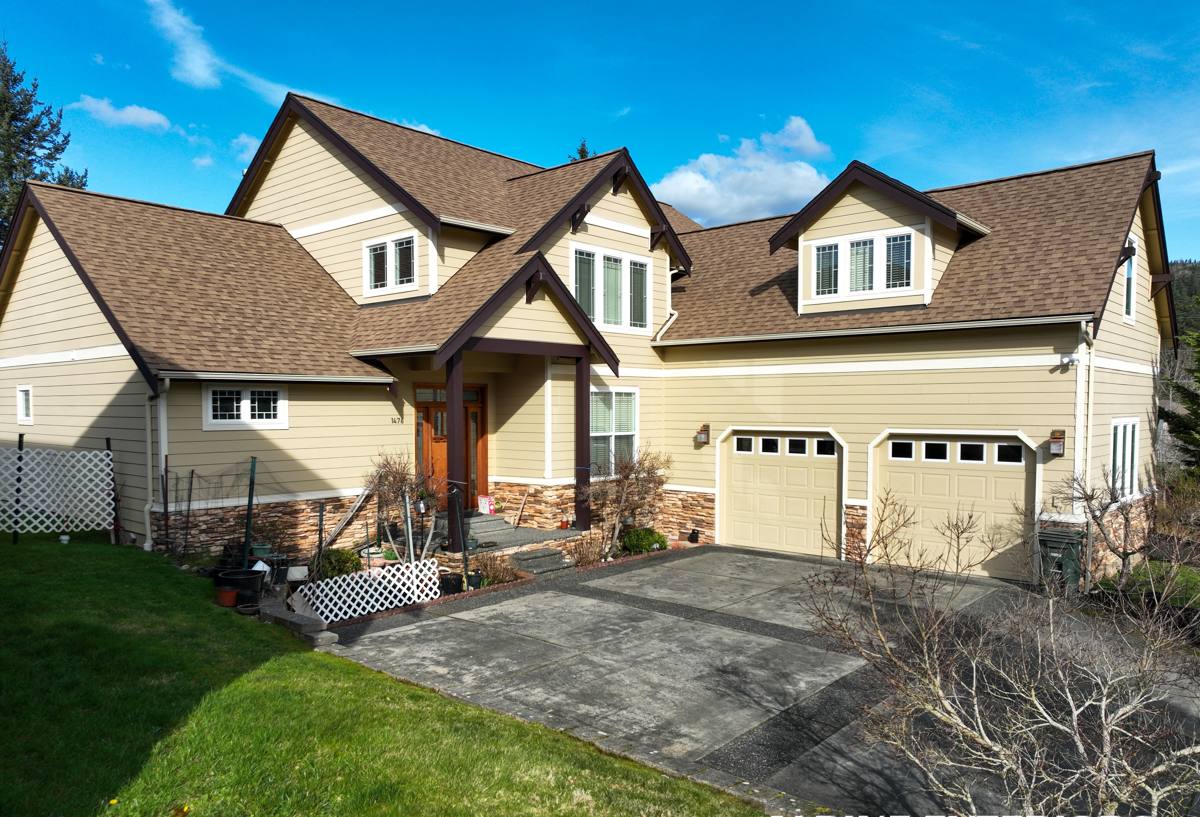
Why "Custom" Matters More Here Than in a Dry Climate
In a dry inland climate, an off-the-shelf window with a passable install will usually survive for years without complaint. In Whatcom County, small gaps and standard-size compromises get exploited by weather almost immediately. Custom windows matter for three practical reasons on Everson homes:
Exact Fit, Not "Close Enough"
Older Everson homes — farmhouses, mid-century ranch layouts, additions built in phases over decades — rarely have perfectly square, standard-dimension openings anymore. Framing settles, foundations shift slightly, and openings that started out standard can be off by half an inch or more in either direction. A custom window is measured and built to the opening as it actually exists today, not to a catalog size that gets shimmed and caulked into submission.
Glass and Frame Matched to Exposure
A window on the south or west side of the house is dealing with UV load and heat gain. A window on the north or east side is dealing with driving rain, condensation, and moss creep on the sill. Custom ordering lets us spec different glass packages or frame finishes by elevation instead of installing the same unit everywhere and hoping it performs equally well on every wall.
Flashing and Drainage Built for the Opening
This is the piece that gets skipped most often on budget jobs. A custom install means the flashing, sill pan, and weather barrier integration are planned for that specific wall assembly — not a generic bead of caulk around the perimeter and a hope that it holds through the next atmospheric river.
Signs Your Current Windows Are Already Losing
Most window failures in this climate are slow. By the time a homeowner notices, the damage has usually been building for one or more seasons. Worth checking for:
- Fogging or a permanent haze between the panes — the seal has failed and the insulating gas is gone
- Soft or discolored wood at the sill or bottom corners of the frame, inside or out
- Green or black growth on the sill, jamb, or the wall just below the window — a sign moisture is sitting rather than draining
- Visible daylight or a draft you can feel with a hand along the frame on a windy day
- Windows that are difficult to open, close, or lock — often a sign the frame has swelled or racked out of square
- Interior condensation that returns every morning regardless of how much you run a fan or dehumidifier
Any one of these on its own might just mean a repair. Two or more on the same window, especially combined with visible moss or algae nearby, usually means the water management around that opening has already broken down.
Material and Glass Options That Actually Hold Up Locally
There's no single "best" window material — the right choice depends on the wall's exposure, the home's age and style, and how much upkeep the homeowner wants to take on. Here's how the common options perform under Whatcom County conditions specifically:
| Material | How It Handles Local Weather | Upkeep |
|---|---|---|
| Vinyl (quality-grade) | Won't rot or corrode; handles moisture well; some expansion/contraction in temperature swings | Low — occasional cleaning, no painting |
| Fiberglass | Very stable in wet-dry cycling, strong resistance to warping; performs well on high-exposure walls | Low — very durable finish |
| Wood (clad exterior) | Traditional look for older Everson homes; exterior cladding protects against rain if detailing is correct | Moderate — interior wood still needs periodic attention |
| Solid wood (all-wood) | Best suited to covered or low-exposure openings; struggles on walls that take direct, driving rain | High — regular repainting or sealing |
| Aluminum | Strong but conducts cold and can condense heavily in this humidity without a thermal break | Low, but condensation-prone without upgrades |
On glass, we typically recommend a dual-pane, low-E unit as the baseline for this region — it manages both heat loss in winter and the moisture-driven condensation that shows up on single-pane and older dual-pane glass. For walls that take the brunt of the weather, a warm-edge spacer system helps resist seal failure longer than standard spacers, which matters more here than in a drier climate where seals simply age more slowly.
Our Installation Process for Everson Homes
The window itself is maybe half the job. The other half is what happens at the opening before and after it goes in.
1. On-Site Measurement and Assessment
We measure every opening individually and check the condition of the surrounding framing, sheathing, and existing flashing while we're there. If there's hidden rot or water staining, we flag it before ordering — not after demo, when it becomes a surprise change order.
2. Custom Ordering
Units are built to the actual opening dimensions and the glass/frame spec chosen for that wall's exposure, not a stock size.
3. Removal and Opening Prep
Old units come out carefully so we can inspect the rough opening. Any soft framing or compromised sheathing gets repaired before the new window goes in — installing a good window into a bad opening just delays the same problem.
4. Sill Pan and Flashing Integration
This is the step that determines whether the install survives the next ten winters. A proper sill pan and correctly lapped flashing route any water that gets past the window back outside, instead of into the wall cavity.
5. Setting, Shimming, and Sealing
The window is set level and square, shimmed at the correct load points, and sealed with materials rated for the movement and moisture this climate produces — not just a generic caulk bead.
6. Interior and Exterior Finish
Trim, casing, and exterior finish work are matched to the home so the new windows look original to the house, not bolted on.
7. Final Walkthrough
We check operation, seals, and finish work with the homeowner before calling the job done.
Mistakes We See From Rushed or Out-of-Area Installs
Everson homeowners occasionally call us to fix or re-do work from a prior install, and the issues are usually consistent rather than random:
- Standard stock sizes forced into non-standard openings, leaving oversized gaps packed with expanding foam and little else
- No sill pan flashing, relying entirely on caulk to keep water out of the wall cavity
- Glass packages chosen for price rather than exposure, leading to early condensation or seal failure on the wettest walls
- Exterior trim and caulk joints left unsealed at the top corners, which is exactly where driving rain finds its way in
None of these show up on install day. They show up eighteen months to three years later, usually as a soft spot in the sill or a musty smell that wasn't there before. Framing these as "our standard versus a shortcut" rather than any specific brand or crew — the underlying issue is almost always the same: less time spent on water management than the climate demands.
What Actually Drives the Cost of a Custom Window Job
Every home is different, so we won't quote a number without seeing the openings, but these are the factors that move the price most:
| Factor | Why It Matters |
|---|---|
| Number and size of openings | More or larger windows means more material and labor |
| Framing condition | Rot or water damage found during removal adds repair time before the new window can go in |
| Material choice | Vinyl, fiberglass, and clad-wood carry different material costs |
| Glass package | Upgraded low-E coatings or warm-edge spacers add cost but extend service life on high-exposure walls |
| Trim and finish complexity | Matching existing casing profiles or historic detailing takes more labor than standard trim |
| Access and site conditions | Second-story openings or tight access can add time and equipment needs |
Broadly, homeowners doing a handful of custom window replacements should expect a per-window range that spans from a modest few thousand dollars for a straightforward opening in good condition, up to considerably more for large openings, premium materials, or openings needing structural repair. We'll always walk through where a specific home falls in that range before any work starts.
Keeping Custom Windows Performing for the Long Run
A correctly installed custom window should need very little from a homeowner, but a small amount of seasonal attention goes a long way in this climate:
- Rinse sills and tracks periodically to keep moss and algae from establishing, especially on shaded, north-facing walls
- Check exterior caulk joints once a year, typically in fall before the wet season, for cracking or separation
- Keep gutters and downspouts clear so overflow isn't running directly down the wall above a window
- Wipe down interior condensation promptly rather than letting it sit on the sill or frame
- Operate locks and hardware a few times a year even on windows you don't open often, to keep mechanisms from seizing
Why It Matters That We Already Work in Everson
Everson isn't a generic zip code to us — it's part of the Lynden-area territory we work in regularly, which means we already understand how Nooksack River proximity, tree cover, and the broader Whatcom County marine climate interact with different home styles here. That familiarity shows up in small decisions that matter: knowing which elevations on a typical Everson lot take the worst of the driving rain, which older home styles tend to have non-standard openings, and how aggressively moss and algae establish on shaded sills in this specific microclimate. It also means we're not learning the local weather patterns on your project — we already know what this climate does to a window installation over five or ten years, and we build accordingly.
If you're seeing fogged glass, drafts, sticking sashes, or just want an honest read on whether your current windows are holding up the way they should, we're happy to take a look. Reach out for a free, no-pressure estimate — we'll assess your openings, explain what we're seeing, and give you a straightforward recommendation with no obligation to move forward.