 Lynden Exterior
 Roof Repair Built for Everson's Weather
Everson sits in the same wet, moss-friendly stretch of Whatcom County as Lynden, and the roofs here take a beating that homeowners further inland rarely deal with. Salt-tinged air moving in off the Salish Sea, long stretches of driving rain, and a moss season that can run eight months out of the year all combine to shorten the life of a roof that was never given the chance to dry out properly between storms. We work on roofs in Everson regularly, and the failure patterns we see are consistent enough that we can usually tell what's wrong with a roof before we're even done walking the perimeter of the house.
This page is about roof repair specifically — not tear-offs, not full replacements. A repair, done correctly, buys a roof years of extra life for a fraction of what replacement costs. Done poorly, it just hides a problem until it comes back worse. That distinction matters more here than in drier climates, because a rushed or cosmetic repair on a Whatcom County roof tends to fail fast.
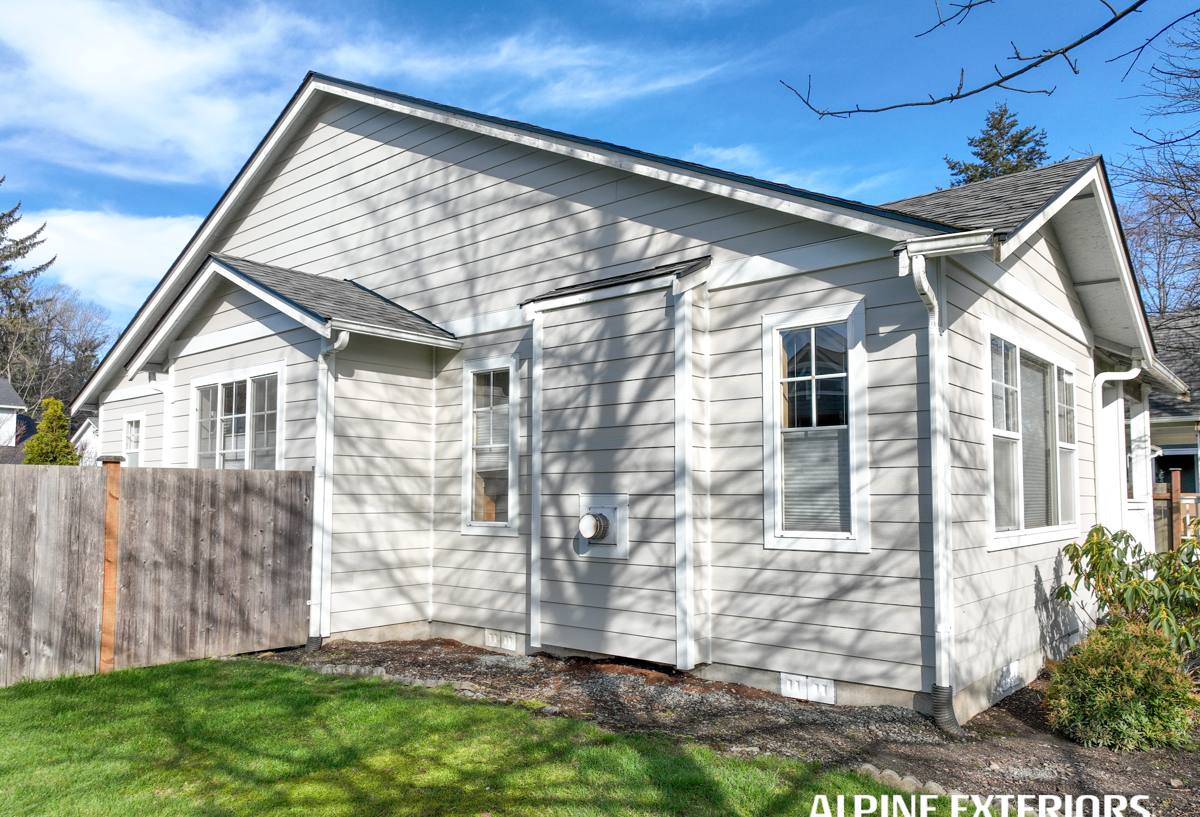
Why Everson Roofs Wear the Way They Do
The climate here doesn't destroy roofs quickly — it wears them down slowly, in ways that are easy to miss until there's a stain on the ceiling. A few things stack up specifically in this area:
- Moisture that lingers. Overcast, drizzly stretches mean shingles, moss, and debris stay damp for days at a time instead of drying out between rains.
- Moss and organic growth. Moss doesn't just look bad — it holds water against the roofing material, lifts shingle edges, and works its way under flashing over time.
- Salt-influenced air. Airborne salt accelerates corrosion on exposed metal — flashing, fasteners, gutter hardware, and vent caps age faster here than they would in a dry inland climate.
- Wind-driven rain. Storms here rarely fall straight down. Rain pushed sideways finds gaps in flashing, underlayment, and valleys that would never leak in a calm rain.
None of this means Everson homes need constant roof work. It means small defects that would be cosmetic elsewhere — a lifted shingle tab, a hairline gap in flashing sealant, a patch of moss at a valley — become active leak risks faster here, and repairs need to account for that.
Signs Your Roof Needs Repair, Not Replacement
Most homeowners call us after noticing a stain, a drip, or missing shingles after a windstorm. But a roof usually gives warning signs well before an active leak shows up inside. Worth checking for, or having us check for:
- Granules collecting in gutters or at downspout outlets — a sign shingles are shedding their protective surface
- Dark streaking or thick moss growth, especially on north-facing slopes that stay shaded and damp
- Curling, cracking, or lifted shingle edges, particularly on older roof sections
- Rust streaks below metal flashing or vent boots
- Soft or discolored spots on ceilings or in the attic, even small ones
- Daylight visible through the roof deck from inside the attic
- Sagging along a ridge line or roof plane
Most of these are repairable if caught early. The exception is widespread granule loss combined with brittle, cracking shingles across most of the roof — at that point you're not fixing a defect, you're patching a roof that's reached the end of its service life, and we'll tell you that honestly instead of running up a repair bill that won't hold.
What We Actually Check
A real roof repair inspection isn't a glance from the ground. We get on the roof (weather permitting) and check the roof deck, flashing at every penetration and valley, shingle condition by section, gutter and downspout function, and attic ventilation and any interior moisture signs. A repair quote based on a driveway inspection is a guess, not a diagnosis.
Common Repairs We Handle in the Everson Area
| Issue | What's Usually Happening | Typical Fix |
|---|---|---|
| Flashing leaks | Sealant has dried and cracked, or metal has corroded and pulled away from the roof plane | Remove and replace flashing section, re-seal and re-integrate with surrounding shingles |
| Valley leaks | Debris and moss trap water, or valley material has worn thin from constant flow | Clear debris, repair or replace valley metal/membrane, re-shingle adjoining courses |
| Wind-lifted or missing shingles | Sealant strips failed or fasteners backed out during a windstorm | Replace missing shingles, re-secure lifted ones, reseal tabs |
| Moss damage | Growth has lifted shingle edges and trapped moisture underneath | Remove moss carefully, treat, repair any shingle damage underneath, address shade/drainage causes |
| Vent boot or pipe boot cracking | Rubber collar has degraded from UV and weather cycling | Replace boot, check surrounding shingles for water intrusion |
| Gutter-line rot or fascia damage | Overflowing or clogged gutters have kept wood wet at the roof edge | Repair or replace damaged fascia/trim, clear and correct gutter flow |
What a Correct Repair Actually Involves
A lot of roof "repairs" are really just cosmetic patches — a bead of sealant over a symptom instead of a fix for the cause. That approach tends to fail within a season or two in this climate, because it doesn't address why the leak started in the first place. A repair we'd stand behind involves a few non-negotiables:
- Finding the actual entry point. Water often travels along the roof deck or underlayment before it shows up as a stain, so the visible damage and the actual leak source aren't always in the same spot.
- Matching materials properly. Mismatched shingle profiles, colors, or ages create their own weak points and stand out visually.
- Re-integrating with the surrounding roof. Flashing and shingles need to be woven back into the existing roof system correctly, not just overlaid on top of it.
- Checking what caused the failure. If moss caused the damage, we address the moss and the conditions that let it grow — shade, debris buildup, poor drainage — not just the shingle it damaged.
Our Roof Repair Process
- Inspection and diagnosis. We get eyes on the actual roof, not just the ceiling stain, and identify the real source of the problem.
- Straight explanation. We walk you through what we found, what's causing it, and whether repair makes sense — or if we think replacement is the more honest recommendation.
- Written estimate. Clear scope, clear price, no surprise add-ons once work starts unless we find something new once the area is opened up.
- The repair itself. Done to match the existing roof system, using materials suited to this climate, not the cheapest available substitute.
- Final check. We confirm the fix holds under close inspection before we call the job done, including checking adjacent areas that could be next in line to fail.
Repair vs. Replacement: How We Decide
This is the question that matters most to your budget, and it deserves an honest answer rather than a sales pitch in either direction. A few factors we weigh:
| Factor | Leans Toward Repair | Leans Toward Replacement |
|---|---|---|
| Roof age | Under roughly 15 years, or a newer roof with isolated damage | Nearing or past the material's expected service life |
| Damage extent | Localized to one area — a valley, a section of flashing, a storm-damaged patch | Widespread granule loss, curling, or moisture damage across multiple slopes |
| Underlying deck condition | Solid, dry roof deck under the damaged area | Soft, rotted, or water-stained decking found once shingles are pulled back |
| Shingle availability | Matching shingles still available or close enough to blend | Discontinued product with no reasonable match |
| History of repeat repairs | First real issue on an otherwise sound roof | Third or fourth repair call on the same roof in a few years |
If a repair is the right call, we'll say so and do it well. If the roof is genuinely past the point where repair makes financial sense, we'll tell you that too — a roof that needs a repair every storm season isn't saving anyone money.
Materials We Stand Behind
For repair work, matching what's already on your roof is usually the priority — mixing shingle types or profiles rarely looks right and can create new weak points at the seams. When a full replacement or larger section replacement is on the table, we lean toward asphalt shingle systems rated for wind and moisture exposure, proper synthetic underlayment, and metal flashing over lighter-gauge alternatives, since Whatcom County's rain and salt-influenced air are hard on thinner materials. These aren't dramatic upgrades — they're the baseline we think a roof in this climate needs to actually hold up, not shortcuts that show up as maintenance headaches two or three years down the line.
Why a Crew That Already Works in Everson Matters
Roof repair isn't just about swinging a hammer — it's about recognizing failure patterns fast because you've already seen them on other roofs nearby. A crew that regularly works Everson and the greater Lynden area knows which roof orientations hold moss longest, which flashing details tend to fail first in this rain pattern, and what a properly repaired roof needs to survive the next few winters here — not just look fixed on the day the crew leaves. That local familiarity shortens the diagnosis, and it means the repair is built for the weather your roof will actually face, not a generic fix.
Simple Roof Maintenance Checklist for Everson Homeowners
- Clear gutters and downspouts at least twice a year, more often under overhanging trees
- Remove moss buildup before it spreads across a full slope, not after
- Trim back branches that keep sections of roof shaded and slow to dry
- Walk the attic after major windstorms and check for new light gaps or damp spots
- Have flashing and valleys checked every couple of years, since these fail before shingles usually do
- Address small leaks immediately — a slow drip in this climate rarely stays small
If you're dealing with a leak, missing shingles after a storm, or just want an honest read on what your roof needs, we're happy to take a look. Estimates are free, there's no pressure to sign anything on the spot, and you'll get a straight answer about whether repair or something more is the right move — just fill out the form below to get started.