 Lynden Exterior
 Why Everson Roofs Wear Out on Their Own Timeline
Everson sits in the part of Whatcom County where the weather doesn't do anything in half measures. Winters bring long stretches of steady rain instead of quick storms, the tree cover throws shade onto roof slopes for most of the day, and the same marine-influenced air that moves through this part of the county keeps everything just damp enough, just long enough, for moss and lichen to get comfortable. None of that is dramatic on its own. It's the accumulation — season after season — that ages a roof faster than the shingle warranty label would suggest.
We work on homes in Everson regularly as part of our normal Lynden-area route, and the pattern is consistent: roofs here rarely fail because of one big event. They fail because moisture found a small weakness and had months, not days, to work on it.
The Moss Problem Is a Moisture Problem
Moss gets blamed as a cosmetic issue, but the real damage is what it does underneath. Moss holds water against the shingle surface long after the rest of the roof has dried, and it works its way under shingle tabs and around fasteners. On north-facing slopes and anywhere shaded by mature trees — common around Everson properties with larger lots — moss can establish itself within a couple of years of a roof going on if the roof wasn't detailed with that in mind.
Driving Rain Finds the Weak Points
Wind-driven rain doesn't just fall on a roof, it pushes sideways and works its way up under shingle edges, around vent boots, and along flashing seams. Roofs installed with minimum-code underlayment and standard flashing details can hold up fine in light rain and still leak during the kind of sustained, wind-pushed rain this region gets several times a winter. A replacement done for this climate accounts for that from the start rather than treating it as an upgrade option.
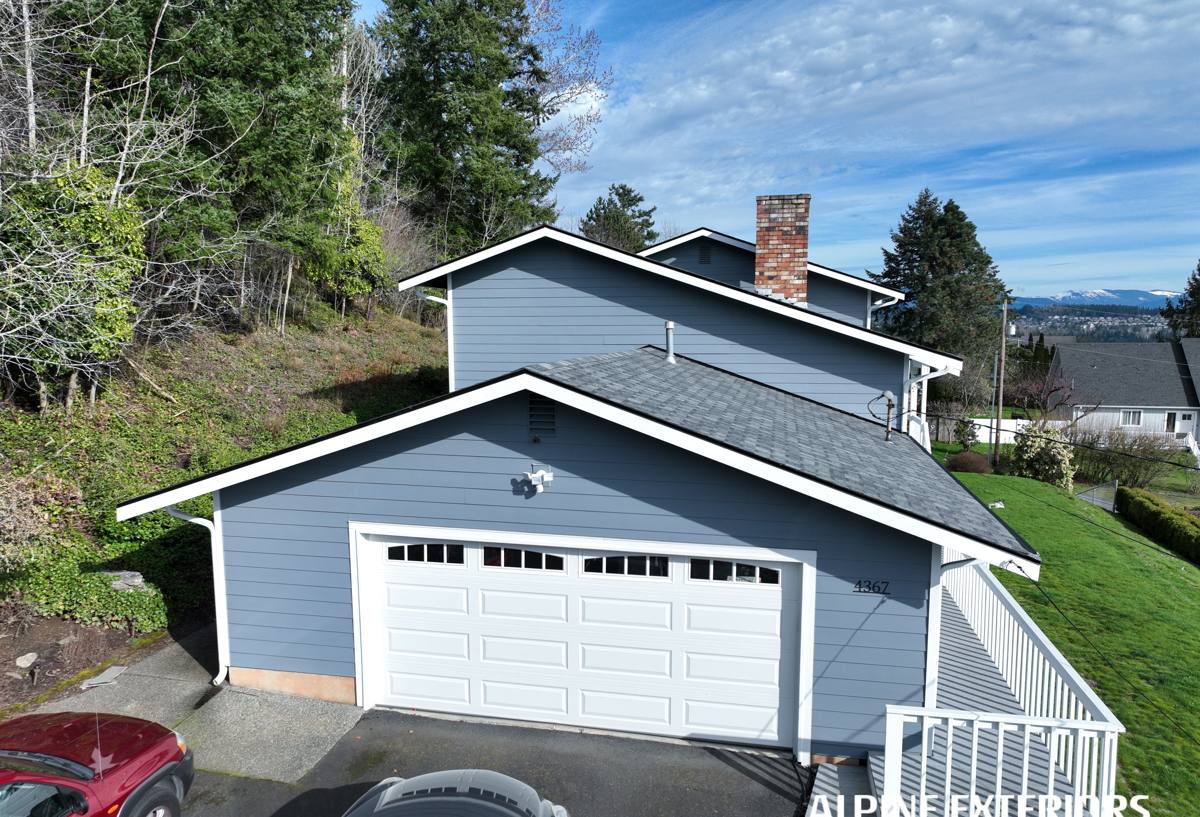
Signs an Everson Home Needs Replacement, Not Another Repair
Repair makes sense when the damage is isolated and the rest of the roof still has service life left. Replacement makes sense when the problems are spread across the roof or the underlying materials are compromised. A straight-up honest assessment during an inspection should tell you which situation you're in — we won't sell a full replacement when a repair will genuinely hold.
- Shingles that are cupping, curling, or losing granules across multiple slopes, not just one spot
- Moss or algae staining that comes back within a year of cleaning
- Soft or spongy decking felt underfoot in the attic, especially near eaves and valleys
- Daylight visible through the roof deck from inside the attic
- Multiple layers of shingles already on the roof from past overlays
- Roof is 20+ years old (asphalt) and showing granule loss in the gutters
- Recurring leaks around the same chimney, skylight, or vent that repairs haven't resolved
- Visible sagging along the ridge or roof plane
What a Correct Roof Replacement Actually Involves
A roof replacement is only as good as what happens under the shingles. Everson's climate makes the prep work — the parts nobody sees once the job is done — more important than the shingle brand on the label.
Full Tear-Off and Deck Inspection
We remove existing roofing down to the deck rather than overlaying, because overlays trap moisture and hide the condition of the plywood or plank decking underneath. Once it's exposed, any soft, delaminated, or water-damaged decking gets replaced before anything new goes down. Skipping this step is the single most common shortcut that leads to early failure.
Underlayment and Ice-and-Water Protection
Given how much of the year this area spends wet, we treat synthetic underlayment as standard, not an upsell, and use self-adhering ice-and-water membrane at eaves, valleys, and roof-to-wall transitions — the exact spots where wind-driven rain and ice dams put the most pressure on a roof.
Ventilation That Matches the Attic
Trapped attic moisture rots decking from the inside and shortens shingle life from underneath, which is a quieter version of the same problem the weather causes from outside. Balanced intake and exhaust ventilation gets checked and corrected as part of the job, not left as-is because "it's already there."
Flashing, Not Just Sealant
Chimneys, skylights, sidewall transitions, and vent penetrations get properly formed metal flashing, step flashing, and counterflashing rather than a bead of caulk over old flashing. Caulk fails; correctly lapped metal sheds water for decades.
Choosing a Roofing Material for This Climate
There's no single "best" roofing material — there's the material that fits the home, the budget, and how much long-term maintenance the owner wants to do. Here's how the common options actually compare for a wet, moss-prone climate like this one.
| Material | Moss/Moisture Resistance | Typical Lifespan | Maintenance |
|---|---|---|---|
| 3-tab asphalt shingle | Lower — flat profile holds moisture longer | 15–20 years | Regular moss treatment recommended |
| Architectural (laminate) shingle | Better — thicker profile sheds water faster | 25–30 years | Occasional moss treatment |
| Metal (standing seam or panel) | Very good — smooth surface, minimal organic growth | 40–50+ years | Low; periodic fastener/sealant checks |
| Cedar shake | Poor without diligent upkeep — organic material invites moss | 20–30 years with maintenance | High; regular treatment and inspection |
We'll walk through the honest trade-offs for your specific roof — slope, shade exposure, budget, and how the home looks — rather than pushing one product across every job.
Our Process for an Everson Roof Replacement
- Inspection and estimate — we get on the roof, check the attic, and give you a written scope with no pressure to decide on the spot.
- Material selection — we go over shingle or metal options, colors, and what fits the home and budget.
- Scheduling — we plan around weather windows, since a tear-off left exposed overnight in this climate is a real risk we don't take.
- Tear-off and deck repair — old roofing comes off, decking is inspected and replaced where needed.
- Underlayment, flashing, and ventilation work — the parts that determine how the roof performs in ten years, not just year one.
- New roofing installed — shingles or metal installed to manufacturer spec, which is also what keeps the material warranty valid.
- Cleanup and final walk-through — magnetic sweep for nails, debris hauled off, and a walk-through so you know what was done and why.
Cost Factors Worth Understanding
Roof replacement pricing varies by roof size, pitch, number of layers to remove, decking condition, and material choice — we're not going to quote a number without seeing the roof. In broad terms, asphalt shingle replacements on an average home tend to run from the mid four figures into the low five figures, and metal roofing runs higher up front in exchange for a much longer service life. The only way to get an accurate number is a real inspection, which is free.
Why a Crew That Already Works Everson Matters
Roofing crews that don't work this area regularly sometimes spec roofs the way they would for a drier climate — lighter underlayment, standard flashing, less attention to ventilation — because that's what works where they usually build. A crew based in Lynden and working Whatcom County day in and day out knows which slopes hold moss, which roof-to-wall details tend to leak locally, and what actually holds up here versus what looks fine on paper. That's not a sales pitch, it's just the practical difference between local experience and a generic install.
It also means faster response if something needs attention after the job — no waiting on a crew that has to drive in from out of the area.
Protecting the Roof After Replacement
A correctly installed roof still benefits from basic upkeep, especially given how long moss season runs here.
- Have moss growth treated before it spreads, not after it's visible from the street
- Keep gutters clear so water isn't backing up under the roof edge
- Trim back overhanging branches to cut down on shade and debris buildup
- Schedule a roof check after major windstorms
- Address small flashing or sealant issues promptly rather than waiting for a leak
If your roof in Everson is showing its age or you just want an honest opinion on what condition it's really in, we're glad to come take a look. The estimate is free, there's no pressure to move forward, and you'll get a straight answer about whether you need a repair or a full replacement — fill out the form below to get started.