 Lynden Exterior
 Siding Repair Built for Everson's Weather, Not a Generic Checklist
Everson sits in the heart of Whatcom County, a few minutes from Lynden, in a stretch of Washington where the weather doesn't do siding any favors. Homes here deal with salt-tinged marine air pushing in off the Sound, long stretches of driving rain, and a moss season that can run most of the year in shaded, north-facing spots. Siding in this area doesn't fail because it's old — it fails because moisture found a way in and nobody caught it early enough.
A siding repair job in Everson isn't the same job as a siding repair in Spokane or Yakima. The repair has to account for how much water this region throws at a house, how long surfaces stay damp between dry spells, and how fast organic growth takes hold on anything that doesn't get sun or airflow. That's the lens we use on every repair call in this area — not just patching what's visibly broken, but understanding why it broke in the first place.
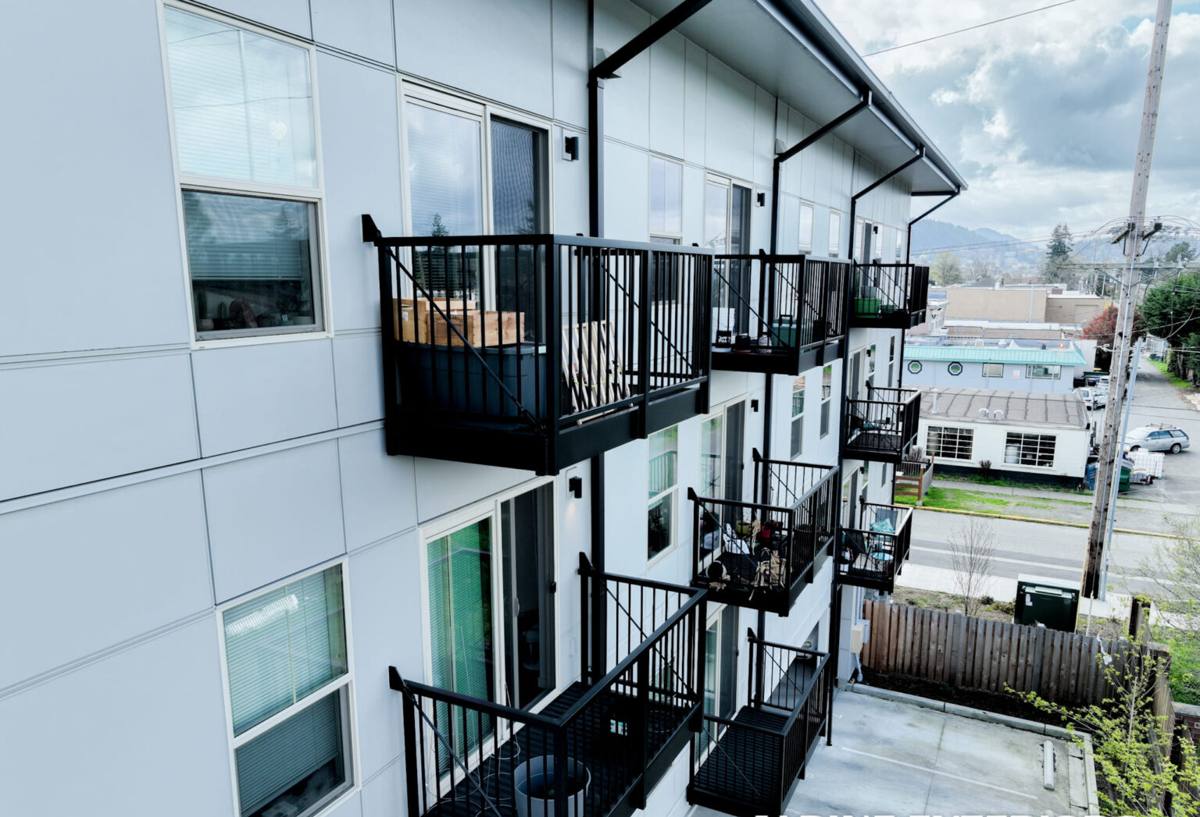
What Whatcom County's Climate Actually Does to Siding
Constant Moisture Exposure
Everson gets a steady diet of rain much of the year, and a lot of it arrives sideways in wind-driven storms. Any gap, crack, or failed caulk joint becomes an entry point. Once water gets behind siding, it doesn't dry out quickly in our climate — humidity stays high, and sun exposure on many lots is limited by tree cover or home orientation.
Moss, Mildew, and Organic Growth
Moss doesn't just sit on top of siding — it holds moisture against the surface and, on wood-based products, feeds decay underneath. Shaded walls, roof-adjacent siding sections, and areas with poor airflow are where we find the worst of it, usually where a homeowner assumed the siding was fine because the damage was hidden behind a green film.
Freeze-Thaw and Temperature Swings
Whatcom County doesn't get brutal winters, but it gets enough freeze-thaw cycling to matter. Water that's already trapped in a seam or a soft spot expands when it freezes, widening cracks and loosening fasteners a little more each cycle. It's a slow process, which is exactly why it goes unnoticed until a repair becomes a much bigger job.
Common Siding Repair Issues We See in Everson Homes
Wood and Engineered Wood Siding
Older wood siding and engineered wood products are the most climate-sensitive materials we work on. Swelling at butt joints, soft or spongy sections near the bottom of walls, peeling paint that signals moisture underneath, and delamination at edges are all common. Once wood-based siding starts absorbing water, the damage spreads faster than most homeowners expect.
Vinyl Siding
Vinyl doesn't rot, but it cracks in cold snaps, warps near heat sources like dryer vents, and — more importantly — it's not sealed at the seams the way many homeowners assume. Water gets behind vinyl panels regularly in this climate, and because vinyl hides what's happening underneath, rot in the sheathing or framing can be well underway before anyone notices a problem on the surface.
Fiber Cement Siding
Fiber cement handles our climate far better than wood or vinyl, but it isn't immune to problems, almost always tied to installation rather than the material itself: caulk failure at joints, paint that wasn't factory-applied starting to peel, fasteners driven wrong, or panels installed too close to grade or a roofline where they stay wet longer than the product was designed for.
What a Correct Siding Repair Actually Involves
A repair that just covers the visible damage without addressing what caused it isn't a repair — it's a delay. Every siding repair we do in Everson follows the same underlying logic, regardless of the material involved:
- Identify the actual water entry point, not just the damaged panel
- Check the condition of the house wrap, flashing, and sheathing behind the siding
- Confirm whether the damage is isolated or spreading along a seam, corner, or wall section
- Match materials and reveal so the repaired section doesn't stand out or create a new water trap
- Re-seal and re-flash correctly at penetrations, trim, and butt joints
- Verify drainage and clearance so the same failure doesn't repeat in the same spot
Skipping any of these steps is how a homeowner ends up paying for the same repair twice.
Repair Options, Compared
| Repair Type | Best For | What's Involved |
|---|---|---|
| Spot Patch | Small, isolated damage with no hidden moisture issue | Remove and replace a single panel or short section, reseal, match paint or finish |
| Section Replacement | Damage that follows a seam, corner, or wall run | Remove siding back to sound material, inspect and repair sheathing/wrap, reinstall with proper flashing |
| Full Wall or Elevation Replacement | Widespread moisture damage, aging wood/vinyl, or repeated failures in one area | Strip to sheathing, address underlying moisture issues, install new siding system |
Our Siding Repair Process for Everson Homeowners
1. Inspection Before Anything Else
We start by looking at the whole wall, not just the damaged spot the homeowner called about. Damage on the surface is often a symptom of something happening a few inches away — a bad seam, a missing kick-out flashing, or a clogged gutter dumping water where it shouldn't be.
2. Honest Diagnosis
We tell homeowners plainly whether a repair will actually hold or whether it's a short-term fix on top of a bigger problem. If a wall section has widespread rot or the siding material itself is past its useful life, patching it is a disservice — we'll say so.
3. Matching or Transitioning Materials
Where the existing siding is sound and a clean patch is realistic, we match it as closely as possible. Where the damage points to a material or installation problem that's going to keep recurring, we'll walk through what replacing that section — or that wall — with a more durable material would look like, and why.
4. Repair Execution
Once we've agreed on scope, the work itself is straightforward but detail-heavy: proper removal without damaging adjacent sound siding, correct flashing and house wrap repair underneath, and fastening and sealing to spec so the repair performs as well as new work.
Repair vs. Replace: How We Help You Decide
Not every siding problem needs a full replacement, and we're not going to sell a whole-house job when a section repair will genuinely hold up. But we also won't recommend a repair that's likely to fail again within a couple of seasons. A few honest factors guide that call:
| Factor | Leans Toward Repair | Leans Toward Replacement |
|---|---|---|
| Extent of damage | Isolated to one panel or small section | Spread across a wall, multiple corners, or several elevations |
| Underlying material condition | Sheathing and framing are sound | Rot or moisture damage found behind the siding |
| Age of existing siding | Newer material, isolated failure | Older wood, LP, or vinyl nearing the end of its service life |
| History of repairs | First issue in that area | Same spot has been patched before |
Why We Use James Hardie for Replacement Sections
When a repair points toward replacing a section, a wall, or eventually the whole exterior, we install James Hardie fiber cement — it's the only siding system we put on homes, and we won't install LP SmartSide, vinyl, Cemplank, Allura, or primed wood as a replacement material, even for a partial repair. That's a deliberate standard, not a sales pitch.
Fiber cement doesn't absorb water the way wood-based products do, and it doesn't trap moisture behind it the way vinyl can. It's non-combustible, which matters for long-term insurance and safety considerations, and James Hardie's ColorPlus factory finish holds up to UV and moisture far longer than field-applied paint — which matters directly for repair work, since paint failure is one of the most common reasons we get called out in the first place. Hardie's HZ5 product line is also engineered for climates with heavy moisture exposure, which lines up with what Whatcom County homes actually deal with year-round.
We're upfront that this means a repaired section may look slightly different from decades-old original siding until a future full repaint or replacement brings the whole exterior into alignment. For most homeowners, trading a short-term aesthetic mismatch for a repair that won't need to be redone in three years is the right call — and we'll always explain the trade-off rather than assume it for you.
Why a Crew That Already Works in Everson Makes a Difference
Siding repair is local work in a way a lot of home improvement isn't. A contractor who's worked on homes throughout Whatcom County knows which neighborhoods sit low and hold moisture longer, which builders in the area historically under-flashed certain details, and how local permitting works for exterior repairs when the scope grows beyond a simple patch. That knowledge shortens the diagnosis phase and means fewer surprises once a wall is opened up.
It also means faster response. Water damage doesn't wait for a convenient scheduling slot, and a crew based nearby in Lynden can get eyes on a problem quickly rather than adding days of travel time to an already time-sensitive repair.
Maintenance That Extends the Life of a Repair
A good repair should last for years, but a little homeowner attention between visits goes a long way in this climate. Watch for:
- Soft, spongy, or discolored areas anywhere on the siding, especially near the ground or roofline
- Moss or dark streaking building up on shaded or north-facing walls
- Caulk that's cracked, shrunk, or pulled away from trim and joints
- Paint that's chalking, peeling, or bubbling, which often signals moisture underneath
- Gutters and downspouts dumping water directly onto or behind siding sections
- Vegetation or mulch piled against siding, holding moisture against the bottom courses
Catching any of these early usually means a small repair instead of a section replacement.
Get a Straight Answer on Your Siding
If you're seeing damage, soft spots, or moss buildup on your Everson home, we'll come take a look, tell you honestly whether it's a repair or something bigger, and walk you through the options — no pressure, no upsell for its own sake. Use the form below to request a free estimate.