 Lynden Exterior
 Ferndale's Climate Is Rougher on a Roof Than It Looks
Ferndale sits close enough to Bellingham Bay and the Strait of Georgia that salt-laden air is a real factor in how long a roof lasts, not just a coastal-town talking point. Add in Whatcom County's long wet season, wind-driven rain off the water, and the deep shade thrown by mature conifers on so many lots, and you get a set of conditions that will find every weak point in a shingle roof faster than a drier inland climate would. We work on homes throughout Ferndale and see the same failure patterns over and over: moss working its way under tab edges, fasteners corroding faster than expected, and valleys or flashing details that were fine for a dry climate but were never built for months of steady saturation.
None of this means asphalt shingles are a bad choice here. They're still the most practical, cost-effective roofing material for the large majority of Ferndale homes. It means the installation has to account for the specific stresses of this location, and the material choices matter more than they would somewhere drier.
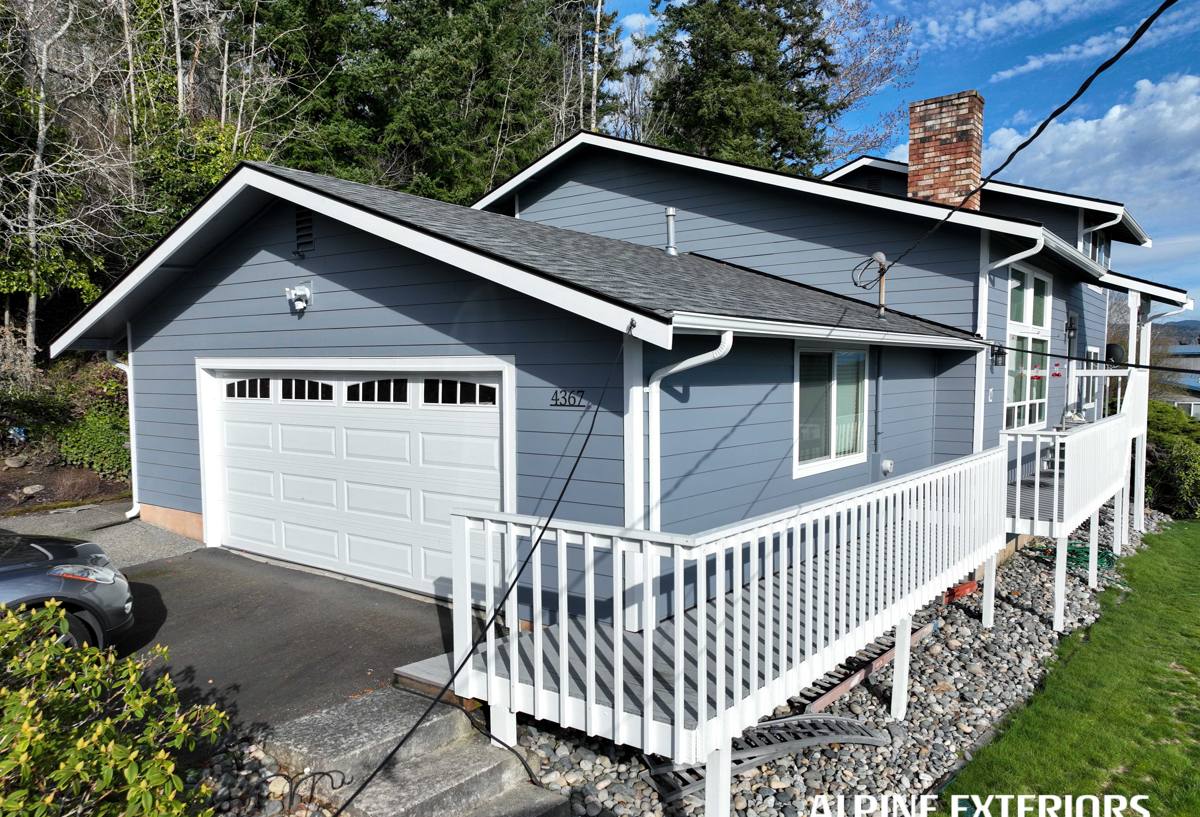
What Driving Rain Does to a Shingle Roof
Ferndale gets weather off the Strait, and wind-driven rain behaves differently than rain falling straight down. It gets pushed sideways and upward under shingle tabs, into fastener holes, and along roof-to-wall intersections where water isn't supposed to travel. A roof that looks fine in a light drizzle can still leak during a wind-driven storm if the underlayment, flashing, and shingle overlap weren't detailed for that kind of exposure.
The parts of the system that matter most in this kind of weather are the ones nobody sees once the roof is finished:
- Ice-and-water shield membrane at eaves, valleys, and any low-slope transitions, not just the code-minimum areas
- Properly lapped synthetic underlayment across the full roof deck, not just spot coverage
- Step flashing and counter-flashing at every wall intersection, sized and installed so water can't wick behind it
- Kick-out flashing anywhere a roof edge meets a sidewall, to keep runoff out of the wall assembly
- Correct shingle nailing pattern and placement, since underdriven or misplaced nails are one of the most common causes of wind-driven leaks
These details cost the same in materials whether they're done right or done in a hurry. The difference shows up years later, in the form of a leak that's hard to trace because the water entered somewhere other than where it appeared on the ceiling.
Moss, Algae, and the Long Wet Season
Whatcom County's moss season isn't really a season here so much as most of the year. Shaded roof sections, north-facing slopes, and anywhere debris collects will grow moss if the roof isn't built or maintained to resist it. Moss does more than look bad. It holds moisture directly against the shingle surface, lifts tab edges as it grows, and traps organic debris that breaks down granule coating over time. Left unchecked for years, it shortens the usable life of an otherwise sound roof.
Algae staining is a related but separate problem: the dark streaking you see on roofs around the region is a type of algae that feeds on the limestone filler in standard shingles, not dirt. It's cosmetic rather than structural, but it's persistent, and it's part of why algae-resistant (AR) shingle lines exist.
What actually helps
Algae-resistant shingles use copper or zinc granules blended into the surface coating, which slows algae growth without chemical treatment. Zinc or copper strips installed near the ridge do something similar for an entire roof over time, as rain carries trace metal down the slope. Keeping overhanging branches trimmed back reduces both moss spore contact and the amount of shade and debris a roof section gets. None of these are one-time fixes — they reduce how fast moss and algae come back, which in this climate is the realistic goal.
Salt Air and Roof Hardware
Ferndale's proximity to the water means airborne salt is a slow, steady factor in roof durability, particularly for anything metal. Standard galvanized fasteners and flashing can corrode faster near the coast than the same materials would inland, and once a fastener starts to corrode, it loses holding strength long before it's visibly rusted through. This is why we pay attention to fastener and flashing material on every Ferndale job rather than defaulting to whatever's cheapest — the cost difference between standard and corrosion-resistant hardware is small relative to the roof's total cost, and it matters more here than it would in most parts of the state.
Choosing the Right Shingle for a Ferndale Roof
Most Ferndale homeowners are choosing between a handful of asphalt shingle grades. Here's how they generally compare for this climate specifically:
| Shingle Type | Typical Lifespan Here | Moss/Algae Resistance | Best Fit |
|---|---|---|---|
| 3-tab (standard) | 15–20 years | None built in | Budget-driven projects, rentals, outbuildings |
| Architectural/laminate | 25–30 years | Varies by line | Most primary residences; better wind rating and appearance |
| Algae-resistant (AR) laminate | 25–30 years | Built-in copper/zinc granules | Shaded lots, north-facing slopes, tree cover — most Ferndale properties |
| Impact-rated/heavier laminate | 30+ years | Usually available with AR option | Homes wanting maximum durability and longer warranty coverage |
For a shaded Ferndale lot, we usually steer homeowners toward an AR-rated architectural shingle even if it costs somewhat more upfront. The lifespan difference on a heavily shaded roof between AR and non-AR shingles can be significant, and re-roofing early because of moss damage costs far more than the upgrade would have.
How We Approach a Shingle Roofing Job in Ferndale
Our process doesn't change dramatically from house to house, but every step gets adjusted for this specific climate:
- Inspection and deck assessment. We check the existing deck for soft spots or moisture damage before quoting, since a wet climate makes deck rot more common than in drier regions.
- Tear-off and deck prep. Old material and fasteners come off completely; any damaged decking gets replaced rather than covered over.
- Underlayment and ice-and-water membrane. Full synthetic underlayment coverage, with membrane at eaves, valleys, and vulnerable transitions.
- Flashing. New step, counter, and kick-out flashing at every wall and penetration, using corrosion-resistant material given the coastal exposure.
- Shingle installation. Manufacturer-specified nailing pattern and exposure, with AR shingles as the standard recommendation for shaded roof sections.
- Ventilation check. We confirm intake and exhaust ventilation are balanced, since trapped attic moisture accelerates deck rot and shortens shingle life from underneath.
- Final walk-through. We go over what was done, what the warranty covers, and what maintenance the roof will need going forward.
Signs a Ferndale Roof Needs Attention
Because moss and moisture damage build slowly, a lot of roof problems here go unnoticed until they've become expensive. Worth checking for:
- Moss buildup on shaded slopes, especially near the ridge or in valleys
- Granules collecting in gutters or at downspout outlets
- Shingle tabs that look lifted, curled, or cracked at the edges
- Dark streaking across the roof field (algae staining)
- Soft spots or sagging when walked, or visible sagging from the ground
- Water stains on interior ceilings, especially after a windy storm
- Rusted or corroding flashing, vent boots, or exposed fasteners
- Daylight visible through the attic roof deck
Any one of these on its own isn't necessarily an emergency, but they're worth a professional look before the next wet season adds to the problem.
Repair, Maintenance, or Replacement
Not every issue means a new roof. A localized flashing failure, a section of storm damage, or moss buildup on an otherwise sound roof can often be addressed with repair and maintenance rather than full replacement. We'll tell you honestly which category your roof falls into rather than defaulting to the more expensive recommendation. Roughly:
| Situation | Typical Approach |
|---|---|
| Isolated leak, roof under 15 years old | Targeted repair (flashing, localized shingles) |
| Heavy moss, shingles otherwise intact | Moss removal, treatment, and maintenance plan |
| Widespread granule loss, curling, multiple leak points | Full replacement usually more cost-effective long-term |
| Roof past 20–25 years with visible wear | Replacement, often with an AR shingle upgrade |
Why It Matters That We Already Work in Ferndale
A roofing crew that regularly works Ferndale and the surrounding Whatcom County area isn't guessing about how the local climate treats a roof — we've seen how fast moss returns on a shaded lot near the water, which flashing details actually hold up under wind-driven rain, and where corrosion tends to show up first on coastal-exposed homes. That local pattern recognition shapes real decisions on your project: which shingle grade we recommend, where we add extra membrane, and what maintenance schedule actually makes sense for your property rather than a generic one pulled from a manufacturer's manual.
If you're dealing with a moss-heavy roof, planning a replacement, or just want an honest read on how much life your current shingles have left, we're happy to take a look. Reach out for a free, no-pressure estimate using the form below.