 Lynden Exterior
 Composite Decking Built for Ferndale's Weather, Not Just Its Curb Appeal
Ferndale sits close enough to the water that salt air is a real factor in how exterior materials age, and far enough into Whatcom County's rain pattern that a deck here spends a good chunk of the year wet, shaded, or both. A composite deck that looks great going in but wasn't built with this specific combination in mind — salt, moisture, and long stretches without direct sun — will show it within a few seasons. Fastener corrosion, framing rot underneath a perfectly good deck surface, and moss creeping into board grooves are the three problems we see most often on decks that weren't built for this area.
This page is about one job: composite decking installed correctly for Ferndale homes. Not a general decking overview, not a sales pitch for one brand over another — just what actually matters when you're putting a composite deck into this climate and want it to still look and perform well in ten or fifteen years.
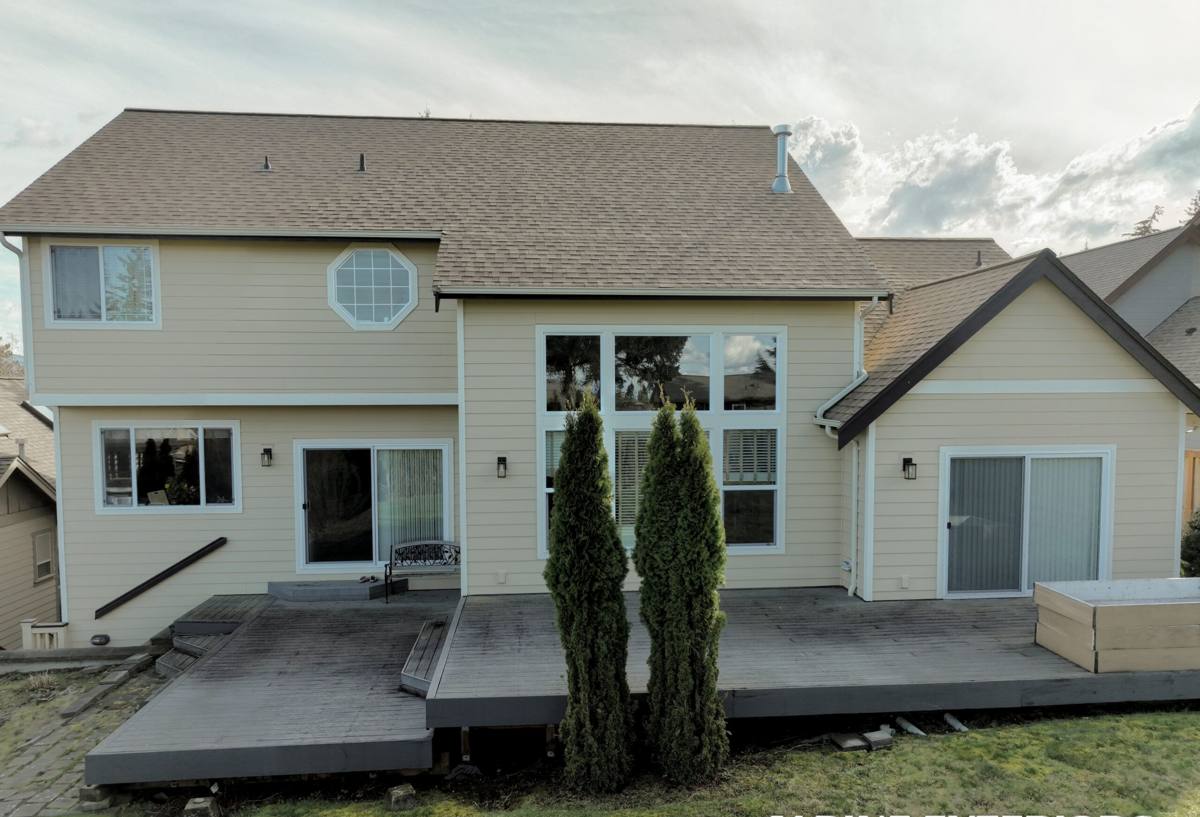
What Ferndale's Climate Actually Does to a Deck
Salt Air and Coastal Exposure
Ferndale's proximity to Bellingham Bay and the Strait of Georgia means airborne salt is part of the environment, even on properties that aren't waterfront. Salt accelerates corrosion on anything metal — screws, joist hangers, post bases, railing hardware — long before it does anything visible to composite boards themselves. A deck can have flawless decking on top and a substructure that's rusting from underneath if the wrong fasteners or connectors were used.
Moss, Algae, and Standing Moisture
Whatcom County's moss season runs long — shaded, north-facing, and low-airflow areas can stay damp for months at a stretch. Moss and algae don't just sit on top of a deck board; they hold moisture against the surface and, in gaps or fastener heads, can trap enough dampness to start affecting the substructure underneath. Composite decking resists rot in the boards themselves, but it doesn't stop moss from growing on a dirty or poorly drained surface, and it won't compensate for framing that can't shed water.
Driving Rain and Freeze-Thaw Cycling
Ferndale doesn't get extreme cold most winters, but it does get enough freeze-thaw cycling — combined with wind-driven rain — to expose weak points in framing, flashing, and ledger board attachment. Water that gets behind a ledger or pools on an unvented substructure will find every gap over a few winters. This is less about the decking material and more about the build underneath it, which is where most decking problems actually start.
Composite vs. Other Decking Materials for a Ferndale Property
Homeowners usually land on composite decking for the same reasons: less maintenance than wood, and better long-term behavior in a wet, shaded climate. Here's how the common options compare for this specific area.
| Material | Behavior in salt air & damp shade | Maintenance | Typical lifespan here |
|---|---|---|---|
| Pressure-treated wood | Absorbs moisture, prone to warping and splintering; needs regular sealing to hold up | Annual cleaning, periodic staining/sealing | 10-15 years before major repair |
| Cedar | Naturally rot-resistant but still needs sealing against constant damp; grays and softens without upkeep | Sealing every 1-2 years, regular cleaning | 15-20 years with consistent maintenance |
| Capped composite | Shrugs off moisture and salt exposure well; surface doesn't absorb water like wood | Periodic washing, no sealing or staining | 25-30+ years, manufacturer-backed |
| Uncapped composite | Better than wood but the exposed core can absorb some moisture over time, especially in constant shade | More frequent cleaning than capped boards | 15-20 years typical |
We install capped composite on the large majority of Ferndale decks because the cap layer is what actually resists the moss, mildew, and moisture staining that this climate produces. It costs more upfront than uncapped composite or pressure-treated wood, but for a deck that's going to sit in coastal, often-shaded conditions for decades, it's the option that avoids the repeat maintenance cycle wood requires.
What a Correctly Built Composite Deck Involves
Substructure and Framing
The decking boards are the part everyone sees, but the framing underneath is what determines whether the deck is still solid in fifteen years. For Ferndale conditions, that means joists and beams sized and spaced to the manufacturer's spec for composite (composite spans differently than wood and needs tighter joist spacing in most cases), pressure-treated or naturally durable framing lumber, and post bases set to keep wood off standing water.
Fasteners and Hardware
Given the salt air, we use stainless steel or heavily coated, corrosion-rated fasteners and structural connectors rather than standard galvanized hardware. It costs a little more per piece, but it's the difference between hardware that's still sound in twenty years and hardware that's rusting through in eight — long before the decking itself would need replacing.
Drainage, Ventilation, and Ledger Details
Two build details matter more in this climate than in a drier one: airflow underneath the deck so moisture doesn't sit trapped against framing, and correct flashing where the deck ledger attaches to the house so driving rain can't work its way behind the siding. A deck that traps moisture at the ledger connection is one of the more expensive repairs to fix later, because by the time it shows up, it usually involves siding and framing damage, not just the deck.
Board Fastening
Hidden fastener systems are standard on most composite decks now, and they matter here specifically because exposed screw heads are one more piece of metal exposed to salt air and one more place for moss and grime to collect. Hidden clips also allow the boards a small amount of room to expand and contract, which composite does more than wood as temperatures swing.
Choosing the Right Composite Board for This Area
Capped vs. Uncapped
We covered the durability difference above, but it's worth being direct about the tradeoff: uncapped composite costs less and still outperforms wood, but in a climate with this much sustained dampness, the exposed core is more prone to moisture absorption and surface staining over time. For most Ferndale homeowners, the added upfront cost of a capped board pays for itself in avoided maintenance and a longer effective lifespan.
Color and Heat Considerations
Darker composite boards run hotter in direct sun, which matters less here than in a drier inland climate, but it's still worth factoring in for west- or south-facing decks that do get sun exposure. Lighter and mid-tone colors also tend to show pollen, moss residue, and water spotting less than very dark boards, which is a practical consideration given how much airborne moisture and organic debris this area produces.
Grain Pattern and Slip Resistance
A textured, wood-grain surface isn't just cosmetic — it provides meaningfully better slip resistance on a deck that's going to be wet or damp more months than not. Smooth, low-texture boards can get slick with even a light layer of moss film or algae, which is a real safety consideration on stairs and high-traffic areas.
Our Process, Start to Finish
- On-site assessment: we look at drainage, sun/shade exposure, existing structure (if replacing a deck), and how the new deck ties into the house.
- Design and material selection: board brand, color, and railing system chosen based on your budget and how the space will actually be used, not just what looks best in a sample.
- Permitting: most raised decks in Whatcom County require a permit; we handle that process rather than leaving it to the homeowner.
- Demo (if applicable): removal of the old deck, with a check of ledger and framing condition before anything new goes up.
- Framing and structural work: corrosion-rated hardware, correct joist spacing for composite, proper ledger flashing.
- Decking, fastening, and railing installation: hidden fastener systems, manufacturer-spec gapping for drainage and expansion.
- Final walkthrough: we go over basic care with you before we consider the job done.
Cost Factors for a Ferndale Composite Deck
Every deck is different, so we won't quote a number without seeing the site, but these are the variables that move the price most:
| Factor | Why it affects cost |
|---|---|
| Deck size and shape | Square footage and the number of angles, cutouts, or level changes directly affect material and labor |
| Height and structure | Elevated decks need more substructure, footings, and often stairs and additional railing |
| Board tier (capped vs. uncapped) | Capped composite carries a higher material cost but lower long-term maintenance cost |
| Site access | Difficult access for equipment or material delivery adds labor time |
| Demo of an existing deck | Removal and disposal of old decking and framing adds to the project scope |
| Railing and lighting | Composite, cable, or metal railing systems and integrated lighting vary widely in cost |
As a broad range, composite deck projects in this region typically run from the mid-teens into the thirty-thousand-dollar range depending on size, height, and material tier — but the only way to get a number that actually applies to your property is a site visit.
Maintenance: What Composite Actually Needs Here
One of the real advantages of composite is how little upkeep it needs compared to wood, but "low maintenance" doesn't mean "no maintenance," especially with Ferndale's moss season. A simple seasonal routine keeps a composite deck looking and performing the way it should:
- Sweep debris and organic buildup regularly, especially in fall and through moss season, so it doesn't sit and hold moisture against the board surface
- Wash the deck once or twice a year with a soft-bristle brush and mild soap and water — avoid pressure washers on composite, which can damage the cap layer
- Check that gaps between boards stay clear so water keeps draining as designed
- Inspect railing posts and stair connections annually for any looseness
- Trim back overhanging vegetation that keeps sections of the deck shaded and damp longer than necessary
- Address any moss or algae promptly with a composite-safe cleaner rather than letting it establish
Why a Ferndale-Familiar Crew Matters
A lot of what makes a composite deck last in this area isn't visible once the project is finished — it's the fastener grade, the framing spacing, the flashing detail at the ledger, and the drainage planning underneath the boards. Those are the choices that separate a deck that holds up through fifteen Whatcom County winters from one that needs structural repair in year eight, and they're exactly the details that get skipped by crews used to building in drier, less coastal climates.
We're based in Lynden and work Ferndale regularly, which means we're building to this area's conditions by default, not adjusting a generic approach after the fact. That includes knowing which hardware grade actually holds up to the salt air here, how much airflow a substructure needs given how long things stay damp, and where moss tends to establish first on a deck in this kind of shade and moisture pattern.
Get a Straightforward Estimate
If you're planning a new composite deck or replacing one that hasn't held up, we're happy to take a look and walk you through what your property specifically needs — no pressure, no upsell on options you don't need. Use the form below to request a free estimate.