 Lynden Exterior
 Metal Roofing Built for Ferndale's Marine Climate
Ferndale sits close enough to the water that homes here take on a different kind of weather than roofs just a few miles inland. Salt-laden marine air moves through Whatcom County most of the year, driving rain comes in sideways during fall and winter storms, and the wet season here runs long enough that moss isn't an occasional nuisance — it's a permanent condition your roof has to be designed around. A roofing system that works fine in a drier climate can fail early here if it isn't matched to these conditions.
Metal roofing, installed correctly, handles this combination better than most alternatives. It sheds water fast, gives moss less to hold onto, and doesn't absorb moisture the way organic shingle materials do. But "metal roofing" covers a wide range of products and installation approaches, and the difference between a correct job and a mediocre one shows up in leaks, corrosion, and fastener failures five to fifteen years down the road — not on day one.
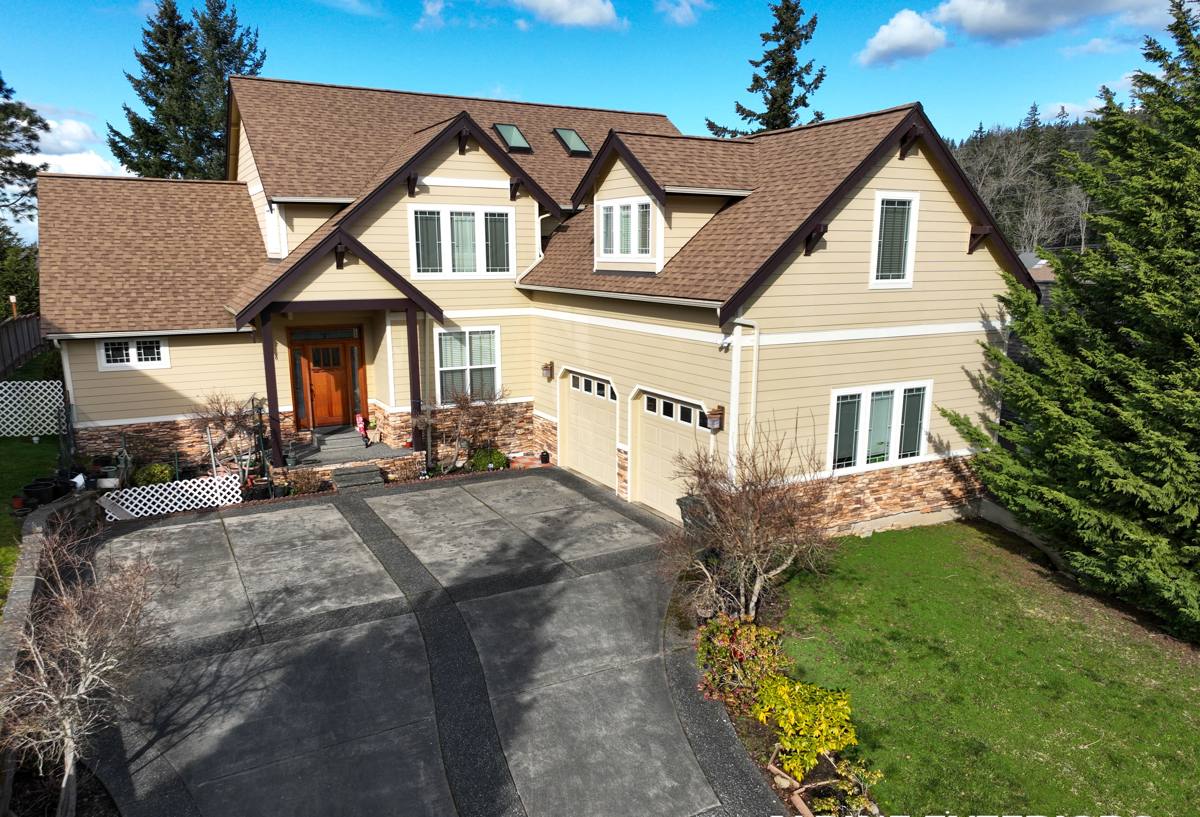
What Salt Air, Driving Rain, and Moss Actually Do to a Roof
Each of these factors stresses a roof in a different way, and they compound each other over a Whatcom County winter.
- Salt air accelerates corrosion on any exposed metal — fasteners, flashing, panel edges — especially where coatings are thin or damaged during installation.
- Driving rain gets pushed sideways and upward under eaves and around penetrations, so lap joints, flashing details, and underlayment matter more here than in calmer climates.
- Extended moss season means organic growth gets a long runway on any surface with texture or shade, holding moisture against the roof deck and working into seams over time.
None of this is unique to Ferndale specifically, but it's more persistent here than in drier parts of the state, and it's a large part of why the right roofing choice and installation detail matter more than the brand name on the panel.
Panel Types and Material Options
Not all metal roofing is built the same way, and the differences matter more in a wet, salty climate than they would somewhere drier.
| Panel Type | Fastening Method | Best Fit For |
|---|---|---|
| Standing seam | Hidden clips, no exposed screws through the panel face | Long-term performance in high-moisture, coastal-influenced areas |
| Exposed-fastener panels | Screws driven through the panel with rubber washers | Lower upfront cost, works well on outbuildings and simpler roof lines |
| Metal shingles / stone-coated panels | Interlocking pieces, concealed or minimal fasteners | Homes wanting a traditional shingle look with metal's durability |
Standing Seam
Standing seam panels use hidden clips rather than screws driven through the panel face, which removes the most common failure point on metal roofs in wet climates — worn-out fastener washers. This is our default recommendation for full roof replacements in areas exposed to driving rain and salt air, because it holds up longest with the least maintenance.
Exposed-Fastener Panels
Exposed-fastener panels cost less upfront and install faster, which makes them a reasonable choice for shops, garages, and other lower-stakes structures. The trade-off is that the rubber washers under each screw eventually harden and shrink, and in a climate with this much rain, that turns into a leak point over time. We're upfront with clients about this trade-off rather than steering everyone toward the more expensive option by default — it depends on the building and the budget.
Metal Shingles and Stone-Coated Panels
These give homeowners a more traditional shingle or shake appearance while keeping metal's shedding and longevity advantages. They interlock in a way that limits exposed fastener points, though the seams require careful detailing to keep wind-driven rain from working its way underneath.
What a Correct Installation Involves
The panel itself is only part of the system. Most metal roof failures we get called out to inspect trace back to installation shortcuts, not the material.
Underlayment and Moisture Barrier
A quality synthetic or self-adhered underlayment underneath the panels is non-negotiable in this climate. It's the backup layer that protects the deck if wind-driven rain ever gets past the panel seams — and in a region with this much sustained rainfall, that backup layer earns its keep.
Fastening and Flashing Details
Flashing around chimneys, vents, skylights, and valleys is where most leaks actually start, regardless of panel type. Correct step flashing, properly lapped courses, and sealant used as a backup rather than a primary seal are what separate a roof that holds up for decades from one that needs re-caulking every couple of years.
Ventilation
Metal roofs need proper intake and exhaust ventilation to prevent condensation from forming on the underside of the panels — a problem that's more common in humid coastal climates than people expect. Poor ventilation can trap moisture against the deck even when the roof surface itself is doing its job.
Our Process, Start to Finish
Every roofing job we take on in the Ferndale area follows the same sequence, whether it's a full tear-off or a re-roof over an existing structure that can support it.
- On-site inspection of the existing roof, deck condition, and any moss, moisture, or rot already present.
- A written estimate that lays out panel type, underlayment, flashing scope, and ventilation work — not just a single bottom-line number.
- Tear-off (when needed) and deck inspection, with any soft or rotted sheathing replaced before anything goes back on.
- Underlayment, flashing, and panel installation in sequence, with attention to lap direction given prevailing wind and rain patterns.
- Final walkthrough covering what was done, what maintenance to expect, and what the warranty actually covers.
We don't skip the deck inspection step to save time. A new metal roof over a compromised deck just hides a problem instead of fixing it.
Living With a Metal Roof Through a Long Wet Season
A properly installed metal roof is low-maintenance, not no-maintenance. A few habits keep it performing the way it's supposed to.
- Clear debris — needles, leaves, branches — from valleys and around penetrations before the fall rains set in.
- Check gutters and downspouts each fall; a metal roof sheds water fast, and clogged gutters push that volume somewhere it shouldn't go.
- Watch for moss forming in shaded valleys or under overhanging branches, and remove it before it spreads rather than after.
- After any major windstorm, do a visual check for lifted flashing or displaced panels rather than waiting for a leak to show up inside.
- Keep an eye on any exposed fasteners over the years — washers are the first thing to wear out, and catching it early is a small fix instead of a ceiling repair.
Cost Factors to Expect
Metal roofing costs more upfront than asphalt shingles, but the right way to think about it is cost per year of service life, not just the sticker price. Actual numbers depend on roof size, pitch, complexity, and panel type, but these are the factors that move the price most.
| Factor | Effect on Cost |
|---|---|
| Panel type | Standing seam runs higher than exposed-fastener panels due to labor and clip systems |
| Roof complexity | More valleys, dormers, and penetrations mean more flashing work and labor time |
| Tear-off vs. overlay | Full tear-off costs more but is often the right call once the deck needs inspection anyway |
| Ventilation upgrades | Adding or correcting intake/exhaust ventilation adds modest cost but protects the whole system |
| Access and pitch | Steep or hard-to-access rooflines increase labor time and staging requirements |
We'd rather walk a homeowner through these factors on-site than quote a number that doesn't reflect the actual roof.
Why a Crew That Already Works Ferndale Matters
Roofing crews who mostly work drier inland regions sometimes under-detail flashing and ventilation because it rarely bites them there. In an area dealing with sustained marine air, driving rain, and a moss season that doesn't really end, those shortcuts show up as callbacks within a few years. Working this part of Whatcom County regularly means we're not guessing at how wind and rain behave on a given roofline — we've already seen how it plays out on similar homes nearby, and we build accordingly rather than applying a generic approach and hoping it holds.
Is It Time to Consider a Metal Roof?
Not every roof needs replacing yet, but a few signs suggest it's worth a closer look sooner rather than later.
- Asphalt shingles curling, cracking, or losing granules, especially on slopes that get the most sun and rain exposure.
- Persistent moss growth that keeps coming back within a season or two of cleaning.
- Visible rust or corrosion on existing metal flashing or fasteners.
- Interior staining on ceilings or in the attic after heavy storms.
- A roof already past or approaching the end of its expected service life.
If you're weighing options for a home in the Ferndale area, we're happy to take a look and walk you through what makes sense for your specific roof — no pressure, no obligation. Use the form below to request a free estimate.