 Lynden Exterior
 Ferndale's Roofs Work Harder Than Most
Ferndale sits close enough to the water that homes here deal with a combination most inland Washington towns don't: salt-laden marine air, long stretches of driving rain off the Sound, and a moss season that can run nine months out of the year. Any one of those on its own is manageable. Together, they shorten the working life of a roofing system faster than most homeowners expect, and they punish shortcuts that would go unnoticed in a drier climate.
When we replace a roof in Ferndale, we're not just swapping old shingles for new ones. We're building a system meant to shed constant moisture, resist the corrosion that salt air causes in metal components, and stay clean enough that moss doesn't get a foothold between visits. That's a different job than a generic re-roof, and it's worth understanding what goes into it before you sign a contract with anyone.
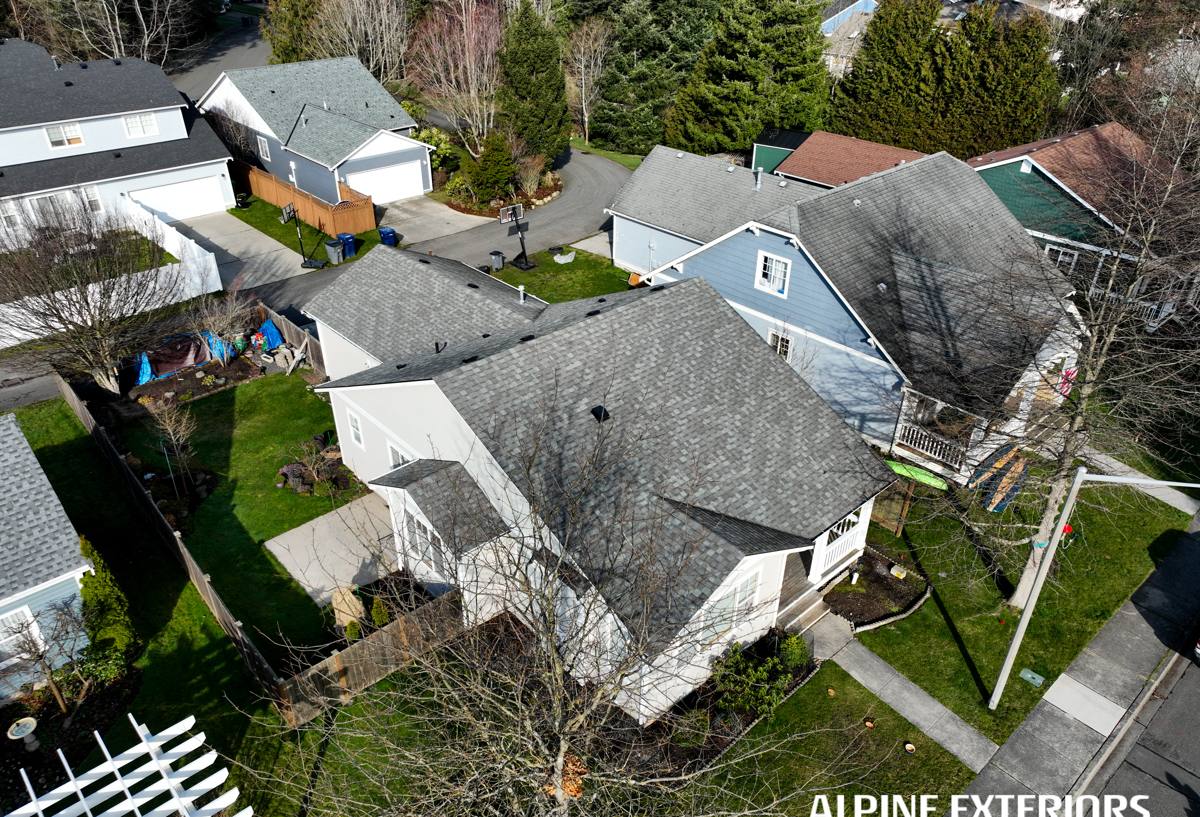
What Correct Roof Replacement Actually Involves
A roof replacement done right is not just new shingles laid over what's there. It's a full system rebuild, and every layer matters more here than it would somewhere dry and inland.
Tear-Off and Deck Inspection
We remove the old roofing down to the deck. This is the only point in the whole project where anyone can actually see the condition of the sheathing underneath. In a climate like ours, hidden moisture damage from old flashing leaks or clogged valleys is common, and it has to be found and repaired before anything new goes down. Skipping tear-off, or "layering" new shingles over old ones, hides problems instead of fixing them.
Underlayment
This is the roof's real waterproofing layer, and in a region with driving, wind-blown rain, it matters as much as the shingles themselves. We use synthetic underlayment across the full deck and self-adhering, rubberized membrane at the eaves, valleys, and any low-slope transitions, where wind-driven water is most likely to work its way backward under the shingle edge.
Flashing
Flashing around chimneys, skylights, sidewalls, and roof-to-wall transitions is where most leaks actually start, not out in the open field of the roof. In salt air, we favor corrosion-resistant flashing materials and finishes over anything prone to early rust or pitting.
Ventilation
A roof deck that can't breathe traps moisture, and trapped moisture leads to rot, mold, and premature shingle failure from underneath. Balanced intake and exhaust ventilation is part of every replacement we do, not an optional add-on.
Choosing Materials for Salt Air and Moss
There's no single "best" roofing material for every home — the right choice depends on your roof's pitch, your home's style, and how much long-term maintenance you want to take on. Here's how the common options stack up for a Ferndale-area home specifically.
| Material | Salt Air Behavior | Moss Resistance | Maintenance |
|---|---|---|---|
| Architectural asphalt shingles | Good with proper fasteners and flashing | Moderate — benefits from algae-resistant granules | Periodic cleaning recommended |
| Standing seam metal | Very good, if coating and fasteners are marine-rated | Excellent — sheds moss naturally on steeper pitches | Low |
| Wood shake | Poor without diligent upkeep | Poor — retains moisture, feeds moss growth | High |
| Composite/synthetic shingles | Good | Good, product-dependent | Low to moderate |
We steer most Ferndale homeowners away from untreated wood shake, not because it can't look good, but because in constant moisture and moss pressure it demands upkeep most people don't want to commit to year after year. Architectural asphalt with algae-resistant granules and proper attic ventilation is a solid, cost-effective standard here. Metal is the strongest long-term performer against both salt corrosion and moss, and it's a reasonable upgrade for anyone planning to stay in the home long-term or wanting to minimize maintenance calls.
Moss and Algae: The Overlooked Culprit
Moss doesn't just sit on a roof looking messy — its root structure holds moisture directly against the shingle surface, and over years that accelerates granule loss and can lift shingle edges, giving wind-driven rain a place to get underneath. North-facing slopes and anything shaded by trees are the first places it takes hold in this climate.
A correct roof replacement reduces future moss pressure in a few concrete ways:
- Algae-resistant shingles with copper or zinc granule additives, where the product line supports it
- Zinc or copper control strips installed near the ridge on request
- Proper attic ventilation so the deck doesn't stay damp from underneath
- Clean, correctly lapped flashing so water doesn't pool in valleys where moss loves to start
None of this replaces periodic roof cleaning and gutter maintenance, but it buys you real time between them and reduces how aggressive that maintenance needs to be.
Our Ferndale Roof Replacement Process
- On-site inspection and estimate. We walk the roof, check the attic for ventilation and moisture signs, and give you a written, itemized quote — no pressure, no gimmicks.
- Material selection. We talk through options based on your roof's pitch, exposure, and budget, with honest trade-offs for each.
- Scheduling around the weather. We plan installation windows with realistic buffer for Whatcom County's rain patterns, and we protect the open deck if conditions shift mid-job.
- Tear-off and deck repair. Old roofing comes off, the deck is inspected, and any soft or damaged sheathing is replaced before anything new goes down.
- Underlayment, flashing, and ventilation installed to spec. This is the stage that determines how the roof performs in year eight, not just year one.
- Final walkthrough. We review the completed roof with you, confirm ventilation and flashing details, and go over basic care going forward.
Signs Your Ferndale Home Needs a Roof Replacement
Repair is the right call for isolated damage. Replacement makes sense once the roofing system as a whole is past its useful life. Watch for:
- Granules collecting in gutters or at downspout outlets
- Shingles that are curling, cupping, or losing their flat profile
- Persistent moss or algae staining that returns quickly after cleaning
- Daylight visible through the roof deck from inside the attic
- Soft or spongy spots when walking the roof (a sign for a professional to check, not a DIY test)
- Rising energy bills tied to poor attic ventilation or insulation performance
- A roof approaching or past 20-25 years old, depending on material
What Affects the Cost of a Roof Replacement
We don't publish blanket prices because every roof is different, but these are the factors that actually move the number on your estimate:
| Factor | Why It Matters |
|---|---|
| Roof size and number of facets | More square footage and more complex cuts mean more material and labor |
| Pitch and access | Steeper or harder-to-access roofs take longer and require more safety setup |
| Deck condition | Rotten or soft sheathing found at tear-off adds material and labor to replace it |
| Material choice | Asphalt, composite, and metal carry different material and labor costs |
| Ventilation and flashing upgrades | Bringing older systems up to current standards adds some cost but pays off in roof lifespan |
| Number of penetrations | Chimneys, skylights, and vents each require careful, time-consuming flashing work |
The only way to get a real number is a physical inspection — anyone quoting a firm price over the phone without seeing your roof is guessing.
Why a Crew That Already Works Ferndale Matters
Roofing crews who work across Whatcom County regularly already know how this climate behaves on a roof, not just in theory but from having pulled off shingles from prior, poorly-built jobs and seen exactly where they failed. That experience shows up in small decisions: how much underlayment overlap to use at eaves, which flashing details to double up on, where ventilation tends to get overlooked in this region's older housing stock.
It also matters for scheduling and follow-through. A crew based nearby can respond quickly if weather interrupts a job, and they're accountable to a local reputation, not just a one-time transaction. We're a Lynden-based crew that works Ferndale and the rest of Whatcom County regularly — this isn't unfamiliar territory for us.
Permits, Warranties, and What to Expect Afterward
Full roof replacements typically require a building permit, and we handle that process as part of the job so you're not left tracking down paperwork. Once the roof is on, you should expect two layers of warranty: a manufacturer's warranty on the materials themselves, and a workmanship warranty from the crew that installed it. Ask any contractor you're considering to explain both in plain terms before you sign anything — what's covered, for how long, and what could void it.
Afterward, a roof still needs occasional attention: keeping gutters clear, trimming back overhanging branches that shade and feed moss growth, and having it looked at after any major windstorm. A correctly installed roof reduces how much of that maintenance you need, but it doesn't eliminate it entirely.
If your Ferndale roof is showing its age or you just want an honest read on where it stands, we're happy to take a look. Use the form below to request a free, no-pressure estimate.