 Lynden Exterior
 Deck Replacement for Kendall Homes Near Lynden
Kendall sits in the rural stretch of Whatcom County northeast of Lynden, where open fields, tree cover, and a wetter-than-average climate all put extra stress on outdoor structures. Decks out here don't fail because homeowners neglect them — they fail because the region's weather is genuinely hard on wood and hardware. Long stretches of drizzle, driving rain that comes in sideways during winter storms, and a moss season that can stretch from fall through spring all work against a structure that spends its life outdoors. If you're looking at a deck that's gone spongy, gray, or unstable, a straight repair often isn't enough. This page covers what a proper deck replacement looks like for a Kendall-area property and why the details matter more here than they would in a drier climate.
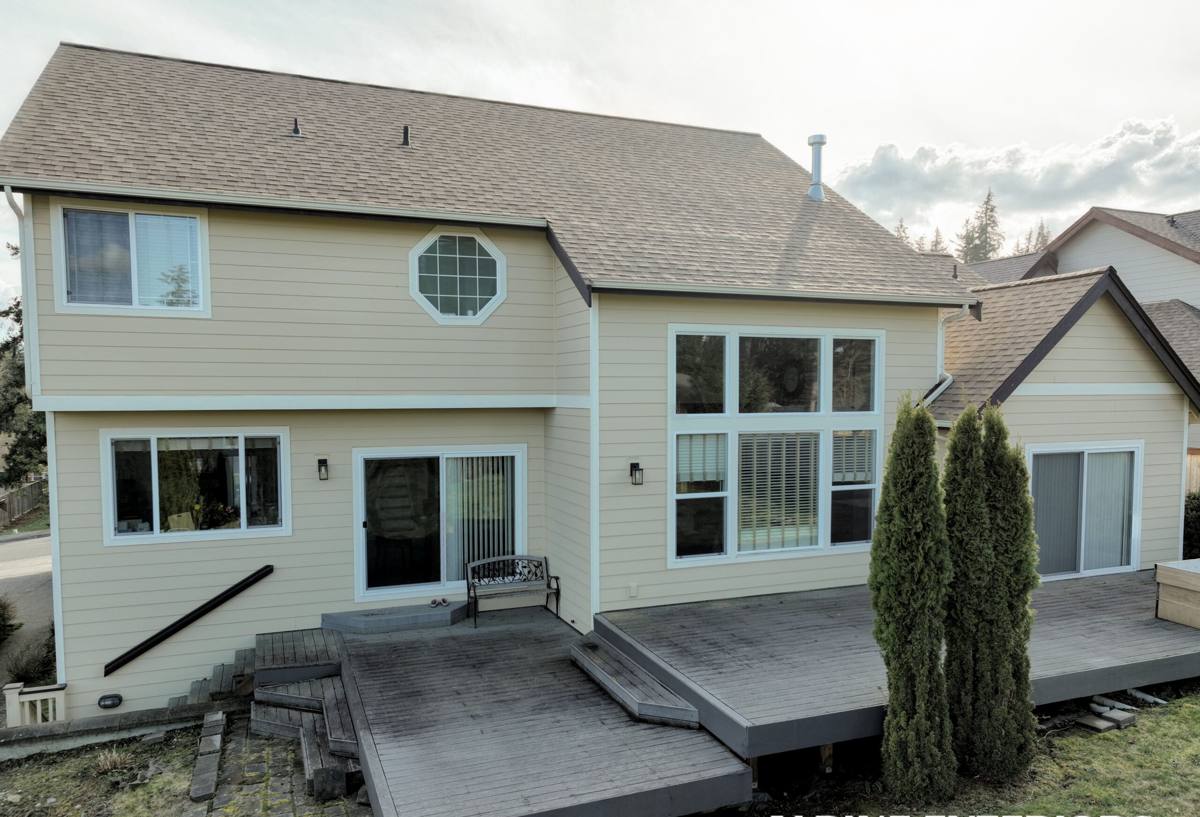
Why Decks Wear Out Faster in This Part of Whatcom County
Every deck failure we see traces back to moisture that had nowhere to go. In the Kendall and Lynden area, that moisture problem is constant rather than seasonal.
Moss and Organic Buildup
Moss doesn't just look bad — it holds water against the decking surface and fasteners for months at a time. On boards that sit in shade from trees or the house itself, moss can establish itself within a year or two of a deck being installed and never fully dry out again. That constant dampness is what actually rots wood, not rain itself.
Driving Rain and Wind-Blown Water
Storms moving through Whatcom County frequently push rain sideways rather than straight down, which drives water up under railings, into board end grain, and behind ledger flashing that wasn't detailed correctly the first time. A deck built for a drier climate's rainfall pattern often has flashing and gaps sized for vertical rain — not the horizontal load this region gets.
Salt Air and Corrosion
Marine air moving inland through the county accelerates corrosion on fasteners, joist hangers, and railing hardware. Once a screw head or hanger nail starts rusting, it weakens exactly where the structure needs strength most — at the connections. This is why fastener and hardware selection matters as much as the decking material itself.
Signs a Deck Needs Full Replacement, Not Repair
Not every tired-looking deck needs to come out. But a few signs mean patching individual boards is a waste of money because the underlying structure is already compromised.
- Joists or beams that feel spongy or flex noticeably when walked on
- Ledger board pulling away from the house, or visible gaps at the rim joist connection
- Rust streaking down from fasteners or joist hangers onto the wood below
- Railing posts that wiggle at the base even after tightening hardware
- Persistent moss or algae that returns within weeks of cleaning
- Soft spots you can push a screwdriver into with light pressure
- A deck older than 20 years built with untreated or minimally treated lumber
If two or more of these apply, replacement is almost always more cost-effective than repair once you account for labor to chase down individual repairs versus doing the framing right one time.
What a Correct Deck Replacement Actually Involves
A deck replacement done right is a structural project, not just a surface swap. The decking boards are the part everyone sees, but the framing and flashing underneath determine whether the new deck lasts 10 years or 30.
Ledger Flashing and House Connection
Where the deck attaches to the house is the single most common point of hidden rot, both in Kendall and across the wider Lynden area. Correct flashing routes water away from the house band joist entirely, with a drip edge and self-adhered membrane behind the ledger board — not just caulk, which fails within a few seasons in this climate.
Framing and Joist Spacing
Joist spacing needs to match the decking material you're installing. Composite and PVC boards generally call for tighter joist spacing than solid wood to prevent flexing and long-term sagging. We also use corrosion-resistant hardware throughout — standard galvanized fasteners don't hold up as well against the moisture and salt air this region sees over a 20-plus-year deck life.
Drainage Underneath the Deck
Water needs somewhere to go once it passes between the boards. On decks with usable space underneath, or decks close to grade, we grade and route drainage away from the foundation rather than letting water pool under the structure where it feeds rot and moss growth from below.
Footings
Footings need to sit below the local frost depth and bear on undisturbed, properly compacted soil. This is inspected work — Whatcom County building officials check footing depth and post connections before decking goes down, and skipping that step is one of the most common corners cut on lower-cost deck jobs.
Choosing the Right Decking Material for This Climate
There's no single "best" decking material — there's a best material for your budget, your maintenance tolerance, and how much sun or shade the deck gets. In a moss-prone, high-moisture area, some trade-offs matter more than they would elsewhere.
| Material | Upfront Cost | Maintenance | Moisture & Moss Behavior | Typical Lifespan |
|---|---|---|---|---|
| Pressure-treated wood | Lowest | Annual cleaning, periodic staining/sealing | Absorbs water; needs sealant reapplied to shed moisture and resist moss | 10–15 years |
| Cedar | Moderate | Regular sealing to maintain color and resist checking | Naturally rot-resistant but still needs upkeep in constant damp shade | 15–20 years |
| Capped composite | Higher | Occasional washing, no staining or sealing | Does not absorb water; resists moss buildup much better than wood | 25–30 years |
| PVC decking | Highest | Occasional washing only | Fully moisture-proof; best option for deep shade or moss-heavy sites | 25–30+ years |
Our professional standard is to steer homeowners away from bare pressure-treated wood on decks that sit in significant shade, simply because the maintenance burden of keeping it sealed against this region's rainfall is steep and easy to fall behind on. That's not a knock on wood as a material — it's a trade-off worth knowing before you commit, especially on a deck that's hard to reach for annual maintenance.
Fasteners and Hardware
Hidden fastener clip systems keep the deck surface free of screw heads, which means fewer points where water can sit and start corrosion. Face-screwed boards cost less to install but give moisture a direct path to the fastener over time. Either way, hardware should be rated for the material and exposure — stainless or heavily coated fasteners are worth the modest upcharge given how corrosive salt-laden, wet air can be on standard hardware.
What Drives Cost on a Kendall-Area Deck Replacement
Every deck is different, so we won't quote a number without seeing the site, but these are the factors that move the price up or down.
| Factor | Effect on Cost |
|---|---|
| Deck size and shape | Larger footprints and multi-level or angled layouts increase labor and material |
| Framing condition | Reusing sound framing costs less than full tear-out and rebuild of joists and beams |
| Decking material | Composite and PVC cost more upfront than wood but reduce long-term maintenance spend |
| Railing style | Cable, glass, or metal railing systems cost more than standard wood or composite balusters |
| Height and stairs | Elevated decks with stairs need more structural work and code-required guarding |
| Site access | Tight access for material delivery or equipment adds labor time |
| Permit and inspection | Required on most full replacements; a fixed but necessary cost |
Permits and Code in Whatcom County
Most deck replacements in and around Lynden require a permit, particularly when framing or footings are being rebuilt rather than just decking boards swapped on existing structure. Guardrail height, baluster spacing, and stair rise/run all have to meet current code, even if the old deck was built under an older standard. We handle the permit process and coordinate inspections as part of the job, so you're not left tracking down paperwork or guessing whether your new deck will pass. Skipping the permit on a structural rebuild isn't worth the risk — it can complicate a home sale or insurance claim down the road if the work is ever questioned.
Our Process for a Kendall Deck Replacement
- On-site assessment — we inspect the existing framing, ledger connection, footings, and drainage to determine what's salvageable and what isn't
- Written estimate — a clear scope covering demolition, framing, decking material, railing, and permit costs, with material options explained plainly
- Permit and planning — we pull the necessary permit and schedule required inspections before work begins
- Demolition and framing — old decking, and any compromised framing, comes out; new joists, beams, and footings go in to current code
- Flashing and waterproofing — ledger flashing and any under-deck drainage work is completed before decking goes down
- Decking, railing, and hardware installation — installed to the manufacturer's spacing and fastening requirements for the material chosen
- Final inspection and walkthrough — we confirm the job passes inspection and walk you through basic care for your new deck
Keeping a New Deck in Good Shape
The material you choose determines how much upkeep is ahead of you, but a few habits extend the life of any deck in this climate.
- Sweep leaves and debris off the surface regularly, especially in fall when they trap moisture against the boards
- Rinse or wash the deck at least once or twice a year to keep moss and algae from establishing
- Check railing posts and stair connections annually for movement or loosening hardware
- Keep gutters and downspouts near the deck clear so roof runoff isn't dumping directly onto or under the structure
- For wood decks, reseal on the schedule the sealant manufacturer recommends — don't wait until it's visibly failing
- Trim back overhanging branches to reduce shade and speed up drying time after rain
Why a Local Crew Matters for This Job
A deck replacement is only as good as its attention to the details that don't show up in a photo — flashing behind the ledger, fastener choice, footing depth, and joist spacing matched to the decking material. Crews that work regularly in Kendall and the surrounding Lynden area already know how this region's rain, moss, and marine air treat a deck over time, because we've replaced enough of them to see the same failure patterns repeat. That local experience shows up in the small decisions made during the build, not just the finished look.
If your deck is showing its age or you're planning ahead before winter storms set in, we're happy to take a look and give you an honest assessment — repair or full replacement — along with a free, no-pressure estimate. Use the form below to get started.