 Lynden Exterior
 Why Decks Wear Out Faster in Laurel's Climate
Laurel sits in a part of Whatcom County that gets more moisture exposure than most homeowners realize. Between the driving winter rain, the marine-influenced air that drifts in off the Salish Sea region, and long stretches of shade under mature trees and low winter sun angles, a deck here is fighting a slower, quieter battle than a deck in a drier inland climate. It's rarely one big storm that takes a deck down. It's years of small moisture cycles working into joints, fasteners, and end grain until the structure underneath is no longer trustworthy, even if the surface still looks okay from a distance.
What Driving Rain Does to Deck Framing
Wind-driven rain doesn't just fall straight down and run off — it gets pushed sideways under railings, behind fascia boards, and into the gap where decking meets a house wall. Over time that means water finds its way to ledger boards, joist hangers, and post bases faster than a homeowner would expect from rainfall totals alone. Once moisture gets trapped against wood framing without a way to dry out, rot and hardware corrosion start well before the top boards show obvious damage.
Moss and the Shade Problem
Whatcom County's long, wet season is ideal moss-growing weather, and moss on a deck is more than a cosmetic nuisance. It holds water against the board surface, blocks airflow, and keeps wood damp for days after the rain has stopped. On boards with any texture or grooving, moss and algae also make the surface slick — a real slip hazard on stairs and near doorways. A deck that stays shaded most of the day will almost always show wear faster than one that gets regular sun and airflow, which is worth factoring into design choices when it's time to rebuild.
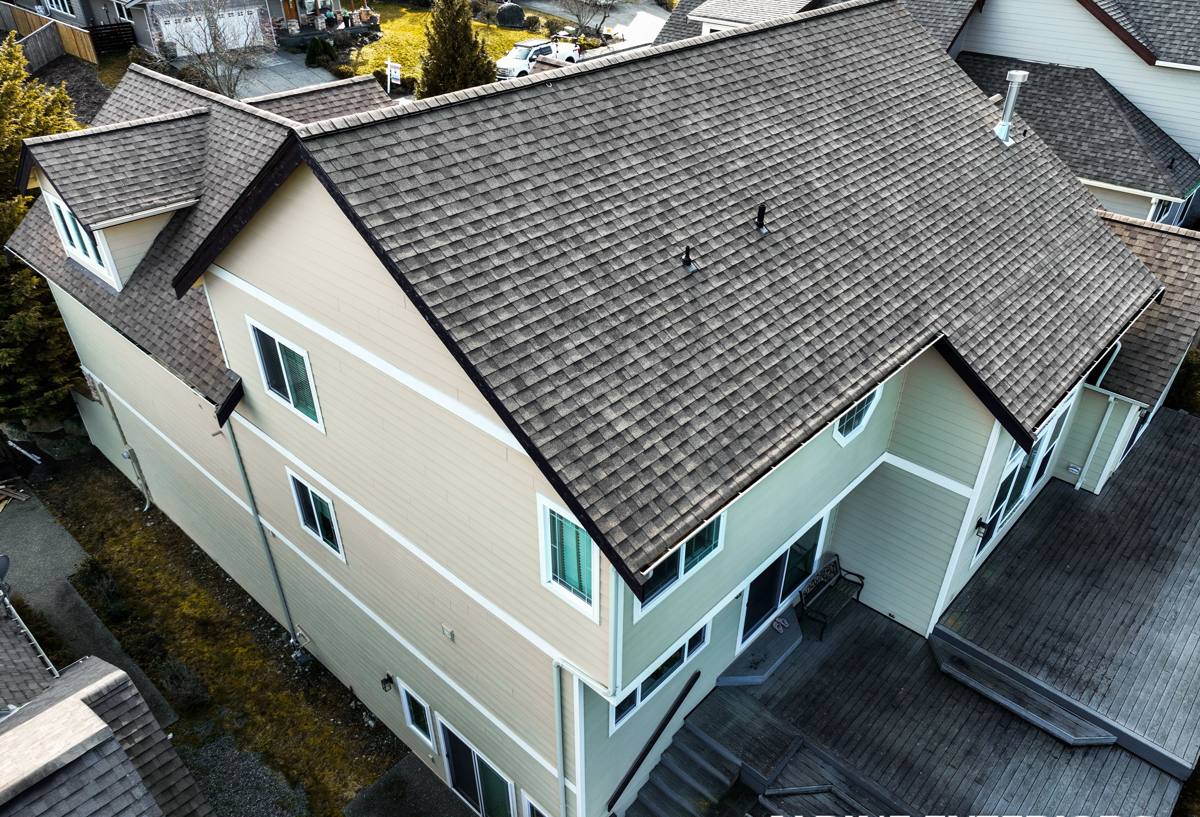
Signs a Laurel Deck Needs Replacement, Not Just Repair
Not every tired-looking deck needs to come out. But there's a point where patching boards is just delaying a bigger problem, and spending money on repairs to a structure that's already compromised underneath is money that doesn't buy you anything long-term. Here's what we look for when deciding whether a deck is a repair candidate or a replacement candidate.
- Soft, spongy, or springy spots in the decking surface, especially near the house or stairs
- Visible rot, splitting, or discoloration at the ledger board where the deck attaches to the house
- Rust staining or corrosion around joist hangers, bolts, or post connections
- Railing posts that wiggle or flex when pushed — often a sign the framing below has softened
- Persistent moss or black staining that comes back within weeks of cleaning
- Gaps, cupping, or fastener heads popping up across multiple boards, not just one or two
- A deck built before current code required proper ledger flashing and lateral load connections
If you're seeing two or more of these at once, that's usually the point where a full replacement ends up costing less over time than another round of patchwork.
What a Correct Deck Replacement Actually Involves
A deck replacement done right is a structural project first and a finish project second. The visible decking boards are the smallest part of the value — the framing, attachment, and drainage details underneath are what determine whether the new deck lasts fifteen years or forty.
Framing and Structural Work
This starts with sizing joists and beams correctly for the actual span and load, not just matching what was there before — older decks in this area were frequently under-built by today's standards. Post footings need to sit below frost depth and bear on solid, undisturbed soil, which matters more here than in drier climates because saturated ground around a shallow footing shifts more over time.
Decking Material Selection
Material choice should match how much sun, shade, and foot traffic the specific deck gets — a shaded deck under trees has different needs than one that bakes in full sun most of the day. We walk through the honest trade-offs of each option rather than pushing whatever has the best margin.
Fasteners, Flashing, and the Ledger Connection
The ledger board — where the deck attaches to the house — is the single most common failure point on decks in wet climates, because it's the one spot where water runs directly toward the house wall. Proper flashing (metal or self-adhering flashing tape, installed in the correct layered order with the house's water-resistive barrier) keeps that joint from becoming a slow leak into the wall framing itself. Fasteners matter too: coated or stainless structural screws and hangers resist the corrosion that plain galvanized hardware eventually suffers under constant damp exposure.
Decking Material Comparison for Whatcom County Homes
| Material | Moisture Behavior | Maintenance | Typical Lifespan |
|---|---|---|---|
| Pressure-treated wood | Absorbs and releases moisture; needs to dry between rain events | Annual cleaning, periodic sealing/staining | 10-15 years before major boards need replacing |
| Cedar | Naturally moisture- and rot-resistant, but still an organic material | Regular cleaning, sealing to hold color and resist moss | 15-20 years with upkeep |
| Composite decking | Doesn't absorb water into the board itself; grooves can still trap surface moisture | Periodic washing to prevent surface mildew/algae film | 20-30 years, often with manufacturer warranty |
| PVC/cellular decking | Essentially non-absorbent | Lowest ongoing maintenance | 25-30+ years |
There's no universally "correct" answer here — it depends on budget, how much upkeep you actually want to do, and how much sun or shade the deck gets. What we won't do is install a product in a spot where its known weak point (like a composite board with poor airflow underneath in a heavily shaded, wet area) sets it up to underperform. That's a design decision, not a sales pitch.
Our Deck Replacement Process
1. On-Site Assessment and Design
We start by getting under the existing deck, not just walking on top of it. That means checking ledger condition, footing depth and condition where visible, joist spacing, and any drainage or grading issues around the foundation that could affect the new structure. We talk through material options and layout with you before anything is finalized.
2. Permitting
Most deck replacements in this area require a permit, especially when the structure is being rebuilt rather than just re-surfaced. We handle the paperwork and make sure the new structure meets current code for footing depth, joist spacing, guardrail height, and ledger attachment — details that matter for safety and for resale down the road.
3. Demolition and Structural Rebuild
Old decking, framing, and any compromised posts or footings come out. We rebuild the structure to current span tables and load requirements, correct any flashing or ledger issues found during assessment, and set new footings where needed.
4. Decking, Railing, and Finish Details
Once the structure is solid, we install the decking material you've chosen, along with railings, stairs, and any trim or skirting. Fastening patterns and hardware are matched to the material manufacturer's specs, since improper fastening is one of the fastest ways to void a decking warranty.
5. Final Walkthrough
We walk the finished deck with you, check railings and stairs for solid attachment, and go over any material-specific care so you know what to expect in year one versus year ten.
Permits, Code, and the Details Homeowners Often Miss
A lot of deck problems we get called out for start with decks that were built without a permit or inspection, often by a previous owner or a handyman-style repair years back. Current code requirements around guardrail height, baluster spacing, stair rise/run consistency, and ledger attachment exist because of real failure patterns — not bureaucracy for its own sake. When we replace a deck, we're not just matching what was there; we're bringing the whole structure up to what current code actually requires, which is also what protects you if the deck is ever part of a home inspection during a future sale.
Cost Factors in a Laurel Deck Replacement
Every deck project is different, but the same handful of factors drive most of the cost variation we see. Rather than quote a number that won't mean much without context, here's what actually moves the price up or down.
| Factor | Why It Matters |
|---|---|
| Deck size and shape | Square footage plus the number of corners, angles, and stair sections all add labor and material |
| Decking material | Composite and PVC cost more upfront than wood but reduce long-term maintenance spending |
| Height off the ground | Taller decks need more substantial post and footing work, plus stairs and often taller railings |
| Condition of existing footings | Reusable footings save cost; footings that don't meet current depth or bearing standards need replacing |
| Railing style | Cable, glass, and custom railing systems cost more than standard wood or metal baluster railings |
| Site access | Decks with tight access for material delivery or demolition debris removal take more labor time |
We give a firm, written estimate after the on-site assessment, not a ballpark over the phone — there are too many variables in a structural project like this to responsibly quote it any other way.
Why Hire a Crew That Already Works Laurel
Building or replacing a deck in this part of Whatcom County means designing for conditions that don't show up the same way everywhere. A crew that mostly works drier inland regions may not think twice about ledger flashing detail or footing depth relative to how saturated the ground gets here through a wet winter. We've built and replaced decks across Lynden and the surrounding area long enough to know which details actually matter locally — where moss takes over fastest, which orientations dry out slowest after rain, and how to grade around new footings so water moves away from the structure instead of sitting against it. That local pattern recognition is the difference between a deck that just looks good on install day and one that's still solid in year twenty.
Maintaining Your New Deck Through the Seasons
Even the best-built deck benefits from some seasonal attention, and what it needs depends on the material you chose.
- Clear leaves and debris from between boards and off ledger areas before the wet season sets in
- Sweep or wash off moss and algae buildup before it has a chance to stain or get slick
- Check railings and stair connections once a year for any looseness
- Re-seal or re-stain wood decking on the schedule the product actually needs, not just when it looks faded
- Keep gutters and downspouts near the deck clear so roof runoff isn't dumping extra water onto or under the structure
- Trim back overhanging branches that keep sections of the deck shaded and slow to dry
A little seasonal upkeep goes a long way toward protecting the structural work underneath, which is the part that's expensive and disruptive to redo.
If your deck in Laurel is showing soft spots, persistent moss, or you're just not sure whether it needs a repair or a full replacement, we're happy to take a look and give you an honest assessment. Fill out the form below for a free, no-pressure estimate — there's no obligation, just a straight answer about what your deck actually needs.