 Lynden Exterior
 Siding Replacement for Laurel Homes Near Lynden
Laurel sits in the rural stretch between Lynden and Bellingham, where farmland, tree cover, and low-lying drainage shape how a house ages. Homes here take a different kind of weather beating than a house in town — more shade from tree lines, more standing moisture after a storm, and long stretches where siding just doesn't get a chance to fully dry out. If your siding is original to the house or was installed decades ago, there's a good chance it's already showing what that exposure does over time: soft spots, peeling paint, swelling at the bottom courses, or moss creeping up from the ground line.
We replace siding for homeowners throughout the Lynden area, including Laurel, and we install exclusively James Hardie fiber cement. This page walks through what siding replacement actually involves here, what Laurel's climate does to different siding materials, and how we handle the job from first look to final cleanup.
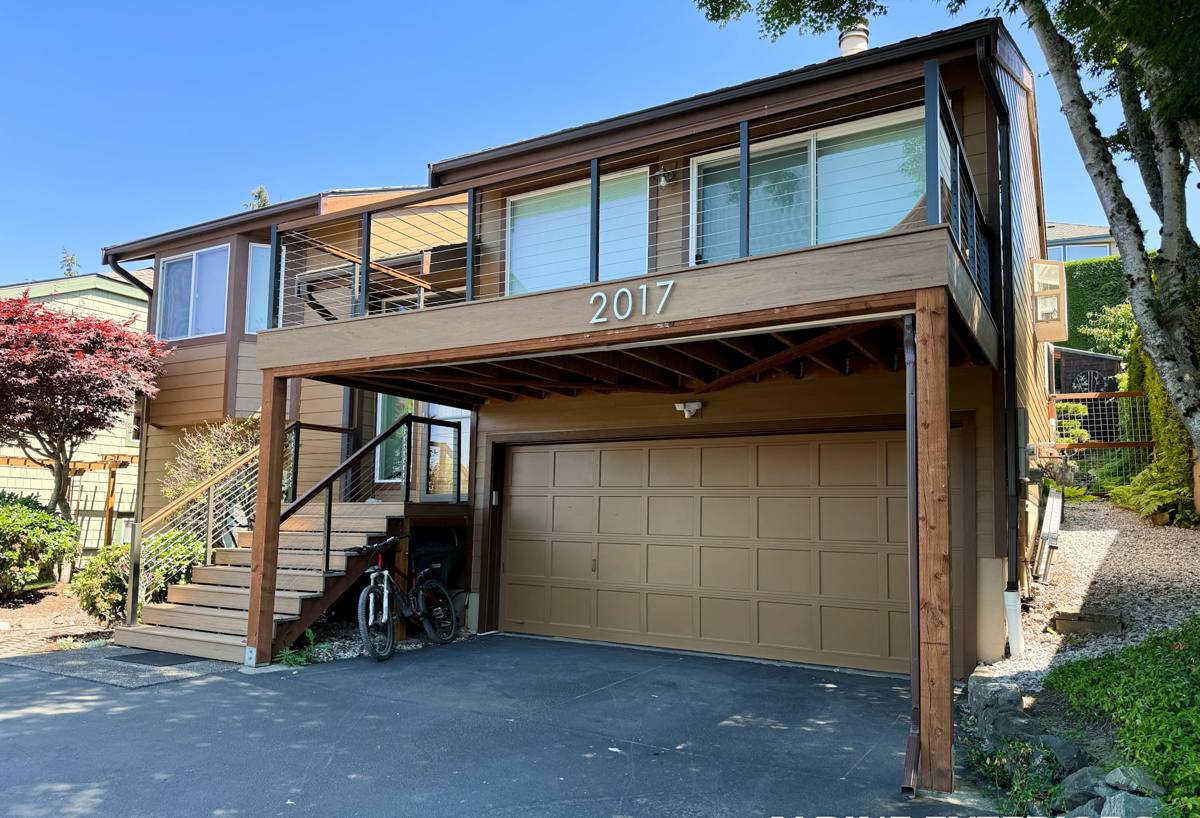
What Whatcom County Weather Does to Siding
The combination that wears out siding in this part of the county isn't any single extreme — it's the steady grind of salt-tinged marine air, driving rain that comes in sideways during winter storms, and a moss season that can run most of the year in shaded, low-airflow spots. None of that is dramatic on its own, but stacked together over 15-20 years, it finds every weak point in a siding system.
Where the damage shows up first
- North and west-facing walls — least sun exposure, slowest to dry after rain, most moss growth
- Bottom courses near grade — splashback, soil contact, and lawn irrigation keep this zone damp longest
- Under eaves with poor gutter performance — concentrated water runoff wears through paint and finish fast
- Butt joints and corner trim — original caulking fails first, letting moisture behind the siding plane
- Anywhere tree canopy blocks wind — common on Laurel's more wooded lots, and it's exactly where moss thrives
Wood-based products — cedar, primed spruce, LP SmartSide — depend on paint film and caulk staying intact to keep moisture out of the wood or wood-fiber substrate. Once that film cracks or the caulk lets go, the material underneath starts absorbing water, and repair becomes a losing race against a slow leak you often can't see until the siding is soft to the touch.
Signs a Laurel Home Needs Siding Replacement, Not Another Repaint
A lot of homeowners start with a repaint, and for cosmetic fading that's a reasonable move. But repainting doesn't fix what's happening underneath if the substrate itself has started to fail. Here's how to tell the difference:
| Symptom | Likely just needs paint | Likely needs replacement |
|---|---|---|
| Faded or chalky color | Yes | — |
| Soft or spongy panels when pressed | — | Yes |
| Visible swelling at panel edges or bottom courses | — | Yes |
| Moss growth that wipes off easily | Yes, with cleaning | — |
| Moss growth over cracked or bubbled paint | — | Yes |
| Peeling limited to sun-exposed south wall | Yes | — |
| Warping, cupping, or delamination of panels | — | Yes |
| Persistent musty smell near exterior walls | — | Yes, have it inspected |
If you're seeing anything in the right-hand column, painting over it just seals moisture in rather than out. That's when it's time to talk about a full replacement rather than a maintenance patch.
Why We Only Install James Hardie Fiber Cement
We made a standardization decision a while back: every siding replacement we do uses James Hardie fiber cement, and we don't install vinyl, LP SmartSide, Cemplank, Allura, primed spruce, or cedar. That's not a marketing line — it's a practical response to what we see on tear-offs across Whatcom County, including plenty of homes in the Laurel and Lynden area.
What that means for a Laurel home specifically
- Non-combustible core — fiber cement doesn't feed a fire the way wood-based products can, which matters given how much dry vegetation surrounds rural Whatcom County properties in summer
- Engineered for wet climates — Hardie's HZ5 product line is formulated specifically for regions like the Pacific Northwest, where moisture cycling is constant
- ColorPlus factory finish — a baked-on finish that resists the fade and chip cycle that drives repeated repainting on wood siding in this climate
- Moss and mildew resistance — the cement-based composition doesn't feed organic growth the way wood fiber and some engineered wood products can
- Long, transferable warranty — backed by a manufacturer with a multi-decade track record, not a startup material with a shorter history
To be fair to the alternatives: vinyl is inexpensive and low-maintenance in mild climates, and LP SmartSide has genuinely improved its engineered-wood formulation over the years. But vinyl can warp and fade under UV and temperature swings, and any wood-fiber product still depends on an intact outer coating to keep water out — once that coating is breached, the clock starts on rot. Cedar looks great and plenty of people love the natural look, but it demands a maintenance schedule most homeowners don't keep up with, and it's the least forgiving option in a climate that barely lets siding dry out between rain events. We'd rather put one product on every house and stand behind it fully than sell five products and hope the maintenance gets done.
What a Correct Siding Replacement Involves
Siding replacement is as much about what's behind the panels as the panels themselves. A new product installed over a compromised or improperly prepared wall assembly will fail early no matter how good the material is.
Our process
- Tear-off and inspection — remove existing siding and inspect sheathing, framing, and flashing for hidden rot or moisture damage before anything new goes up
- Repair the substrate — replace any damaged sheathing or framing found during tear-off; this step gets skipped by corner-cutters and it's the single biggest predictor of a siding job's lifespan
- Weather-resistive barrier — install or verify a proper water-resistive barrier and correct window/door flashing integration before siding goes on
- Install James Hardie panels or lap siding — following manufacturer-specified fastening patterns, clearances, and gaps, which is what keeps the warranty valid
- Trim, caulking, and joints — proper joint treatment at butt seams, corners, and penetrations, since these are the first failure points in any siding system
- Final inspection and cleanup — walk the whole exterior, check clearances at grade and roofline, and clear the site
Details that matter in Laurel's conditions
- Maintaining proper clearance between siding and grade or hardscape, since splashback is one of the most common causes of early siding failure here
- Checking gutter and downspout performance during the estimate — poor drainage upstream will undermine even a perfect siding job
- Paying extra attention to shaded, low-airflow wall sections where moss and mildew take hold first
- Sealing and flashing every penetration (vents, hose bibs, light fixtures) since these are common leak points during the region's wetter months
What to Expect Cost-Wise
Siding replacement pricing depends on square footage, the amount of trim and architectural detail, how much substrate repair is needed, and whether the job includes tear-off of multiple existing layers. Rather than quote a number that won't reflect your specific house, we walk every property in person and price it based on what we actually find — including any hidden rot discovered once old siding comes off. What we can tell you honestly: substrate repair costs are the most common source of surprise on siding jobs, and a thorough tear-off inspection up front is what prevents that surprise from becoming a mid-project change order.
Why Hire a Crew That Already Works This Area
A crew that regularly works Lynden and the surrounding Whatcom County communities, including Laurel, has already seen how the local climate plays out on real houses over years, not just at the time of installation. That matters for a few practical reasons:
- We know which wall orientations and lot conditions in this area tend to hide moisture problems, so we know where to look closely during tear-off
- We're familiar with the drainage patterns common to Laurel's rural and semi-rural lots, which affects how we handle grade clearance and gutter tie-ins
- We're a short drive away for warranty follow-up or questions after the job is done — not a crew that disappears once the invoice is paid
- We've built our process around one product system, which means our crews are deeply practiced with James Hardie specifically, not spread thin across five different materials
Maintaining Your New Siding
James Hardie siding is low-maintenance compared to wood, but "low-maintenance" isn't "no-maintenance." A simple annual routine keeps it performing the way it's designed to:
- Rinse the exterior once a year, focusing on shaded and north-facing walls where moss and grime build up fastest
- Keep gutters clear so water isn't overflowing directly onto siding runs
- Trim back vegetation and tree branches that keep wall sections damp and shaded
- Inspect caulking at trim and joints every couple of years and touch up as needed
- Keep an eye on grade level near the foundation — soil and mulch built up over time can reduce siding clearance
If your Laurel-area home is showing signs of siding wear — softness, swelling, persistent moss, or paint that keeps failing no matter how often you repaint — we're happy to take a look. Reach out for a free, no-pressure estimate using the form below, and we'll give you a straight assessment of what your siding actually needs.