 Lynden Exterior
 Metal Roofing Built for the Way Kendall Actually Weathers
Kendall sits up against the foothills northeast of Lynden, in the part of Whatcom County where the tree canopy is thicker, the driveways are longer, and the roof over your head deals with a different set of pressures than a roof closer to town. More shade means slower drying after every rain. More trees mean more debris, more moss, and more gutters that need attention. And because this is still Whatcom County, the same driving rain and long wet season that shapes roofing decisions across the region applies here too — it just shows up alongside heavier shade and, at higher spots, occasional wet snow load.
Metal roofing has become a common answer for homeowners in this area because it handles moisture and moss better than most alternatives, sheds snow instead of holding it, and — for homes with more tree cover and brush nearby — carries a fire resistance rating that asphalt shingles simply don't offer. This page is about doing that job correctly in Kendall specifically, not about metal roofing in general.
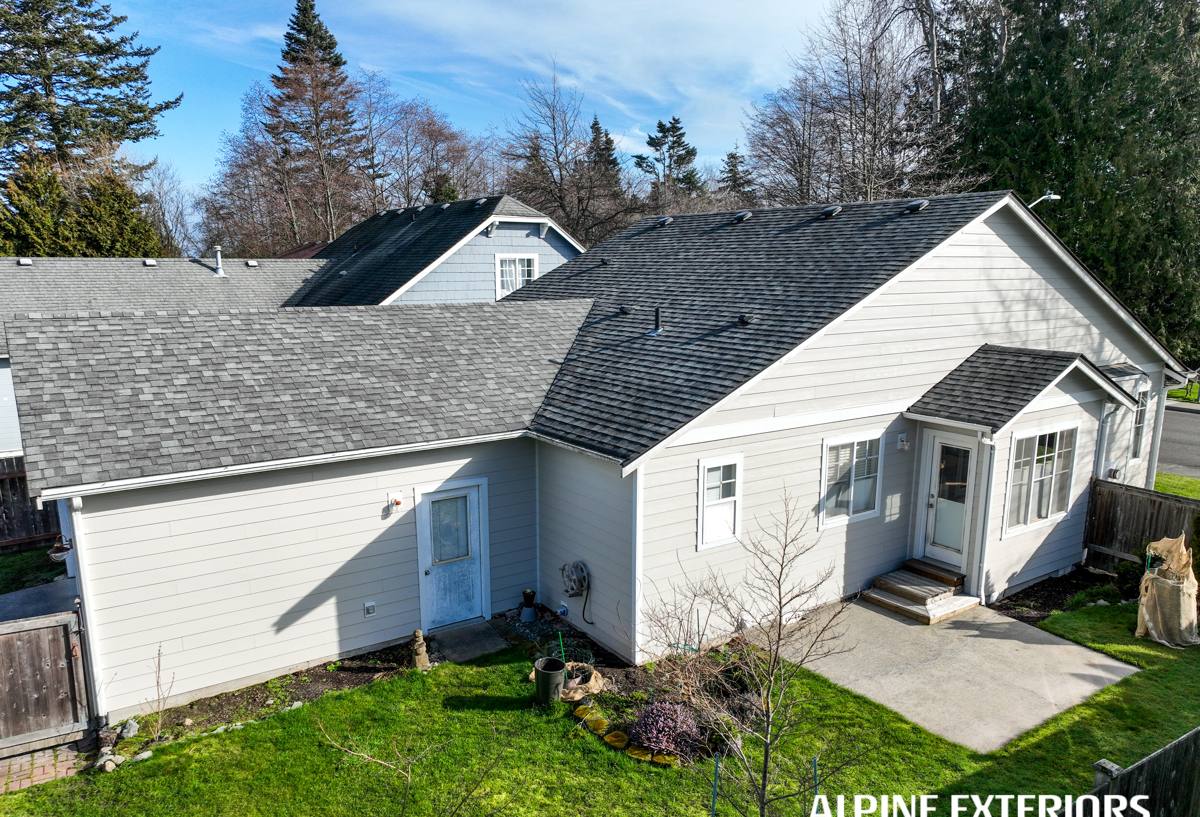
What Kendall's Climate Actually Does to a Roof
Before talking about panels and fasteners, it's worth being honest about what a roof in this area is up against:
- Shade and moisture retention: Homes tucked under fir and cedar cover stay damp longer after storms than homes in open sun. That extended dampness is exactly what moss and algae need to take hold.
- Moss season that doesn't really end: In much of Whatcom County moss growth slows in summer. Under heavier tree cover, it barely slows at all. Moss holds water against roofing material and, on shingles, works its way under tabs over time.
- Driving rain: Wind-driven rain pushes water sideways at valleys, penetrations, and low-slope transitions — the details that fail first if they weren't installed correctly in the first place.
- Elevation and snow: Kendall sits a bit higher and closer to the foothills than downtown Lynden. Wet, heavy snow shows up more often here, and a roof needs to shed it rather than trap it against fascia and gutters.
- Wildfire exposure: Homes bordered by trees and brush have more ember exposure risk during dry spells than homes in open subdivisions. Roofing material matters for that.
None of this means a roof in Kendall is doomed — it means the material and the details matter more here than they would on a roof with full sun exposure and no tree cover.
Why Metal Handles This Climate Well
Metal roofing doesn't have the granular surface that asphalt shingles use to shed water and block UV — and that surface is exactly what gives moss and algae something to grip. A correctly installed metal roof sheds water and dries fast, which starves moss of the sustained moisture it needs. It's also a Class A fire-rated material, which matters directly for homes near tree lines. And it holds up to wind-driven rain better than a shingle roof when the flashing and seams underneath it are done right — which is the operative phrase, because a metal roof is only as good as the details under the panels.
We're not going to tell you shingles are a bad product — plenty of homes in more open, sunnier parts of the area do fine with a quality shingle roof and a normal maintenance schedule. Metal is simply the better match for a heavily shaded, moss-prone, higher-elevation lot, and that describes a lot of Kendall properties.
Standing Seam vs. Exposed Fastener
Both are legitimate metal roofing systems, but they behave differently over time, which matters more in a wet, shaded climate than a dry one.
| Feature | Standing Seam | Exposed Fastener |
|---|---|---|
| Fasteners | Hidden under interlocking seams | Screwed through the panel face |
| Long-term maintenance | Minimal — no exposed sealant to fail | Fastener washers age and need occasional re-torque or replacement |
| Upfront cost | Higher | Lower |
| Best fit | Primary residences, long-term ownership | Shops, outbuildings, budget-conscious projects |
| Moisture behavior in shade | Very good — no penetration points to fail | Good, but washers are the weak point over time |
For a heavily shaded home in Kendall that stays damp longer between rain events, we generally steer homeowners toward standing seam on the main house. Exposed fastener systems are a perfectly reasonable choice for detached shops and outbuildings where the maintenance tradeoff matters less.
Gauge and Coating
Panel gauge (thickness) affects dent resistance and how well the roof handles heavy wet snow load — a real consideration at Kendall's elevation. Coating matters just as much: a PVDF (often sold as Kynar 500) finish holds its color and resists chalking far longer than a basic polyester coating, which matters on a roof that's going to spend a lot of its life under filtered tree light and damp air rather than baking dry in full sun.
What a Correct Installation Actually Involves
Metal roofing forgives very little. A shingle roof with a slightly imperfect flashing detail might weep slowly for years before anyone notices. A metal roof with the same mistake tends to show a leak fast, because water finds the gap instead of soaking into a mat of shingle granules. That's the argument for doing it right the first time, not for avoiding metal.
- Deck assessment: Any decking softened by years of moss and trapped moisture gets found and replaced before a single panel goes down — not covered over.
- Underlayment: A high-temp synthetic underlayment, with self-adhered ice-and-water membrane at eaves, valleys, and around penetrations where driving rain and snowmelt concentrate.
- Panel layout: Panels run to shed water correctly at every valley and transition, with overlaps sized for wind-driven rain, not just straight-down rainfall.
- Flashing and penetrations: Every pipe boot, chimney, and skylight curb gets purpose-built flashing — not just sealant, which degrades faster under tree sap and constant damp than it does on a sun-exposed roof.
- Fastening: Correct fastener spacing and torque for the panel type and local wind exposure, especially at eaves and ridge where uplift is highest.
- Ventilation: Ridge and soffit ventilation sized to let the attic breathe, so moisture doesn't get trapped between the deck and the panels from underneath.
- Snow retention: Where the roof faces a walkway, driveway, or entry, snow retention hardware is planned in — metal sheds snow well, which is good for the roof and something to plan for below it.
Our Process, Start to Finish
We keep this straightforward because a roof project shouldn't feel like a mystery:
- On-site inspection: We walk the roof and the attic, not just look from the ground. Moss coverage, deck condition, ventilation, and how the tree line sits relative to the roof all factor into the recommendation.
- Written estimate: Panel type, gauge, coating, and scope spelled out — no vague allowances.
- Tear-off and deck repair: Old roofing comes off, decking gets inspected board by board, and anything compromised is replaced before underlayment goes down.
- Underlayment and flashing: Ice-and-water membrane and synthetic underlayment installed first, with all flashing details built before panels go on.
- Panel installation: Panels run, fastened, and seamed to spec, with valleys and transitions checked as we go rather than at the end.
- Final walkthrough: We go over the finished roof with you, including what maintenance looks like going forward and what's under warranty.
Maintenance That Actually Matters Here
A metal roof needs far less upkeep than shingles, but "far less" isn't "none" — especially under tree cover.
- Clear needles, leaves, and debris from valleys and gutters at least once or twice a year — more often on a heavily treed lot.
- Check that gutters and downspouts are actually moving water away from the foundation during heavy rain, not just present.
- Have exposed-fastener washers inspected periodically; they're the one component on that system that ages and can need attention.
- Keep overhanging branches trimmed back — falling limbs dent panels, and constant leaf litter is what feeds moss growth even on metal.
- After any wind event, a quick visual check of seams and flashing costs nothing and catches problems early.
Cost Factors to Understand Before You Get Quotes
| Factor | Why It Moves the Price |
|---|---|
| Panel system | Standing seam costs more upfront than exposed fastener but needs less long-term attention |
| Roof pitch and complexity | More valleys, dormers, and penetrations mean more flashing labor |
| Deck condition | Rot from years of trapped moss moisture adds repair cost that only shows up once tear-off starts |
| Tear-off vs. overlay | Metal generally should not go over an existing roof with hidden moisture damage — full tear-off is usually the honest recommendation |
| Access | Long driveways, steep grades, and limited staging area (common on larger Kendall lots) affect crew time |
| Coating grade | A PVDF/Kynar finish costs more than basic coatings but holds up longer under filtered tree light and damp air |
Why It Matters That We Already Work in Kendall
A roofing crew that mostly works in open, sunny subdivisions closer to town isn't automatically wrong for the job — but they may not think in terms of shaded decks, moss-prone valleys, longer driveways, and wet snow at elevation until they're standing on your roof. Working this area regularly means we already factor in the tree cover, the debris load, the wildfire exposure that comes with bordering timber, and the drainage details that matter more here than on a roof in full sun. That's not a sales pitch — it's just what shows up in the estimate and in the install when someone already knows the terrain.
If you're weighing metal roofing for a home in Kendall — whether it's a full replacement, a shop roof, or you're just trying to understand your options before your current roof forces the decision — we're happy to walk the roof with you and give you a straight answer, including if metal isn't the right fit for your particular situation. The estimate is free, there's no pressure attached to it, and you can use the form below to get started.