 Lynden Exterior
 Why Roofs Wear Out Faster in the Nooksack Area
Nooksack sits in the low, green river-valley country east of Lynden, in the heart of Whatcom County — a part of Washington where the weather off the Salish Sea and the Nooksack River bottomland combine to keep everything damp for most of the year. Homes here don't fail because of one big storm. They fail from months of steady, driving rain, moisture-laden marine air that never fully dries out, and heavy tree cover that shades roofs long enough for moss and algae to take hold. A roof that would last three extra winters in a drier inland climate simply doesn't get that grace period here.
That's the backdrop for every roof replacement we do in this area: not "will it rain," but "how much water will hit this roof, how often, and how long will it sit wet before it can dry." Get that part right and everything else — material choice, ventilation, flashing details — follows from it.
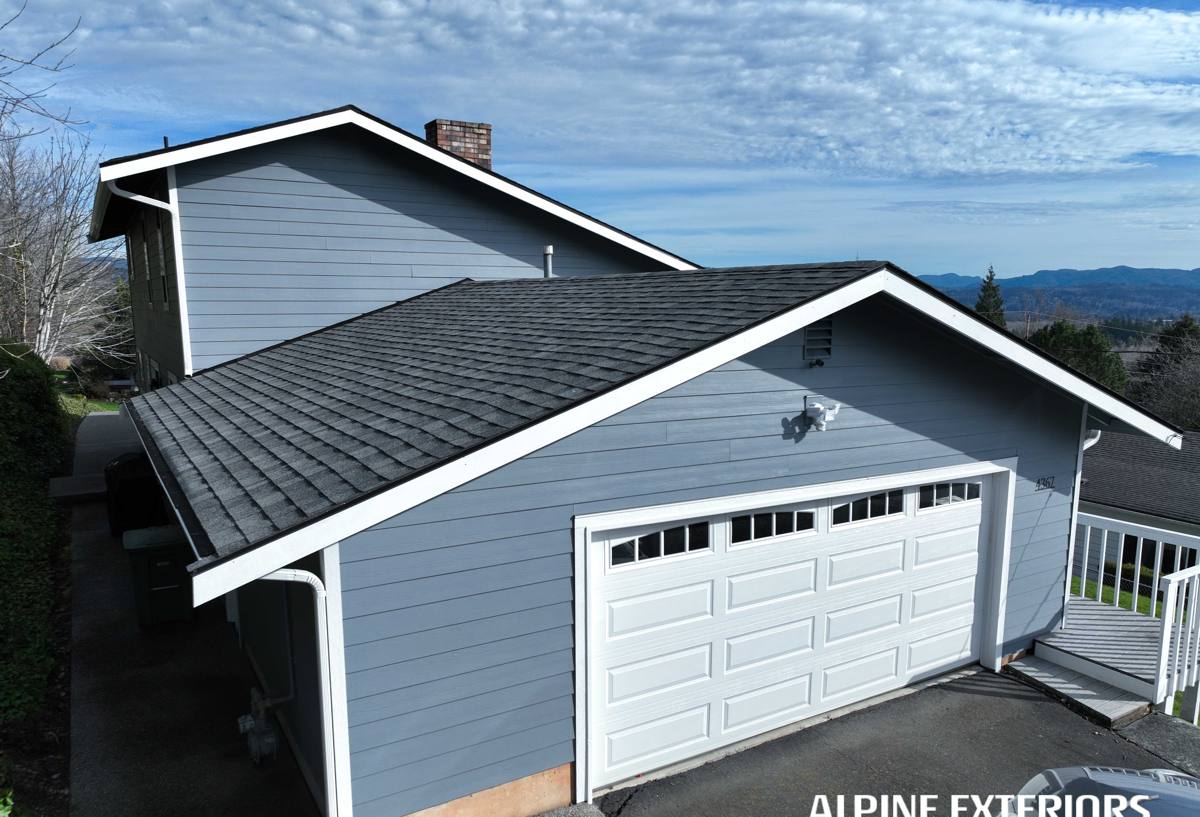
Signs a Nooksack Roof Needs Replacing, Not Just Patching
A lot of roofs get repaired past the point where repair is the honest answer. In this climate, moisture finds the weak spot in a patched roof faster than in most, so it's worth knowing when you've crossed the line from repair to replacement.
- Granules collecting in gutters or at downspout outlets, especially after wind or heavy rain
- Moss established in mats rather than a light green film — mats hold water against the roof deck
- Shingles that are cupping, curling at the edges, or visibly thinner in valleys
- Daylight or water staining visible from inside the attic, particularly near vents, chimneys, or skylights
- Multiple past repairs concentrated in the same area, especially north-facing or shaded slopes
- A roof approaching or past the upper end of its material's realistic lifespan for this climate (see the table below)
Any one of these on its own might just mean a repair. Two or three together, especially on an older roof, usually means the underlayment and deck are starting to take on water the shingles were supposed to stop.
What a Correct Roof Replacement Actually Involves
A roof replacement isn't just stripping old shingles and nailing down new ones. In a wet, moss-prone climate like this one, most of the value is in the layers you never see once the job's done.
Tear-Off and Deck Inspection
We remove the old roofing down to the deck rather than layering over it. That's the only way to actually see what's underneath — soft or delaminated plywood, rot around old flashing, or deck damage from a slow leak that never showed up as a stain inside. Any compromised sheathing gets replaced before anything new goes down; roofing over a soft deck just hides the problem for a year or two.
Underlayment
Given how much rain this area sees, we treat underlayment as a real second line of defense, not a formality. Synthetic underlayment with ice-and-water shield membrane at eaves, valleys, and around penetrations gives the roof a backup barrier for the times wind-driven rain gets under a shingle edge — which, in a Whatcom County winter, is not rare.
Flashing
Flashing around chimneys, skylights, sidewalls, and roof-to-wall transitions is where most leaks actually start, not in the open field of shingles. We replace flashing rather than reuse it, and we take extra care at valleys and any point where the roof meets a wall or dormer, since those are the spots driving rain finds first.
Ventilation
An unvented or poorly vented attic traps warm, moist air against the underside of the deck, which speeds up rot and helps moss and mildew take hold from below as well as above. Balanced intake and exhaust ventilation is part of a correct replacement here, not an upsell.
Choosing a Roofing Material for This Climate
There's no single "best" roofing material — there's the right material for how a specific house is shaded, how steep the roof is, and what the homeowner wants to maintain over time. Here's how the common options actually perform under Nooksack's rain and moss pressure:
| Material | Moss/Moisture Resistance | Typical Lifespan Here | Maintenance |
|---|---|---|---|
| Architectural asphalt shingle | Good with proper ventilation and periodic cleaning | 20–30 years | Occasional moss treatment, gutter clearing |
| Metal (standing seam or panel) | Excellent — sheds water fast, little surface for moss to grip | 40–50+ years | Low; check fasteners and sealant over time |
| Cedar shake | Requires consistent upkeep to resist moss and rot in a wet climate | 20–30 years with diligent maintenance | High — regular treatment and inspection needed |
| Synthetic/composite shingle | Good; resists moisture absorption better than wood | 30–40 years | Low to moderate |
For heavily shaded lots along tree lines near the river, we tend to steer homeowners toward asphalt or metal over cedar — not because cedar can't perform, but because it demands a level of ongoing maintenance that most homeowners don't want to keep up with year after year, and the moisture behavior of wood in constant shade works against it. That's a maintenance-and-moisture tradeoff we'll walk through honestly for your specific roof, not a blanket rule.
Our Roof Replacement Process
The process is the same whether it's a straightforward gable roof or something with multiple valleys and dormers — the steps don't change, just the time each one takes.
- On-site inspection and measurement, including a look inside the attic where accessible
- Written estimate covering material options, tear-off, deck repair contingencies, and ventilation
- Scheduling around a realistic weather window — we don't tear off a roof and gamble on a forecast
- Tear-off, deck inspection, and any necessary sheathing repair
- Underlayment, ice-and-water membrane at vulnerable points, and new flashing
- Installation of the new roofing material per manufacturer specification
- Ventilation check and adjustment
- Full site cleanup, including magnetic sweep for nails and debris
- Final walkthrough with the homeowner
We schedule tear-off in stages sized to what we can dry-in before weather turns, rather than opening up more roof than we can close by end of day. That's a basic precaution anywhere, but it matters more here than in drier parts of the state.
Moss: The Long-Term Enemy of a Nooksack Roof
Whatcom County's moss season runs long — shaded, north-facing slopes can stay damp enough to support moss growth for most of the year. Moss isn't just cosmetic. It holds water against the shingle surface, works its way under shingle edges as it grows, and gradually lifts and separates the roofing material from the deck. A roof that's replaced correctly but never addressed for moss will show the same problems again within a decade, sometimes sooner on shaded sections.
Part of a correct replacement is thinking about moss from day one: material choice, sun exposure, and whether zinc or copper strips at the ridge make sense for a particular roof's shade pattern. We'll flag this during the estimate if your property has the kind of tree cover that makes it worth planning for.
Permits, Timeline, and What to Expect
Most residential roof replacements in unincorporated Whatcom County and the areas around Lynden and Nooksack require a permit, and we handle that as part of the job rather than leaving it to the homeowner. A typical single-family roof replacement, once scheduled, usually takes one to three days of on-site work depending on size, pitch, and material — longer for steep or complex rooflines, or if deck repair turns out to be more extensive than expected. We'll give you a realistic range up front rather than a best-case number that assumes nothing goes wrong.
Why Hiring a Crew That Already Works This Area Matters
A roofing crew that works Nooksack, Lynden, and the surrounding Whatcom County valley regularly already knows which slopes hold moss the longest, how local wind patterns drive rain into valleys and wall transitions, and what the county expects for permitting and inspection. That's not something you get from a crew based somewhere with a drier climate rotating through on a one-off job. It shows up in small decisions — where extra ice-and-water membrane actually earns its cost, which flashing details need reinforcing, how much ventilation a particular attic layout needs — that add years to a roof's real-world lifespan here.
If your roof is showing its age or you're just trying to figure out where you stand, we're happy to take a look and give you a straightforward, no-pressure estimate — no invented urgency, just an honest read on your roof and what it needs. Use the form below to get started.