 Lynden Exterior
 Roof Repair Built for Maple Falls Conditions
Maple Falls sits in a part of Whatcom County where the roof over your head works harder than it does almost anywhere else in the state. Between the driving rain that blows in off the water, the long stretch of wet months that never quite dry out, and the moss that finds a foothold on every shaded slope, a roof here takes a steady beating year after year. A repair that would hold up fine in a drier climate can fail within a season if it's not done with these specific conditions in mind.
We repair roofs throughout the Lynden area, and Maple Falls gets the same attention to detail as every other stop on our schedule: a real inspection, an honest explanation of what's actually wrong, and a repair that's built to last through the next wet season, not just patched until it fails again.
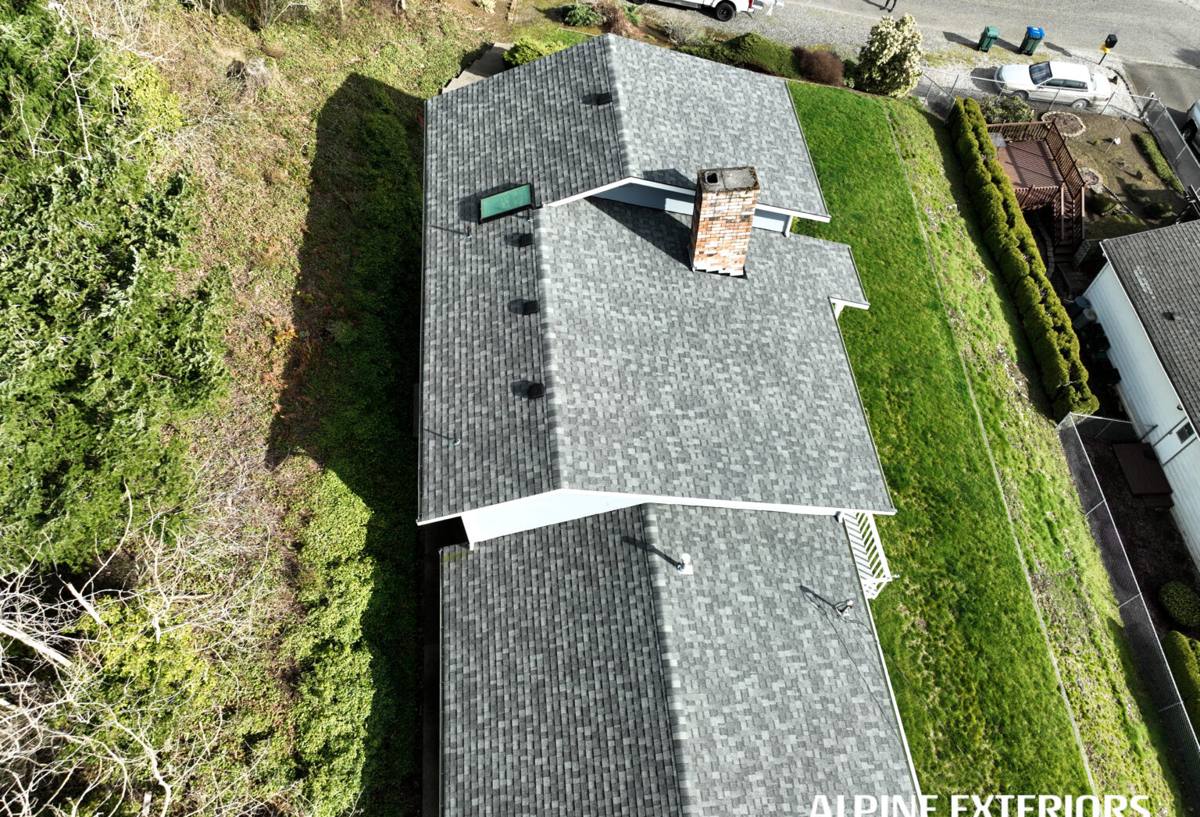
What Local Weather Does to a Roof
Understanding why a roof fails here is the first step in fixing it correctly.
Driving Rain
Wind-driven rain doesn't just fall straight down — it gets pushed sideways under shingle tabs, around flashing edges, and into any gap that a calm-weather rain would never reach. This is why roofs in our area need tighter flashing details, properly lapped underlayment, and sealed penetrations around vents, chimneys, and skylights. A repair that ignores wind direction is a repair that will leak again the first time a real storm rolls through.
A Long Moss Season
Shaded, north-facing slopes and roofs under tree cover stay damp for months at a time, which is exactly what moss needs to take hold. Moss isn't just a cosmetic issue — as it grows, it lifts shingle edges, holds moisture against the roofing material, and slowly works its way under the surface. Left alone, a mossy patch becomes a soft spot, and a soft spot becomes a leak.
Salt Air
Proximity to salt air accelerates corrosion on exposed metal — flashing, fasteners, gutters, and vent caps all age faster than they would inland. When we repair a roof in this area, we pay close attention to the condition of metal components, not just the shingles or panels, because corroded flashing is one of the most common hidden causes of a leak that homeowners can't explain.
Signs Your Roof Needs Repair, Not Just a Look
Most roof damage doesn't announce itself with a dramatic leak on day one. It shows up as small signals first. If you're seeing any of the following, it's worth getting a professional look before the next storm season:
- Dark streaks, green tinting, or visible moss patches on the roof surface
- Granules collecting in gutters or at the base of downspouts
- Curling, cracked, or lifted shingle edges, especially on shaded slopes
- Water stains or discoloration on interior ceilings or upper walls
- Soft or spongy spots when walking the roof during an inspection
- Rusted, lifted, or missing flashing around chimneys, vents, or skylights
- Daylight visible through the roof deck from inside the attic
- Sagging sections along the roofline or at valleys
Any one of these on its own might be minor. Several together usually mean the roof has been dealing with moisture longer than it should have, and it's time for a closer look.
Common Repairs We Handle in This Area
Every roof and every situation is different, but the repairs we're called out for most often in the Maple Falls area tend to fall into a handful of categories.
| Repair Type | Typical Cause | What the Fix Involves |
|---|---|---|
| Flashing repair | Corrosion, poor original installation, or wind-driven rain forcing water under the edges | Remove and replace damaged flashing, re-seal transitions, correct lapping direction |
| Moss and debris removal | Shaded slopes, tree cover, extended damp season | Careful removal without damaging the surface, treatment to slow regrowth, gutter clearing |
| Shingle or panel replacement | Wind lift, age, granule loss, impact damage | Replace affected sections, check surrounding material for hidden damage |
| Leak tracing and repair | Water entering at one point and traveling before showing up inside | Trace the actual entry point, repair the source, not just the visible stain |
| Vent and penetration sealing | Aged sealant, cracked boots, corroded fasteners | Replace pipe boots and sealant, check fastener condition |
| Gutter and edge repair | Salt air corrosion, debris buildup, ice or storm damage | Repair or replace affected sections, confirm proper drainage away from the roofline |
How Our Repair Process Works
A roof repair is only as good as the inspection behind it. Here's how we approach it:
- On-site inspection. We get on the roof, not just a ladder at the eaves, and check the deck, flashing, ventilation, and shingle or panel condition — not just the spot where the leak is showing up inside.
- Find the actual source. Water often travels along the underlayment or framing before it shows up as a stain, so the visible damage inside the house isn't always directly above the real problem. We trace it back before we touch anything.
- Honest explanation. We walk you through what we found, what's causing it, and what it will take to fix it correctly — including whether a repair makes sense or if you're better served putting that money toward a longer-term fix.
- The repair itself. We match materials as closely as possible, correct the underlying issue (not just the symptom), and pay particular attention to flashing, sealant, and fastener condition given how hard this climate is on those components.
- Final check. Before we consider the job done, we confirm water is shedding properly and check adjacent areas that could be the next problem spot if left unaddressed.
Repair or Replace? How We Help You Decide
Not every roof problem needs a full replacement, and not every roof problem should be patched forever either. We give you a straight answer based on what we actually find, not a sales pitch in either direction.
| Factor | Leans Toward Repair | Leans Toward Replacement |
|---|---|---|
| Roof age | Well within expected lifespan for the material | At or past the end of its typical service life |
| Extent of damage | Isolated to one area or component | Spread across multiple slopes or recurring in several spots |
| Deck condition | Solid, no soft spots found | Soft, rotted, or water-damaged decking discovered |
| Leak history | First occurrence, clear single cause | Repeated leaks in different areas over time |
| Moss/moisture damage | Surface-level, caught early | Has been present long enough to compromise the material underneath |
If a repair is the right call, we'll say so and do it properly. If we find that the roof has bigger issues beneath the surface, we'll show you exactly what we found so you can make an informed decision — not a rushed one.
Materials and Maintenance Considerations
Whatever the roofing material — asphalt shingle, metal, or another system already on your home — the maintenance conversation in this part of Whatcom County always comes back to the same three things: keeping moisture from sitting on the surface, keeping moss from establishing itself, and keeping flashing and fasteners ahead of corrosion. A repair that only addresses the visible damage without accounting for these ongoing pressures tends to be a short-term fix. We aim for repairs that hold up through several wet seasons, not just until the next one.
Regular gutter clearing, trimming back overhanging branches where practical, and catching moss early all extend the life of a repair. We're happy to point out these opportunities during an inspection even if they're not the reason you called.
A Practical Pre-Winter Checklist
Before the wet season sets in, it's worth taking a quick look at a few things yourself, or having us do it as part of a repair visit:
- Clear gutters and downspouts of leaves, needles, and debris
- Check for visible moss growth on shaded or north-facing slopes
- Look for lifted or missing shingles after any significant wind event
- Inspect attic spaces for daylight, staining, or musty odors
- Confirm downspouts are directing water away from the foundation
- Note any ceiling stains that appeared or grew since last season
Why a Crew That Already Works Maple Falls Matters
A repair crew that only occasionally works this far north misses details that matter here — how wind actually hits a roof in this terrain, how long moss has to establish itself given the local rain pattern, and which flashing details tend to fail first under salt-air exposure. We work throughout the Lynden area regularly, and that familiarity shows up in the small decisions during a repair: where we double-check flashing, how we handle moss removal without damaging the surface underneath, and which fastener and sealant choices actually hold up here versus in a drier climate.
It also means we're not guessing about local building considerations or trying to apply a one-size-fits-all approach from a different region. We show up knowing what this climate does to a roof, because we see it every week.
Get a Straight Answer About Your Roof
If you're dealing with a leak, spotting moss taking hold, or just want a second opinion before winter, we're happy to take a look. We'll give you a free, no-pressure estimate and an honest read on what your roof actually needs — nothing more, nothing less. Fill out the form below to get started.