 Lynden Exterior
 Roofing Built for Abbotsford's Fraser Valley Weather
Abbotsford sits in the Fraser Valley Regional District, close enough to the Salish Sea that salt-laden air rides in on the wind, and close enough to the mountains that rain systems stall and dump for days at a time. That combination is hard on a roof. Add a moss season that can run from early fall through late spring in a wet year, and you've got a climate that punishes any shortcut taken during installation. A roof that's merely "good enough" somewhere drier will show its weak points fast here.
We're based just south of the line in Lynden, Whatcom County, and we've been doing exterior work in this border region long enough to know what actually holds up and what fails first. Roof replacement in Abbotsford isn't a different trade than roofing anywhere else — but the details that matter shift when driving rain and constant moisture are part of the daily reality instead of the occasional storm.
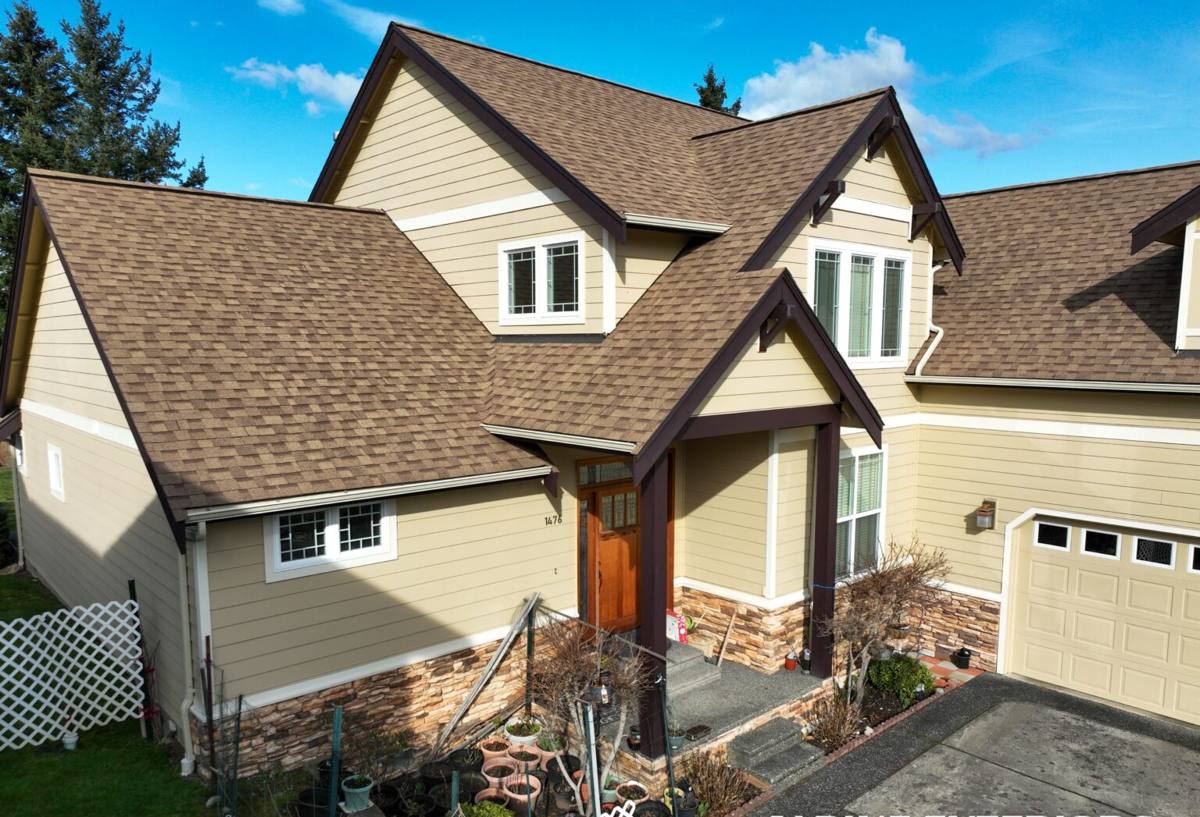
Signs Your Roof Is Due for Replacement, Not Another Repair
Every roof reaches a point where patching stops making financial sense. In this climate, that point tends to arrive from the inside out — moisture works into places you can't see from the ground long before shingles look obviously bad. Here's what we look for when deciding whether a repair will actually hold or whether replacement is the honest recommendation:
- Granule loss heavy enough that you're finding shingle grit in the gutters every season, not just after a storm
- Shingles that are cupping, curling, or cracking, especially on south- and west-facing slopes that take the most sun-to-rain cycling
- Soft or spongy spots when walking the roof, which usually means the decking underneath has taken on moisture
- Persistent moss growth that comes back within a season or two of cleaning, a sign the roof surface is staying damp longer than it should
- Daylight visible through the roof deck from inside the attic, or water stains on attic framing
- A roof that's 20+ years old (for asphalt) and has multiple older repairs layered on top of each other
- Ice-damming or backed-up water at the eaves during cold snaps, even with clear gutters
If you're seeing one or two of these, a repair might still be the right call. If you're seeing several at once, or the roof is old enough that the underlayment and decking are likely as tired as the shingles, replacement is usually the more honest answer — repeated repairs on a roof that's structurally past its service life just delay a bigger bill.
What a Correct Roof Replacement Actually Involves
A roof replacement is more than swapping old shingles for new ones. In a climate that sees this much sustained rain, the layers underneath the shingles matter as much as the shingles themselves.
Tear-Off and Deck Inspection
We remove the existing roofing down to bare decking rather than laying new material over old. That's the only way to actually see the plywood or board sheathing underneath. Any decking that's soft, delaminated, or water-stained gets replaced before anything new goes down — installing new shingles over compromised decking just hides a problem that will resurface, often as a leak, within a few years.
Underlayment and Ice-and-Water Protection
Given how much of the year this region spends wet, we treat underlayment as a real weather barrier, not a formality. Self-adhering ice-and-water membrane goes at the eaves, valleys, and around any roof penetration — the spots where wind-driven rain is most likely to force its way under the shingle line. Synthetic underlayment covers the rest of the field, holding up better under prolonged moisture exposure than old-style felt paper.
Ventilation
A roof needs balanced intake and exhaust airflow to keep the attic space dry and to help shingles last their full lifespan. Poor ventilation traps moist air against the underside of the decking, which accelerates rot and helps moss and mildew take hold from below as well as above. We check existing soffit and ridge venting during the tear-off and correct any imbalance rather than reinstalling the same setup by default.
Flashing at Valleys, Walls, and Penetrations
Most roof leaks don't happen in the open field of shingles — they happen at transitions: valleys, chimneys, skylights, and where a roof meets a sidewall. We install new metal flashing at every one of these points rather than reusing old flashing, since flashing failure is one of the most common causes of leaks in older reroofs that otherwise look fine.
Moss-Resistant Details
Given how long moss season runs here, we build in what we reasonably can to slow regrowth — proper shingle spacing and drainage, zinc or copper strip options near the ridge where owners want them, and making sure valleys and low-slope sections are pitched and flashed to actually shed water instead of holding it.
Choosing the Right Roofing Material
Most homes in this area are well served by asphalt shingles, but there's a real difference between shingle grades, and the right choice depends on your roof's exposure, your budget, and how long you want to go before the next replacement.
| Material | Typical Lifespan | Moss/Moisture Resistance | Wind Rating |
|---|---|---|---|
| 3-tab asphalt shingle | 15–20 years | Fair — needs regular moss treatment | Lower — often rated to 60–70 mph |
| Architectural (laminate) shingle | 25–30 years | Good, especially with algae-resistant granules | Higher — commonly 110–130 mph |
| Standing seam metal | 40–50+ years | Very good — sheds moss and moisture quickly | Very high, when properly installed |
| Cedar shake | 20–30 years with upkeep | Requires the most maintenance in a wet, mossy climate | Moderate, wind-dependent on fastening |
Architectural shingles are the most common upgrade we recommend for this area — the added cost over 3-tab is modest relative to the roof's total price, and the longer lifespan and better wind rating matter more here than in a drier, calmer climate. Metal is a strong option for owners planning to stay long-term and wanting to minimize moss maintenance, though it carries a higher upfront cost. Cedar shake looks good but asks the most of an owner in terms of ongoing care in a climate this wet — we'll install it if that's your preference, but we'll also be honest about the maintenance commitment going in.
Our Roof Replacement Process, Start to Finish
- On-site inspection and estimate. We walk the roof (weather permitting) and the attic, and give you a written estimate that reflects what we actually find — not a guess from the ground.
- Material selection. We go over shingle or metal options, color, and any moss-mitigation add-ons like zinc strip, based on your roof's exposure and your budget.
- Scheduling around the weather. Given how much rain this region gets, we plan tear-off days around forecast windows and keep the roof protected if conditions turn while work is in progress.
- Tear-off and deck inspection. Old roofing comes off, decking is inspected and repaired as needed, and you're shown any decking issues before we cover them back up.
- Underlayment, flashing, and ventilation correction. The waterproofing layers go in first, done right, before a single new shingle is installed.
- Shingle or metal installation. Installed to manufacturer spec, including nailing pattern and exposure — the details that determine whether the warranty actually holds up.
- Cleanup and magnetic sweep. Job site and yard are cleared of debris and nails before we consider the job done.
- Final walkthrough. We review the finished roof with you and answer any questions before closing out the job.
Permits and Working Across the Border
Abbotsford, like most municipalities, generally requires a permit for a full roof replacement — requirements can vary depending on the scope of work and the property, so it's worth confirming with the city for your specific job. Part of what we handle as your contractor is making sure the right permit is pulled and the work is scheduled to pass inspection, rather than leaving that step to the homeowner.
Working on both sides of the border also means paying attention to logistics that a purely local or purely cross-border crew might not think about — material sourcing, delivery timing, and making sure a crew and their equipment can move efficiently between a Whatcom County home base and an Abbotsford job site without losing a day to avoidable delays.
Why a Crew That Already Works Abbotsford Matters
Roofing crews that only occasionally cross into the Fraser Valley tend to underestimate how much the local conditions demand — how quickly moss reestablishes, how much wind-driven rain a valley or wall flashing actually needs to resist, and how often ventilation gets overlooked on older homes that were built before current standards. A crew that works this area regularly has already seen what fails here and builds against it as a matter of habit, not as an afterthought.
There's also a practical side: familiarity with the permitting process, realistic scheduling around a wet forecast instead of an optimistic one, and knowing which material suppliers can actually deliver on time in this region. None of that shows up on a quote, but all of it affects whether the job goes smoothly.
Keeping Your New Roof Sound Through the Wet Season
A properly installed roof still benefits from basic seasonal upkeep, especially given how long the wet months run here. A little attention each year goes a long way toward protecting the investment.
- Clean gutters and downspouts before the fall rains start, so water has somewhere to go instead of backing up under the roof edge
- Have moss treated or gently removed before it builds up thick enough to hold moisture against the shingles
- Trim back overhanging branches that keep sections of the roof shaded and slow to dry, which speeds up moss regrowth
- Check attic ventilation isn't blocked by insulation or storage, especially after any attic work
- Walk the roofline visually after major windstorms to catch lifted or displaced shingles early
None of this replaces a professional inspection every few years, but it will meaningfully extend the life of a roof that was installed correctly in the first place.
If your Abbotsford home is due for a new roof, or you're not sure whether repair or replacement makes more sense, we're happy to take a look and give you a straight answer. Use the form below to request a free, no-pressure estimate.