 Lynden Exterior
 Storm Damage Roof Repair for Laurel Homes
Laurel sits in one of the wetter, windier pockets of Whatcom County, close enough to the Salish Sea to pick up salt-laden air and close enough to open farmland to catch the full force of winter storms with nothing to slow them down. When a windstorm, hail event, or heavy downpour damages a roof out here, the difference between a repair that lasts and one that fails again next season usually comes down to how thoroughly the damage was found and how correctly it was fixed the first time.
This page covers what storm damage roof repair actually involves for homes in and around Laurel, what our process looks like from first call to final inspection, and why it matters to work with a crew that already understands this specific stretch of Whatcom County.
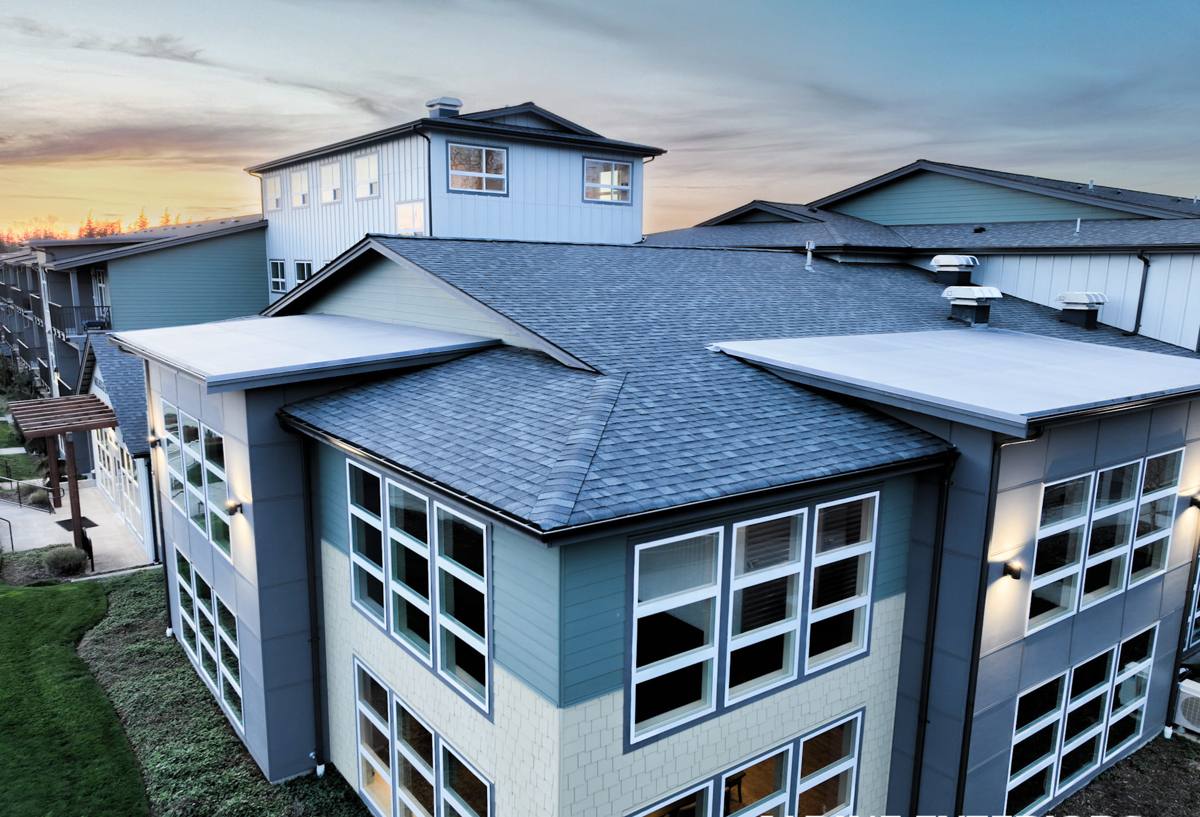
What Laurel's Climate Does to a Roof
Every region has its own pattern of roof wear, and Laurel's is shaped by three things working together over the course of a year.
Salt Air
Proximity to the Salish Sea means metal roofing components, flashing, fasteners, and vents are exposed to airborne salt more than homes further inland. Over time this accelerates corrosion on lower-grade metal, which is one reason fastener and flashing quality matters more here than in a dry inland climate.
Driving Rain
Pacific storm systems don't just drop rain straight down in this part of Whatcom County — wind-driven rain gets pushed sideways and upward under shingle edges, around flashing, and into any gap that a calmer climate would never test. A roof that would hold up fine in light, vertical rain can still leak here if the underlayment, flashing laps, or shingle seal strips aren't done right.
A Long Moss Season
Mild, wet winters that stretch on for months create ideal moss and moisture-retention conditions on north-facing and shaded slopes. Moss holds water against the roof surface, works into shingle layers, and lifts edges — which is exactly where wind and storm damage tends to start.
Individually, none of these is dramatic. Together, over years, they wear a roof down faster than most homeowners expect — and they turn small storm damage into bigger leaks faster than it would in a drier climate.
Signs of Storm Damage Worth Checking
Not all storm damage is obvious from the ground. Some of it only shows up as a slow leak weeks later. Here's what we tell Laurel homeowners to watch for after any significant wind or rain event:
- Shingles that look lifted, curled, or missing along ridges and edges
- Granules collecting in gutters or at downspout outlets
- Bent, dented, or missing flashing around chimneys, vents, and skylights
- New or worsening moss growth on shaded slopes after a wet stretch
- Water stains on interior ceilings, especially near exterior walls or chimneys
- Debris — branches, needles, moss clumps — built up in valleys where water should be draining freely
- Soft or spongy spots when walking the roof (a sign moisture has already reached the decking)
If you see more than one of these after a storm, it's worth a proper inspection rather than waiting to see if it gets worse.
What a Correct Storm Damage Repair Involves
Inspection Before Anything Else
A correct repair starts with finding the actual extent of the damage, not just patching the spot that's visibly leaking. Wind and rain damage often extends beyond the obvious point of failure — a lifted shingle three feet away can be feeding water into the same leak. We check the full slope, not just the reported problem area.
Emergency Mitigation When Needed
If a storm has left a roof actively leaking or exposed, the first job is stopping further water intrusion — tarping exposed decking and securing loose materials — before scheduling the permanent repair. This matters most during Whatcom County's wetter months, when a few extra days of exposure can turn a repair into a full deck replacement.
Matching Repair to Damage
Storm repairs generally fall into a few categories, and using the wrong one is one of the most common mistakes we see from rushed or unfamiliar crews:
- Spot shingle replacement — for isolated wind damage where the surrounding roof and underlayment are still sound
- Flashing repair or replacement — for leaks at chimneys, vents, skylights, or wall intersections, which are the most common failure points in wind-driven rain
- Underlayment and decking repair — when water has gotten past the shingle layer and into the roof structure itself
- Partial slope replacement — when damage is spread across a section rather than isolated to a few shingles
A repair that only addresses the surface layer without checking underlayment and decking condition underneath is a repair that's likely to resurface as the same leak next storm season.
Ventilation Check
We also check attic ventilation as part of storm repairs in this climate. Poor ventilation traps moisture that mixes with storm intrusion to accelerate rot and moss growth from the inside out — fixing the visible damage without addressing airflow is treating half the problem.
Repair vs. Replacement: How We Help You Decide
| Factor | Repair Usually Makes Sense | Replacement Usually Makes Sense |
|---|---|---|
| Extent of damage | Isolated to one area or slope | Spread across multiple slopes |
| Roof age | Well within its expected service life | Already near the end of its lifespan |
| Decking condition | Dry, solid decking under the damage | Soft, rotted, or water-stained decking |
| Underlayment condition | Intact elsewhere on the roof | Brittle, cracked, or failing broadly |
| Moss and moisture history | Minor, manageable growth | Long-term moss damage across the roof |
| Cost | A few hundred to a few thousand dollars depending on scope | A larger investment, but resets the clock on the whole roof |
We'll always tell you honestly which category your roof falls into. Recommending a full replacement when a targeted repair would genuinely hold up doesn't serve anyone long-term — and neither does patching a roof that's clearly past the point where repairs are cost-effective.
Our Process for Laurel Storm Repairs
- Initial contact and scheduling — we get a rough picture of the storm event and any visible or reported symptoms (leaks, missing shingles, debris damage)
- On-site inspection — a full walk of the affected slopes, flashing points, and attic space where accessible, with photo documentation
- Emergency mitigation if needed — tarping or temporary sealing to stop active water intrusion
- Written scope and estimate — a clear explanation of what's damaged, what needs repair, and why, with no pressure to upsell beyond what the roof actually needs
- Repair work — matching materials as closely as possible to the existing roof, with proper flashing, underlayment, and fastening for this climate
- Final walkthrough — reviewing the completed work with you before we consider the job done
Insurance and Documentation
Many storm damage repairs in Whatcom County involve a homeowner's insurance claim. We document damage thoroughly with photos and a written scope that holds up to adjuster review, and we're straightforward about what is and isn't storm-related — inflating a claim or attributing pre-existing wear to a storm event is bad practice that can jeopardize your claim and your relationship with your insurer. Our job is an honest assessment; how you handle the claim itself is between you and your insurance company, though we're glad to answer questions about the roofing side of it.
Why a Locally Familiar Crew Matters in Laurel
Storm damage repair isn't just about swinging a hammer at a missing shingle. A crew that already works this part of Lynden and Whatcom County knows which flashing details tend to fail first in wind-driven rain, how aggressively moss builds on shaded slopes here, and what a genuinely storm-damaged roof looks like versus one with long-term wear that a storm simply exposed. That familiarity shows up in fewer callbacks and repairs that are scoped correctly the first time — rather than a crew learning the local climate's failure points on your roof.
It also matters for response time. After a regional storm, demand for roofing repair spikes across the county, and out-of-area or traveling "storm chaser" crews often move on before warranty work or follow-up questions can be addressed. A local crew is still here next month, and next storm season.
Ready for an Honest Assessment?
If a recent storm has left your Laurel-area roof with missing shingles, damaged flashing, or a leak you can't quite trace, we're happy to take a look. We offer free, no-pressure estimates — you'll get a straight answer about what's actually damaged, what it needs, and why, before any work begins. The estimate form below is the easiest way to get started.