 Lynden Exterior
 Metal Roofing Built for Sumas' Weather
Sumas sits at the top of the Nooksack River valley, right against the Canadian border in the northeast corner of Whatcom County, a few minutes from Lynden. It's farmland and open valley more than waterfront, but it still sits inside the same wet, marine-influenced weather system that shapes roofing across this whole part of Washington. Rain here is frequent and often wind-driven rather than falling straight down, moss has a long growing season on anything shaded or damp, and in winter the valley catches cold outflow wind that funnels through the Sumas Gap toward the Fraser Valley. A roof built for a milder, drier climate — or installed without those specific loads in mind — tends to show its age here faster than homeowners expect.
Metal roofing holds up well against exactly that combination of moisture and wind, which is why we get asked about it often for homes in and around Sumas. This page covers what a metal roof actually needs to do here, what a correct installation involves, and how we approach the job so it performs for decades instead of just looking good on install day.
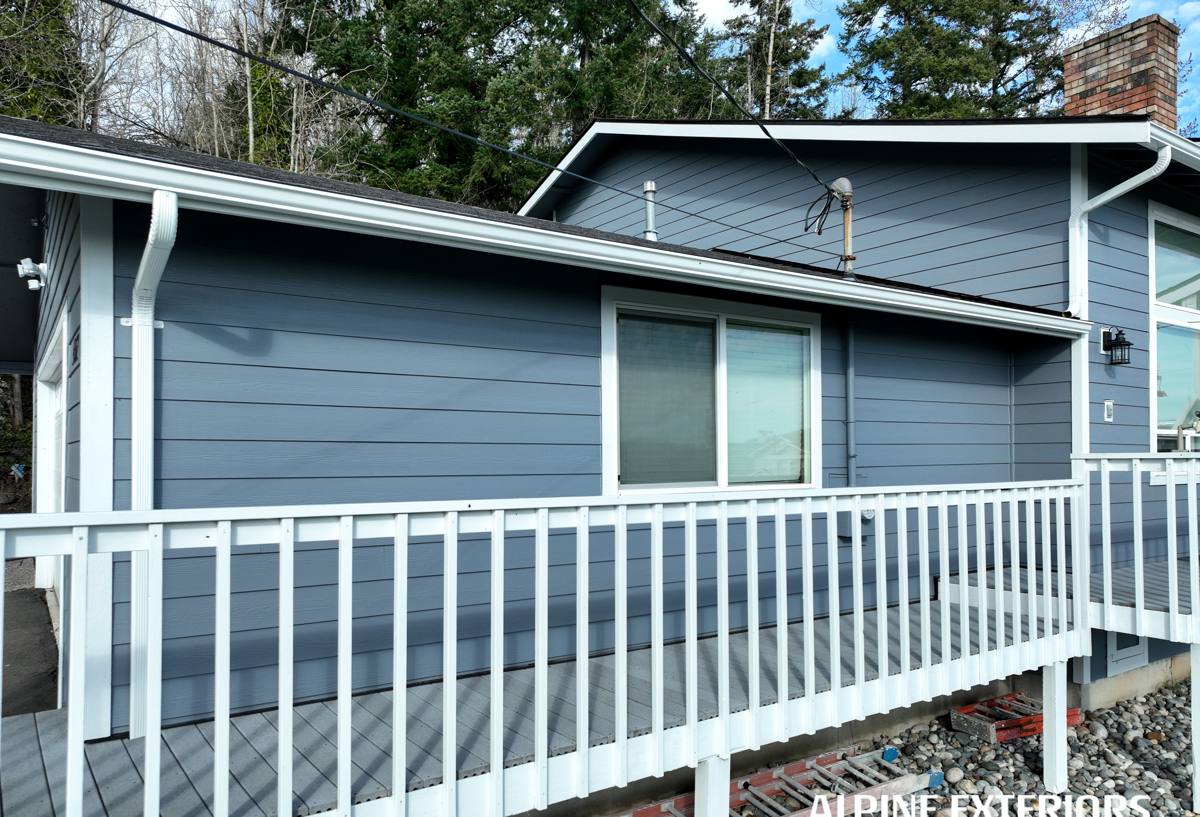
What Local Weather Does to a Roof Over Time
Sustained Moisture and a Long Moss Season
Shaded roof planes, north-facing slopes, and anything near mature trees or farm windbreaks hold moisture longer than open, sun-exposed roof sections. Over a few wet seasons, asphalt and wood-based roofing in those spots grows moss and algae, and moss doesn't just look bad — it holds water against the roof surface and works into seams and edges. Metal's smooth, non-porous surface gives moss far less to grip onto, which matters a lot in a valley where roofs can stay damp for days at a stretch through fall, winter, and spring.
Wind-Driven Rain and Ice
Rain in the Nooksack valley rarely falls straight down. It gets pushed sideways into roof valleys, around chimneys and vent penetrations, and under flashing that isn't lapped correctly. Sumas also sees harder winter wind events than more sheltered parts of the county, thanks to the Sumas Gap acting as a natural funnel for cold air moving south out of the Fraser Valley. That combination of wind and moisture is a heavier, more directional load than an annual rainfall number suggests, and it's exactly where roofs with weak flashing or under-fastened panels fail first.
Temperature Swings and Material Fatigue
Whatcom County doesn't see extreme heat, but the valley gets real cold snaps in winter, sometimes sharper here than closer to the coast because of that outflow wind. Roofing material that expands and contracts repeatedly, especially anything fastened without room to move, works itself loose over years. Metal roofing systems are designed around that movement — but only if they're installed with the right fastening method and panel spacing for the system you choose.
Standing Seam vs. Exposed-Fastener Metal Panels
"Metal roofing" isn't one product — it's a category, and the two systems homeowners in Sumas usually choose between behave differently in this climate.
| Factor | Standing Seam | Exposed-Fastener Panel |
|---|---|---|
| How panels attach | Concealed clips under raised seams; no exposed screws through the panel face | Screws driven through the panel face into the roof deck or purlins |
| Movement with temperature | Panels float on clips, so they expand and contract without stressing fasteners | Fixed points at every screw; more prone to elongated holes and leaks over time |
| Maintenance | Very low — no exposed fasteners to re-seat or reseal | Fastener washers age and need occasional inspection and replacement |
| Typical lifespan | 40-70 years with proper installation | 25-40 years, largely dependent on fastener maintenance |
| Upfront cost | Higher material and labor cost | More budget-friendly |
| Best fit | Long-term ownership, exposed or wind-heavy roof planes | Outbuildings, secondary structures, tighter budgets |
For primary homes in Sumas, especially roof planes exposed to that valley wind, we lean toward standing seam because it has no exposed fasteners for wind and freeze-thaw cycling to work loose. Exposed-fastener panels are still a legitimate option for barns, shops, and outbuildings where budget matters more than a multi-decade maintenance-free lifespan, as long as the fastener pattern and washer quality are right for the job.
What a Correct Metal Roof Installation Involves
Deck Inspection and Underlayment
Before any panel goes down, the existing deck gets checked for rot, soft spots, and proper nailing pattern — metal roofing telegraphs an uneven deck more visibly than shingles do. We install a high-temperature synthetic underlayment rated for use under metal, plus self-adhered ice-and-water membrane at eaves, valleys, and any low-slope transitions where wind-driven rain is most likely to find a way in.
Flashing and Penetrations
Valleys, chimneys, skylights, and vent pipes are where the vast majority of roof leaks start, metal or otherwise. Every penetration gets purpose-made flashing detailed for metal panels, not adapted shingle flashing, with proper laps and sealant placement so wind-driven rain can't work its way underneath.
Fastening and Panel Layout
Panel layout accounts for prevailing wind direction and the seam type, with fastener spacing tightened up on exposed roof planes and near ridges and eaves where uplift is highest. On standing seam, clip spacing is set for the specific wind and snow load expectations for this part of Whatcom County, not a generic default.
Ventilation
A metal roof over a poorly ventilated attic can trap moisture underneath the deck, leading to condensation problems that have nothing to do with the roofing material itself. We check ridge and soffit ventilation as part of every metal roofing job and correct it when the existing setup won't keep pace with the new roof.
Our Process, Start to Finish
- On-site inspection: we walk the existing roof, deck, and attic ventilation, and check flashing details around every penetration.
- Written estimate: a clear scope covering panel system, underlayment, flashing details, and ventilation work, with no vague allowances.
- Material order and scheduling: panels are ordered to the exact roof measurements; we schedule around weather windows rather than rushing a job into a wet forecast.
- Tear-off and deck prep: old roofing removed, deck inspected and repaired as needed before anything new goes down.
- Underlayment and flashing installation: ice-and-water membrane, synthetic underlayment, and all flashing set before a single panel is fastened.
- Panel installation: panels run, seamed or fastened per the chosen system, with fastener spacing and clip placement set for this site's wind exposure.
- Final walkthrough and cleanup: magnetic sweep for stray fasteners, full site cleanup, and a walkthrough so you know what maintenance, if any, the roof actually needs.
Maintenance and Moss Prevention for Metal Roofs
Metal roofing needs far less upkeep than asphalt shingles, but "low maintenance" isn't "no maintenance," especially with the moss pressure this valley puts on any roof.
- Clear debris and organic buildup from valleys and around penetrations once or twice a year — trapped debris holds moisture even on a metal surface.
- Keep gutters clear so water isn't backing up under eave flashing during heavy rain.
- Trim back tree limbs overhanging the roof to cut down on shade and debris that feed moss growth in shaded areas.
- Check exposed fasteners on exposed-fastener systems every few years for washer wear, especially on wind-exposed planes.
- After any major wind event, do a visual check for lifted panel edges or displaced flashing rather than waiting for a leak to show up inside.
- Avoid pressure washing directly against seams and fastener points; a soft wash and rinse is enough to keep a metal roof clean.
Cost Factors for Metal Roofing in Sumas
Every roof is different, and we won't quote a number without seeing the actual roof, but these are the factors that move a metal roofing estimate up or down in this area:
| Factor | Why It Matters |
|---|---|
| Panel system chosen | Standing seam costs more upfront than exposed-fastener panels but needs less long-term maintenance |
| Roof pitch and complexity | Steep pitches, multiple valleys, and dormers add labor time and flashing detail |
| Tear-off vs. re-roof | Removing old roofing and repairing deck issues adds cost but is often necessary for a correct installation |
| Ventilation corrections | Adding or fixing ridge and soffit ventilation is a smaller add-on cost that protects the whole system |
| Wind exposure of the site | Open, exposed roof planes typical of Sumas' farmland setting may call for tighter fastener spacing |
| Access and roof height | Steep or hard-to-access roofs take longer and require more safety setup |
As a rough starting point, exposed-fastener metal roofing tends to sit closer to premium asphalt shingle pricing, while standing seam runs meaningfully higher upfront — but with a service life that's often two to three times longer and close to zero routine fastener maintenance. We walk through the real trade-offs for your specific roof rather than pushing one system as the default answer.
Why Hire a Crew That Already Works in Sumas
Metal roofing done well is a details business — flashing laps, fastener spacing, panel expansion allowance — and those details change depending on the wind exposure, pitch, and moisture pattern of the specific site. A crew that already works this valley knows how the Sumas Gap wind behaves differently from a sheltered lot a few miles south, knows how long moss actually takes to establish on a shaded north slope here, and has already worked through the local permitting process for roofing replacements in this part of the county. That local familiarity shows up in fewer surprises mid-project and a roof detailed for the conditions it will actually face, not a generic install.
If you're weighing metal roofing for a home in Sumas or elsewhere near Lynden, we're happy to walk your roof, explain what we see, and give you a straightforward, no-pressure estimate — just fill out the form below.