 Lynden Exterior
 Why Siding Wears Out Faster Around Sumas
Homes in and around Sumas sit in one of the wetter, greener corners of Whatcom County. The combination of marine-influenced air moving in off the Sound, long stretches of driving rain through fall and winter, and shaded, tree-lined lots that stay damp well into spring adds up to a tough environment for exterior siding. Add in a moss season that can run eight months or more in some yards, and it's easy to see why siding that looks fine on a dry-climate spec sheet can start failing here years ahead of schedule.
Wood-based and wood-adjacent siding products are the ones that suffer most. Repeated wet-dry cycling swells seams, lifts paint, and softens fiberboard at the bottom courses and around windows — exactly where water collects and lingers. Moss and algae don't just sit on the surface; on the wrong substrate they hold moisture against the wall long enough to start real damage underneath. None of this means Sumas is unusually harsh. It just means siding decisions that work fine in a dry inland climate need a second look out here.
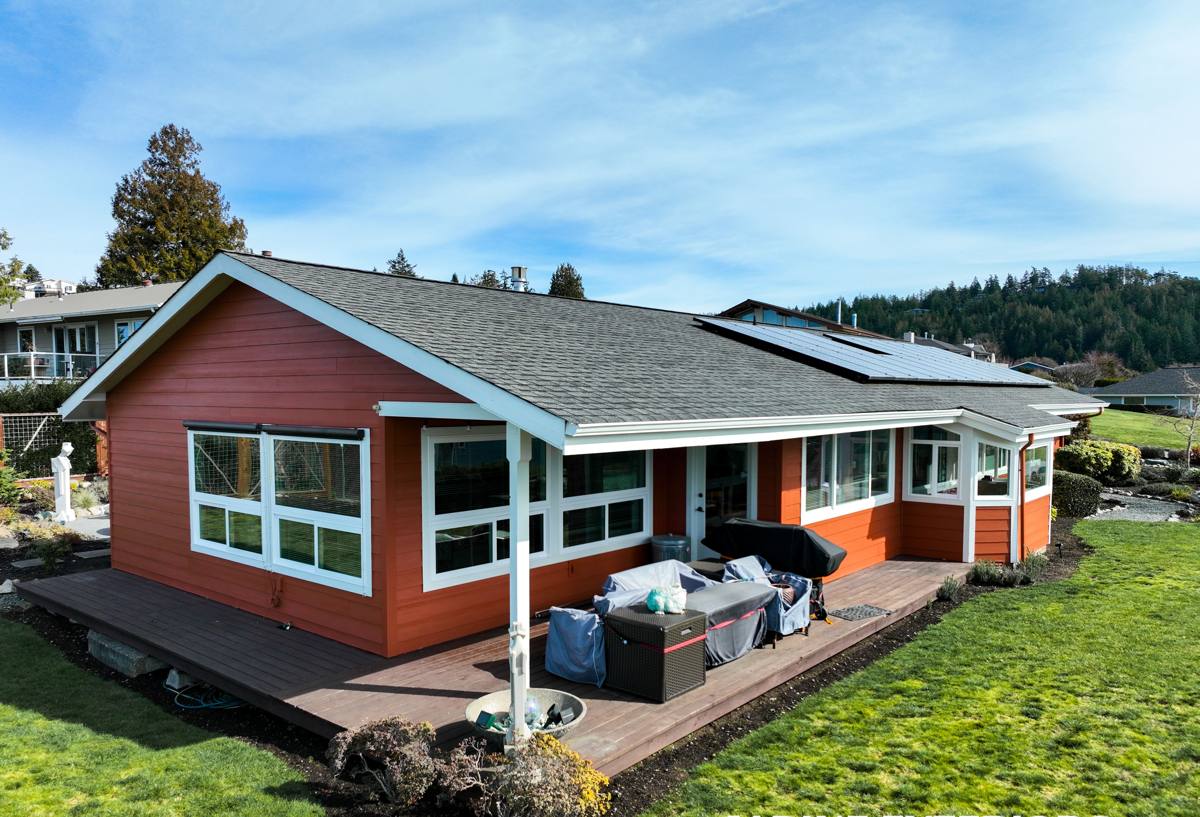
What a Correct Siding Replacement Actually Involves
Siding replacement isn't just stripping old panels and nailing up new ones. Done right, it's a full envelope job, and every step matters more in a wet climate than in a dry one.
- Full tear-off, not overlay. Installing new siding over old hides existing rot and moisture problems instead of fixing them.
- Sheathing inspection. Once the old siding is off, the wall sheathing gets checked for soft spots, rot, and prior water damage — this is the one point in the job where hidden problems are actually visible.
- Weather-resistive barrier. A correctly lapped and taped moisture barrier goes on before anything else, giving the wall a drainage plane behind the new siding.
- Flashing at every penetration. Windows, doors, hose bibs, light fixtures, and any other wall penetration need proper flashing so water is directed out, not in.
- Rainscreen or drainage gap where called for. A small gap behind the siding lets bulk water drain and the wall dry out between storms — important in a climate where "between storms" doesn't leave much dry time.
- Correct fastening. Fiber cement has specific nailing patterns, fastener types, and clearances. Installed loose or over-driven, it will crack, cup, or pull away over time.
- Caulking and sealant at the right joints only. Modern siding systems are designed to shed water, not seal it in — sealing the wrong joints traps moisture instead of letting it escape.
Skip any one of these steps and the siding itself can be a premium product and still fail early. This is why we treat siding replacement as an envelope project, not a cosmetic swap.
Why We Install James Hardie and Nothing Else
We standardized on James Hardie fiber cement siding for every home we work on, including in Sumas, and we don't install vinyl, LP SmartSide, or other fiber cement brands. Fiber cement is non-combustible, doesn't swell or rot the way wood-based products can, and holds paint and factory finish far longer than vinyl in a climate with this much sustained moisture. James Hardie's ColorPlus factory finish is baked on and warrantied against fading and peeling, which matters in a market where DIY-quality touch-up paint jobs are common and rarely match.
Hardie also builds region-specific product engineering — their HZ5 line is formulated for climates with freeze-thaw cycling and sustained moisture exposure, which fits the Pacific Northwest better than a one-size-fits-all product. We're not paid more to recommend Hardie over anything else; it's simply what we've found holds up when it's installed correctly and left alone for the next twenty-plus years.
Our Sumas Siding Replacement Process
1. On-Site Walkthrough
We look at the whole exterior, not just the siding that's visibly failing. Trim, flashing, window details, and any moss or algae buildup around the foundation and roofline all factor into the plan.
2. Written Scope and Estimate
You get a clear, itemized scope before any work starts — what's being torn off, what the wall assembly will look like once it's rebuilt, and which HardiePlank profile and color are going on.
3. Tear-Off and Sheathing Check
Old siding comes off, and we inspect the sheathing underneath. If there's rot or water damage, we flag it and address it before anything new goes up — no covering up a problem with fresh siding.
4. Weather Barrier, Flashing, and Drainage Plane
This is the step that determines how the wall performs for the next few decades, and it's the one most easily rushed by crews unfamiliar with the product. We don't rush it.
5. Hardie Installation
Panels or lap siding go on to manufacturer spec — correct fastener spacing, clearances above grade and decks, and proper joint treatment.
6. Final Walkthrough
We walk the finished exterior with you before calling the job done, and cover care basics — mainly how little maintenance it actually needs compared to what you're replacing.
HardiePlank Options That Make Sense for This Area
Most Sumas-area homes end up on either HardiePlank lap siding for a traditional look or HardiePanel for a more modern, board-and-batten style. Both come pre-finished in ColorPlus colors chosen to hold up under UV and moisture without the chalking or fading that shows up on cheaper painted products after a few Northwest winters. Smooth and cedar-textured finishes are both available, so the switch from an existing wood-look exterior doesn't have to change the character of the house — just how long it lasts.
What Siding Replacement Typically Costs
Every home is different, but these are the factors that move the number most on a Sumas-area siding replacement:
| Factor | How It Affects Cost |
|---|---|
| Sheathing condition | Rot or water damage found during tear-off adds repair scope before new siding can go on |
| Home size and wall complexity | More corners, gables, and dormers mean more cutting, flashing, and labor time |
| Siding profile chosen | Lap siding, panel siding, and trim details vary in material and install cost |
| Trim and accessory scope | Full trim replacement alongside siding costs more upfront but avoids mismatched old/new trim |
| Access and site conditions | Steep lots, mature landscaping, and tight setbacks slow the job and add labor |
| Story height | Two-story walls require more scaffolding or lift time than single-story |
We give real, project-specific numbers after a walkthrough — not a phone estimate — because the sheathing condition alone can change the scope significantly once the old siding comes off.
Signs Your Sumas Home Needs Siding Replacement Now
- Soft or spongy spots when you press on the siding, especially near the bottom courses or below windows
- Paint that's peeling, bubbling, or needs recoating more often than every few years
- Persistent moss or algae staining that comes back quickly after cleaning
- Visible gaps, warping, or buckling panels
- Rising energy bills that point to a wall assembly no longer sealing properly
- Siding that's original to a home built more than 20-25 years ago, especially wood-based products
None of these on their own means you need a full replacement tomorrow, but more than one or two together usually means the wall assembly behind the siding is starting to take on water — worth a real inspection rather than a wait-and-see approach.
Why a Crew That Already Works in Sumas Matters
Siding installation quality comes down to the details — flashing sequencing, drainage planes, fastening — and those details get executed more reliably by a crew that's done the work repeatedly in the same conditions. A crew based around Lynden and working regularly in Sumas already knows how local moisture and moss patterns behave against a wall, what sheathing condition to expect on homes of a given age in this area, and how to sequence a job around Whatcom County's wetter months instead of fighting them. That local repetition is worth more than a generic national install crew rotating through unfamiliar territory.
Timeline and What to Expect
A typical single-family siding replacement runs anywhere from several days to a couple of weeks once work starts, depending on home size, sheathing repairs needed, and weather windows. We schedule around the wetter stretches of the year where we can, since fiber cement installation and sealant work both perform better in dry conditions. You'll know the expected timeline before the crew shows up, and we'll flag it immediately if sheathing repairs found during tear-off are going to add time.
If your Sumas-area home is showing any of the signs above, or you're just planning ahead, we're glad to walk the exterior with you and give you a straight answer on what it needs. The estimate is free, there's no pressure, and you'll get a real scope — not a guess — before you decide anything. Use the form below to get started.