 Lynden Exterior
 Window Replacement Built for Deming's Rain and Tree Cover
Deming sits along the Nooksack River corridor east of Lynden, tucked under heavy Douglas fir and cedar canopy on the way toward Mount Baker. That setting is beautiful, but it's rough on windows. Less direct sun and more standing shade means wood trim and old aluminum frames stay damp longer after every storm that rolls through Whatcom County. Compared to the coastline west of us, salt air isn't the main enemy out here — the bigger issues are driving rain that gets pushed sideways by wind funneling through the valley, and a moss and algae season that can run eight or nine months a year on anything that doesn't dry out fast.
Windows on Deming-area homes take that punishment directly at the frame, the sill, and the flashing details around the opening. When those details fail, the damage almost never shows up as a dramatic leak first. It shows up as a soft spot in the sill, a window that's gotten hard to operate, or trim that's started to green up faster than the rest of the house. We've built our window replacement process around catching and correcting exactly those failure points, because on a wooded, rain-heavy lot like the ones common around Deming, the installation detail matters more than the window brand.
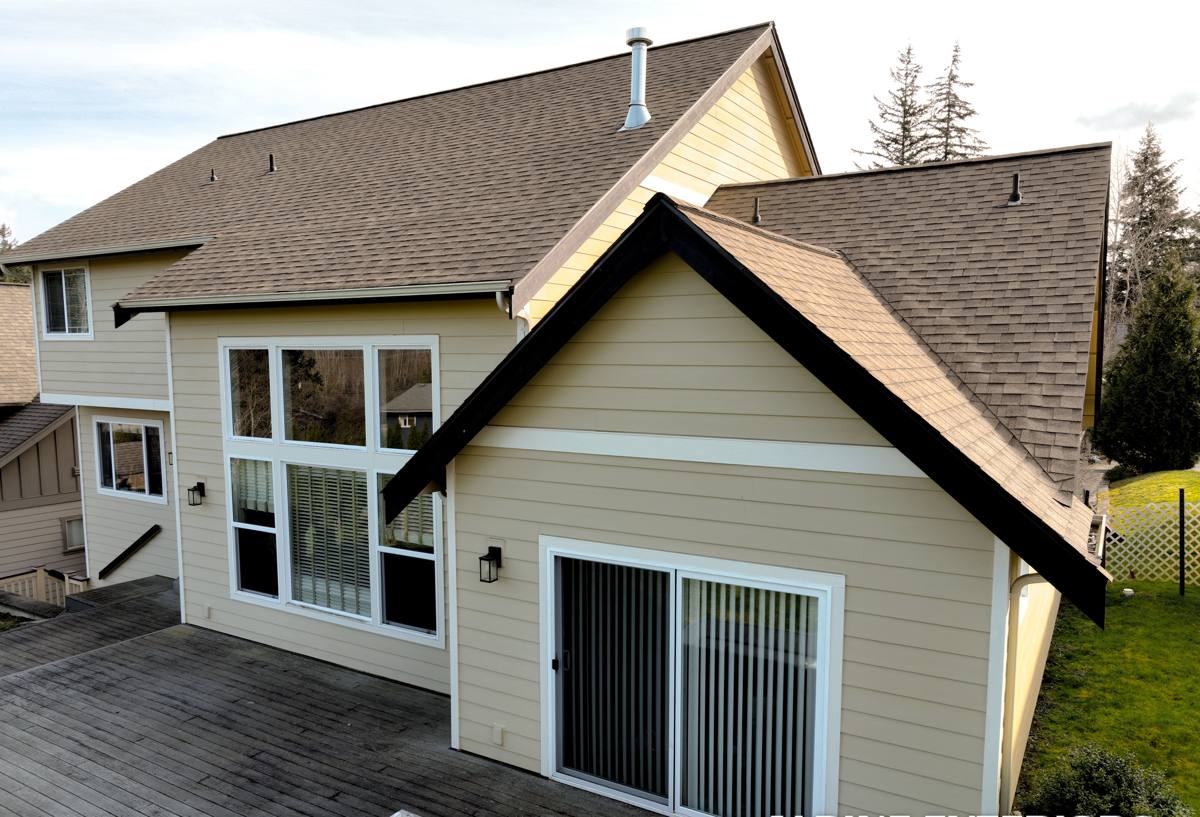
How Deming's Climate Wears Down Windows
Driving Rain and Wind-Driven Moisture
Storms moving up the Nooksack valley don't just drop rain straight down — wind pushes it sideways into window faces and up under poorly sealed trim. Older single-pane and early dual-pane windows, along with original wood or aluminum frames, were rarely installed with the kind of sill pan flashing and weather-resistant barrier detailing that's standard practice today. Over the years, that lets moisture work its way behind the frame instead of running off it.
Shade, Humidity, and Moss
Heavy tree cover keeps a lot of Deming properties in shade for large parts of the day, especially in fall and winter when the sun angle is already low. Less direct sun means surfaces around windows stay wet longer after rain, which is exactly the condition moss, algae, and mildew need to take hold. On wood-clad windows and painted wood trim, that ongoing dampness accelerates rot at the corners and sill long before the glass itself is a problem.
Temperature Swings and Seal Failure
Whatcom County's mix of cold, damp winters and warm summer days puts real stress on insulated glass seals over time. Once a seal fails, moisture gets trapped between the panes — you'll see fogging or a hazy ring that never fully clears, even on dry days. That's a sign the unit is done, not something that can be cleaned away.
Signs a Deming Home Needs Window Replacement
- Fogging or condensation trapped between the glass panes that doesn't clear when the weather dries out
- Wood sills or trim that feel soft, spongy, or show dark staining at the corners
- Windows that are difficult to open, close, or lock — often from swollen or warped frames
- Visible daylight, drafts, or a cold draft felt near the frame even with the window shut
- Moss, algae, or persistent green streaking on the sill or lower frame that returns soon after cleaning
- Noticeably higher heating bills in winter with no other explanation
- Peeling or bubbling paint on wood-framed windows, especially on shaded elevations
- Noise transfer that seems worse than it should be for the window's age
What a Correct Installation Actually Involves
Swapping in a new window is the easy part. What determines whether that window lasts 20+ years in a Deming rain environment happens in the two inches around the frame that nobody sees once trim goes back on.
Removal and Opening Inspection
We pull the old unit and check the rough opening framing, sheathing, and sill for hidden rot or moisture damage before anything new goes in. On older Whatcom County homes this step regularly turns up soft framing that needs repair — patching over it with a new window on top guarantees a repeat failure.
Sill Pan and Flashing
A sloped sill pan and properly lapped flashing tape direct any water that does get past the exterior cladding back out and away from the framing, instead of letting it pool at the sill. This is the single most important detail for wind-driven rain performance, and it's also the step most often skipped on budget installs.
Air Sealing and Insulation
The gap between the window frame and the rough opening gets sealed with low-expansion foam or backer rod and sealant — never just stuffed with fiberglass insulation alone, which does nothing to stop air movement and can hold moisture against the frame.
Exterior Weatherproofing
Housewrap or weather-resistant barrier gets integrated with the flashing in the correct shingle-lap order so water always sheds downward and outward, never behind the barrier. Trim and caulking go back on with a paintable, flexible sealant rated for our wet climate, not a hardware-store caulk that will crack within a season or two.
Choosing the Right Window for a Deming Property
There's no single "best" window — the right call depends on how shaded the lot is, how much maintenance the homeowner wants to take on, and the style of the home. Here's how the common options compare for a river-valley, tree-covered setting like Deming:
| Window Type | Moisture Performance | Maintenance | Best Fit |
|---|---|---|---|
| Vinyl | Won't rot; frame doesn't absorb water | Low — occasional cleaning | Most Deming homes, especially shaded or heavily wooded lots |
| Fiberglass | Excellent; very stable in swings between wet and dry | Low | Homes wanting a slimmer sightline or higher-end finish |
| Wood-clad | Good if maintained; exterior cladding protects the wood core | Higher — exterior finish and seals need regular upkeep | Homes prioritizing an all-wood interior look and willing to maintain it |
| Aluminum (older style) | Poor thermal performance; prone to condensation | Moderate | Generally not recommended for this climate — we'll explain why if it's what you currently have |
We steer most Deming customers toward vinyl or fiberglass simply because a shaded, damp lot punishes anything that requires ongoing exterior finish maintenance. If you love the look of wood on the interior, a wood-interior/vinyl- or fiberglass-exterior clad window gets you that look without exposing bare wood to the weather.
U-Factor and Glass Packages
For our winters, a lower U-factor (heat loss rating) matters more than a low Solar Heat Gain Coefficient, since most Deming lots don't get intense summer sun exposure through heavy tree cover. Double-pane with a low-E coating is the practical baseline; triple-pane can make sense on north-facing or particularly exposed walls, but it's not always worth the added cost on a shaded lot where heat gain was never the problem to begin with.
Our Process, Start to Finish
- On-site assessment — we look at existing window condition, framing, and any drainage or shading factors specific to your lot
- Honest recommendation — material, glass package, and style options based on what your home actually needs, not the most expensive option available
- Written estimate — clear pricing with no vague allowances
- Scheduling — timed around weather windows, since flashing and sealant work needs a reasonably dry install day
- Removal and opening repair — old units out, framing inspected and repaired as needed
- Installation — sill pan, flashing, air sealing, and window set per manufacturer and best-practice specs
- Exterior finish — trim, caulking, and touch-up so the new window looks intentional, not patched in
- Walkthrough — we operate every window with you before calling the job done
Why Hire a Crew That Already Works Deming and the Surrounding Area
Deming isn't downtown Lynden. Properties out here tend to be larger, often with gravel or long driveways, septic and well systems instead of city hookups, and mature trees close to the house that affect both access and drying conditions during the job. A crew that's worked this area knows to plan around those realities — protecting landscaping and driveways, working efficiently around limited daylight in shaded yards, and understanding which Whatcom County permit and inspection steps apply to window replacement versus a full structural change.
Just as important, a local crew has already seen how different window products actually hold up a few years into our specific rain-and-shade pattern, not just how they perform on a spec sheet. That's the kind of judgment that only comes from doing this work in this climate, on this kind of property, repeatedly.
What Affects the Cost of a Window Replacement Project
| Factor | Why It Matters |
|---|---|
| Number and size of windows | More openings and larger units mean more material and labor |
| Frame material chosen | Vinyl is typically the most cost-effective; fiberglass and wood-clad cost more up front |
| Condition of the rough opening | Hidden rot or framing damage adds repair time before the new window can go in |
| Access and site conditions | Upper-story windows, difficult site access, or landscaping close to the house can add time |
| Glass package | Upgraded low-E coatings or triple-pane glass raise material cost per unit |
| Trim and exterior finish work | Matching existing trim profiles or repainting adds to the scope |
Every property is different, which is why we walk the job in person before giving a number rather than quoting sight unseen over the phone.
Keeping New Windows Performing Long-Term
- Rinse pollen, moss spores, and debris off sills and tracks a couple times a year, especially on shaded elevations
- Keep gutters and downspouts clear so roof runoff isn't dumping extra water near window heads
- Check exterior caulking annually and touch up any cracked or separated sections before it becomes a leak path
- Trim back branches or vegetation that keep a window in constant shade and moisture
- Operate locks and hardware periodically through the winter so mechanisms don't seize up from disuse
If you're noticing drafts, sticking sashes, fogged glass, or trim that's staying damp longer than it should around your Deming-area home, it's worth having it looked at before a maintenance issue turns into a framing repair. We offer free, no-pressure estimates — walk us through what you're seeing and we'll give you a straight read on what your windows actually need, using the form below.