 Lynden Exterior
 Windows Built for Life Around Wiser Lake
Wiser Lake sits in one of the wetter, shadier pockets of the Lynden area, and homes here carry a different set of window problems than a house out in open farmland. Mature tree cover holds moisture against siding and trim longer after a storm passes. Lake-adjacent lots tend to run damp underfoot, which pushes humidity up against the lower floors of a house year-round. Add in Whatcom County's long stretch of driving rain and the marine-influenced air that moves through this part of Washington, and you get windows that age faster than their warranty paperwork suggests they should.
Energy-efficient windows are marketed on their U-factor and their heating bill savings, and those numbers matter. But for a Wiser Lake home, the bigger question is often simpler: is the window actually keeping water and moist air out of the wall cavity, or is it just a good insulator that's slowly failing behind the trim? We treat both problems as one job.
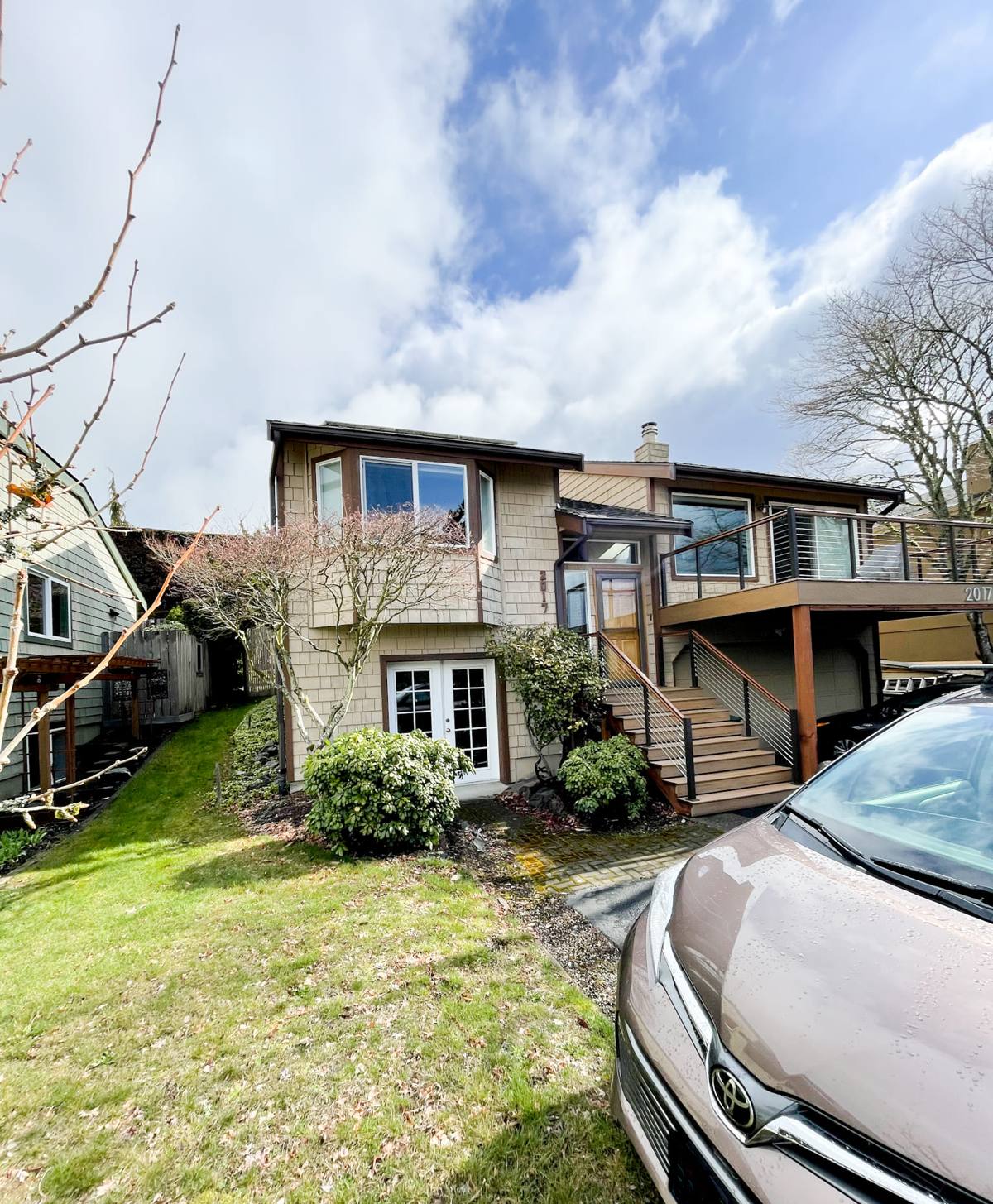
What This Climate Does to Windows Over Time
Every window eventually shows its age, but the pattern we see around Wiser Lake is fairly consistent:
- Moss and algae staining on sills, exterior trim, and lower sashes in shaded, north-facing rooms and anywhere tree canopy blocks direct sun for most of the day.
- Soft or discolored wood at the sill and lower corners of older wood or wood-clad windows, usually starting on the exterior face where finish coatings wear thin first.
- Condensation between the glass panes — a sign the seal on a double- or triple-pane unit has failed and the gas fill has escaped, which kills the window's insulating performance even though the glass still looks clear.
- Drafts and cold spots near the frame, often from failed weatherstripping or a rough opening that was never properly sealed and flashed during the original install.
- Sticking or misaligned sashes caused by moisture-driven swelling and shrinking in the frame material over repeated wet-dry cycles.
None of this is unique to Wiser Lake — it's Pacific Northwest weather doing what it does. But the tree cover and lake-adjacent humidity around here tend to accelerate the moss and moisture side of that list compared to homes on more open, sun-exposed lots closer to town.
What "Energy-Efficient" Should Actually Mean Here
Performance ratings that matter locally
For our climate zone, the two numbers worth paying attention to are U-factor (how well the window resists heat loss — lower is better) and air leakage rating (lower is better here too). Solar heat gain coefficient matters less in western Washington than it does in sunnier climates, since most of our energy loss is from heat escaping, not from excess sun coming in.
Installation quality is half the performance
A high-performance window installed without proper sill pan flashing, correctly lapped house wrap, and sealed rough openings will leak air and moisture regardless of its rating on paper. This is the piece that gets skipped most often on rushed jobs, and it's the piece that determines whether a window is still performing well in ten years or is quietly rotting the framing behind it.
Gas fills and spacers
Argon-filled double-pane units with a warm-edge (non-metal) spacer are the standard we recommend for most Wiser Lake homes — they balance cost against real-world performance well. Triple-pane makes sense for north-facing rooms, bedrooms over unheated spaces, or homes where the owner has specifically flagged high heating bills as the driver for the project.
Signs It's Time to Look at Your Windows
- Fogging or a hazy ring between the panes of glass that doesn't wipe away
- Visible moss or dark staining on sills or lower window trim
- A noticeable draft when standing near the window on a windy day
- Difficulty opening, closing, or locking a window that used to operate smoothly
- Soft spots when you press on the exterior sill or lower frame corners
- Rooms near windows that feel noticeably colder than the rest of the house
- Higher heating bills without any other clear explanation
Any one of these on its own might just mean a single window needs attention. Several of them together, especially on the same wall or elevation, usually points to a moisture or flashing problem worth having looked at before it spreads into the framing.
Frame Material Comparison
Frame material has a bigger effect on long-term performance in this climate than most homeowners expect. Here's how the common options actually behave under repeated wet Northwest winters:
| Frame Material | Moisture Behavior | Maintenance | Typical Fit for Wiser Lake |
|---|---|---|---|
| Vinyl | Won't rot; can distort slightly with big temperature swings | Low — occasional cleaning | Strong all-around choice, especially on shaded or damp elevations |
| Fiberglass | Very stable, minimal expansion/contraction, resists moisture well | Low | Good for higher-end projects or larger openings needing more rigidity |
| Wood | Prone to rot and moss growth if finish isn't maintained | High — regular refinishing needed | Best reserved for homes prioritizing a specific historic or architectural look |
| Wood-clad (wood interior, aluminum or vinyl exterior) | Exterior resists weather well; interior still needs normal care | Moderate | Popular where owners want a wood look inside without full wood-frame upkeep |
| Aluminum | Durable but conducts heat and cold readily unless thermally broken | Low | Less common for residential energy-efficiency projects in this climate |
We don't push one material as universally "best." A shaded, moisture-prone elevation facing the lake side of a property calls for a different recommendation than a sun-exposed south wall on the same house, and we'll walk through that difference with you room by room.
How We Approach a Wiser Lake Window Project
- On-site assessment. We check existing frames, sills, and the surrounding siding and trim for hidden moisture damage before we ever talk product selection — a new window installed over a rotten rough opening just hides the real problem.
- Product selection based on exposure. Shaded, damp elevations get different treatment recommendations than sun-facing walls. We factor in tree cover, drainage around the foundation, and which rooms run cold in winter.
- Removal and opening prep. Old units come out carefully to protect surrounding siding and trim. Any soft framing or damaged sheathing gets repaired before the new window goes in — not covered up.
- Proper flashing and sealing. Sill pan flashing, correctly lapped house wrap or building paper, and appropriate sealant at the right joints — this is the step that determines whether the window stays watertight for the long haul.
- Installation and adjustment. Units are set plumb, level, and square, then shimmed, fastened, and insulated around the frame so there are no gaps for air or moisture to travel through.
- Interior and exterior finish work. Trim, caulking, and touch-up work to match the surrounding finish, inside and out.
- Final walkthrough. Every window gets operated and checked with you before we call the job done.
Cost Factors to Expect
Every project is different, but these are the main things that move the price up or down on a window job around Wiser Lake:
| Factor | Why It Matters |
|---|---|
| Number and size of openings | More windows and larger units mean more material and labor |
| Frame material | Vinyl is typically the most budget-friendly; fiberglass and wood-clad cost more upfront |
| Hidden damage at the opening | Rotten sheathing or framing found during removal adds repair time before the new window can go in |
| Access and elevation | Second-story or hard-to-reach windows take longer and may need additional equipment |
| Trim and finish work | Matching existing exterior trim profiles or interior stain/paint adds finish labor |
We give straightforward, itemized estimates so you can see exactly what's driving the number — no vague lump-sum pricing.
Why Local Experience on This Lake Matters
A crew that regularly works properties around Wiser Lake and elsewhere in Whatcom County knows what to expect before the ladder goes up: which elevations tend to hold moss, how a shaded lot behaves differently than an open one two miles down the road, and how driving rain off a storm typically hits a given roofline or wall. That kind of pattern recognition doesn't replace a proper on-site inspection, but it does mean fewer surprises and a more accurate estimate from the first visit.
It also means we're not guessing at how a product will hold up in this specific climate. We install and stand behind our work in the same weather your windows have to survive every winter — that's the standard we hold ourselves to on every job in Lynden and the surrounding communities.
If your windows are fogging, drafting, sticking, or just costing you more to heat around than they should, we're glad to take a look. Reach out for a free, no-pressure estimate — we'll walk the property, check what's actually going on, and give you a straight answer on what it would take to fix it.