 Lynden Exterior
 Building Near Wiser Lake Means Building for Moisture
New construction gives you one real advantage over a remodel: you get to do the window installation right the first time, before siding, trim, and interior finishes lock in whatever choices were made at framing. Around Wiser Lake, that first-time-right window is worth more than it might be in a drier part of the state. This corner of Whatcom County sits close enough to Puget Sound and the Strait of Georgia that homes catch salt-tinged marine air on top of the humidity that collects around the lake itself. Add driving rain that comes in sideways during fall and winter storms, and a moss season that can stretch from October well into spring, and you have a climate that is constantly testing every seam, sill, and flashing detail on a house.
None of that means new construction windows near Wiser Lake need to be exotic or overbuilt. It means the basics — correct rough opening prep, proper flashing sequence, the right sealants, and glass specified for how the house actually sits on the lot — have to be done with real discipline. On a new build, there is no old caulk or failed flashing to work around. There is also no excuse for cutting corners, because everything is visible and testable before the walls close up.
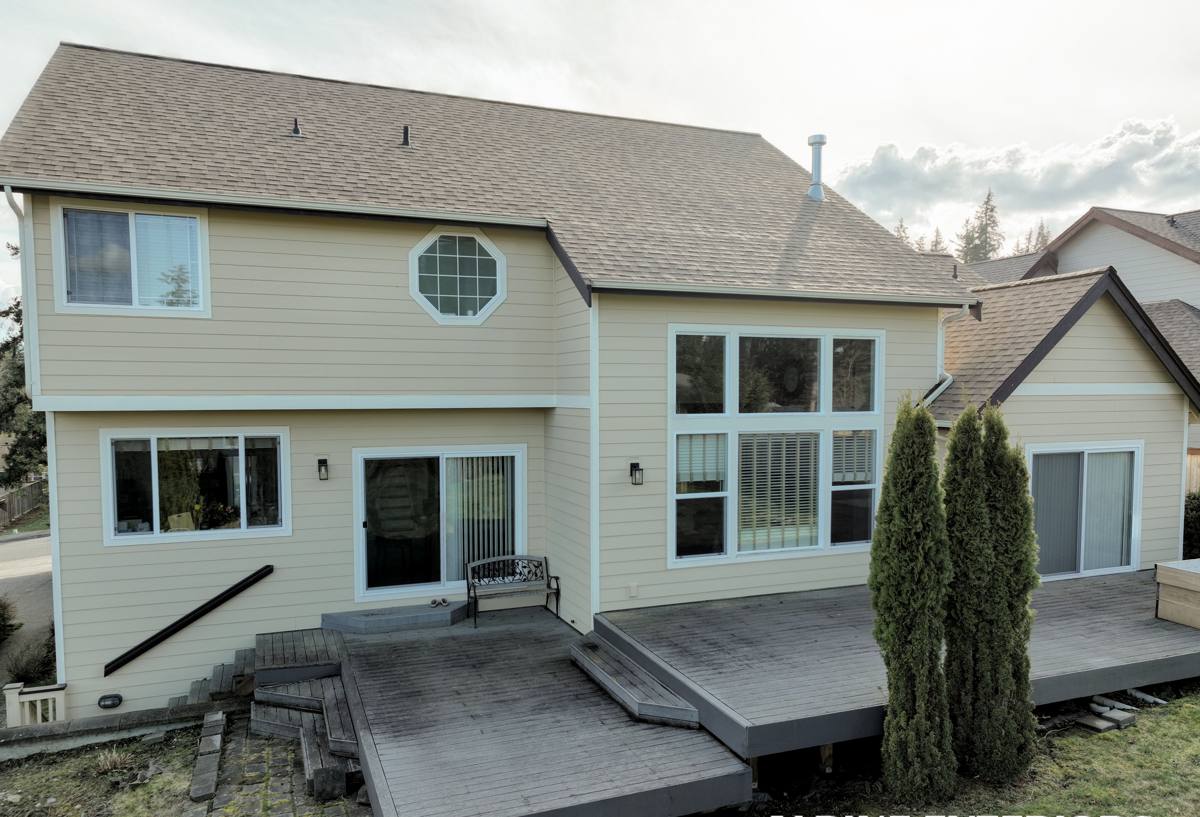
What Local Homes Actually Need From New-Construction Windows
Water Management First
Lynden and the Wiser Lake area don't get extreme cold, but they get a lot of wet weather, and wet weather that lingers is harder on a house than a hard freeze. Wind-driven rain finds any gap in a window's flashing plane and pushes water uphill against gravity if the drainage path isn't built correctly. On a new build, this is solved with a proper weather-resistive barrier lap sequence, sill pans under every opening, and head flashing integrated with the housewrap — not caulk alone. Caulk is a backup, not a strategy.
Moss, Algae, and Frame Longevity
A long moss season affects more than roofs. Shaded elevations near mature trees, common around lake lots, stay damp longer between rain events, which is exactly the condition moss and algae need to take hold on frames, sills, and trim. Frame material and finish matter here: a smooth, factory-finished frame with tight joinery sheds spores and grime far better than a porous or heavily seamed one. Sill design matters too — a sill that lets water pool invites growth even on good materials.
Condensation and Indoor Humidity
New homes are built tighter than older ones, which is good for energy bills but means indoor humidity has fewer places to escape. Without the right glass package, that shows up as condensation on interior glass during cold, wet mornings — common in this climate even without hard freezes. Getting the glass spec right at the construction stage avoids a problem homeowners would otherwise fight every winter.
What "Correct" Installation Actually Involves
A lot of window problems on new builds trace back to installation sequence, not the window itself. On a Wiser Lake area new construction project, a correct install includes:
- Rough openings checked for square, level, and correct size before any window is set — not adjusted after the fact
- Sill pans installed under every opening to direct any incidental water back outside the wall plane
- Flashing integrated in the correct shingle-lap order with the housewrap: sill, jambs, then head, each lapping over the one before it
- Fasteners placed per the manufacturer's schedule, not "close enough" — under- or over-fastening both cause long-term problems
- Shimming that supports the frame without distorting it, so sashes operate smoothly for years, not just on install day
- Backer rod and the correct exterior sealant at the final joint, sized and tooled properly rather than smeared on thick to hide gaps
- Interior air sealing with low-expansion foam or backer rod, separate from the exterior weatherproofing layer
Every one of those steps is inspectable before the wall closes up, which is exactly why new construction is the right time to insist on doing it correctly rather than hoping it was done correctly.
Choosing the Right Window Type and Glass for This Site
There isn't one "best" window for every new build near Wiser Lake — the right choice depends on the elevation's sun exposure, how close the lot sits to the water, and how much shade and dampness a given wall sees. Here's how the common frame options compare for this climate:
| Frame Material | Moisture Performance | Maintenance | Where It Fits Well |
|---|---|---|---|
| Vinyl | Good — won't rot, resists moisture intrusion at the frame itself | Low; occasional cleaning | Most elevations; strong value for budget-conscious builds |
| Fiberglass | Excellent — very stable, minimal expansion/contraction in wet-dry cycles | Low | Shaded or damp-prone elevations near trees or the lake |
| Wood-clad | Good exterior protection, but interior wood needs the clad seal to stay intact | Higher; clad joints and interior finish need attention over time | Homeowners prioritizing an interior wood look who accept the added upkeep |
For glass, a dual-pane, low-E package is the practical standard for new construction in this climate — it manages condensation risk and keeps energy costs reasonable without paying for performance the house doesn't need. On west- or lake-facing elevations with more direct sun and wind exposure, we'll sometimes recommend a slightly upgraded glass package; on sheltered, tree-shaded sides, standard glass is usually the right call. We'll walk through this room by room rather than specifying one glass package for the whole house by default.
Our Process, Start to Finish
1. Plan Review and Rough Opening Check
We review the window schedule against the framing plan before any windows arrive, and we verify rough openings on site — not on paper — before installation day.
2. Flashing and Sill Pan Install
Sill pans go in first, then the window, then jamb and head flashing integrated with the housewrap in the correct order. This is the step that determines whether the window stays dry for the next 20 years.
3. Setting, Shimming, and Fastening
Each window is set plumb, level, and square, shimmed to manufacturer spec, and fastened per the schedule — not by feel.
4. Interior and Exterior Sealing
Interior air sealing and exterior weatherproofing are treated as two separate steps with two different materials, because they do two different jobs.
5. Final Walk-Through
Before we call a window done, we operate every sash and check for square margins, smooth operation, and a clean, consistent exterior seal — the same checks a good building inspector will run.
Mistakes We See on New Builds — and Avoid
Most window callbacks on new construction trace back to a handful of repeat issues:
- Flashing installed out of sequence, so water gets trapped behind the housewrap instead of directed out
- Sill pans skipped or improvised with extra caulk instead of a proper pan
- Openings that were slightly out of square, "made to work" by forcing the window instead of correcting the frame
- Sealant used as the primary water barrier instead of a backup to correct flashing
- Fastening schedules ignored, leading to frame distortion and sash misalignment within a few years
Every one of these is avoidable with the right sequence and a crew that treats new construction with the same care as a warranty callback — because on a new build, there's no old work to blame.
Cost Factors for New-Construction Window Packages
Every new build near Wiser Lake is different, but the same handful of factors drive most of the cost difference between projects:
| Factor | How It Affects Cost |
|---|---|
| Frame material | Vinyl is the most budget-friendly; fiberglass and wood-clad cost more but change maintenance and moisture performance |
| Number and size of openings | More and larger windows increase material and labor directly |
| Glass package | Upgraded low-E or performance glass on sun- or wind-exposed elevations adds cost per unit |
| Site exposure | Lake-facing or shaded, tree-heavy elevations may warrant upgraded materials, which affects the overall package price |
| Flashing and sill pan complexity | Unusual openings, bays, or multi-unit combinations take more labor to flash correctly |
We'll never quote a whole-house price without walking the plan set and the site first — the factors above shift enough from lot to lot near the lake that a generic number isn't useful to you.
A Pre-Install Checklist for Builders and Homeowners
If you're managing a new build near Wiser Lake, whether as the homeowner or working alongside your general contractor, these are worth confirming before window installation day:
- Rough openings have been checked for square and correct size against the window schedule
- Housewrap is installed and sequenced to receive flashing in the correct lap order
- Sill pans are specified for every opening, not just the ones facing prevailing weather
- Glass packages have been reviewed elevation by elevation, not applied uniformly across the house
- The installer's fastening and sealing schedule matches the window manufacturer's written instructions
- A final walk-through and operation check is scheduled before drywall closes the openings from the interior
Why It Matters to Hire a Crew That Already Works This Area
Wiser Lake lots aren't identical to a dry, open subdivision lot elsewhere in Whatcom County. Shade patterns from mature trees, humidity that sits near the water, and exposure to driving rain off the Sound all vary house to house, sometimes wall to wall on the same house. A crew that has installed windows on new builds in this specific area already knows which elevations tend to need extra attention to flashing and glass, and which don't — that judgment comes from doing the work here repeatedly, not from a general new-construction checklist. It also means fewer surprises during inspection and a build schedule that isn't held up by rework.
If you're planning a new build near Wiser Lake and want windows specified and installed correctly the first time, we're happy to walk your plans, look at the lot, and put together a straightforward, no-pressure estimate — just fill out the form below.